
Freestanding emoji statues
Plan a defined front, return depth, base, and finished sides according to how visitors approach the piece.
A digital icon becomes a physical installation only after its artwork, scale, depth, and placement are defined. For a social media event, decide whether the emoji is a freestanding statue, a grouped symbol system, a shallow background, or one element within a larger branded setting.
Plan an Emoji Installation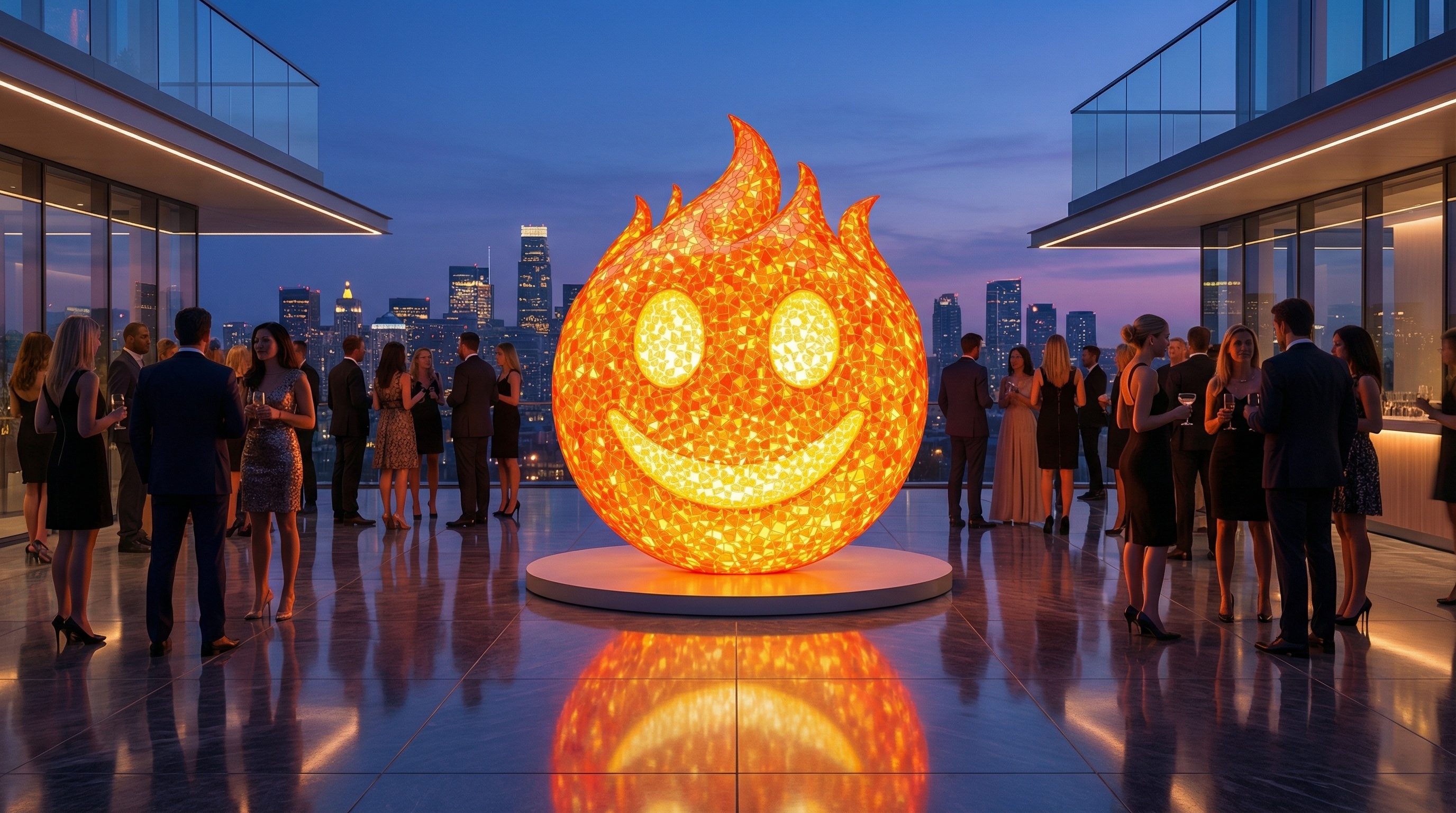
The artwork may support several physical interpretations. Select the form that fits the floor plan and the event program rather than enlarging the screen graphic without a placement plan.
Plan a defined front, return depth, base, and finished sides according to how visitors approach the piece.
Coordinate several symbols with a hierarchy of size, spacing, and orientation instead of treating each as an unrelated object.
Use shallow or layered icons where wall width is available but the event cannot give up much floor depth.
Pair approved icons with words, hashtags, or a brand mark only when the exact artwork and typography are supplied.
Treat overhead placement, rigging, weight, venue approval, and sightlines as site-specific scope.
Discuss light source, power, brightness, cable routing, and service access when illumination is part of the approved concept.
Emoji appearance varies by platform and designer. Supply the exact vector artwork and confirm that it is approved for the proposed physical use. WhiteClouds should not copy a platform-specific icon from a screenshot or substitute a similar vendor design.
Define the required colors, outlines, facial features, and any event-specific variation. If a symbol will be used beside a logo or campaign phrase, provide the complete lockup and clear-space rules.
A flat icon may also need decisions that do not exist in the source file. Approve the side profile, back treatment, edge color, and the way projecting features connect to the main form. For a grouped installation, provide one marked layout showing which version of every symbol belongs in each position.
The source images are approved concepts rather than completed-project evidence. One demonstrates a large individual symbol; the other shows how several icons can share scale, color, and spacing rules.
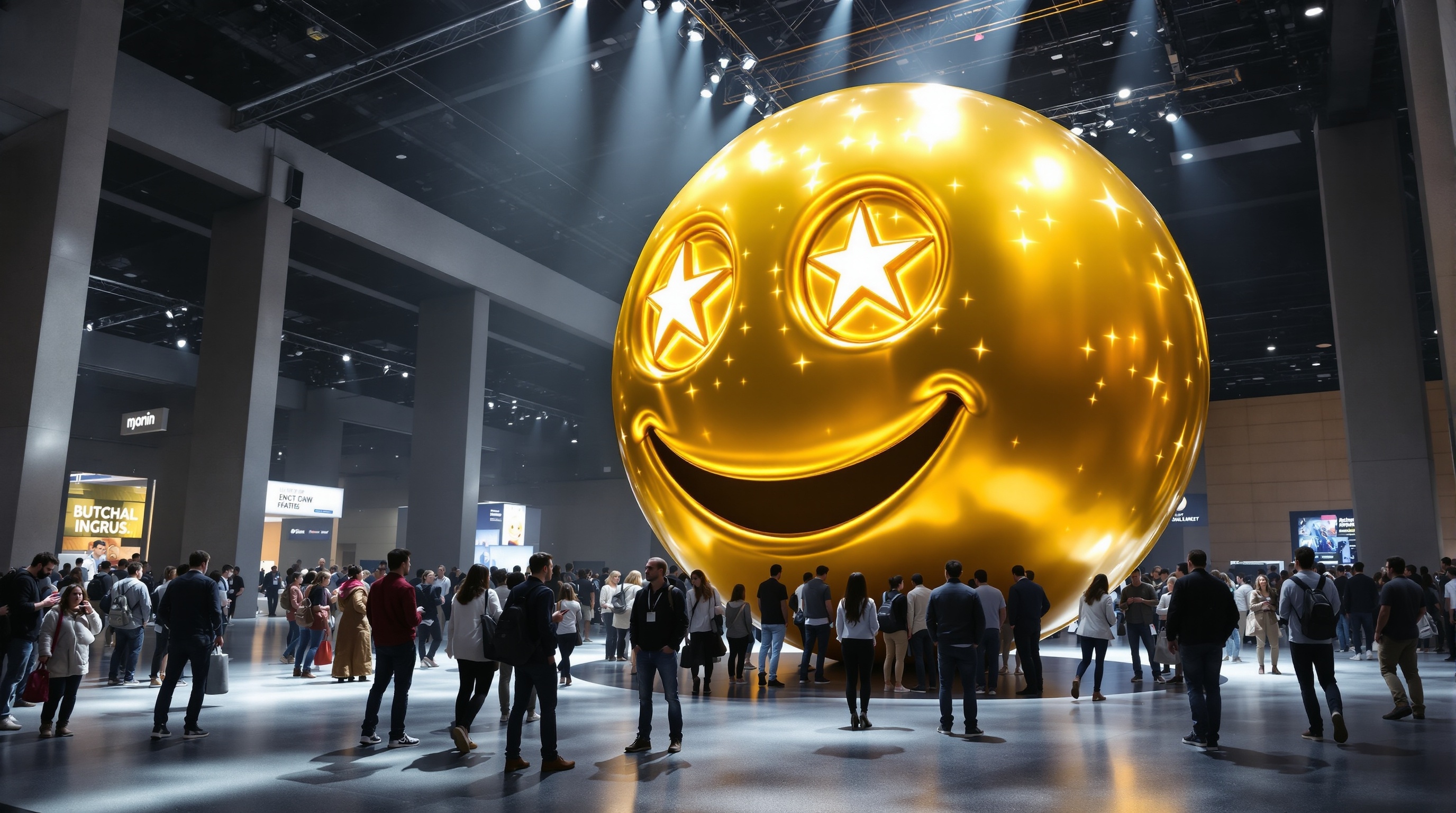
Mark the event footprint, entrances, queues, camera position, sponsor graphics, and any open area required around the statue. The dimensions should account for projecting features and the base, not only the diameter of the face.
If visitors may touch or enter the display, describe that contact precisely. A decorative emoji is not automatically designed for sitting, climbing, or load-bearing use. Any movement or interaction must be reviewed as part of the physical scope.
Check the proposed view through the same phone orientation and camera distance expected at the event. A symbol that reads clearly from across a hall may fill the frame at close range, while a grouped set can become visually compressed from an angled queue. Include ceiling height and nearby lighting in that review.
Approved artwork and measured event space provide the essential starting point.
Use the character-prop and statue service to review the wider fabrication offering. The gallery provides references for dimensional characters, poses, groups, and display configurations.
Send the approved icon files, quantity, proposed scale, event plan, viewing directions, handling requirements, and schedule. Note whether the symbols are freestanding, mounted, suspended, illuminated, or part of a larger display.