
Giant Elephant Statue Ideas
An elephant statue is read through its mass and a few highly specific features: the head, ears, trunk, tusks, legs, and back line. Pose determines how those parts overlap from each viewing side. Before scale or finish is discussed, the reference and primary silhouette should be fixed.
Plan an Elephant Statue
Choose the elephant's stance and trunk position
A calm four-leg stance, a walking pose, or a raised trunk creates a different footprint and balance of forms. Specify the head angle, ear position, trunk curve, tusk visibility, and leg spacing. If the reference is stylized, identify the features that may be simplified and those that must remain anatomically recognizable.
Review the pose from the front, both sides, and rear. A trunk that reads clearly in profile may overlap the face from the main approach. Ears, tusks, and feet can also disappear behind the body unless the primary viewing direction is considered early.
Coordinate silhouette, surface, and support
The elephant's visual weight should be resolved together with the physical setting and base relationship.
Head and ears
Set ear spread, head turn, eye direction, and the relative size of facial features from approved references.
Trunk and tusks
Choose curves and clearances that remain visible from the intended approaches without assuming audience contact.
Body and legs
Establish the back line, belly clearance, leg rhythm, and foot placement that define the stance.
Base and ground line
Decide whether the feet meet the floor directly, connect to a plinth, or belong within a larger scenic arrangement.
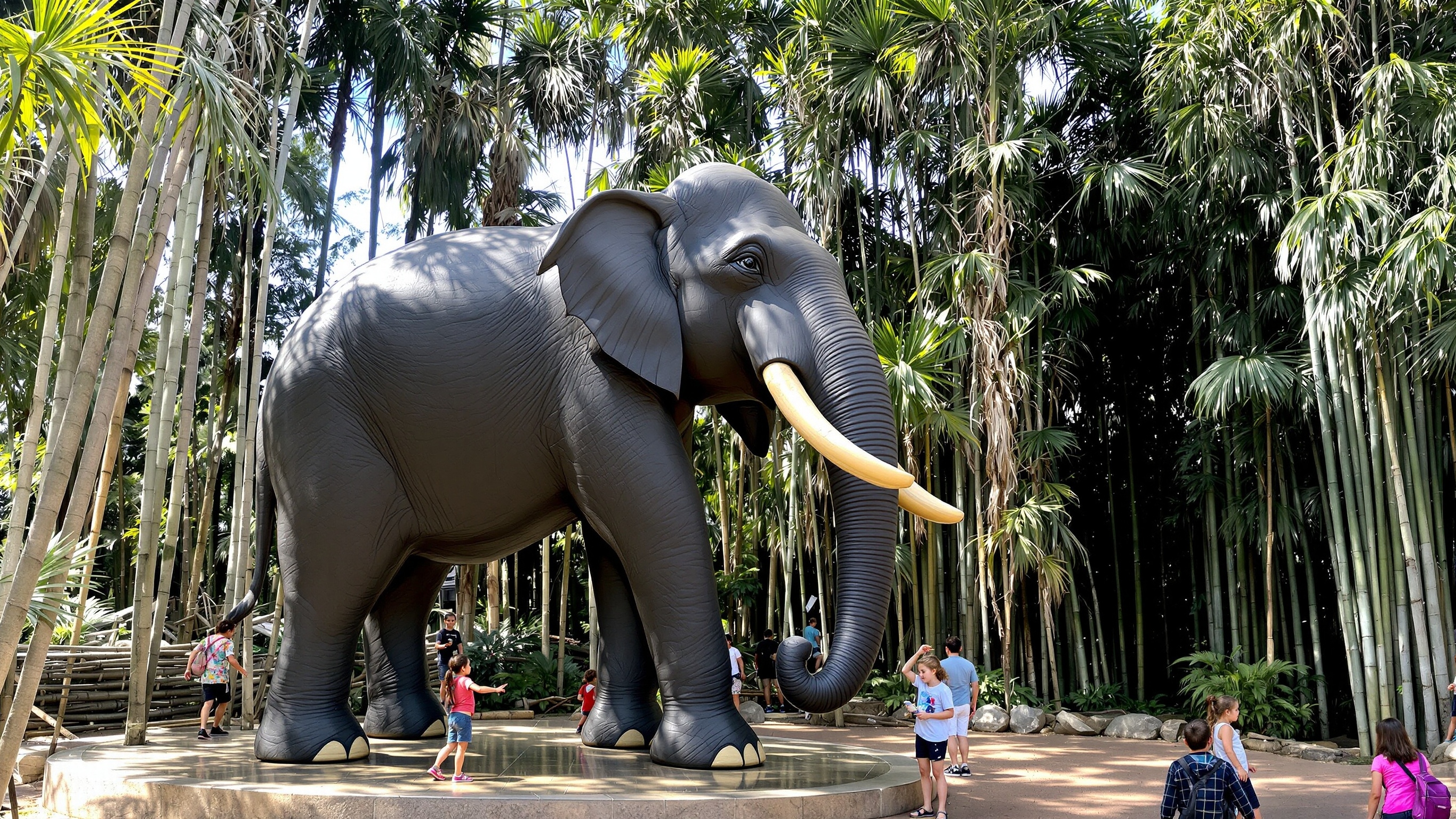
Compare elephant concepts with a completed animal statue
The two concepts show different elephant settings and profiles. The completed geometric bear is included only to illustrate how an animal form can use simplified surface planes and a defined stance; it does not imply a construction or finish for the proposed elephant.

Measure the setting before fixing overall size
Provide the available width, depth, and height, including the space needed around the trunk, ears, and tusks. Mark doors, elevators, loading access, overhead limits, and the final viewing distance. A statue may need planned sections for transport, but their locations should respect the major contours.
Identify indoor or exterior placement and whether guests may touch, lean on, sit on, or walk beneath any part of the figure. These are scope inputs, not assumed capabilities. The intended interaction and site conditions need to be evaluated for the actual project. Note any nearby walls or plantings that may hide the trunk or rear legs from common approaches.
What to provide for an elephant-statue estimate
Clear pose references and site limits allow the first conversation to stay specific.
- Realistic or stylized reference
- Approved pose from several angles
- Overall dimensions or maximum footprint
- Primary viewing sides
- Surface and color direction
- Base or scenic relationship
- Audience-contact expectations
- Access, destination, and deadline
Request a giant elephant statue quote
Send the approved elephant reference, pose, desired dimensions, key viewing angles, surface direction, base concept, expected audience contact, installation setting, access limits, destination, and schedule. Include site photographs when the available volume is fixed.