
Planning a Giant Desk Lamp Prop
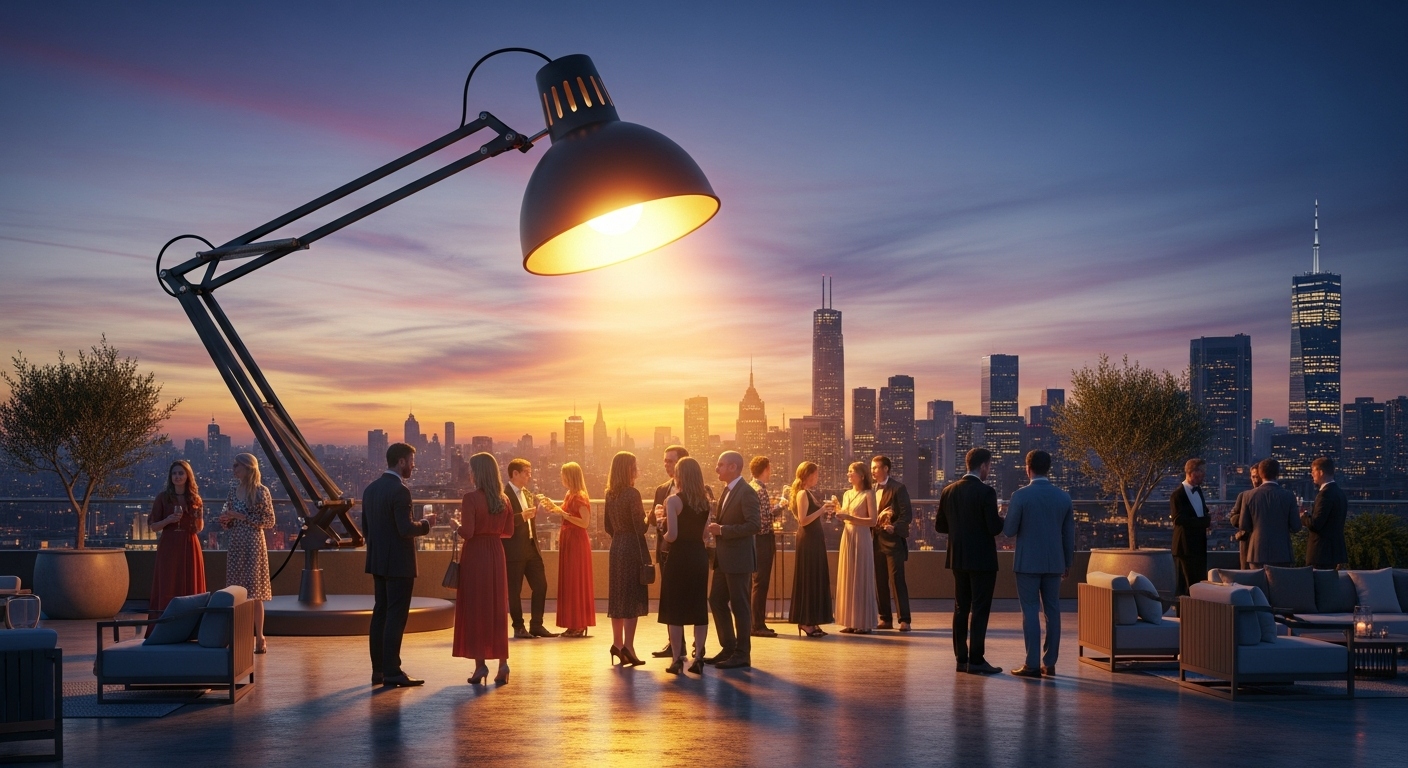
Giant Desk Lamp Prop: one oversized articulated desk-lamp prop defined by a compact base, jointed arm system, pivot points, and a directional shade. Recognition depends on the weighted or clamp-like base, lower and upper arm segments, elbow pivots, spring or counterbalance cues, short neck, shade profile, and fixed beam direction. The central scale question is that the long arm system and relatively compact base must stay visually balanced while the joints remain legible and the selected pose does not imply uncontrolled movement. The images are desk lamp design concepts rather than photographs of completed WhiteClouds work.
Plan a Desk Lamp Display
Define the Desk Lamp Form
Desk Lamp physical scope: one oversized articulated desk-lamp prop defined by a compact base, jointed arm system, pivot points, and a directional shade. Its geometry includes base footprint, arm-segment lengths, pivot-center locations, fixed joint angles, total reach and height, shade diameter and depth, opening angle, and support envelope. Its defining visual cues are the weighted or clamp-like base, lower and upper arm segments, elbow pivots, spring or counterbalance cues, short neck, shade profile, and fixed beam direction.
Desk Lamp presentation: a static nonoperating task-lamp replica locked in one declared pose with the base, articulated arm, and directional shade all readable. The visual treatment can use approved task-lamp color, restrained metal-like arm and joint accents, shade interior contrast, supplied controls or hardware cues, and authorized graphics. Keep the desk lamp scope separate from floor lamps, pedestal lamps, pendant lamps, enclosed lanterns, genie-lamp vessels, working illumination, electrical-fixture claims, movable joints, certified wiring, and ordinary lamp procurement.
Desk-lamp identity comes from the arm mechanism and the controlled relationship between a small base and directional shade. Begin with one supplied task-lamp family: parallel spring arms, a single hinged boom, a balanced architect-lamp system, or another documented articulated profile. Mark every pivot center, arm length, joint housing, spring-like cue, cable-like path when visible, neck connection, shade opening, and fixed stop angle. The enlarged object remains a static display even when the reference suggests adjustability. Its declared pose must fit the venue envelope and keep the base, arm path, and shade readable from the principal approach.
Treat the articulated arm as a measured chain of connected parts. Record the center of each pivot, the distance between pivots, arm width and depth, joint-housing diameter, spring-like element location, and the shade axis. A familiar anglepoise reference may use two parallel members on each arm segment, while another task lamp may use one solid boom. Preserve the selected system instead of blending both. The pose should be reproducible in elevation and plan views, with the lowest base point, highest joint, farthest shade edge, and occupied floor envelope identified.
The shade is directional, so its opening angle affects recognition and visitor sightlines. Define the rim outline, shade depth, neck connection, interior color, and the point toward which it faces. A downturned shade can frame a separate object or display area, but that object remains additional scope. A raised shade creates more height and may expose the interior. Light-like color or a bright interior may be used as a visual treatment, but working illumination, wiring, controls, power distribution, heat, certification, and venue electrical approval must be requested and reviewed separately.
This page does not compete with the broader Giant Lamp page. That completed authority covers monumental floor, pedestal, and pendant compositions organized around a stem or suspension and a decorative shade. The desk-lamp task begins with a compact desktop-style base and a jointed, directional arm system. Keeping those mechanical-looking pivot relationships visible is more important than borrowing the proportions of a floor lamp or treating the shade as a hanging feature.
Control the Details That Identify the Desk Lamp
Desk Lamp planning variables include base footprint, arm-segment lengths, pivot-center locations, fixed joint angles, total reach and height, shade diameter and depth, opening angle, and support envelope; the weighted or clamp-like base, lower and upper arm segments, elbow pivots, spring or counterbalance cues, short neck, shade profile, and fixed beam direction; approved task-lamp color, restrained metal-like arm and joint accents, shade interior contrast, supplied controls or hardware cues, and authorized graphics; and a static nonoperating task-lamp replica locked in one declared pose with the base, articulated arm, and directional shade all readable.
Desk Lamp form
For the desk lamp, set base footprint, arm-segment lengths, pivot-center locations, fixed joint angles, total reach and height, shade diameter and depth, opening angle, and support envelope. Show one oversized articulated desk-lamp prop defined by a compact base, jointed arm system, pivot points, and a directional shade, and keep the complete outline readable from the primary approach.
Desk Lamp recognition
Check the desk lamp at room distance and from the intended camera side. Prioritize the base, linked pivots, arm path, and directional shade, then document any detail that may be simplified without losing the task-lamp silhouette.
Desk Lamp surface
Develop approved task-lamp color, restrained metal-like arm and joint accents, shade interior contrast, supplied controls or hardware cues, and authorized graphics. Place each requested desk lamp graphic on the reference views with usable artwork, orientation, and scale.
Desk Lamp setting
Plan a static nonoperating task-lamp replica locked in one declared pose with the base, articulated arm, and directional shade all readable. Record the footprint and visible sides for the desk lamp, then add circulation around the desk lamp, access limits, support preference, and fixed site constraints.
Plan Scale, Viewing, and Placement
Desk Lamp scale issue: the long arm system and relatively compact base must stay visually balanced while the joints remain legible and the selected pose does not imply uncontrolled movement. Resolve that relationship through base footprint, arm-segment lengths, pivot-center locations, fixed joint angles, total reach and height, shade diameter and depth, opening angle, and support envelope, then test the desk lamp against its principal view and available floor or site area.
Possible desk-lamp settings range from an office or education campaign to a creative-studio exhibit, retail installation, trade show, stage, or photo display. Build the input package around the exact reference, fixed pose, viewing side, graphics, access route, and required date. Any request for contact, motion, illumination, occupancy, or exterior exposure needs its own stated requirement.
Compare Desk Lamp Directions
Desk Lamp reference 1: Shows the complete base-to-arm-to-shade system and the scale of a fixed working pose. Desk Lamp reference 2: Provides a second fixed arm angle and a clear silhouette against an open event setting.
Compare the desk lamp concepts as visual directions. They do not identify a prior desk lamp customer or commission. Use the desk lamp views to compare base footprint, arm-segment lengths, pivot-center locations, fixed joint angles, total reach and height, shade diameter and depth, opening angle, and support envelope and approved task-lamp color, restrained metal-like arm and joint accents, shade interior contrast, supplied controls or hardware cues, and authorized graphics. The images do not establish final desk lamp dimensions, construction, performance, transport, installation, interaction, or outcome.
Prepare the Desk Lamp Project Brief
A useful desk-lamp quote brief begins with the selected articulated system and fixed pose. Pair that reference with dimensions, visible sides, finish direction, venue limits, and the applicable items below.
- specific desk-lamp reference
- base, arm, shade, and overall dimensions
- fixed arm and shade angles
- principal viewing side
- approved colors and graphics
- site, access route, and date
- Physical subject: one oversized articulated desk-lamp prop defined by a compact base, jointed arm system, pivot points, and a directional shade
- Geometry: base footprint, arm-segment lengths, pivot-center locations, fixed joint angles, total reach and height, shade diameter and depth, opening angle, and support envelope
- Recognition cues: the weighted or clamp-like base, lower and upper arm segments, elbow pivots, spring or counterbalance cues, short neck, shade profile, and fixed beam direction
- Surface direction: approved task-lamp color, restrained metal-like arm and joint accents, shade interior contrast, supplied controls or hardware cues, and authorized graphics
- Display direction: a static nonoperating task-lamp replica locked in one declared pose with the base, articulated arm, and directional shade all readable
- Scale issue: the long arm system and relatively compact base must stay visually balanced while the joints remain legible and the selected pose does not imply uncontrolled movement
- Desk Lamp setting: office, education, or design campaign
- Desk Lamp setting: creative-studio or product-themed exhibit
- Desk Lamp setting: retail, trade-show, stage, or photo display
- Excluded scope: floor lamps, pedestal lamps, pendant lamps, enclosed lanterns, genie-lamp vessels, working illumination, electrical-fixture claims, movable joints, certified wiring, and ordinary lamp procurement
- Requested desk lamp contact, movement, lighting, occupancy, or exterior exposure
Request a Custom Quote
Send the desk lamp reference, specific desk-lamp reference, base, arm, shade, and overall dimensions, fixed arm and shade angles, principal viewing side, approved colors and graphics, site, access route, and date, destination, and required date. Also describe a static nonoperating task-lamp replica locked in one declared pose with the base, articulated arm, and directional shade all readable. WhiteClouds can review the defined scope and prepare a custom quote. The concept images support visual planning and do not depict a completed WhiteClouds project.