
Planning a Giant Cricket Ball Prop
Giant Cricket Ball Prop: one enlarged cricket ball defined by its leather-like field and raised stitched seam. Recognition depends on a deep red or approved ball color, paired seam rows, central stitch path, and spherical volume. Scale question: the seam must be enlarged enough to identify cricket while staying proportional to the ball. The images are cricket ball concepts, not completed-project records.
Plan a Cricket Ball Display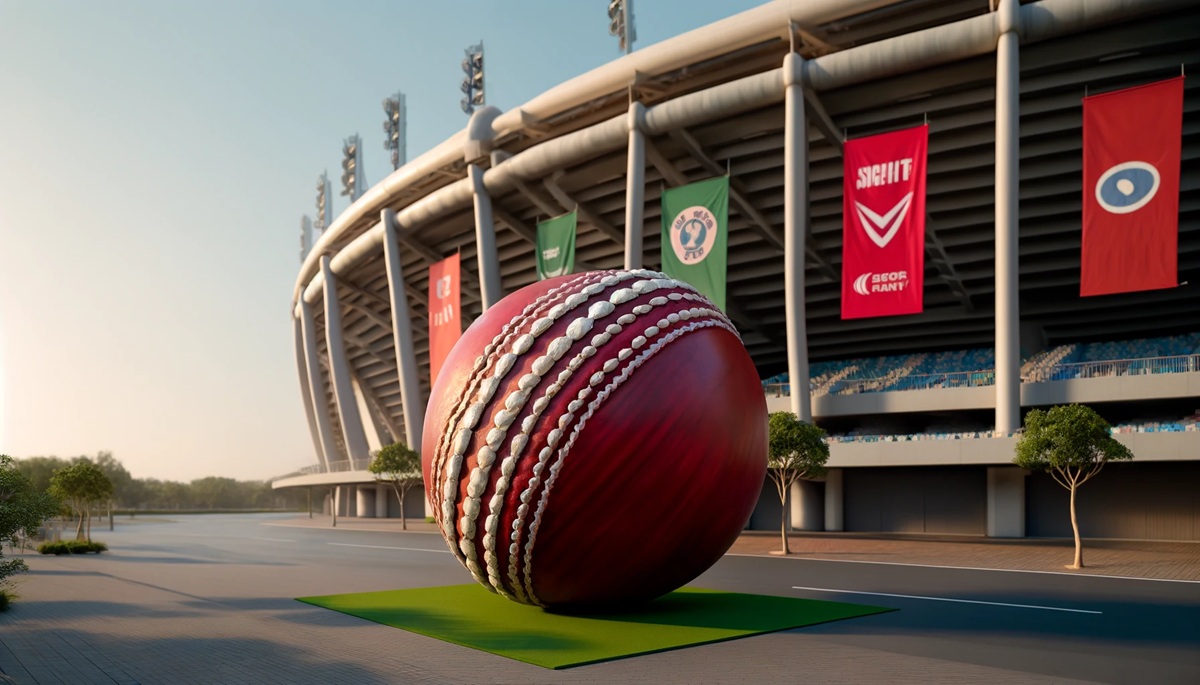
Define the Cricket Ball Form
Cricket Ball physical scope: one enlarged cricket ball defined by its leather-like field and raised stitched seam. Cricket Ball geometry: diameter, seam arc, stitch spacing, viewing orientation, and base contact. Cricket Ball identity: a deep red or approved ball color, paired seam rows, central stitch path, and spherical volume.
Cricket Ball presentation: a stadium, club, sponsor, or retail landmark whose seam faces the main approach. Cricket Ball visual treatment: smooth or lightly grained panels, contrasting stitching, controlled highlights, and approved graphics. Exclude from this cricket ball request: baseball or softball seam ownership, general sports history, functional play claims, and invented team work.
A cricket ball is organized around its equatorial stitched seam. Specify the two raised seam rows, the stitch spacing, the arc presented toward the viewer, and the relationship between the seam and the two leather-like hemispheres. A deep red direction can evoke the traditional visual language, while another approved match or campaign color can be used when clearly supplied. Controlled scuff-like variation, panel sheen, and stitch contrast can add depth without implying that the prop is playable equipment. Wicket shapes, crease lines, club colors, or a pitch setting may reinforce the cricket context, but the ball itself should remain identifiable when those surroundings are removed from view.
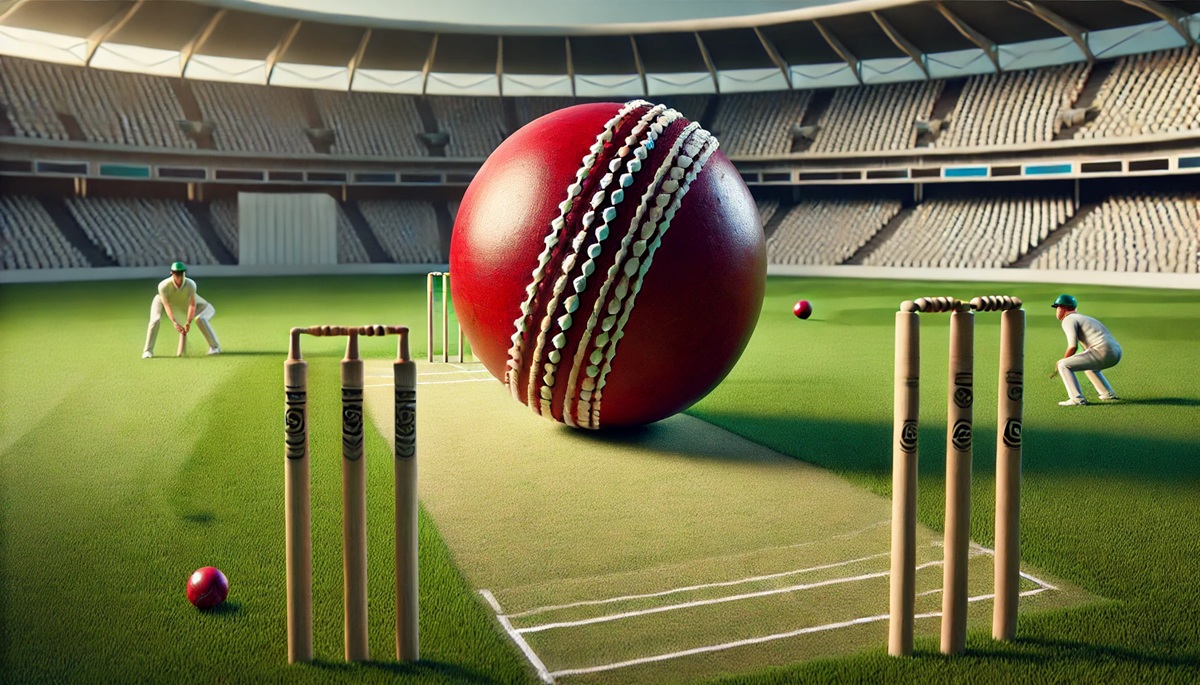
A side-on cricket study can distinguish the proud seam ridge from the smoother quarter surfaces. Useful reference details include parallel thread rows, pierced stitch holes, a narrow equator, hand-burnished-looking highlights, and wear-like tonal patches. Place the seam diagonally when a dynamic bowling presentation is desired, or vertically when symmetry matters more.
Control the Details That Identify the Cricket Ball
Cricket Ball planning variables: diameter, seam arc, stitch spacing, viewing orientation, and base contact; a deep red or approved ball color, paired seam rows, central stitch path, and spherical volume; smooth or lightly grained panels, contrasting stitching, controlled highlights, and approved graphics; and a stadium, club, sponsor, or retail landmark whose seam faces the main approach.
Cricket Ball form
Plan diameter, seam arc, stitch spacing, viewing orientation, and base contact. Show one enlarged cricket ball defined by its leather-like field and raised stitched seam. Keep the cricket ball outline readable from the primary view.
Cricket Ball recognition
Preserve a deep red or approved ball color, paired seam rows, central stitch path, and spherical volume. Rank the cricket ball details for the expected viewing distance. Mark any permitted simplification.
Cricket Ball surface
Use smooth or lightly grained panels, contrasting stitching, controlled highlights, and approved graphics. Supply authorized cricket ball artwork and mark each graphic location on the reference views.
Cricket Ball setting
Plan a stadium, club, sponsor, or retail landmark whose seam faces the main approach. Include the cricket ball footprint, approach, circulation, support preference, and fixed site limits.
Plan Scale, Viewing, and Placement
Cricket Ball scale issue: the seam must be enlarged enough to identify cricket while staying proportional to the ball. Resolve it through diameter, seam arc, stitch spacing, viewing orientation, and base contact. Relate those measurements to a stadium, club, sponsor, or retail landmark whose seam faces the main approach.
Cricket Ball settings: cricket club or tournament entrance; sponsor fan-zone activation; sporting-goods campaign or awards setting. Cricket Ball buyer inputs: ball reference and color; diameter; seam and stitch pattern; approved marks; pose and base; venue and schedule. State requested cricket ball movement, lighting, contact, or exterior exposure separately.
Compare Two Cricket Ball Directions
Cricket Ball concept one: Shows the spherical form, seam orientation, outdoor footprint, and viewing distance. Cricket Ball concept two: Provides a closer seam study and a sport-specific presentation context.
Compare diameter, seam arc, stitch spacing, viewing orientation, and base contact. Compare smooth or lightly grained panels, contrasting stitching, controlled highlights, and approved graphics. These cricket ball concepts support visual selection only. No cricket ball customer or commission is documented. Final cricket ball dimensions, construction, performance, transport, installation, and outcome remain unconfirmed.
Prepare the Cricket Ball Project Brief
Cricket Ball quote inputs should connect a deep red or approved ball color, paired seam rows, central stitch path, and spherical volume with diameter, seam arc, stitch spacing, viewing orientation, and base contact. Include each applicable item below.
- ball reference and color
- diameter
- seam and stitch pattern
- approved marks
- pose and base
- venue and schedule
- Physical subject: one enlarged cricket ball defined by its leather-like field and raised stitched seam
- Geometry: diameter, seam arc, stitch spacing, viewing orientation, and base contact
- Recognition cues: a deep red or approved ball color, paired seam rows, central stitch path, and spherical volume
- Surface direction: smooth or lightly grained panels, contrasting stitching, controlled highlights, and approved graphics
- Display direction: a stadium, club, sponsor, or retail landmark whose seam faces the main approach
- Scale issue: the seam must be enlarged enough to identify cricket while staying proportional to the ball
- Cricket Ball setting: cricket club or tournament entrance
- Cricket Ball setting: sponsor fan-zone activation
- Cricket Ball setting: sporting-goods campaign or awards setting
- Excluded scope: baseball or softball seam ownership, general sports history, functional play claims, and invented team work
- Requested contact, movement, lighting, or exterior exposure for the cricket ball
Request a Custom Quote
Send the cricket ball reference, ball reference and color, diameter, seam and stitch pattern, approved marks, pose and base, venue and schedule, destination, and required date. Also identify a stadium, club, sponsor, or retail landmark whose seam faces the main approach. WhiteClouds can review that defined cricket ball scope and prepare a custom quote. The concept images support visual planning only and are not evidence of a prior customer project.