
Planning a Custom Giant Clown Character
A giant clown character is defined by expression, face geometry, costume silhouette, pose, and the emotional tone requested for the setting. A cheerful carnival host, quiet theatrical figure, and unsettling haunted character require different references and should not be treated as one generic clown.
Plan a Giant Clown Character
Choose the expression before the costume details
Define the intended response in plain terms and support it with approved face references. A wide smile, fixed stare, raised brows, painted tear, or compressed mouth can change the entire figure. Avoid mixing cheerful and frightening cues unless the contrast is intentional.
Provide front and profile views of the head. Mark the makeup boundaries, nose shape, hair volume, hat, and collar because these large color and silhouette areas often carry recognition before smaller facial details become visible.
Lock the clown into one readable pose
Pose should reinforce the selected character tone and the available footprint.
Standing host
An upright figure can face an approach, gesture toward an entrance, or hold a separately defined original object.
Seated figure
A seated pose lowers the eye-line and expands the horizontal footprint through knees, shoes, and costume folds.
Leaning character
A forward or side lean adds energy but changes the occupied depth and the principal view.
Framed appearance
A booth, arch, wall, or scenic opening can hide part of the body when that relationship is shown in the approved layout.
Coordinate the head, hands, shoes, and wardrobe
State whether the design follows human proportions, classic clown exaggeration, or an original stylized system. Draw the relationship among head width, shoulder line, glove size, trouser volume, and shoe length before selecting the final height.
Supply approved colors, patterns, buttons, ruffles, suspenders, props, and accessories. Identify every visible side so pattern placement and costume details are not inferred from one front image.
Compare an upright host with a seated character
The standing concept uses a tall silhouette, strong shoe scale, and broad costume color blocks. The seated concept concentrates the body near the ground and makes the face, collar, hands, knees, and shoes the dominant front view.
They are concept images, not completed projects. A new character should use approved original references and should not copy a known clown or performer without documented permission.
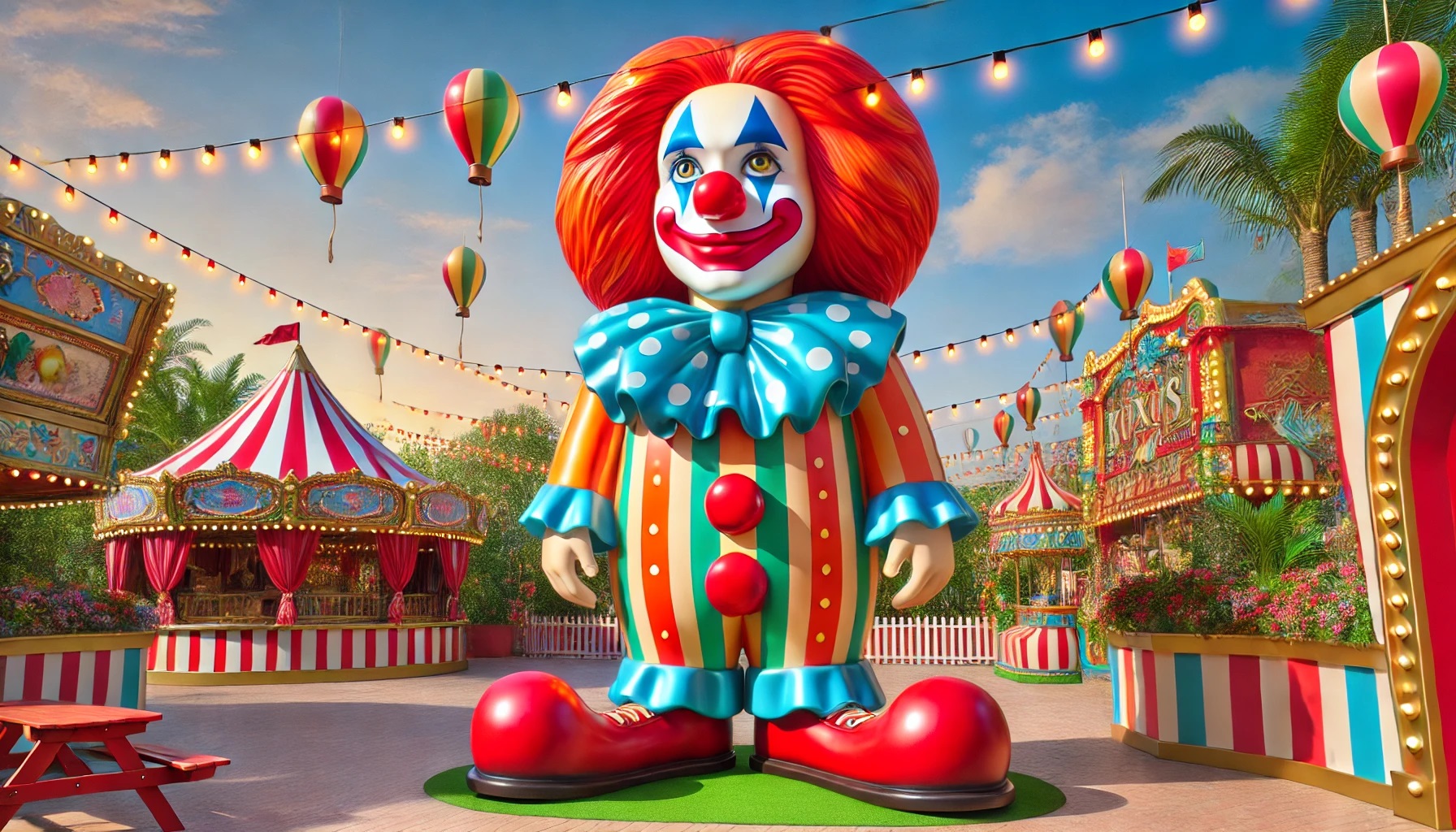
Prepare the face, costume, and pose as one design
The request should make the character's tone visible before production questions begin.
- Approved front, profile, and rear character references
- Cheerful, theatrical, elegant, eerie, or other selected tone
- Standing, seated, leaning, framed, or other fixed pose
- Overall dimensions and intended eye-line
- Makeup boundaries, nose, hair, hat, collar, gloves, shoes, and accessories
- Approved colors, patterns, logos, and rights documentation
- Primary approach, visible sides, and base preference
- Destination, site access, display conditions, and required date
Request pricing for a custom giant clown character
Send the approved character art, expression, pose, dimensions, costume references, visible sides, base and placement details, access information, destination, and schedule.