
Planning a Giant Creature Claw Prop
A giant claw prop begins with a specific anatomy: talons, a paw with exposed claws, a crab-like pincer, or an original creature appendage. Choosing that family first prevents a vague monster shape and determines the number of digits, joint direction, occupied depth, and support position.
Plan a Giant Claw Prop
Name the claw before enlarging it
Start with a clear choice among a talon, paw with exposed claws, pincer, or original fantasy appendage. Provide views that show the palm or wrist, every visible digit, and the joint sequence. A silhouette alone may not distinguish a bird talon from a reptile or monster form.
Mark which anatomical traits are essential and which can be stylized. If the claw belongs to protected artwork or a recognizable character, provide approved reference material and confirm the intended use before detailed matching.
Set the bend and contact of every projection
The pose should be resolved as a still physical composition.
Planted
A weight-bearing-looking stance spreads toes or pads against a floor or scenic surface and emphasizes the top view.
Reaching
Forward-projecting digits make the side profile and clearance in front of the wrist especially important.
Emerging
A wall, ground, crate, or scenic opening may hide the wrist, but the intersection must be shown in the supplied layout.
Pincer
Two opposing jaws need an approved opening angle and a fixed relationship to the compact wrist mass.
Draw the full space around curved claws
Measure the form to the furthest tip, not only to the palm. Note where a talon curls back toward the body, where a nail projects past a base, and where the public route passes closest to the shape.
Identify the primary viewing side and any face that may be hidden by scenery. A floor piece, wall emergence, or overhead-looking form has a different visible underside and contact area; describe the display condition without prescribing unsupported engineering.
Compare paw, talon, and pincer silhouettes
The concepts show three substantially different appendage families. The paw uses a broad planted mass and several long nails. The talon raises distinct toes from a narrower central form. The pincer relies on two opposing jaws rather than separate nails.
Select one family for a new request. Combining all three would create an unresolved creature rather than a clear fabrication brief.
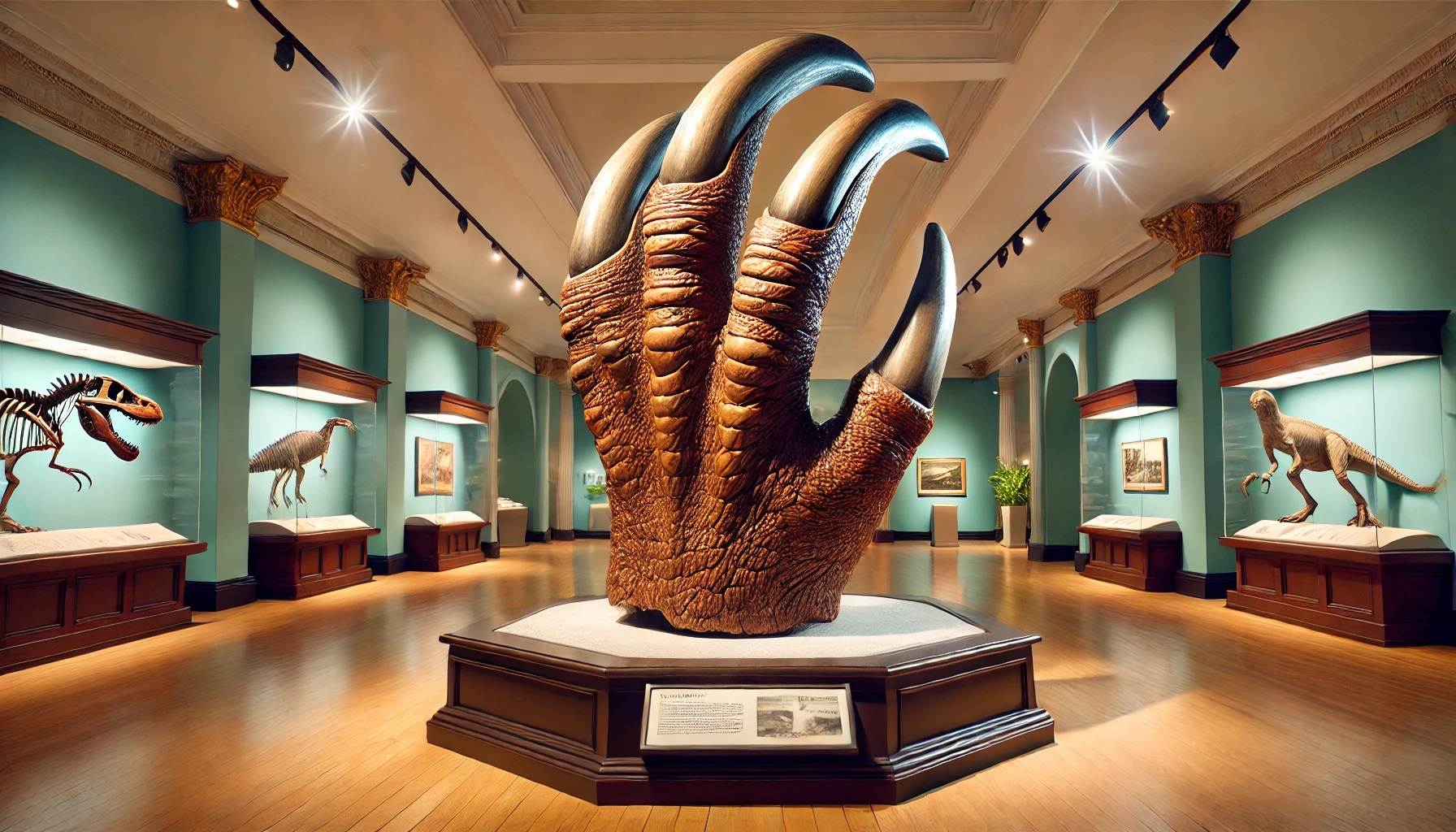

List the anatomy and setting together
The most useful input is a fixed appendage, not a general mood.
- Approved species, creature, or original-design references
- Talon, paw-claw, pincer, or other anatomy family
- Digit or jaw count and exact fixed pose
- Overall height, width, depth, and tip-to-tip envelope
- Palm, wrist, pad, scale, fur, shell, or original surface direction
- Principal and secondary viewing sides
- Floor, wall, scenic-opening, or overhead-looking condition
- Destination, access route, display duration, and required date
Request pricing for a custom giant claw prop
Send the anatomy reference, digit count, fixed pose, dimensions, viewing sides, surface direction, display condition, clearances, destination, and schedule.