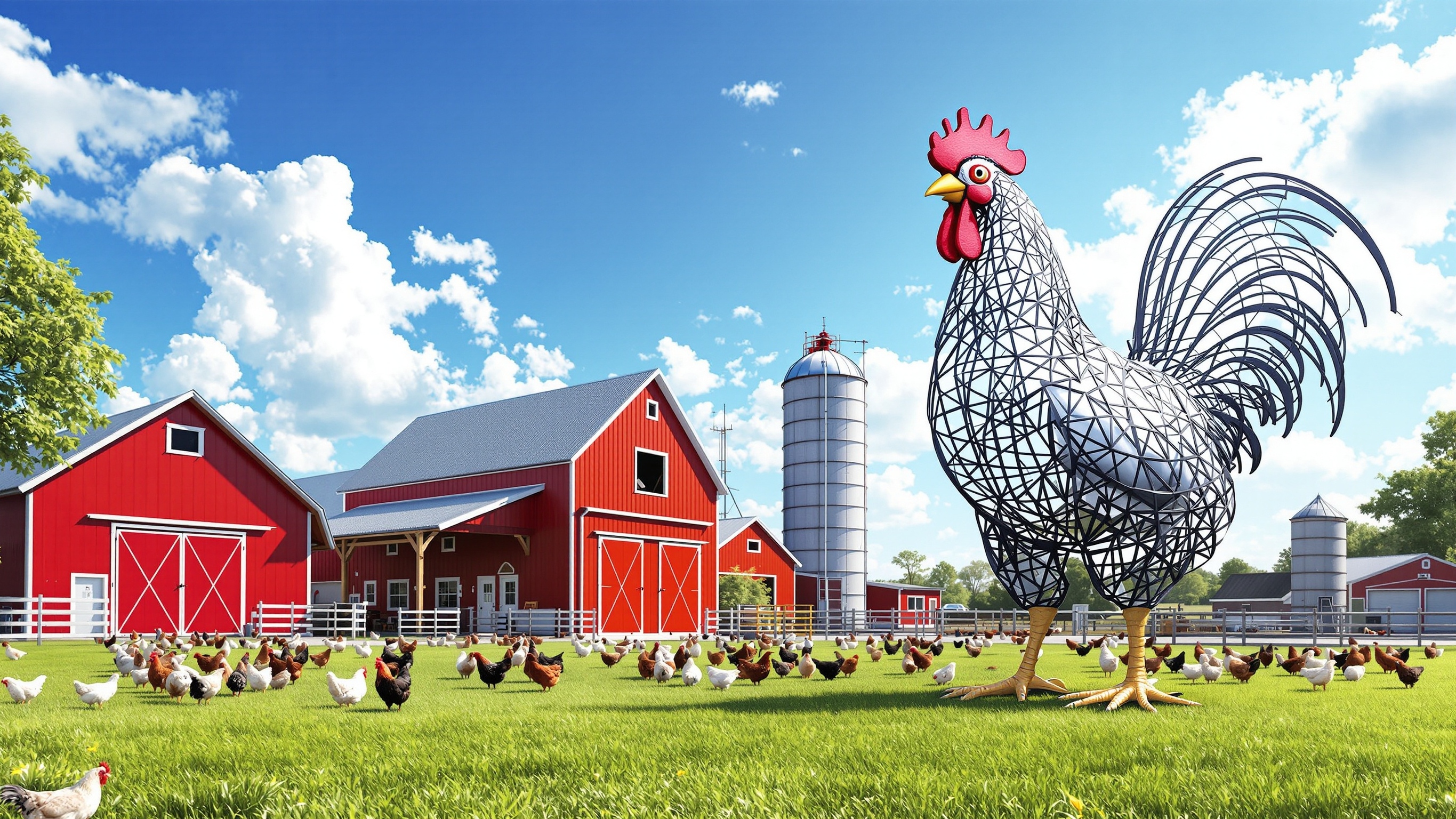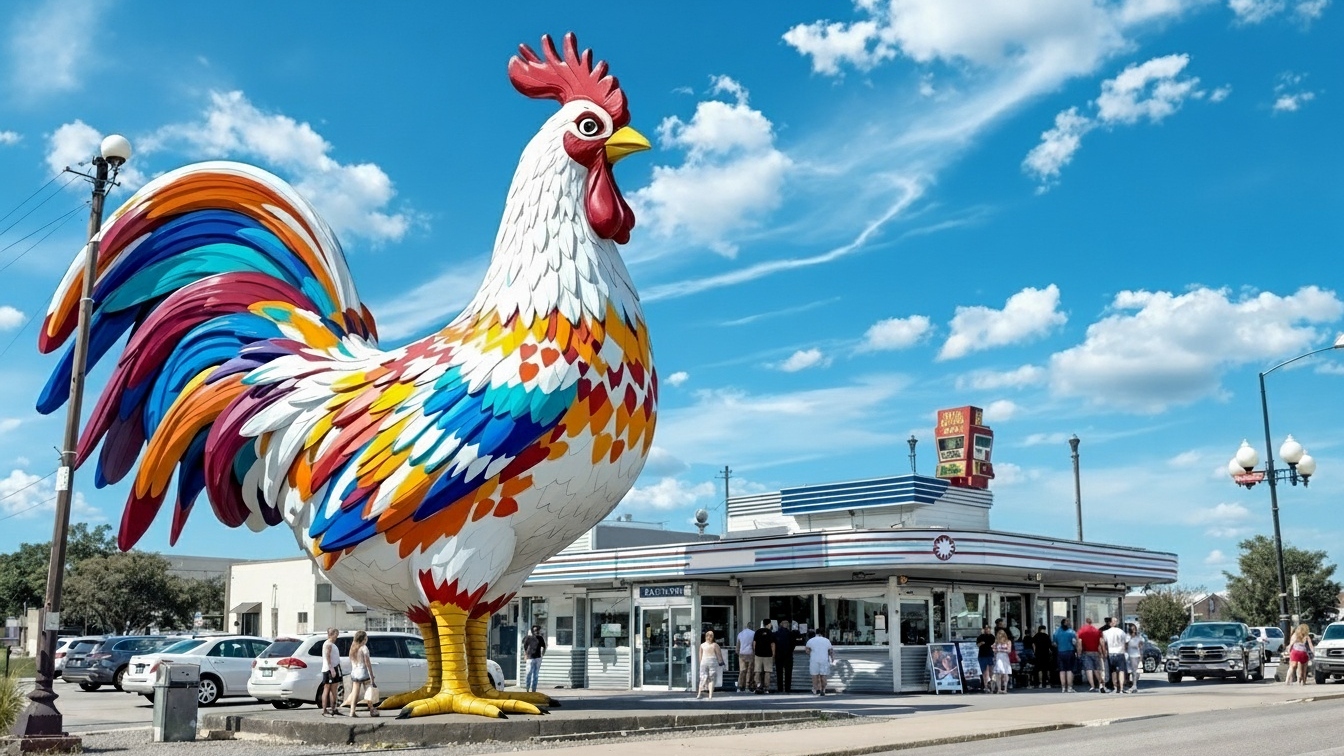
Giant Chicken Statue
We Build Custom Giant Chicken Statues
The Giant Chicken Statue: A Colossal Celebration of Farmyard Charm
From highways and small-town diners to agricultural fairs and quirky roadside stops, oversized statues have become a beloved part of Americana. Among these whimsical landmarks, few are as instantly charming—or amusing—as the Giant Chicken Statue. Towering high above its surroundings, this monumental tribute to one of the world’s most familiar barnyard animals is equal parts humor, nostalgia, and cultural pride. The chicken, often overlooked in favor of more majestic animals, becomes extraordinary when magnified into colossal form. A giant chicken statue is not just a quirky novelty—it’s a bold artistic statement that blends humor, rural tradition, and community identity into one unforgettable landmark.

Why the Chicken?
Chickens have been a part of human history for thousands of years. Domesticated in Southeast Asia more than 7,000 years ago, they’ve provided food, companionship, and cultural symbolism across continents. Chickens appear in folklore, religion, and even as national symbols. In China, the rooster is one of the twelve zodiac animals, representing honesty and diligence. In Christianity, the crowing chicken is a reminder of vigilance and redemption. Yet beyond symbolism, the chicken is a universal animal. Found in nearly every country and culture, it represents the ordinary and familiar. A giant chicken statue takes this everyday bird and elevates it—literally—into something extraordinary, reminding us that even the most common creatures can inspire awe and delight when celebrated in monumental form.
Famous Giant Chickens Around the World
Giant chicken statues are surprisingly widespread. In the United States, they’re often spotted outside fried chicken restaurants, diners, and poultry farms. These fiberglass or metal figures attract road-trippers eager for a photo op, embodying the spirit of roadside Americana.
One of the most famous examples is the Big Chicken in Marietta, Georgia. Originally constructed in 1963, this 56-foot-tall bird is perched above a KFC restaurant, complete with rolling eyes and a beak that opens and closes. It has become such a beloved landmark that when the structure needed repairs in the 1990s, locals rallied to ensure it was preserved. Today, it is not just a restaurant sign but a cultural icon, even serving as a point of reference in driving directions. Internationally, giant chicken statues can be found in Brazil, the Philippines, and Portugal, often tied to cultural festivals or local poultry industries. Each one reflects the unique traditions of its community while sharing the universal appeal of the bird itself.
The Chicken as an Artistic Subject
Artistically, the chicken is both challenging and rewarding. Its rounded body, detailed plumage, and expressive features make it an engaging subject for sculpture. A giant chicken statue must exaggerate these features while maintaining recognizability. The comb, wattle, and tail feathers often become focal points, sculpted with bold lines and vivid colors to stand out from a distance. Artists may choose hyper-realism, capturing lifelike textures and proportions, or they may lean into whimsy, creating stylized, cartoon-like chickens that emphasize humor. Either way, the result is visually striking. Unlike solemn monuments, a giant chicken statue invites joy and laughter, proving that art can be both meaningful and playful.
Roadside Americana and Tourism
Giant animal statues are a staple of roadside America. They transform long drives into adventures, offering unexpected moments of delight. A giant chicken statue fits seamlessly into this tradition. Travelers can’t resist pulling over for a quick photo, and families often make these stops part of their vacation memories.
For local businesses, the statues are marketing gold. A diner with a 25-foot chicken out front is far more likely to attract attention than one with a simple sign. Souvenir shops spring up around such landmarks, selling everything from chicken-shaped mugs to postcards. Entire festivals may even be organized around the statue, turning it into a cultural hub. Social media has only amplified this effect. Photos of giant chickens frequently go viral, spreading the fame of the statue far beyond the town or highway where it stands.
The Emotional Impact of a Giant Chicken
Encountering a giant chicken statue is a surreal experience. At first, there’s laughter—the absurdity of seeing such a familiar bird magnified to monumental proportions is inherently humorous. But then comes admiration, as visitors appreciate the artistry and engineering behind the structure. For those with rural roots, the statue may spark nostalgia for farm life and early mornings filled with the sounds of crowing. For children, it’s a moment of wonder, blending the worlds of imagination and reality. Ultimately, the emotional impact is a mix of joy, humor, and reflection on the role of ordinary creatures in our lives.
How a Giant Chicken Statue Might Be Fabricated
Creating a 25-foot chicken statue is no small feat. It requires the combined talents of artists, engineers, and builders. Here’s how such a project might unfold:
Concept and Design
The process begins with sketches, digital renderings, and small-scale models. Artists decide whether the chicken will be standing proudly, mid-strut, or perhaps perched on a pedestal. Every feature—from the comb to the feathers—must be carefully proportioned so it looks natural when enlarged.
Structural Framework
A steel framework serves as the skeleton of the statue. This internal structure supports the outer shell and ensures the bird can withstand wind, rain, and even snow. Engineers carefully calculate weight distribution, especially if the chicken has outstretched wings or a large tail.
Outer Shell
The body of the statue can be crafted from materials such as fiberglass, bronze, or stainless steel. Fiberglass is lightweight and cost-effective, making it a popular choice for roadside attractions. Bronze lends a sense of permanence and gravitas, while stainless steel offers a sleek, modern look.
Feather Detailing
The chicken’s feathers are one of its most distinctive features. Sculptors may create individual feather molds or carve patterns directly into the panels. To capture realism, layers of color and texture are added, with particular attention to the iridescent sheen often seen in chickens’ plumage.
Painting and Finish
The comb and wattle require bold reds, while the body might be painted in whites, browns, or multi-colored patterns depending on the breed depicted. High-quality paints and UV-resistant coatings ensure the statue maintains its vibrancy over time.
Assembly and Installation
The statue is fabricated in sections—head, body, wings, and tail—then transported to the site. Cranes lift each piece into place, securing them to the steel framework and anchoring everything to a reinforced concrete base. Lighting systems may be added to highlight the chicken at night, making it a round-the-clock attraction.
The finished product is a stunning blend of humor, craftsmanship, and engineering.
Realism vs. Whimsy in Design
Should a giant chicken statue look lifelike or whimsical? Both approaches offer unique appeal.
- Realistic designs celebrate the natural beauty of chickens, highlighting their plumage, posture, and form with accuracy. These statues often feel majestic and dignified.
- Whimsical designs exaggerate features, leaning into cartoonish styles that emphasize humor. These statues are approachable, family-friendly, and instantly memorable.
The choice often depends on the setting. A whimsical chicken might suit a roadside diner, while a realistic one could be placed in a cultural park or agricultural museum.
Community Identity and Cultural Pride
For many communities, a Giant Chicken Statue becomes more than an attraction—it becomes part of local identity. Agricultural towns may embrace it as a symbol of their heritage, hosting festivals and events around the statue. Restaurants may brand themselves with the chicken, and schools or sports teams may adopt it as a mascot. The statue is also a point of pride. What may start as a quirky roadside novelty can quickly evolve into a cherished landmark, drawing not just tourists but also locals who see it as a reflection of their community’s spirit.
The Future of Giant Chicken Statues
As technology advances, giant chicken statues may incorporate new innovations. Motion sensors could trigger recorded clucks or crowing as visitors approach. Augmented reality apps might allow visitors to see animated feathers or digital chicks surrounding the statue. LED lighting could illuminate the bird in changing colors at night, turning it into a spectacle after dark. Sustainability is also a growing focus. Future statues may be crafted from recycled materials or designed with solar-powered lighting, aligning with environmental values. These additions ensure the statue remains relevant and impactful for generations to come.
Why We Love Giant Animal Statues
Giant animal statues capture our imagination because they transform the ordinary into the extraordinary. They remind us that art doesn’t always have to be solemn—it can be playful, humorous, and accessible. Chickens, in particular, embody a universal familiarity. Everyone knows them, and seeing them magnified to colossal size is both funny and awe-inspiring. The Giant Chicken Statue taps into this tradition perfectly. It delights travelers, strengthens community pride, and proves that even the humblest animals can inspire monumental tributes.
Conclusion: Clucking Into the Spotlight
The Giant Chicken Statue is more than a roadside oddity—it is a cultural icon, an artistic achievement, and a joyful celebration of farmyard life. Its towering presence inspires laughter, nostalgia, and admiration, proving that even the most ordinary creatures can be extraordinary when viewed through the lens of art. To stand beneath a giant chicken is to be reminded of the humor and wonder in everyday life. It’s a chance to celebrate resilience, tradition, and community spirit—all embodied in a bird we often take for granted.
So the next time you encounter a colossal chicken along the roadside or in a town square, don’t just laugh—take a moment to admire the craftsmanship, snap a photo, and join in the joy of a monument that turns the ordinary into the unforgettable.