
Planning a Giant Chainsaw Prop
Giant Chainsaw Prop: one oversized static chainsaw prop with a supplied guide-bar, chain pattern, housing, handles, and guard profile. Recognition depends on the long guide bar, repeated chain-tooth rhythm, drive housing, front and rear handles, hand guard, vents, and selected control details. The central scale question is that the thin guide bar and repeated chain details must enlarge enough to read without overwhelming the motor-housing silhouette. The images are chainsaw design concepts rather than photographs of completed WhiteClouds work.
Plan a Chainsaw Display
Define the Chainsaw Form
Chainsaw physical scope: one oversized static chainsaw prop with a supplied guide-bar, chain pattern, housing, handles, and guard profile. Its geometry includes overall length, guide-bar length and depth, housing volume, handle openings, guard angle, chain pitch, and support contact. Its defining visual cues are the long guide bar, repeated chain-tooth rhythm, drive housing, front and rear handles, hand guard, vents, and selected control details.
Chainsaw presentation: a nonoperating chainsaw replica staged horizontally, diagonally, or vertically with the bar and housing both readable. The visual treatment can use approved equipment colors, molded-panel cues, restrained metal-like bar treatment, and authorized graphics. Keep the chainsaw scope separate from a moving chain, cutting function, fuel or battery operation, working controls, forestry advice, hand-saw blades, circular-saw guards, and invented commissions.
Chainsaw identity depends on the relationship between the guide bar and the compact housing behind it. The reference should show which side carries the dominant graphics, where the front and rear handles sit, how the guard crosses the upper profile, and how much chain detail remains visible at the intended viewing distance. A diagonal pose can make both bar length and housing depth clear, while a strict side elevation is useful for artwork and proportion. Chain teeth are visual cues only; the display must not suggest that the enlarged object cuts, starts, rotates, or accepts power.
Chainsaw drawings need one continuous side elevation that connects the guide bar to the drive housing. Mark the bar tip, visible chain path, tooth rhythm, bumper or guard forms, front handle, rear grip, trigger area, starter-cover cues, vents, and any supplied cap or fastener details. Bar length should be measured from the housing rather than from the overall display edge. The body can be compact and rounded or more angular, but the chosen reference must control every panel break. A three-quarter view then establishes housing depth, handle openings, and how the front guard crosses the upper silhouette.
The chain is a repeated visual border, not a working mechanism. Decide how many teeth remain readable at the intended distance and whether the guide bar carries authorized lettering, a color field, or no graphic at all. A horizontal presentation resembles the familiar tool posture; a steep diagonal creates height but changes the floor footprint and support points; a vertical bar needs enough surrounding clearance to preserve the tip. Smoke, sawdust, logs, power cords, batteries, fuel components, and theatrical scenic elements are separate additions. None should appear in the quote scope unless the supplied composition specifically includes them.
Control the Details That Identify the Chainsaw
Chainsaw planning variables include overall length, guide-bar length and depth, housing volume, handle openings, guard angle, chain pitch, and support contact; the long guide bar, repeated chain-tooth rhythm, drive housing, front and rear handles, hand guard, vents, and selected control details; approved equipment colors, molded-panel cues, restrained metal-like bar treatment, and authorized graphics; and a nonoperating chainsaw replica staged horizontally, diagonally, or vertically with the bar and housing both readable.
Chainsaw form
For the chainsaw, set overall length, guide-bar length and depth, housing volume, handle openings, guard angle, chain pitch, and support contact. Show one oversized static chainsaw prop with a supplied guide-bar, chain pattern, housing, handles, and guard profile, and keep the complete outline readable from the primary approach.
Chainsaw recognition
Preserve the long guide bar, repeated chain-tooth rhythm, drive housing, front and rear handles, hand guard, vents, and selected control details. Rank the chainsaw cues for the expected viewing distance, and make every permitted simplification explicit.
Chainsaw surface
Develop approved equipment colors, molded-panel cues, restrained metal-like bar treatment, and authorized graphics. Place each requested chainsaw graphic on the reference views with usable artwork, orientation, and scale.
Chainsaw setting
Plan a nonoperating chainsaw replica staged horizontally, diagonally, or vertically with the bar and housing both readable. Record the footprint and visible sides for the chainsaw, then add circulation around the chainsaw, access limits, support preference, and fixed site constraints.
Plan Scale, Viewing, and Placement
Chainsaw scale issue: the thin guide bar and repeated chain details must enlarge enough to read without overwhelming the motor-housing silhouette. Resolve that relationship through overall length, guide-bar length and depth, housing volume, handle openings, guard angle, chain pitch, and support contact, then test the chainsaw against its principal view and available floor or site area.
Chainsaw settings may include tool or equipment campaign; haunted, theatrical, or scenic display; trade-show, retail, or photo installation. Useful buyer inputs include chainsaw reference and viewing side; overall and guide-bar dimensions; housing and handle details; chain-detail level; approved colors and marks; site and deadline. State any requested chainsaw contact, movement, lighting, or exterior exposure as a separate requirement.
Compare Chainsaw Directions
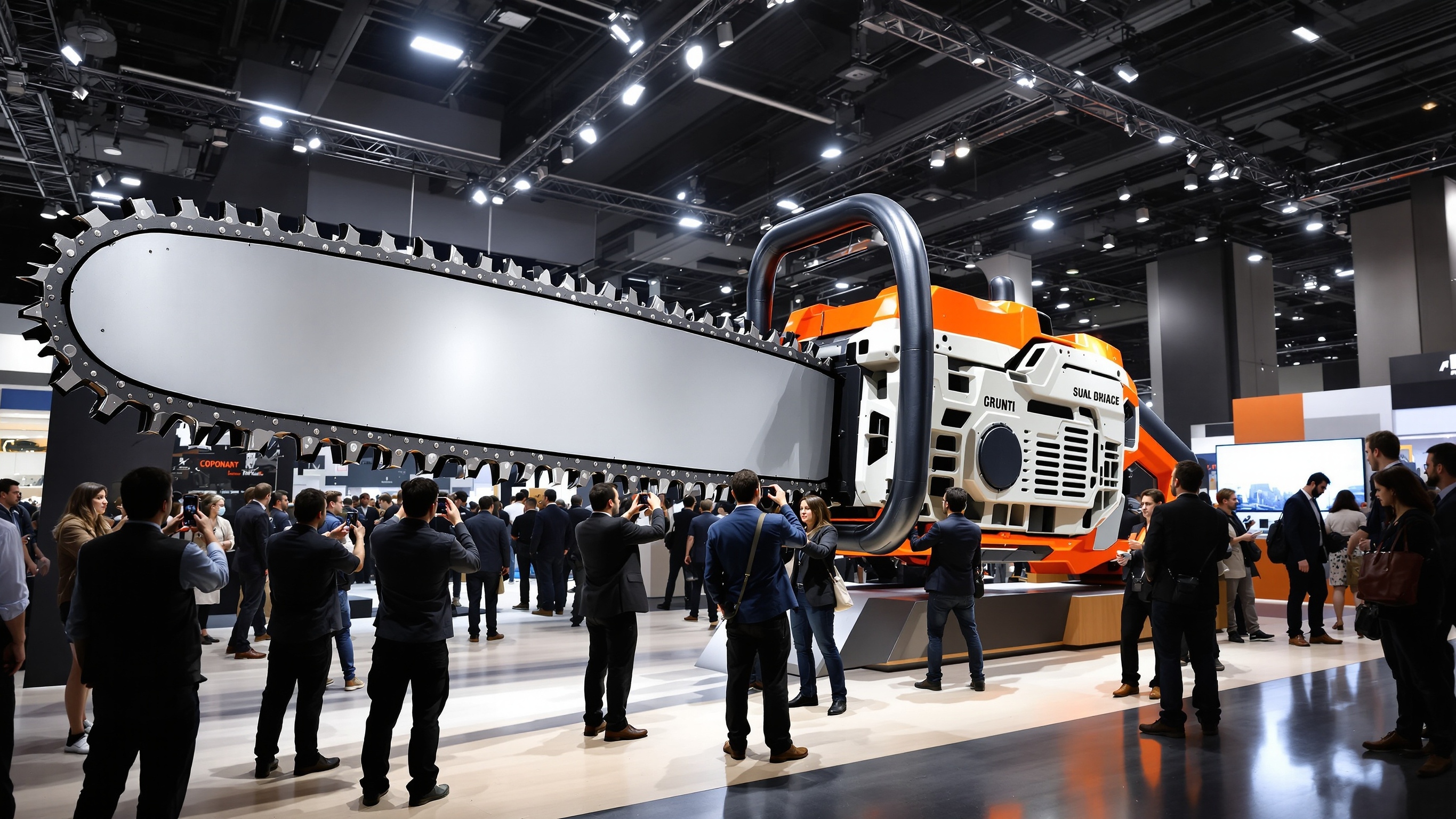
Chainsaw reference 1: Shows the complete bar-and-housing silhouette in a scenic setting. Chainsaw reference 2: Provides a clear side view for bar, chain, guard, and housing comparison.
Compare the chainsaw concepts as visual directions. They do not identify a prior chainsaw customer or commission. Use the chainsaw views to compare overall length, guide-bar length and depth, housing volume, handle openings, guard angle, chain pitch, and support contact and approved equipment colors, molded-panel cues, restrained metal-like bar treatment, and authorized graphics. The images do not establish final chainsaw dimensions, construction, performance, transport, installation, or outcome.
Prepare the Chainsaw Project Brief
Chainsaw quote inputs should connect the defining chainsaw cues with its intended dimensions and display setting. Include each applicable chainsaw item below.
- chainsaw reference and viewing side
- overall and guide-bar dimensions
- housing and handle details
- chain-detail level
- approved colors and marks
- site and deadline
- Physical subject: one oversized static chainsaw prop with a supplied guide-bar, chain pattern, housing, handles, and guard profile
- Geometry: overall length, guide-bar length and depth, housing volume, handle openings, guard angle, chain pitch, and support contact
- Recognition cues: the long guide bar, repeated chain-tooth rhythm, drive housing, front and rear handles, hand guard, vents, and selected control details
- Surface direction: approved equipment colors, molded-panel cues, restrained metal-like bar treatment, and authorized graphics
- Display direction: a nonoperating chainsaw replica staged horizontally, diagonally, or vertically with the bar and housing both readable
- Scale issue: the thin guide bar and repeated chain details must enlarge enough to read without overwhelming the motor-housing silhouette
- Chainsaw setting: tool or equipment campaign
- Chainsaw setting: haunted, theatrical, or scenic display
- Chainsaw setting: trade-show, retail, or photo installation
- Excluded scope: a moving chain, cutting function, fuel or battery operation, working controls, forestry advice, hand-saw blades, circular-saw guards, and invented commissions
- Requested chainsaw contact, movement, lighting, or exterior exposure
Request a Custom Quote
Send the chainsaw reference, chainsaw reference and viewing side, overall and guide-bar dimensions, housing and handle details, chain-detail level, approved colors and marks, site and deadline, destination, and required date. Also describe a nonoperating chainsaw replica staged horizontally, diagonally, or vertically with the bar and housing both readable. WhiteClouds can review the defined scope and prepare a custom quote. The concept images support visual planning and do not depict a completed WhiteClouds project.