
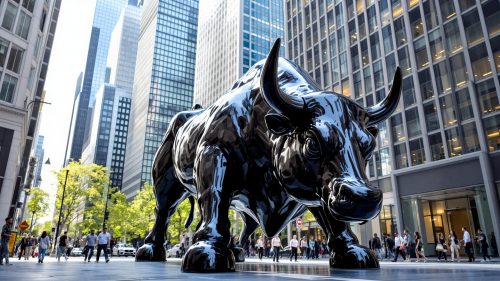
Giant Bull Statue: Power, Symbolism, and the Art of Monumental Design
The bull has always stood as a global symbol of strength, vitality, and determination. From ancient cave paintings to Wall Street’s famous Charging Bull, this powerful animal has represented everything from prosperity to rebellion. Now imagine that same force captured in the form of a giant bull statue towering over passersby, inspiring awe while cementing itself as a landmark. Giant bull statues are more than just oversized works of art—they are cultural icons, community anchors, and feats of fabrication that blend tradition with modern creativity. In this article, we’ll explore the origins and symbolism of the bull in art, famous bull statues around the world, the cultural appeal of going giant, and even how these colossal figures are fabricated. Along the way, we’ll uncover why the giant bull statue has become such an unforgettable part of modern roadside attractions and urban design.
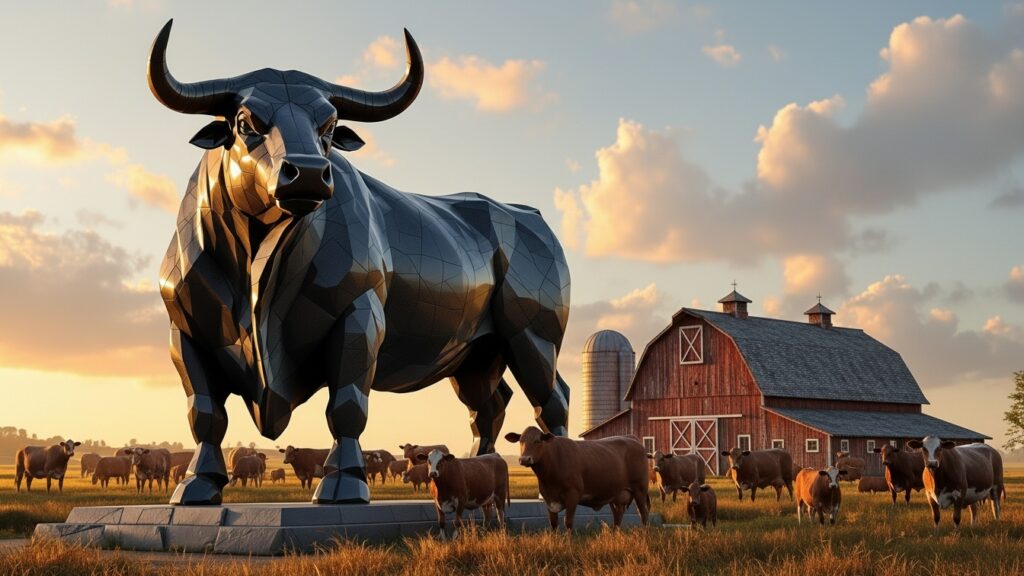
The Bull Through History: From Sacred Beast to Modern Icon
Bulls have played pivotal roles in mythology and human storytelling for millennia. In Mesopotamian cultures, the bull was revered as a sacred beast symbolizing fertility and protection. Ancient Greeks gave us the Minotaur—half man, half bull—a creature embodying both raw power and mystery. Meanwhile, in Hindu culture, the bull Nandi is the devoted mount of Lord Shiva, worshiped as a guardian figure.
Fast forward to Spain, and bulls dominate cultural life in the form of bullfighting and the running of the bulls in Pamplona. In financial districts worldwide, the bull represents upward market momentum, optimism, and wealth creation. Whether seen as sacred, fearsome, or prosperous, the bull remains one of humanity’s most consistent symbols of resilience and force. A giant bull statue taps into this collective imagery. Its oversized form becomes a stage where all these cultural associations converge—myth, money, tradition, and raw natural power.
Why Make It Giant? The Allure of Monumental Bulls
Human beings have always built big. From the pyramids of Egypt to the Statue of Liberty, monumental structures serve as focal points for identity, tourism, and pride. With animals in particular, scale adds drama. A bull rendered twice or three times life-size immediately amplifies its presence, turning an ordinary statue into an unforgettable experience.
Tourists love “larger-than-life” attractions because they make perfect photo opportunities and social media content. A giant bull statue doesn’t just decorate a plaza or park—it dominates it. Visitors are drawn in, positioning themselves at the bull’s feet for perspective shots, or capturing close-ups of the beast’s steely eyes and rippling muscles. For towns, cities, and businesses, such statues are instant branding tools. Moreover, scale unlocks creativity. A bull sculpted at twenty feet tall isn’t bound by anatomical limits—it can take on stylized, heroic proportions that accentuate muscle groups, horns, or even abstract artistic features. The size becomes part of the storytelling.
Famous Giant Bull Statues Around the World
The Charging Bull of Wall Street
Arguably the most famous bull statue in the world, New York City’s Charging Bull was installed in 1989 as a guerrilla art piece. Created by artist Arturo Di Modica, it quickly became an unofficial icon of Wall Street, symbolizing prosperity and strength in financial markets. Though not toweringly tall, its massive, aggressive stance feels monumental, proving that size isn’t everything—attitude and pose matter too.
The Raging Bull of Birmingham
In England, Birmingham’s Bullring Shopping Centre is home to a massive bronze bull statue that greets millions of visitors annually. Known as “The Guardian,” this 12-foot-tall beast is a modern retail mascot, blending tradition (bull markets, strength) with consumer culture.
Spain’s Osborne Bulls
All across Spain’s highways, giant black bull silhouettes stand on hillsides. Originally advertising billboards for Osborne Sherry, these 46-foot-tall figures became cultural icons, now protected as part of Spain’s national heritage. They are not anatomically detailed but instead stylized shadows, proving that simplicity at scale can be just as powerful as intricate realism.
Rural and Roadside Bulls
Across the American Midwest and Latin America, rural roadside bulls dot landscapes as mascots for farms, ranches, and restaurants. Some are made from fiberglass, others from welded scrap metal, and many serve as quirky tourist stops that embody small-town Americana.
Design Variations: Realism, Abstraction, and Whimsy
Not all giant bull statues are created equal. Some lean toward photorealistic detail, capturing the animal’s anatomy with veins, muscles, and textured hides. Others lean abstract, focusing on geometric patterns, sleek metallic finishes, or stylized forms that border on fantasy.
- Realistic Bulls: Hyper-detailed, muscular, and sometimes intimidating. These often lean toward classical sculpture styles, making the bull feel alive.
- Abstract Bulls: Reduced to bold shapes or smooth curves, sometimes in modern plazas or art galleries. They appeal to contemporary design sensibilities.
- Cartoonish Bulls: Found mostly in roadside America, often with friendly expressions, painted horns, or bright colors. These make bulls approachable for family attractions.
- Cultural Bulls: Inspired by mythology, often adorned with symbolic ornaments, jewelry, or integrated into temple and festival settings.
Each style serves a different purpose—whether to intimidate, inspire, or amuse.
The Fabrication of a Giant Bull Statue
Creating a giant bull statue is as much an engineering challenge as it is an artistic endeavor. Fabricators must balance weight, durability, and visual fidelity while keeping in mind transportation and installation logistics. Here’s how such a project might unfold:
Concept and Design
It begins with sketches and digital modeling. Artists collaborate with engineers to decide on the bull’s size, pose, and expression. CAD software allows designers to visualize proportions and test structural stability before fabrication begins. Will the bull be rearing on its hind legs? Charging forward? Grazing? Each pose affects balance and structural needs.
Internal Framework
Large statues require skeletons. For a giant bull, this framework is often made of steel rebar or welded tubular frames that act as the spine, legs, and core. The skeleton must be able to withstand external forces such as wind, rain, and accidental contact with visitors.
Body Sculpting
Once the skeleton is in place, materials like high-density foam, fiberglass, or clay are added in layers to form the bull’s body. CNC milling machines may carve rough shapes from foam blocks, which are then refined by sculptors. Artists pay close attention to musculature, horns, and facial details, since these are the focal points.
Surface Coating
To ensure durability, the outer layer is coated with fiberglass resin, cementitious coatings, or specialized polymers. For bronze-effect finishes, molds can be cast and coated to mimic real metal without the excessive weight and cost. Weatherproof paints, UV-resistant coatings, and sealants extend the statue’s lifespan outdoors.
Transportation and Installation
Giant statues are often fabricated in sections. The bull’s body, head, and legs might be made separately, then transported by flatbed trucks to the site for final assembly. Cranes and rigging systems are used to position and weld the parts together. The foundation must be carefully engineered to prevent tilting or collapse.
Finishing Touches
Artists add texture to the hide, polish horns, and apply patina effects. Some bulls even incorporate interactive elements like LED-lit eyes, seating platforms on their backs, or engraved plaques telling the story of their creation. The result is a work that blends artistry with structural ingenuity—half sculpture, half engineering marvel.
Symbolism in Modern Contexts
Beyond artistry, giant bull statues often serve as symbols tailored to their environments. In financial centers, they represent bullish markets. In rural towns, they symbolize agriculture, ranching, and community pride. For businesses, they act as attention-grabbing mascots that drive foot traffic. For festivals, they can be parade floats or temporary installations that channel energy and celebration. The universality of the bull as a symbol means that wherever you go, people understand it – strength, determination, and vitality. That cross-cultural recognition is part of why giant bull statues remain so effective.
Tourist Appeal: The Selfie Factor
No discussion of giant statues today is complete without acknowledging social media. A giant bull is irresistible as a backdrop for Instagram posts and TikTok videos. Travelers want that one-of-a-kind image standing beneath its horns or pretending to wrestle with its head. Entire tourism economies have sprung up around quirky roadside attractions, and giant bulls fit perfectly into this ecosystem. Communities that invest in a giant bull statue aren’t just buying a piece of art—they’re investing in a local economic engine powered by visitors, word of mouth, and digital exposure.
The Future of Giant Bull Statues: Innovation and Technology
As technology advances, so too does the art of giant statue creation. 3D printing is increasingly being explored for fabricating parts of sculptures at large scales, reducing material waste and allowing for incredible precision. Interactive features are also becoming common—motion sensors that trigger sound effects, augmented reality experiences where visitors can see animated bulls through their phones, or even kinetic statues with moving parts.
Imagine a bull whose head nods slowly, or whose nostrils puff out mist on the hour. Tomorrow’s giant bull statues may not just be static monuments but immersive experiences blending sculpture, architecture, and digital storytelling.
Conclusion: Why We’ll Always Love Giant Bulls
The giant bull statue embodies humanity’s fascination with power, scale, and symbolism. It is at once a nod to ancient traditions and a celebration of modern creativity. Whether realistic, abstract, or playful, these statues command attention and spark conversation. They anchor communities, attract tourists, and remind us of the timeless place the bull has held in human imagination.
From Wall Street to Spanish highways to roadside America, the giant bull continues to charge forward—this time not in pastures or arenas, but in plazas, city squares, and along highways as unforgettable works of art. And as fabrication techniques evolve, the bulls of tomorrow will be even more awe-inspiring, blending engineering marvels with cultural storytelling. So the next time you encounter a giant bull statue, pause for a moment. Stand at its feet, look up at its horns, and feel the centuries of history, myth, and artistry staring back at you. It’s not just a statue. It’s a living legend in monumental form.
Check out WhiteClouds’ 3D Statues for more information.
Contact us today to learn more about our 3D services and how we can help you achieve your goals.