
Planning a Giant Buffalo Prop
Giant Buffalo Prop: one oversized buffalo-form prop with a supplied pose, body mass, head angle, horns, hump, legs, and coat treatment. Recognition depends on the shoulder hump, heavy forequarters, lowered head, short curved horns, muzzle, beard, and transition to a narrower rear body. The central scale question is that the broad front body and lowered head need enough separation from the legs and base to read clearly at distance. The images are buffalo design concepts rather than photographs of completed WhiteClouds work.
Plan a Buffalo Display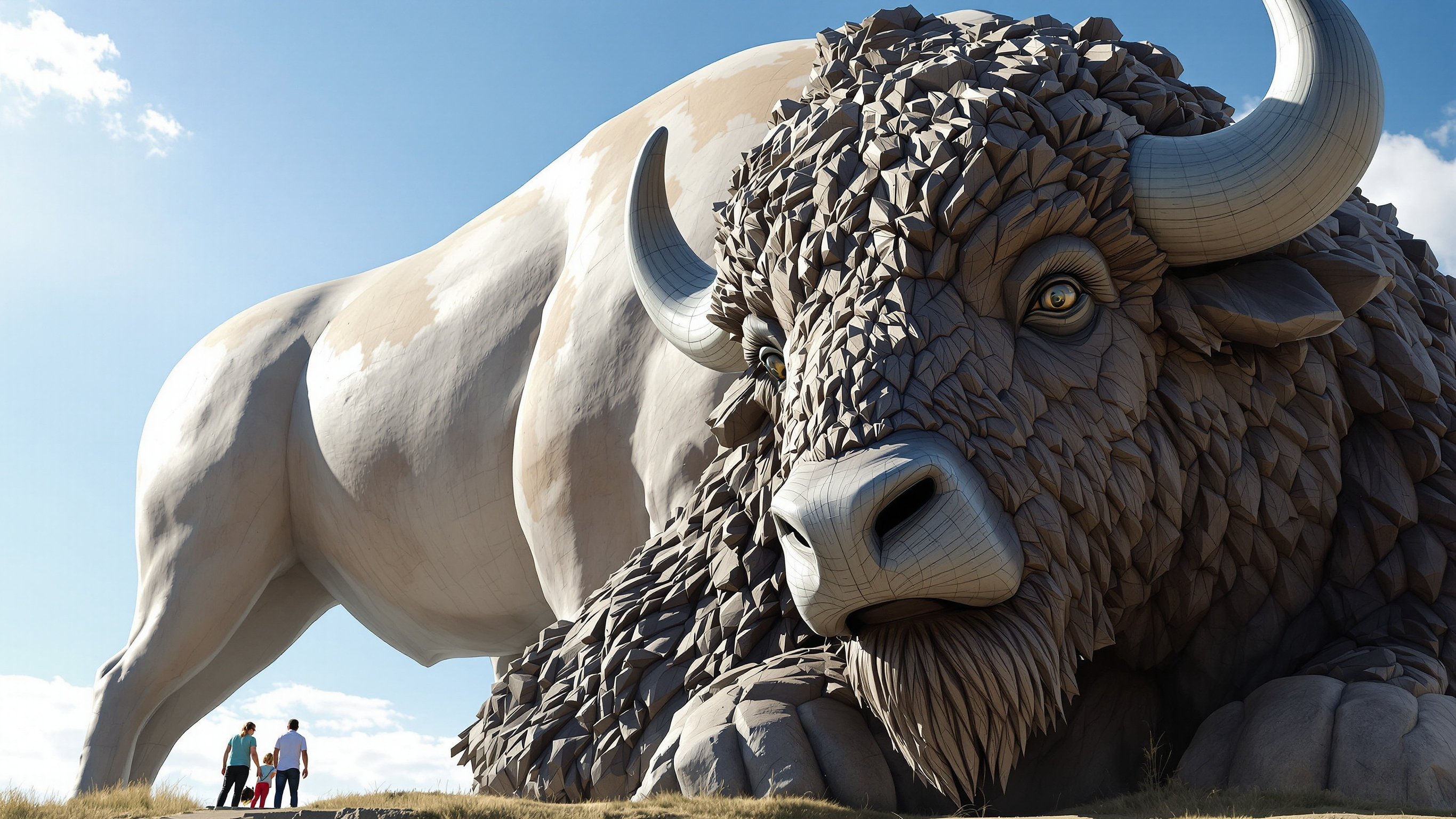
Define the Buffalo Form
Buffalo physical scope: one oversized buffalo-form prop with a supplied pose, body mass, head angle, horns, hump, legs, and coat treatment. Its geometry includes nose-to-tail length, shoulder height, horn spread, head pitch, leg stance, belly clearance, and base contact. Its defining visual cues are the shoulder hump, heavy forequarters, lowered head, short curved horns, muzzle, beard, and transition to a narrower rear body.
Buffalo presentation: a freestanding animal landmark designed around the primary approach, side silhouette, face visibility, and base footprint. The visual treatment can use an approved stylized or naturalistic coat direction with controlled hair-like masses and no unsupported material claim. Keep the buffalo scope separate from a documented WhiteClouds commission, named landmark attribution, concrete or other unverified materials, climbability, occupancy, and animal-history filler.
The buffalo form should be planned as a connected mass rather than a generic four-legged animal. Its broad shoulder hump, heavy forequarters, lowered head, short curved horns, muzzle, beard, and narrower rear body create the recognizable silhouette. Head pitch and horn spread affect both expression and required clearance. The belly line, leg spacing, hoof positions, and base relationship determine whether the body appears grounded from the main approach. A naturalistic direction may emphasize large coat masses and restrained color shifts; a stylized direction can simplify those areas while preserving the hump and head. Choose a walking, standing, or braced pose before dimensions are fixed. School, regional, tourism, or team colors may influence the treatment only when authorized artwork and an exact visual direction are supplied.
Control the Details That Identify the Buffalo
Buffalo planning variables include nose-to-tail length, shoulder height, horn spread, head pitch, leg stance, belly clearance, and base contact; the shoulder hump, heavy forequarters, lowered head, short curved horns, muzzle, beard, and transition to a narrower rear body; an approved stylized or naturalistic coat direction with controlled hair-like masses and no unsupported material claim; and a freestanding animal landmark designed around the primary approach, side silhouette, face visibility, and base footprint.
Buffalo form
For the buffalo, set nose-to-tail length, shoulder height, horn spread, head pitch, leg stance, belly clearance, and base contact. Show one oversized buffalo-form prop with a supplied pose, body mass, head angle, horns, hump, legs, and coat treatment, and keep the complete outline readable from the primary approach.
Buffalo recognition
Preserve the shoulder hump, heavy forequarters, lowered head, short curved horns, muzzle, beard, and transition to a narrower rear body. Rank the buffalo cues for the expected viewing distance, and make every permitted simplification explicit.
Buffalo surface
Develop an approved stylized or naturalistic coat direction with controlled hair-like masses and no unsupported material claim. Place each requested buffalo graphic on the reference views with usable artwork, orientation, and scale.
Buffalo setting
Plan a freestanding animal landmark designed around the primary approach, side silhouette, face visibility, and base footprint. Record the footprint and visible sides for the buffalo, then add circulation around the buffalo, access limits, support preference, and fixed site constraints.
Plan Scale, Viewing, and Placement
Buffalo scale issue: the broad front body and lowered head need enough separation from the legs and base to read clearly at distance. Resolve that relationship through nose-to-tail length, shoulder height, horn spread, head pitch, leg stance, belly clearance, and base contact, then test the buffalo against its principal view and available floor or site area.
Buffalo settings may include regional, school, or team-themed display; tourism or destination photo feature; exhibit, event, or scenic animal setting. Useful buyer inputs include buffalo reference and pose; overall height and length; horn and head orientation; stylization level; approved colors or marks; site access and schedule. State any requested buffalo contact, movement, lighting, or exterior exposure as a separate requirement.
Compare Buffalo Directions
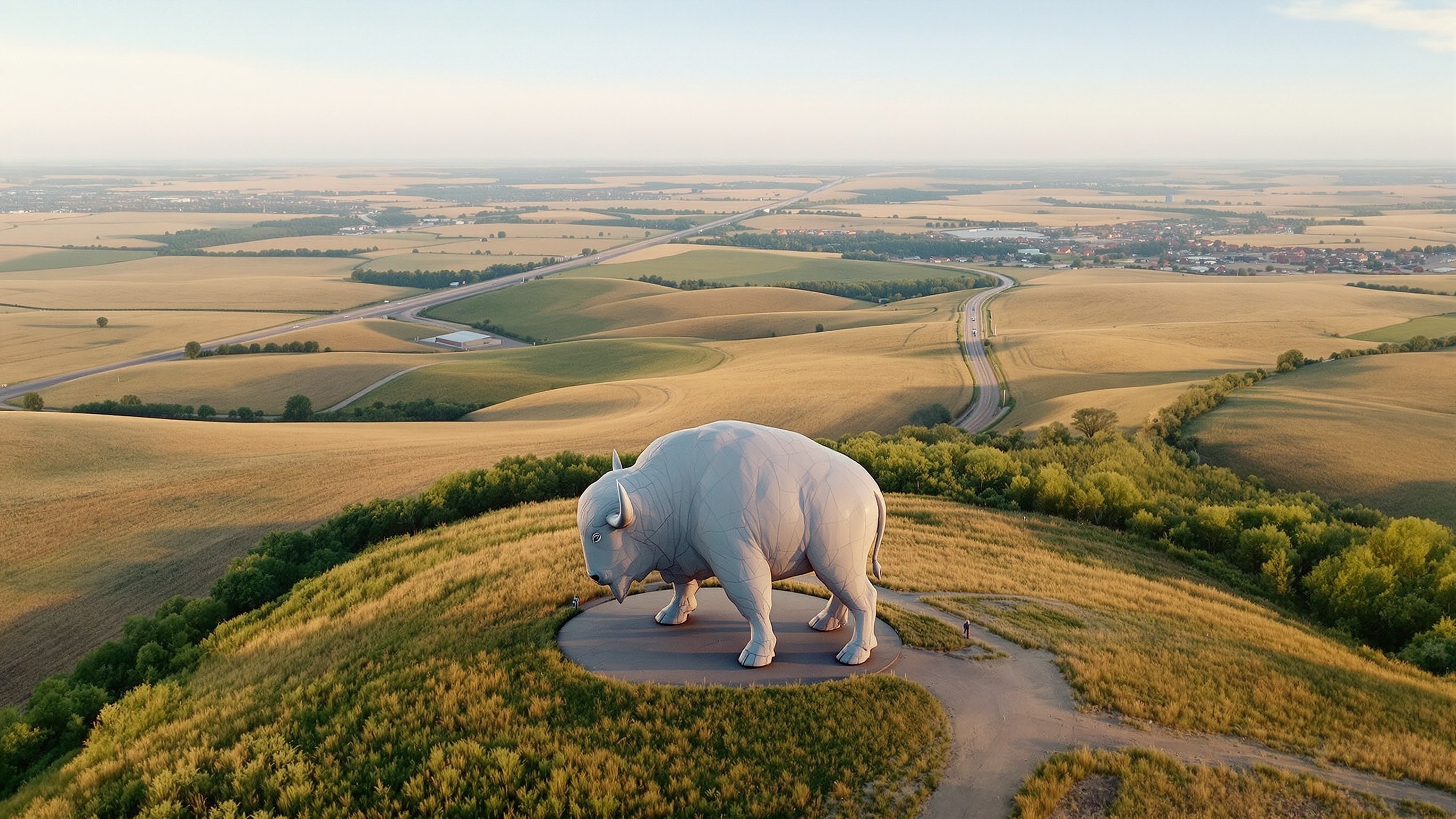
Buffalo reference 1: Provides a close recognition study without presenting the depicted landmark as a WhiteClouds project. Buffalo reference 2: Shows the complete animal silhouette, stance, footprint, and long-distance scale.
Compare the buffalo concepts as visual directions. They do not identify a prior buffalo customer or commission. Use the buffalo views to compare nose-to-tail length, shoulder height, horn spread, head pitch, leg stance, belly clearance, and base contact and an approved stylized or naturalistic coat direction with controlled hair-like masses and no unsupported material claim. The images do not establish final buffalo dimensions, construction, performance, transport, installation, or outcome.
Prepare the Buffalo Project Brief
Buffalo quote inputs should connect the defining buffalo cues with its intended dimensions and display setting. Include each applicable buffalo item below.
- buffalo reference and pose
- overall height and length
- horn and head orientation
- stylization level
- approved colors or marks
- site access and schedule
- Physical subject: one oversized buffalo-form prop with a supplied pose, body mass, head angle, horns, hump, legs, and coat treatment
- Geometry: nose-to-tail length, shoulder height, horn spread, head pitch, leg stance, belly clearance, and base contact
- Recognition cues: the shoulder hump, heavy forequarters, lowered head, short curved horns, muzzle, beard, and transition to a narrower rear body
- Surface direction: an approved stylized or naturalistic coat direction with controlled hair-like masses and no unsupported material claim
- Display direction: a freestanding animal landmark designed around the primary approach, side silhouette, face visibility, and base footprint
- Scale issue: the broad front body and lowered head need enough separation from the legs and base to read clearly at distance
- Buffalo setting: regional, school, or team-themed display
- Buffalo setting: tourism or destination photo feature
- Buffalo setting: exhibit, event, or scenic animal setting
- Excluded scope: a documented WhiteClouds commission, named landmark attribution, concrete or other unverified materials, climbability, occupancy, and animal-history filler
- Requested visitor contact, movement, lighting, or exterior exposure
Request a Custom Quote
Send the buffalo reference, buffalo reference and pose, overall height and length, horn and head orientation, stylization level, approved colors or marks, site access and schedule, destination, and required date. Also describe a freestanding animal landmark designed around the primary approach, side silhouette, face visibility, and base footprint. WhiteClouds can review the defined scope and prepare a custom quote. The concept images support visual planning and do not depict a completed WhiteClouds project.