
Planning a Giant Belt and Buckle Prop
Giant Belt and Buckle Prop: one oversized belt-and-buckle display organized around a supplied strap profile, buckle frame or plate, tongue, keeper, holes, and fixed presentation curve. Recognition depends on the long strap, buckle outline, center or plate relationship, tongue and keeper cues, hole spacing, edge treatment, and selected wrap or flat pose. The central scale question is that the buckle must remain dominant enough to identify the object while the long strap stays proportionate and does not become generic ribbon or signage. The images are belt and buckle design concepts rather than photographs of completed WhiteClouds work.
Plan a Belt and Buckle Display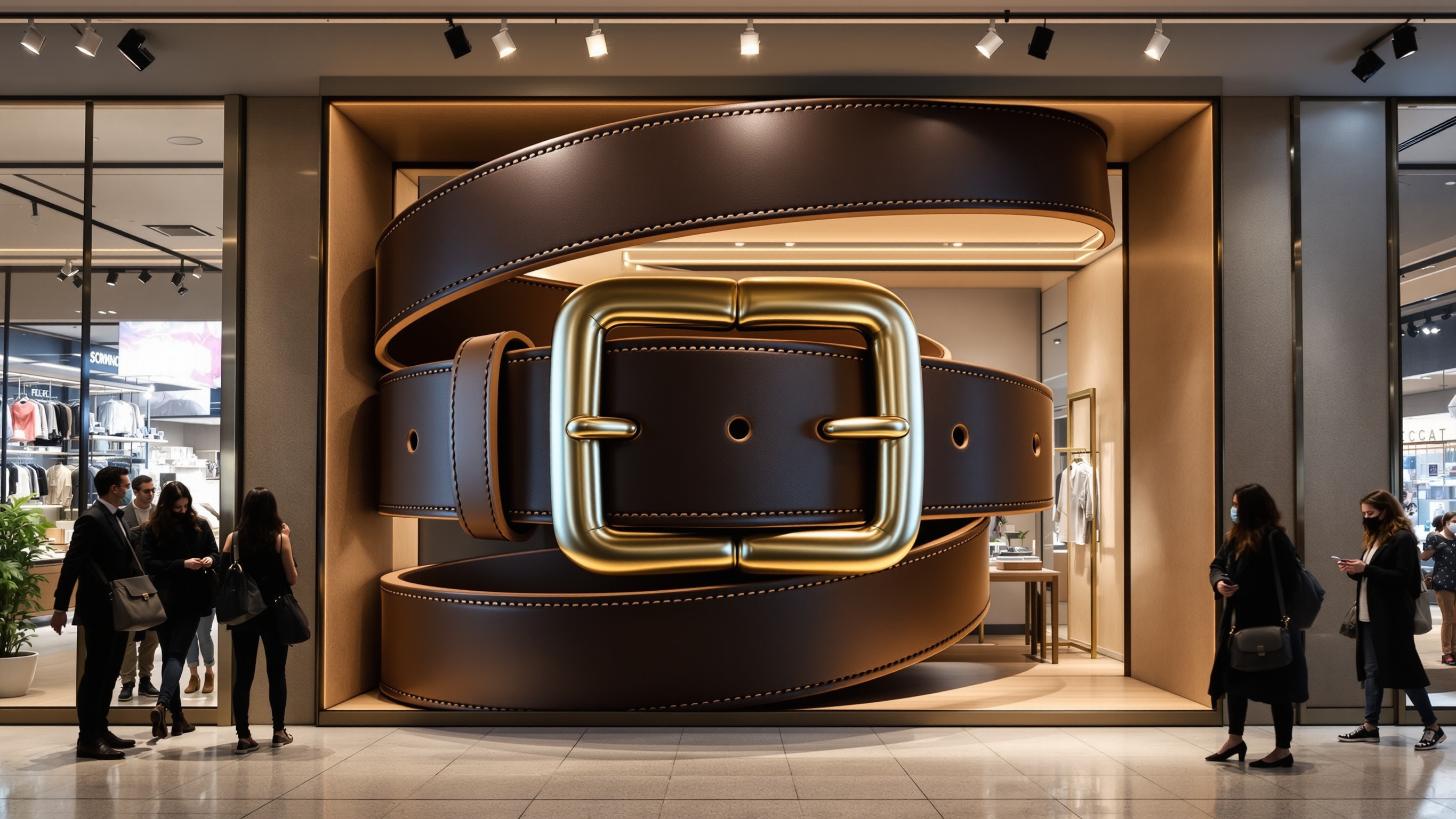
Define the Belt and Buckle Form
Belt and Buckle physical scope: one oversized belt-and-buckle display organized around a supplied strap profile, buckle frame or plate, tongue, keeper, holes, and fixed presentation curve. Its geometry includes overall length and width, strap thickness, buckle height and width, frame or plate depth, tongue position, hole interval, curve radius, and support footprint. Its defining visual cues are the long strap, buckle outline, center or plate relationship, tongue and keeper cues, hole spacing, edge treatment, and selected wrap or flat pose.
Belt and Buckle presentation: a static accessory replica presented flat, coiled, wrapped around a form, or standing as a defined buckle-led composition. The visual treatment can use approved leather-like strap color, stitching cues, metal-like buckle treatment, authorized emblems, and controlled edge contrast. Keep the belt and buckle scope separate from wearable function, working fastening, load-bearing use, clothing manufacture, unsupported championship or brand marks, and invented metal or leather construction.
Treat the belt and buckle as one connected composition. Identify whether the buckle is an open frame, plate, trophy-style face, roller form, or supplied custom shape. Then map strap width, taper, hole line, keeper, tongue, stitching-like edge cues, and the transition through the buckle. A flat front view supports artwork and proportion; a curved display needs a plan view and measured radius so the strap does not hide the buckle. Any emblem or inscription requires approved artwork and a declared viewing side.
Buckle choice changes the entire display. An open frame depends on the visible tongue and strap path; a plate buckle presents a broad artwork field; a trophy-style face may add a layered border and central emblem; a simple roller form emphasizes strap return and hardware spacing. Record which details project from the face and which can remain graphic. If the belt curves through space, show the inside and outside radii as well as the point where each end leaves the buckle. The scenic support should hold that fixed curve without being mistaken for a mannequin, wearable belt, working closure, or structural restraint.
Control the Details That Identify the Belt and Buckle
Belt and Buckle planning variables include overall length and width, strap thickness, buckle height and width, frame or plate depth, tongue position, hole interval, curve radius, and support footprint; the long strap, buckle outline, center or plate relationship, tongue and keeper cues, hole spacing, edge treatment, and selected wrap or flat pose; approved leather-like strap color, stitching cues, metal-like buckle treatment, authorized emblems, and controlled edge contrast; and a static accessory replica presented flat, coiled, wrapped around a form, or standing as a defined buckle-led composition.
Belt and Buckle form
For the belt and buckle, set overall length and width, strap thickness, buckle height and width, frame or plate depth, tongue position, hole interval, curve radius, and support footprint. Show one oversized belt-and-buckle display organized around a supplied strap profile, buckle frame or plate, tongue, keeper, holes, and fixed presentation curve, and keep the complete outline readable from the primary approach.
Belt and Buckle recognition
Preserve the long strap, buckle outline, center or plate relationship, tongue and keeper cues, hole spacing, edge treatment, and selected wrap or flat pose. Rank the belt and buckle cues for the expected viewing distance, and make every permitted simplification explicit.
Belt and Buckle surface
Develop approved leather-like strap color, stitching cues, metal-like buckle treatment, authorized emblems, and controlled edge contrast. Place each requested belt and buckle graphic on the reference views with usable artwork, orientation, and scale.
Belt and Buckle setting
Plan a static accessory replica presented flat, coiled, wrapped around a form, or standing as a defined buckle-led composition. Record the footprint and visible sides for the belt and buckle, then add circulation around the belt and buckle, access limits, support preference, and fixed site constraints.
Plan Scale, Viewing, and Placement
Belt and Buckle scale issue: the buckle must remain dominant enough to identify the object while the long strap stays proportionate and does not become generic ribbon or signage. Resolve that relationship through overall length and width, strap thickness, buckle height and width, frame or plate depth, tongue position, hole interval, curve radius, and support footprint, then test the belt and buckle against its principal view and available floor or site area.
Belt and Buckle settings may include fashion or retail display; western, award, or themed setting; trade-show, stage, exhibit, or photo installation. Useful buyer inputs include belt and buckle reference; overall strap and buckle dimensions; buckle type and artwork; flat, curved, or wrapped pose; approved colors and details; venue and date. State any requested belt and buckle contact, movement, lighting, or exterior exposure as a separate requirement.
Compare Belt and Buckle Directions
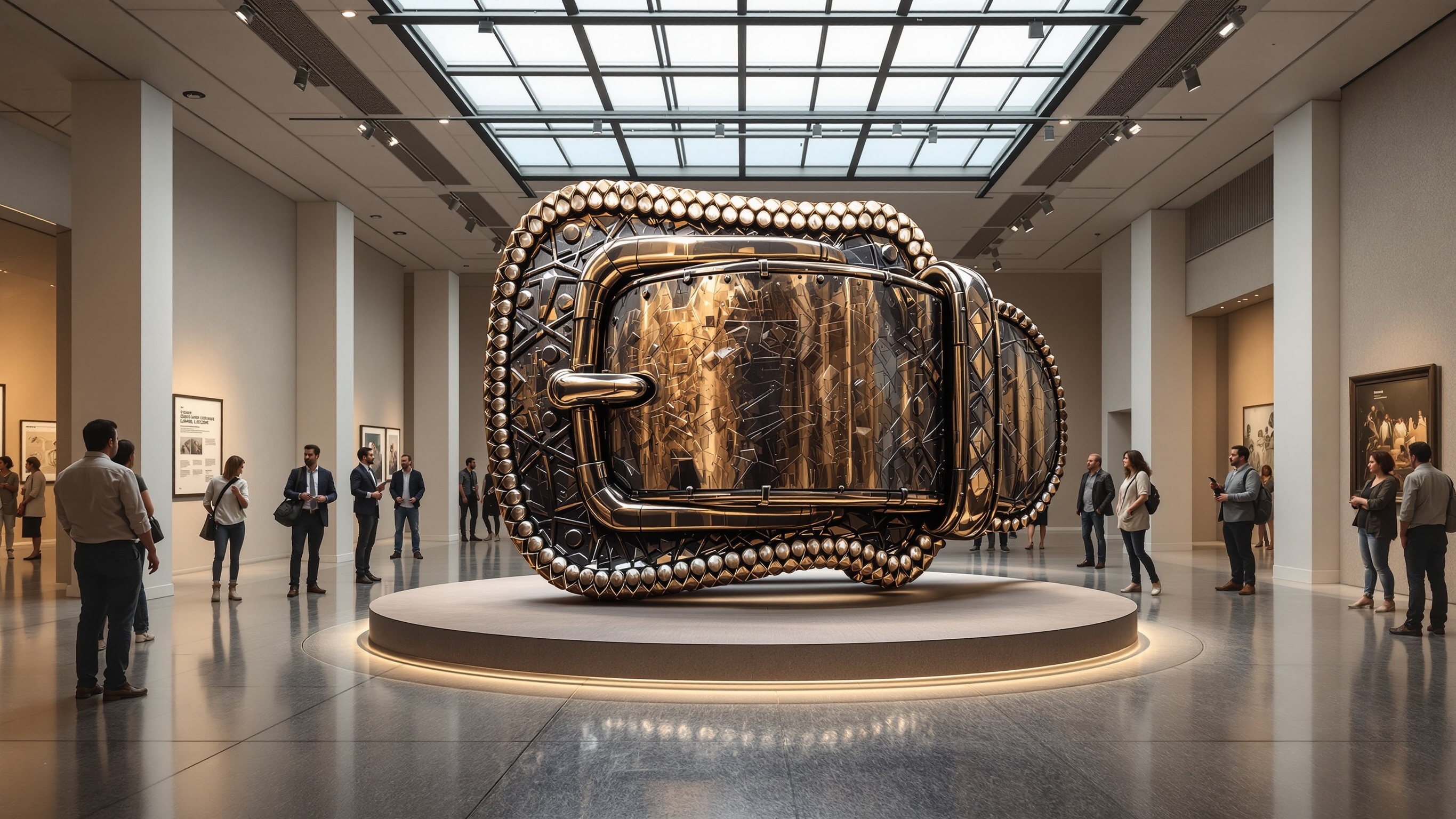
Belt and Buckle reference 1: Shows the complete strap-and-buckle relationship and a curved presentation. Belt and Buckle reference 2: Provides a buckle-led alternate direction and clear front-face artwork area.
Compare the belt and buckle concepts as visual directions. They do not identify a prior belt and buckle customer or commission. Use the belt and buckle views to compare overall length and width, strap thickness, buckle height and width, frame or plate depth, tongue position, hole interval, curve radius, and support footprint and approved leather-like strap color, stitching cues, metal-like buckle treatment, authorized emblems, and controlled edge contrast. The images do not establish final belt and buckle dimensions, construction, performance, transport, installation, or outcome.
Prepare the Belt and Buckle Project Brief
Belt and Buckle quote inputs should connect the defining belt and buckle cues with its intended dimensions and display setting. Include each applicable belt and buckle item below.
- belt and buckle reference
- overall strap and buckle dimensions
- buckle type and artwork
- flat, curved, or wrapped pose
- approved colors and details
- venue and date
- Physical subject: one oversized belt-and-buckle display organized around a supplied strap profile, buckle frame or plate, tongue, keeper, holes, and fixed presentation curve
- Geometry: overall length and width, strap thickness, buckle height and width, frame or plate depth, tongue position, hole interval, curve radius, and support footprint
- Recognition cues: the long strap, buckle outline, center or plate relationship, tongue and keeper cues, hole spacing, edge treatment, and selected wrap or flat pose
- Surface direction: approved leather-like strap color, stitching cues, metal-like buckle treatment, authorized emblems, and controlled edge contrast
- Display direction: a static accessory replica presented flat, coiled, wrapped around a form, or standing as a defined buckle-led composition
- Scale issue: the buckle must remain dominant enough to identify the object while the long strap stays proportionate and does not become generic ribbon or signage
- Belt and Buckle setting: fashion or retail display
- Belt and Buckle setting: western, award, or themed setting
- Belt and Buckle setting: trade-show, stage, exhibit, or photo installation
- Excluded scope: wearable function, working fastening, load-bearing use, clothing manufacture, unsupported championship or brand marks, and invented metal or leather construction
- Requested belt and buckle contact, movement, lighting, or exterior exposure
Request a Custom Quote
Send the belt and buckle reference, belt and buckle reference, overall strap and buckle dimensions, buckle type and artwork, flat, curved, or wrapped pose, approved colors and details, venue and date, destination, and required date. Also describe a static accessory replica presented flat, coiled, wrapped around a form, or standing as a defined buckle-led composition. WhiteClouds can review the defined scope and prepare a custom quote. The concept images support visual planning and do not depict a completed WhiteClouds project.