
Planning a Giant Bat Prop
A giant bat prop is governed by wing span, body size, head direction, and a fixed flight or roosting pose. Those choices determine the occupied envelope and support points more than the overall height alone.
Plan a Giant Bat Prop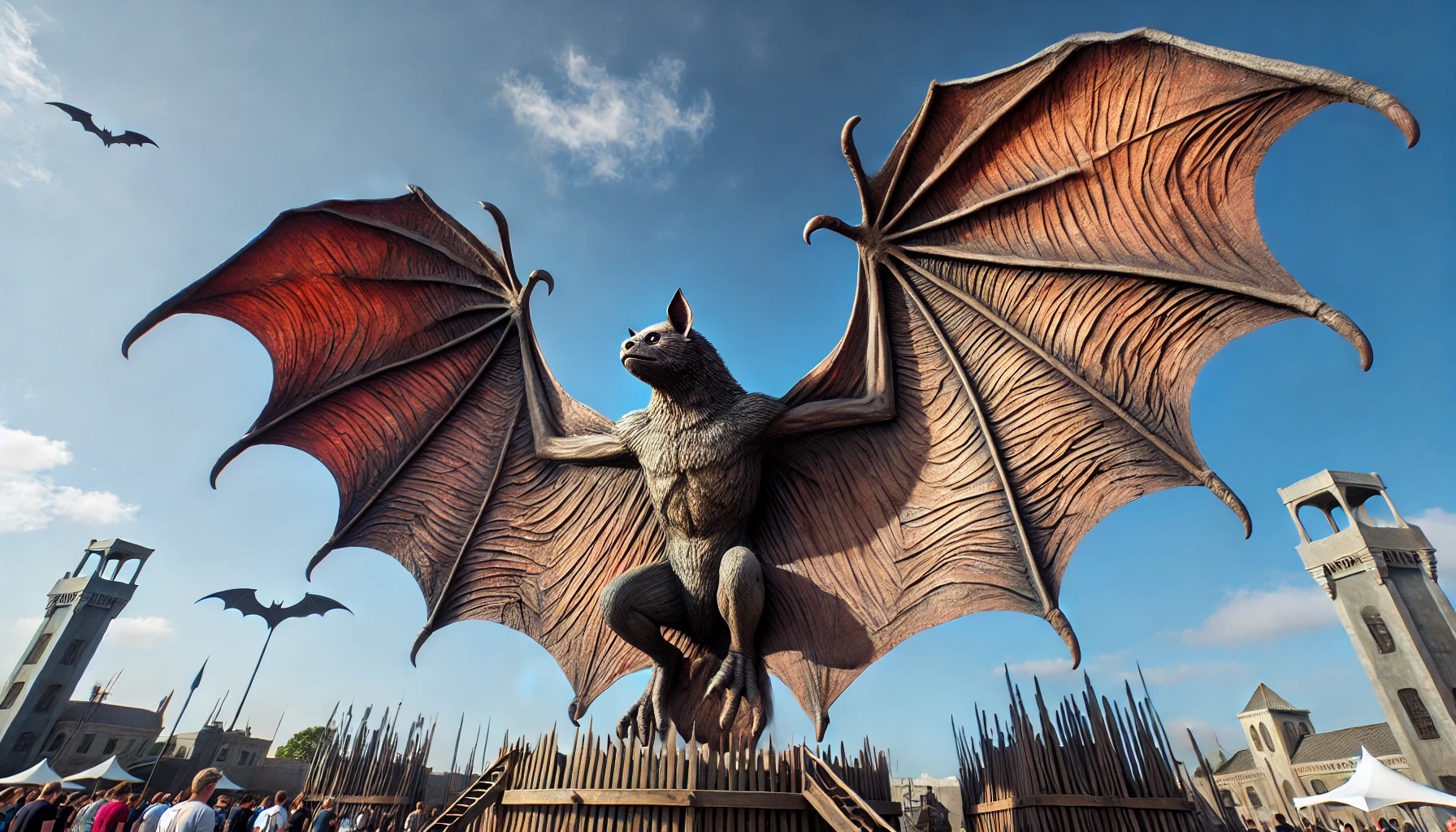
Start with the full wing-to-wing envelope
Supply a front or underside reference that shows the intended membrane outline, wing joints, body centerline, head, ears, and feet. A total span without a body dimension leaves the proportions unresolved.
Add the required public view. A bat seen from below needs a different head angle and wing contour than one viewed at eye level. If several bats are planned, give each pose and envelope separately.
Choose how the bat occupies space
The pose changes both recognition and the location of practical support.
Extended flight
Open wings create the widest silhouette and require clear space around the tips.
Banking turn
One raised wing and one lowered wing add depth and make the principal viewing direction important.
Folded roost
A compact vertical form emphasizes wrapped wings, feet, and an inverted head.
Partial fold
A middle position can reduce span, but the bend and membrane edges still need coordinated references.
Keep the pose readable around its support
Mark floor, wall, scenic, or overhead-looking support as a display condition rather than assuming a method. A support hidden behind the body may preserve an underside view, while a scenic branch, wall, or base becomes part of the visible composition.
Check the bat against ceilings, signs, nearby scenery, lights, and visitor paths. Record the closest viewing distance so eyes, ears, teeth, fur direction, or graphic surface details are neither overworked nor too small to read.
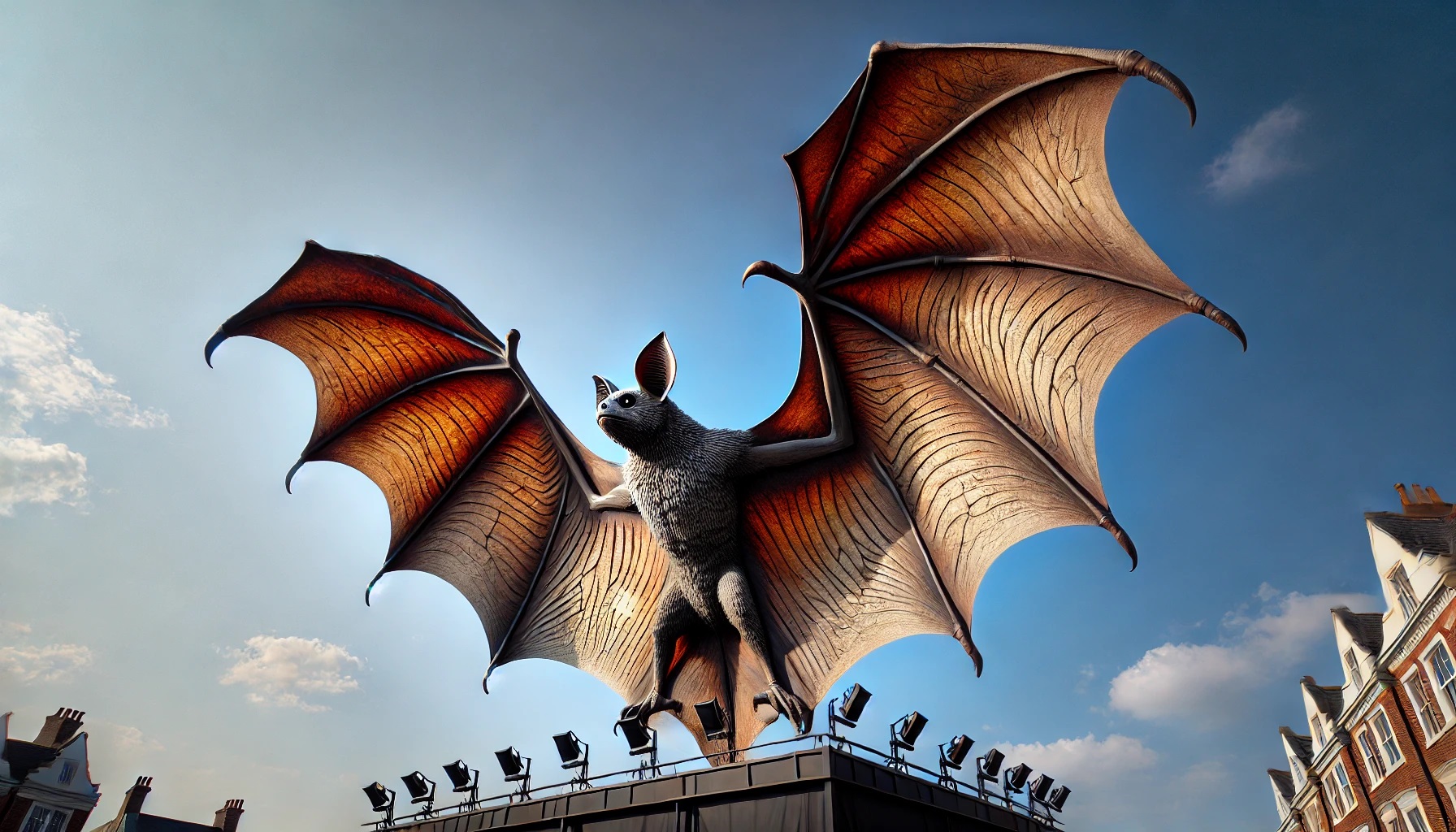
Compare an open span with a compact presentation
The two concepts show how the same subject changes when the wings are spread versus drawn into a tighter pose. They are visual directions only and do not document WhiteClouds fabrication.
A new design should replace their proportions with approved bat references, a fixed pose, exact envelope dimensions, and the intended viewing direction.
Define the animal form before fabrication
A concise request should settle pose and space first.
- Approved species or stylized bat references
- Flight, banking, roosting, inverted, or other fixed pose
- Total wing span plus body length, width, and depth
- Head direction, expression, ears, feet, and membrane outline
- Primary and secondary viewing sides
- Floor, wall, scenic, or overhead-looking display condition
- Nearby ceiling, sign, lighting, and visitor clearances
- Destination, access route, display duration, and required date
Request pricing for a custom giant bat prop
Send the approved bat references, pose, wing span, body dimensions, viewing sides, display condition, surrounding scenery, access information, destination, and schedule.