
Fantasy Dragon Statues for Festival Settings
A festival dragon needs a silhouette that survives distance, stage lighting, crowds, and a busy event background. Wing span, neck movement, head angle, and the relationship between the body and its display area matter more than a catalog of fantasy details.
Plan a Festival Dragon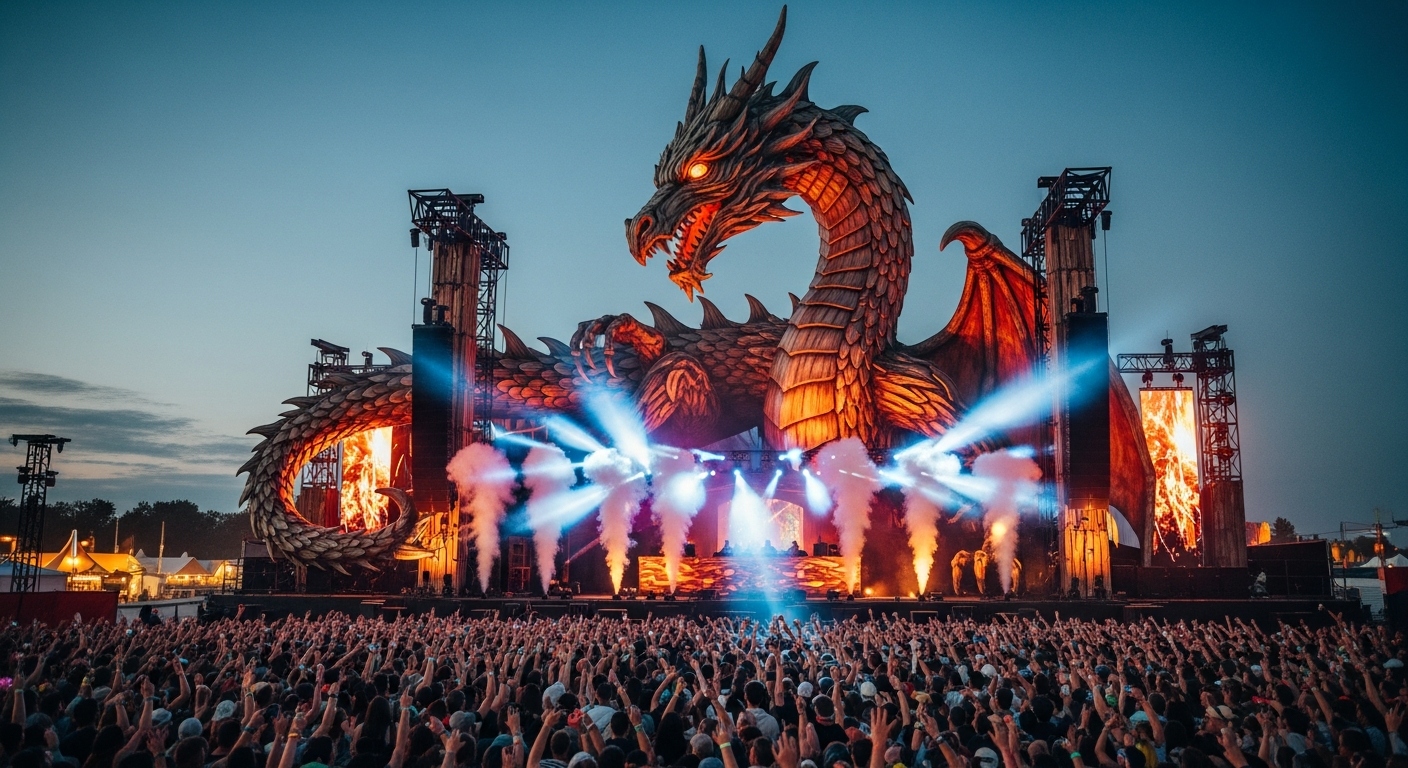
Choose the silhouette before surface detail
A dragon can occupy the same nominal height in very different ways, so the pose should answer the event setting first.
Wing-led profile
A broad raised wing line reads across a crowd but requires careful coordination with rigging, signs, lighting, and neighboring structures.
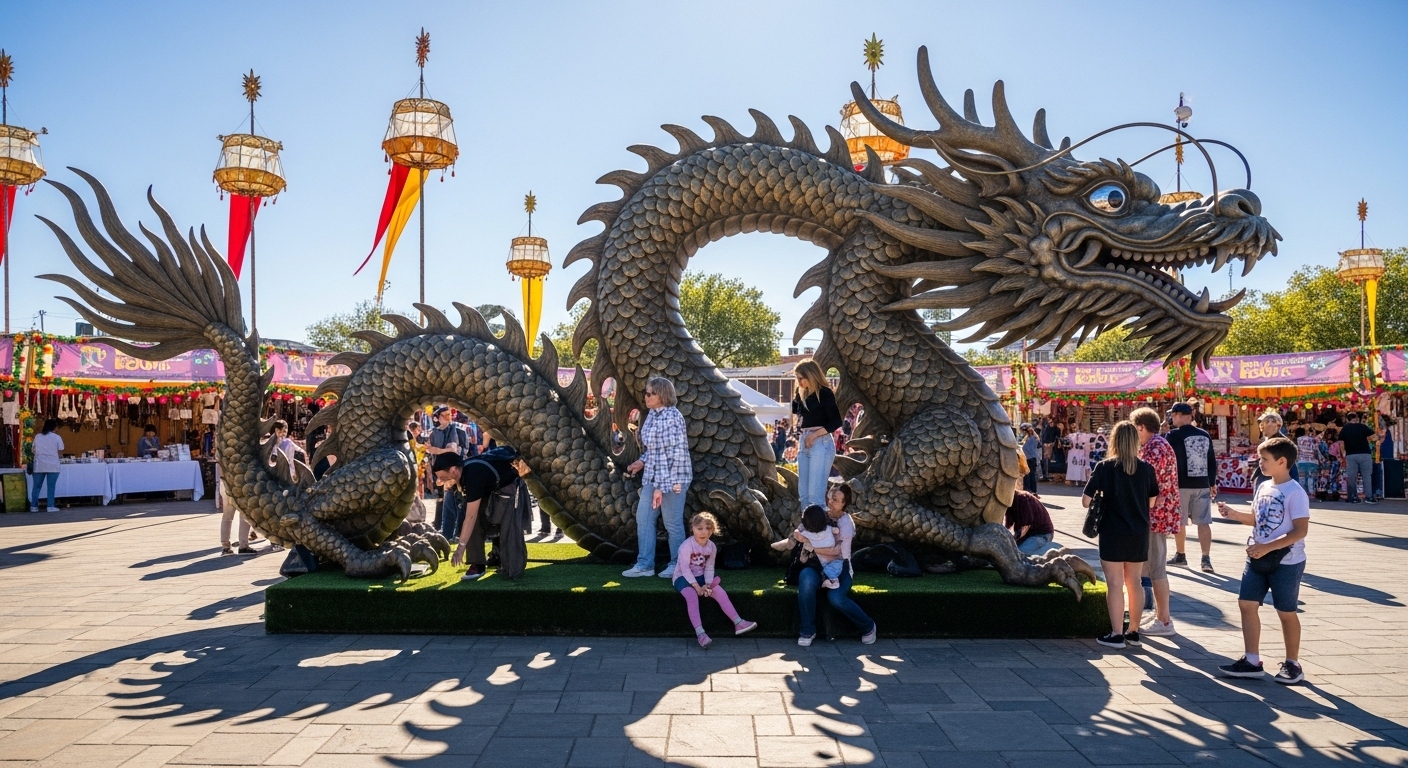
Coiled ground pose
A wrapped tail and lower body can create a compact footprint while offering strong views around a plaza installation.
Raised head
An elevated neck can preserve the face above visitors, though the head direction must make sense from the primary arrival route.
Creature character
Eye shape, mouth position, horns, and body language can move the design from regal to playful or threatening without copying a franchise creature.
Design for distance, motion, and a crowded background
Map the farthest important view and the point where a visitor can study the figure closely. Small scales and subtle facial detail may disappear from the distant view, while a clean head profile, open wing shape, and controlled color breaks remain legible. At close range, transitions between the neck, shoulders, legs, and tail keep the creature convincing.
Event hardware can interrupt the outline. Include stage towers, banners, fencing, vendor roofs, and lighting positions in site references. If the figure is intended for photographs, reserve a camera line and person position that do not hide the dragon's face or create a queue across normal circulation.
Compare an open event concept with a completed creature model
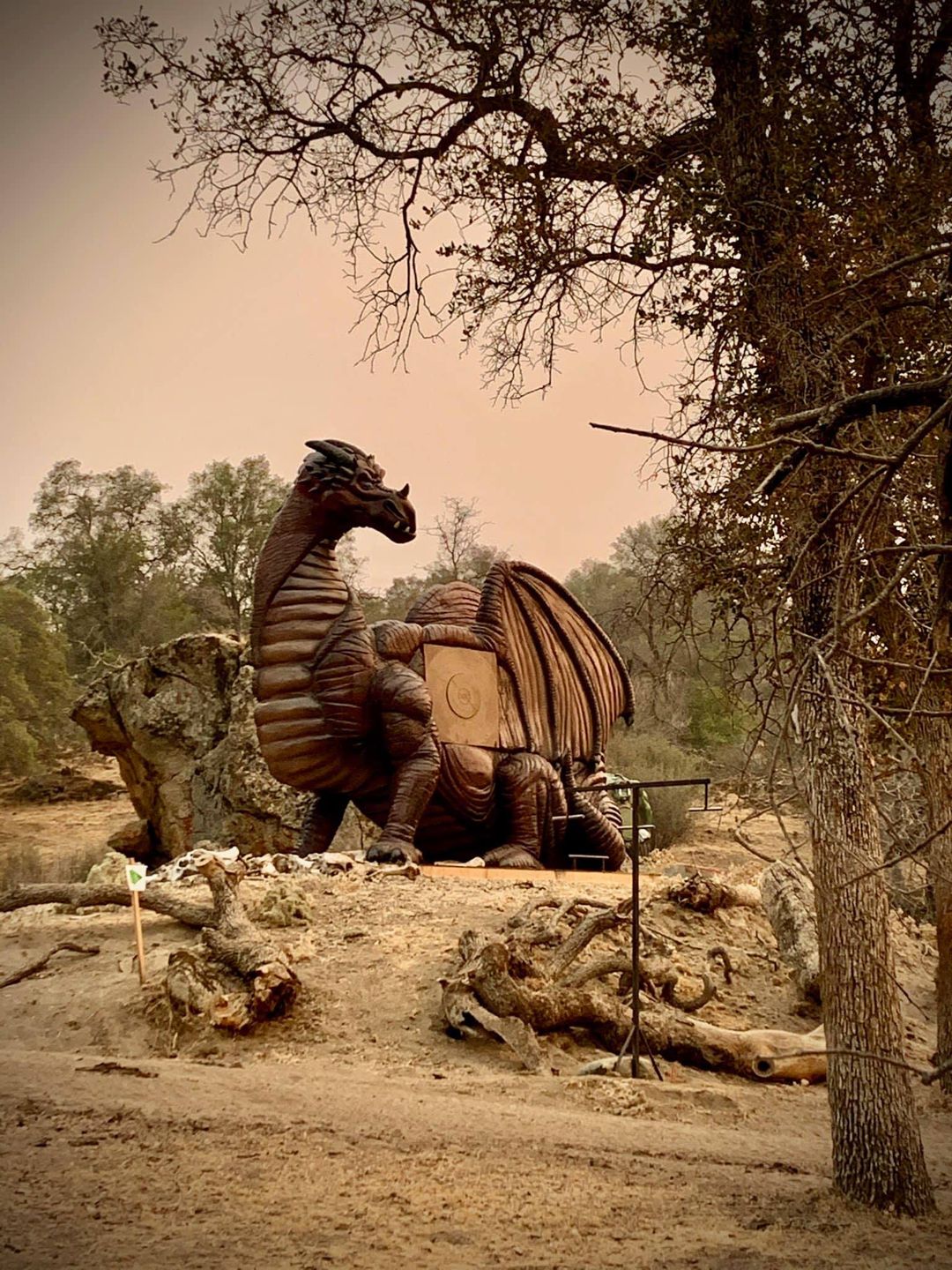
The festival images illustrate two possible display arrangements rather than completed projects. The separate WhiteClouds dragon archery target shows a physical creature with recognizable wings, head, and stance. Together they help frame design questions, but the completed example does not establish a standard festival size, material, or installation method.
Resolve the envelope that the dragon must fit
Provide measured limits for the complete form, not only its body height.
- Maximum overall width, height, and depth
- Wing-tip, horn, jaw, and tail clearances
- Primary approach and longest viewing distance
- Stage, plaza, or tent relationship
- Public reach and controlled-access areas
- Available loading path and assembly area
- Lighting goals and nearby event fixtures
- Event dates, destination, and placement duration
Supply original artwork and define the intended personality
Front and side drawings should agree on anatomy, markings, horns, wings, and tail. A three-quarter view is useful for expression, but it cannot resolve every dimension alone. Mark any features that may be simplified and any emblem, accessory, or color that must stay exact.
If the design is connected to a protected character or entertainment property, the party ordering the work should provide approved reference art and the necessary authorization. An original festival creature can instead begin with a mood, species influences, and a clearly documented visual brief.
Request a quote for a festival dragon statue
Share the original or approved dragon artwork, pose, overall size limits, site plan, audience distance, public-access conditions, loading route, lighting intent, destination, and event date. Include the maximum wing and tail envelope so the complete form can be evaluated.