
Big Letters with Lights
Large dimensional letters planned with integrated or external lighting for events, exhibits, campuses, and branded spaces
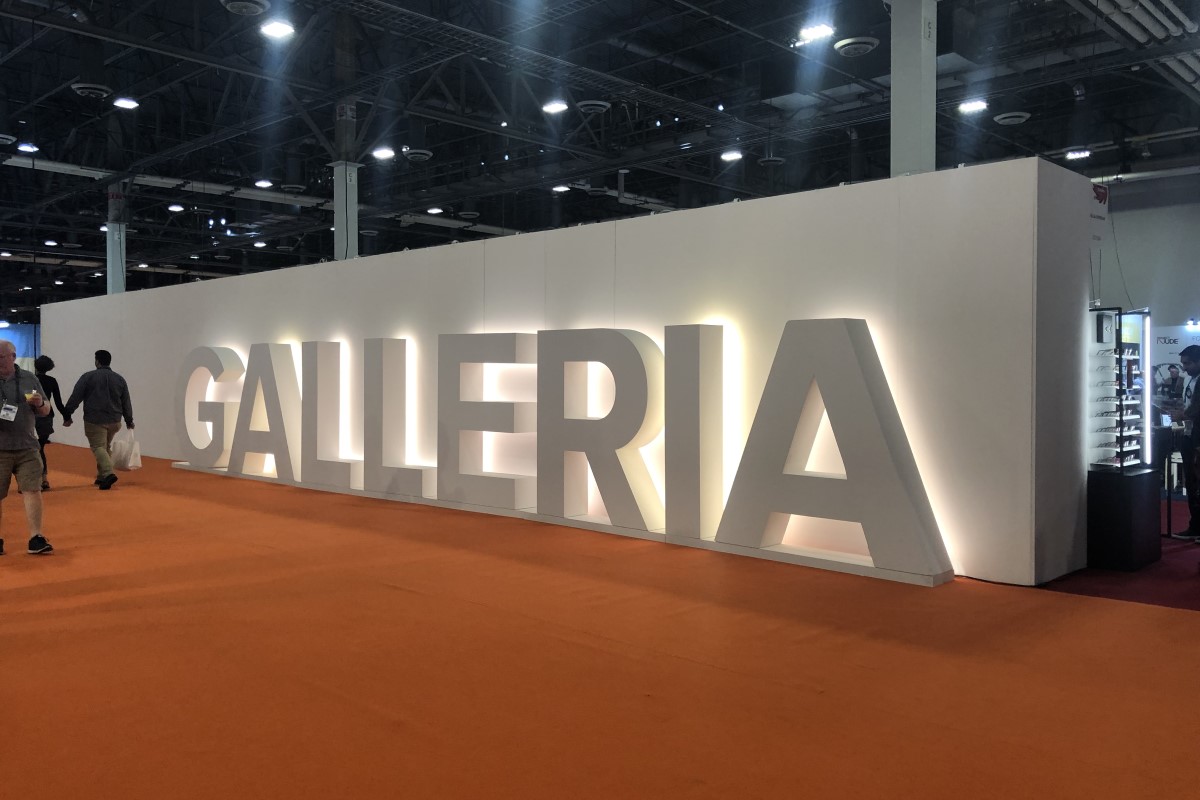
Lighting can define the face, edge, silhouette, or surroundings of a large letter display. The useful approach depends on the letter material, viewing conditions, power, mounting, and the visual effect the project needs.
Technical Overview
Define What the Lighting Should Do
Light can make the letter face luminous, create a glow behind the form, accent the edges, project imagery across a surface, or simply illuminate the letters from the floor or ceiling. These effects solve different visual problems and require different hardware and construction.
Begin with the desired appearance in the actual environment. Ambient light, wall color, viewing distance, photography, audience movement, and the time of day all affect whether an illuminated treatment reads clearly or disappears into the surroundings.
Compare Integrated and External Lighting
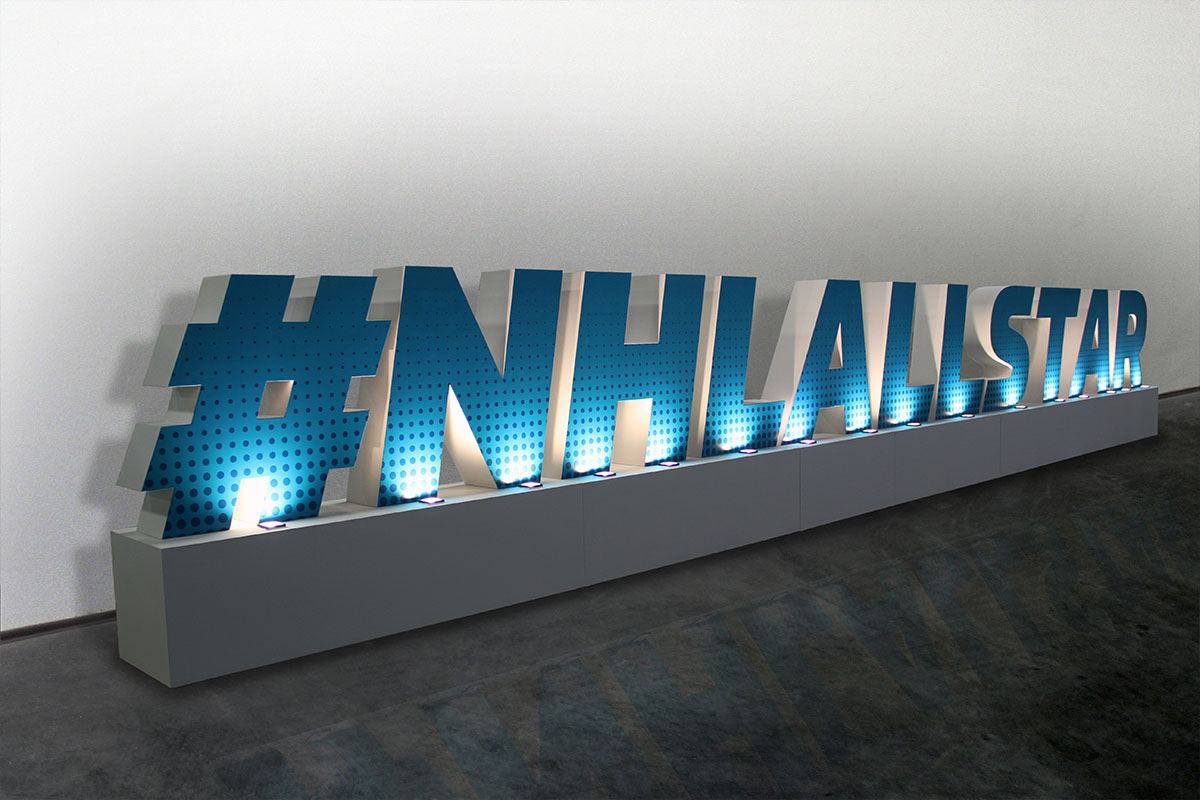
Integrated lighting is housed within or immediately behind the letter assembly. Front illumination, edge illumination, and halo effects each require space for light sources, diffusion, wiring, and access. They also change the way the face and returns are fabricated.
External approaches use uplights, spotlights, troughs, or projection equipment aimed at the letters or nearby surface. They can preserve a simpler letter construction, but the fixtures need protected positions, controlled angles, power, and a plan for people or objects crossing the beam.
Coordinate Letter Construction With Light
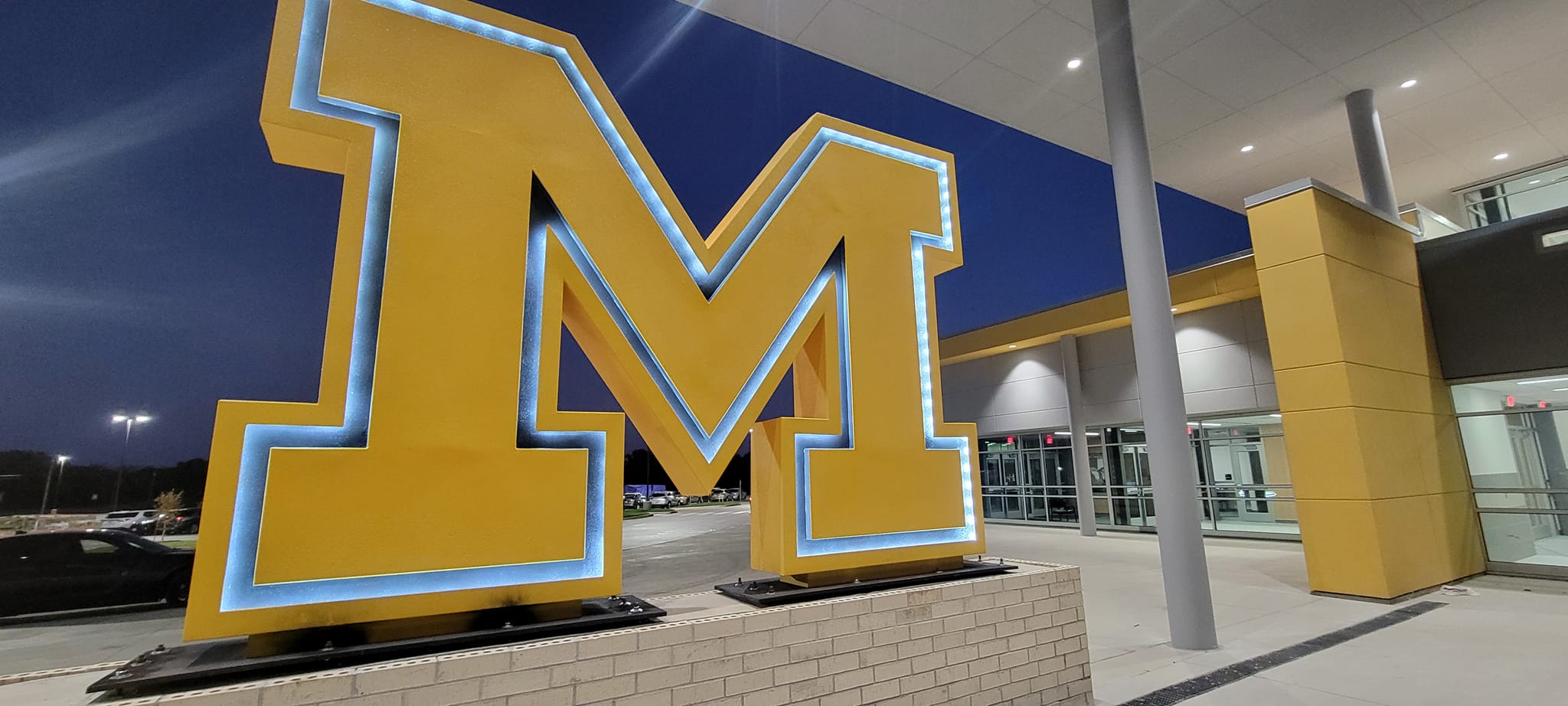
The letter material, depth, face opacity, edge treatment, and interior finish influence how light is contained or distributed. A configuration suitable for an opaque spotlighted letter is not automatically suitable for an internally illuminated face.
Power supplies, wiring paths, connectors, switches, and service access should be resolved with the physical form. Freestanding letters may need cable routes through a base, while wall-mounted letters depend on substrate access and the location of available power.
Plan Scale, Spacing, and Mounting
Large letters need enough stroke width and spacing to remain legible at the primary viewing distance. Lighting can strengthen separation, but it cannot correct a wordmark that is too small, too tightly spaced, or poorly contrasted with its background.
Determine whether the display will be freestanding, base mounted, suspended, or attached to a wall. The mounting approach affects stability, alignment, visible backs, wiring, setup time, and the amount of clearance required around each letter.
Test the Effect in the Intended Setting
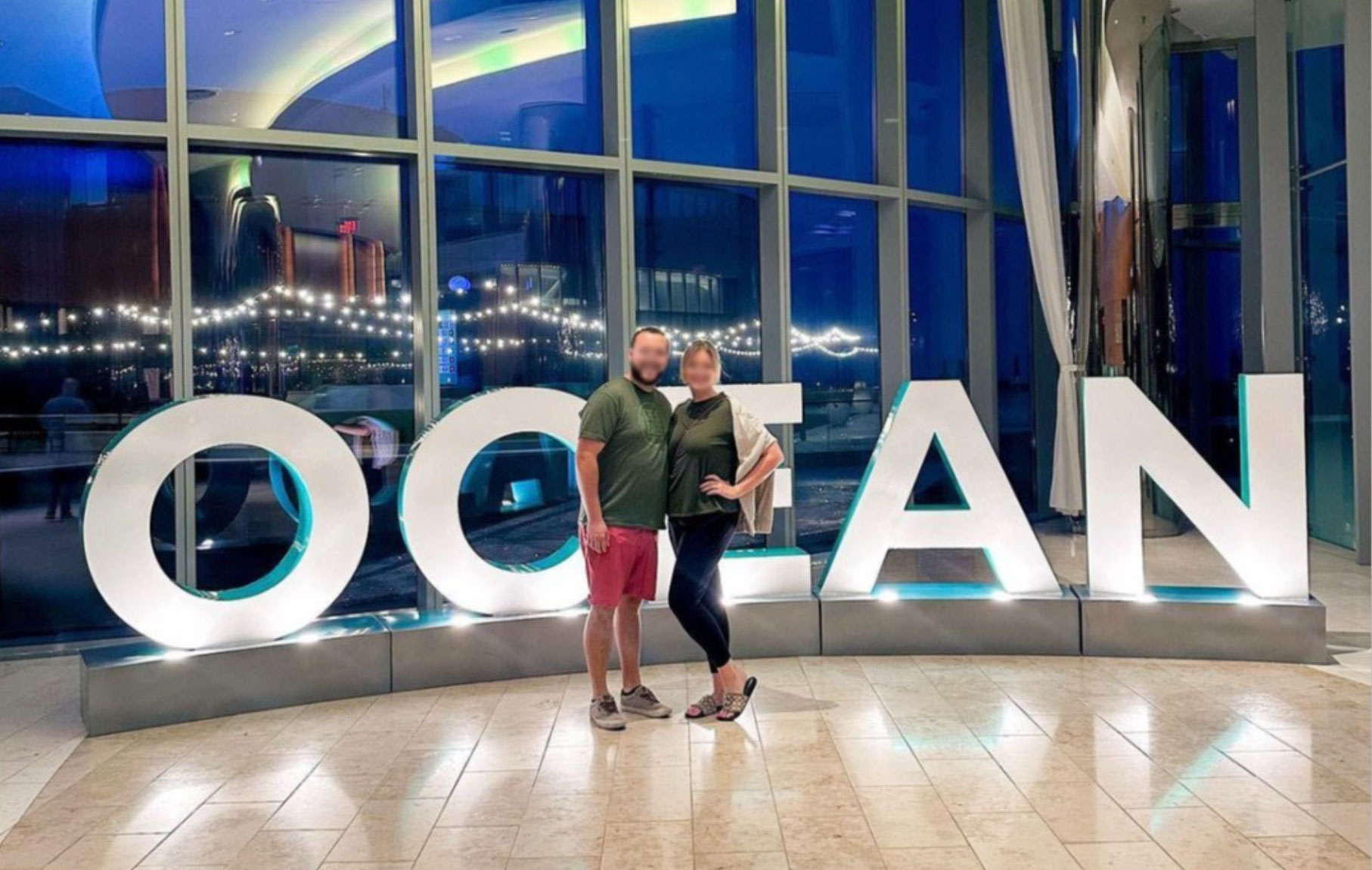
Finish and lighting should be reviewed together, ideally with samples or a controlled mockup when color and diffusion are critical. Reflective surfaces, translucent faces, and textured coatings can look very different under direct light and under the venue's ambient fixtures.
The final review should cover the lit and unlit appearance, brightness control if specified, cable visibility, fixture positions, access, and likely camera angles. The approved effect should remain clear without creating distracting glare around the display.
Prepare an Illuminated Letter Brief
Provide vector artwork, finished dimensions, target depth, material and finish preferences, desired lighting effect, ambient conditions, viewing distance, mounting surface, power details, installation responsibility, transport needs, and the event or opening date.
WhiteClouds can evaluate those requirements as one system and plan large letters whose structure, finish, mounting, and lighting support the same visual objective.
Plan large illuminated letters
Review custom foam letter capabilities, completed displays, and the full dimensional-letter planning guide.
Tell us what your model needs to communicate
Share the intended audience, approximate size, level of detail, available source files, and project timeline.