
Baker Mountain 3D Map for a Compact Ski Area
Baker Mountain in Moscow, Maine is described by Ski Maine as a small community ski area with one surface lift and five trails and glades. That compact footprint favors a focused physical map in which the terrain form and a few essential routes can remain prominent.
Scope a Baker Mountain Map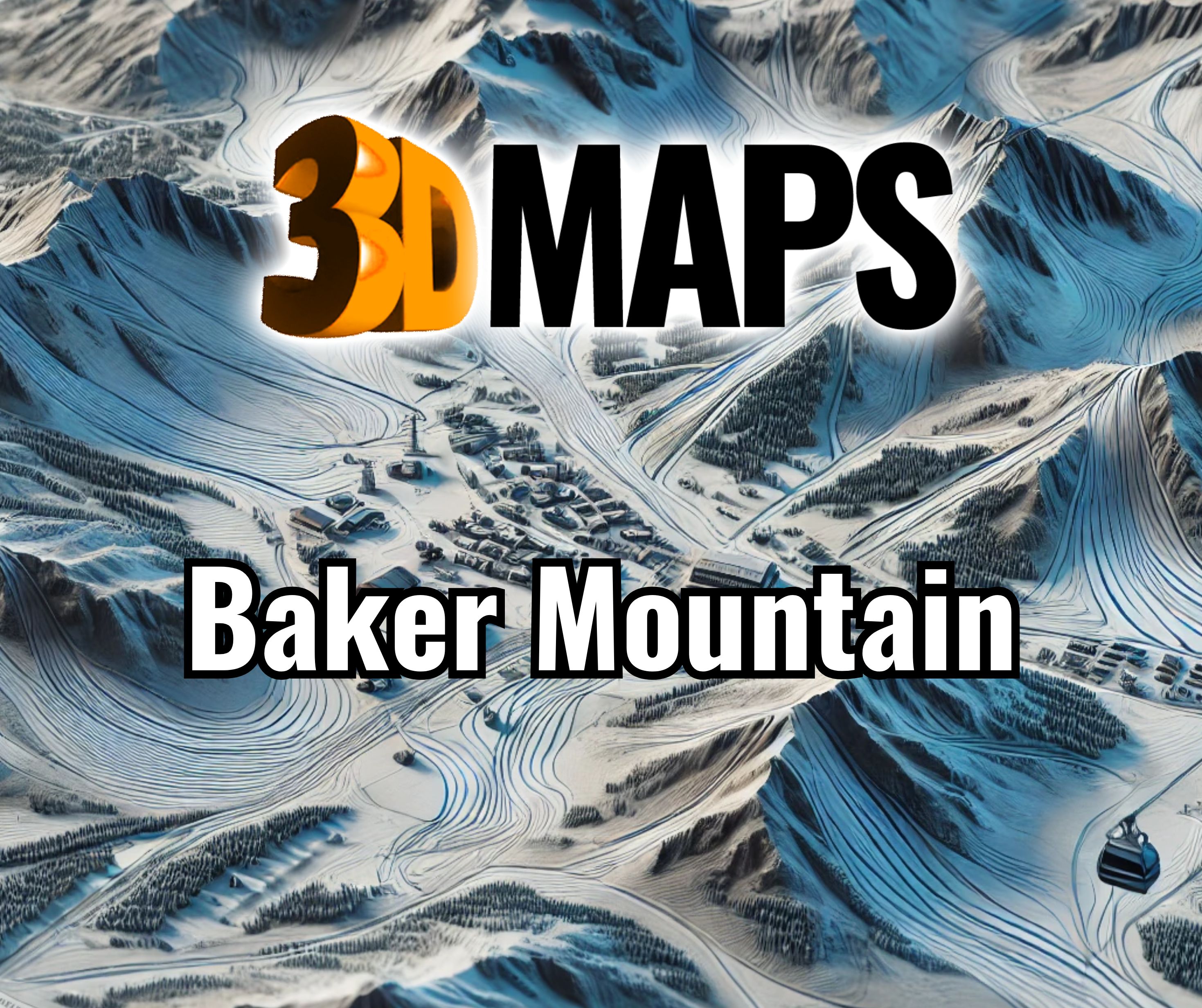
Let a small ski hill remain a small, clear map
Baker Mountain does not need the information architecture of a multi-peak resort. The useful question is how little surrounding land can be included while the lift-served hill still reads as a complete place. A tight crop gives the slope more physical presence and leaves enough room for the few trail and lift labels that matter.
Ski Maine lists one surface lift and five trails and glades. That limited network can be shown directly instead of being compressed into a large legend. The base edge, lift line, and route origins can establish the reading order without decorative regional detail.
Keep the Baker Mountain information set deliberately short
Every retained layer should help a viewer understand the hill or recognize the place.
- Accurate terrain surface inside the selected boundary
- One surface-lift alignment
- Current trail and glade lines
- A simple base or arrival reference
- Only the labels that remain readable at final size
- A restrained legend if symbols cannot be explained directly
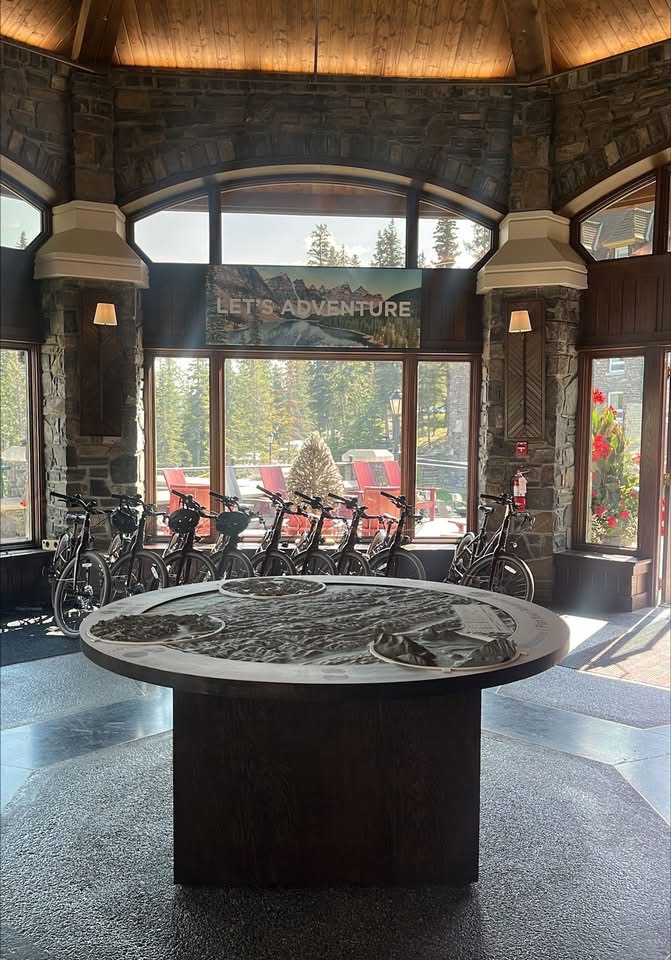
A large Banff display shows why format follows purpose
The supporting WhiteClouds project depicts Banff National Park for the Fairmont Banff Springs Adventure Centre. Its broad geography, pedestal, and extensive destination information answer a very different brief. Baker Mountain can benefit from the same discipline in boundary and labeling while remaining far smaller and simpler.
Make subtle terrain readable without distorting it
A compact map should feel dimensional, but the physical height needs to serve recognition.
Honest slope form
Begin with the actual elevation relationship and evaluate any proposed relief treatment against the map's educational purpose.
Clear route contrast
Use trail lines and lift markings that remain visible without covering the terrain surface.
Quiet perimeter
Avoid a large border or oversized regional context that visually reduces the hill.
Appropriate object size
Choose dimensions from label legibility, intended handling, and display distance rather than from a resort-scale precedent.
Design for the place where the map will live
A lodge wall, club room, local exhibit, or personal collection creates different expectations. A public display may need durable labels and an obvious orientation. A tabletop keepsake can invite closer inspection and may use a simpler base. Record the audience and viewing distance before settling the model footprint.
If historical routes or former lift alignments are important, keep them in a separate approved layer. Mixing dates without explanation can make a compact map look current when it is actually commemorative.
Request pricing for a Baker Mountain relief map
Share the desired boundary, current route and lift references, intended audience, display format, dimensions, label priorities, destination, and deadline.