
How Big Should a Custom Military Statue Be?
A custom military or commemorative statue should be sized for the people, place, and purpose it is meant to serve. The figure needs to read from the intended approach, fit its base and surroundings, and leave a practical route for delivery and setup. Start with the setting and the meaning of the display, then set the dimensions.
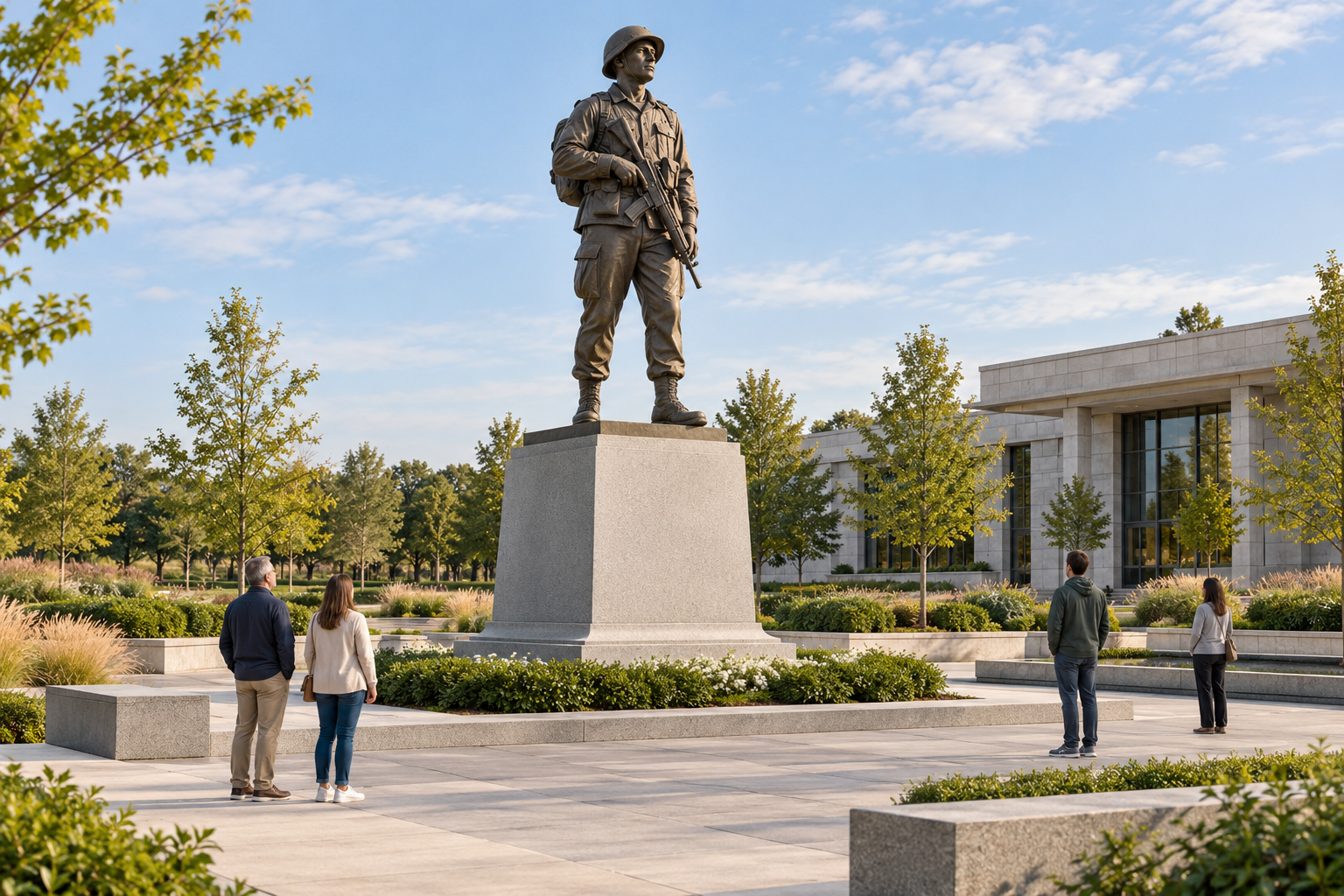
Start with the purpose of the display
A project may honor a person, recognize service, mark a community history, support a museum or visitor experience, or create a temporary ceremonial display. Those uses lead to different decisions about audience distance, interaction, viewing sides, and how much of the surrounding space should remain open.
Choose a scale relationship, not a magic number
Life-size, larger-than-life, and landmark-scale are useful ways to describe the intended relationship between a figure and its audience, but they are planning descriptions rather than fixed industry standards. Compare the proposed figure with nearby doors, people, buildings, trees, and the farthest important viewer before locking the height.
Separate figure height from total display height
Write the figure height, base or pedestal height, and complete installed height as separate numbers. A base can change the way a figure is seen from across a plaza or through a crowd. It can also affect the visual proportion of the display, the approach route, and the space available for inscriptions or other approved elements.
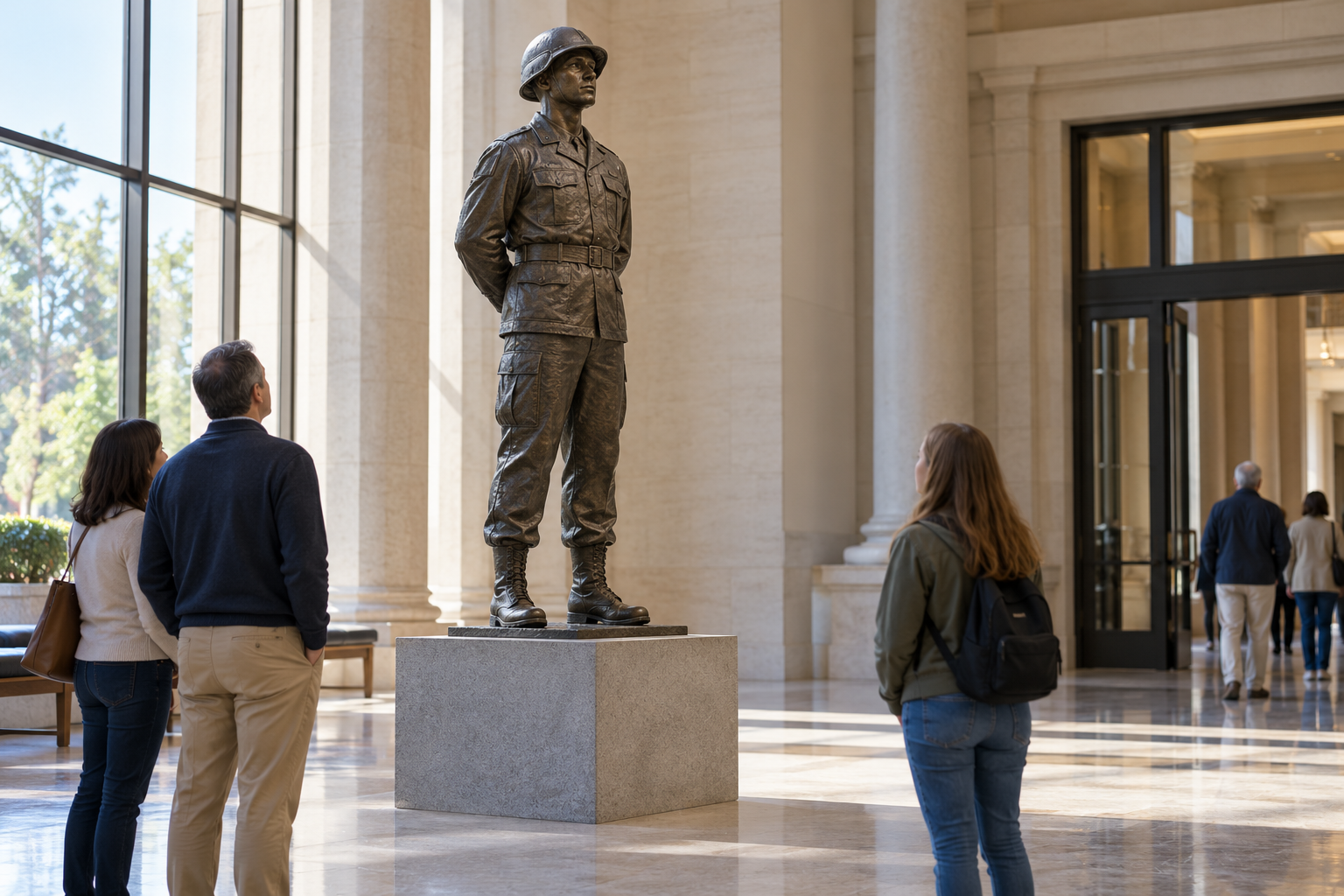
Plan the footprint around the pose
Height is only one part of the envelope. Record the maximum width and depth, the base footprint, projecting equipment or accessories, and the clear space needed around the display. A forward gesture, grouped figures, flag, tool, or other extended form can change the route and sightlines even when the figure height stays the same.
Use the main approach to set the sightlines
Mark where visitors, staff, or a camera will first encounter the figure and how close they can approach. Review the face, posture, equipment details, inscription area, and overall silhouette from those points. If people will walk around the piece, define the important sides instead of designing only for a front view.
Treat uniform and equipment details as supplied design information
For a historical or commemorative subject, provide the reference artwork, approved photographs, drawings, insignia, and any guidance the commissioning group wants the fabricator to follow. The fabrication brief should identify what must be accurate without assuming a historical detail that has not been supplied or reviewed.
Plan access before the final form is fixed
Measure loading areas, doors, corridors, elevators, stairs, turning space, storage, and the path to the final display. Share whether the piece is intended for a short event, repeated transport, an indoor setting, covered outdoor use, or an exposed location. WhiteClouds can then discuss an appropriate fabrication and delivery plan for the actual site.
What to include in a quote request
- Subject, pose, reference artwork, and the sides that need to be finished
- Target figure height, base height, total installed height, width, depth, and footprint
- Viewing distance, camera position, audience path, and surrounding architecture
- Indoor, covered, or exposed placement and the site conditions to review
- Delivery route, storage, setup window, reuse plans, and schedule
- Approved graphics, inscriptions, equipment details, lighting, or interaction requirements
- The people responsible for design approval and site coordination
Common planning questions
What scale works for a commemorative display?
The useful scale is the one that remains legible from the intended approach and fits the setting without losing the human relationship of the subject. A close, reflective display and a figure meant to read across an open space may need different proportions.
How does a base change the overall size?
The base adds to the installed height and can change sightlines, access, and the amount of surrounding space needed. Keep the figure, base, and complete display dimensions separate in the first brief.
What should be measured before fabrication planning?
Measure the proposed footprint, maximum height, delivery route, viewing distances, nearby structures, and any access or storage constraints. Photos and a simple site sketch are useful additions to the initial request.
Discuss a custom military or commemorative statue
Share the subject, target dimensions, reference files, display setting, access route, and schedule through the custom character prop and statue service. Browse the custom character props and 3D statues gallery for examples of public-facing figure scale and display context.
Related military and commemorative statue resources
Compare custom statue services and public-facing examples while you plan scale, sightlines, access, and display context.
Custom Character Prop & Statue Quote
Share the size, placement, finish, timing, and reference files available for your project.