
How Big Should a Custom Equestrian Statue Be?
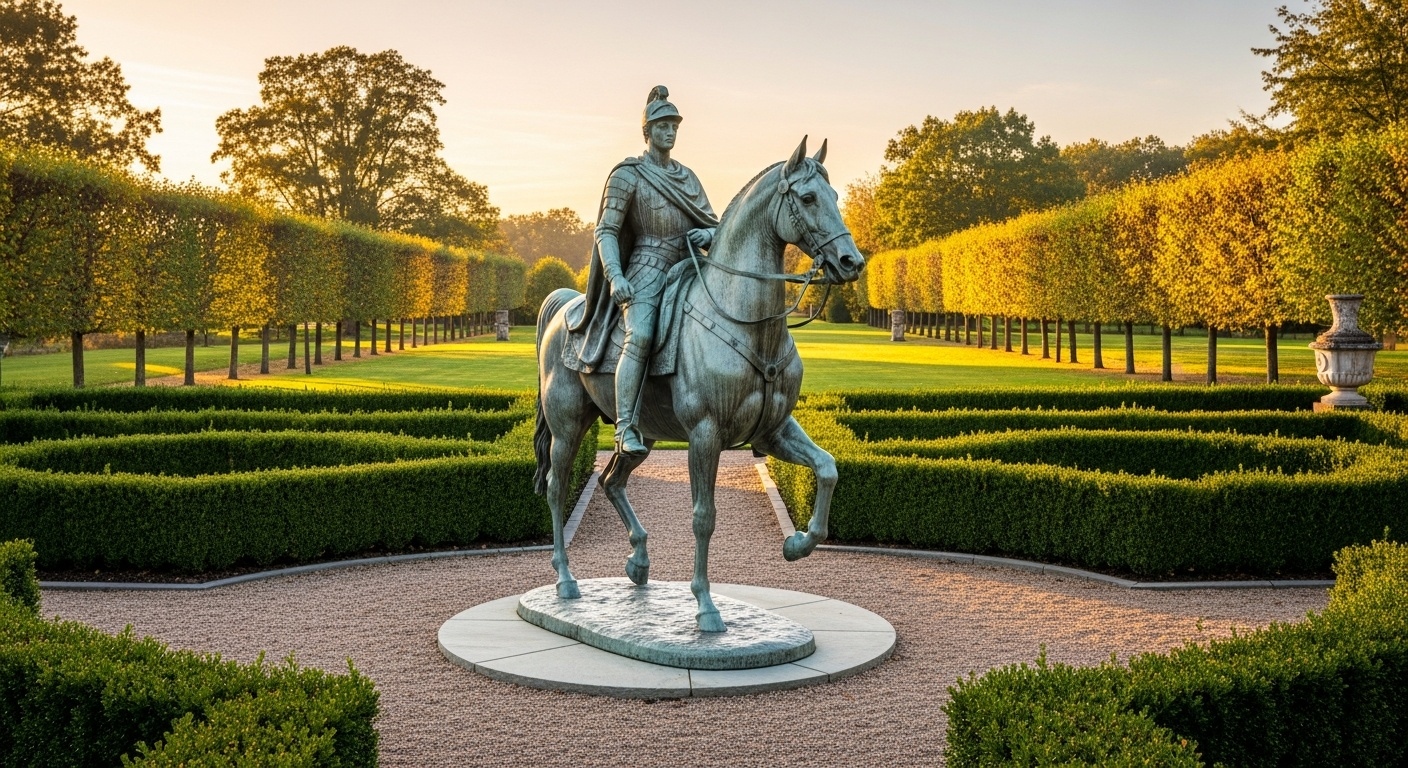
An equestrian statue is a single composition made from two connected subjects: the horse and the rider. The useful dimensions include the overall height, the horse's footprint, the rider's relationship to the saddle and body, the base, and the space people need to view and approach the display. Set the composition before treating the project as a simple height calculation.
Plan the rider and horse as one composition
Begin with the intended relationship between the rider, the horse, and the base. A standing, walking, rearing, or turning pose changes the silhouette and the balance of the piece. The rider's posture, equipment, clothing, and gesture should be reviewed together with the horse's head, legs, tail, and direction of movement.
Measure the full dimensional envelope
Record the maximum height from the base to the highest point, along with the maximum width, depth, footprint, and any projecting forms. A raised leg, extended arm, angled weapon or flag, tail, or forward-moving pose can use more space than a front elevation suggests.
Choose the pose before final dimensions
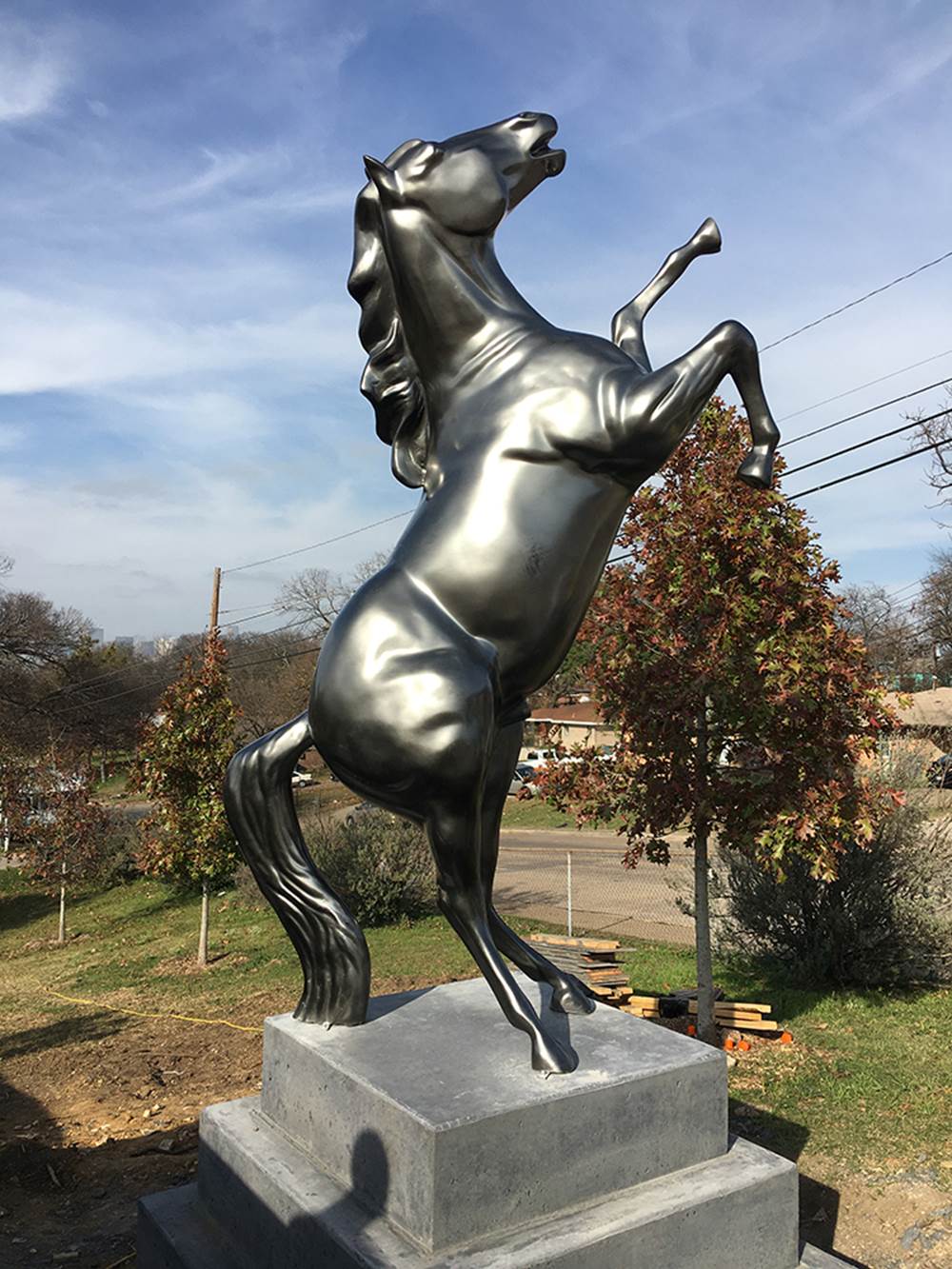
Pose affects the center of visual weight, the clear space around the sculpture, and the way the horse and rider read from different approaches. Use sketches, reference photographs, or a 3D file to settle the major silhouette before committing to the final envelope.
Review profile and frontal views
An equestrian figure can look balanced in profile and read very differently from the front or rear. Mark the important arrival points, photo positions, and walk-around views. Confirm which sides need full detail and whether the display will be seen against open space, architecture, landscaping, or a stage-like background.
Relate the base to the horse's footprint
Keep the horse's feet, any extended legs, the rider's vertical height, and the base in a single dimensional conversation. A taller base can improve visibility from a distance, while a lower base may support a closer, more approachable experience. Separate the figure height, base height, and complete installed height in the project brief.
Use reference material that answers the right questions
Share the subject, pose, rider references, horse references, approved clothing or equipment details, and the views that matter most. If the piece represents a specific person, team, historical subject, or brand, identify the supplied artwork and the people responsible for reviewing likeness and design direction.
Do not let folklore choose the pose
Popular stories sometimes assign a fixed meaning to the number of raised horse hooves. That is not a useful default for a commissioning brief. Let the pose serve the subject, the reference material, the silhouette, and the intended audience; if a historical convention matters to the project, verify it with the commissioning group or a qualified historian.
Plan access, shipping, and setup early
Measure loading areas, doors, corridors, elevators, stairs, gates, turning space, storage, and the route to the display position. Share whether the piece will be assembled on site, transported repeatedly, or placed for a longer display. The horse's footprint and the base often determine the practical route as much as the overall height.
What to include in a quote request
- Rider and horse references, pose direction, and the intended viewing sides
- Maximum overall height, figure height, base height, width, depth, and footprint
- Profile, front, rear, and photo-view sightlines
- Indoor, covered, or exposed placement and the surrounding site conditions
- Delivery route, storage, assembly, setup window, reuse plans, and schedule
- Approved clothing, equipment, graphics, inscriptions, or other subject details
- The people responsible for design review and final approval
Common planning questions
How does the horse change total statue dimensions?
The horse determines the main footprint, while the rider and pose determine the upper envelope and the way the composition reads from different directions. Measure both subjects together rather than estimating the rider as a separate figure placed on top.
What should be measured at the site?
Measure the available footprint, height clearance, delivery route, viewing distances, photo positions, and nearby structures. Include the base and the space needed for people to approach or move around the display.
How do pose and base affect shipping and setup?
An extended pose can increase width or depth, and a tall base can change the route and handling plan. Share access and setup information before the pose and final dimensions are locked.
Discuss a custom equestrian statue
Share the rider and horse references, target dimensions, pose, base, display setting, access route, and schedule through the custom character prop and statue service. Browse the custom character props and 3D statues gallery for additional examples of figure scale and display planning.
Related equestrian statue resources
Compare custom statue services and horse-form examples while you plan rider proportion, pose, footprint, access, and display.
Custom Character Prop & Statue Quote
Share the size, placement, finish, timing, and reference files available for your project.