
Planning a Giant Fedora Hat Prop
Giant Fedora Hat Prop: one oversized fedora-hat prop defined by a pinched crown, lengthwise crease, surrounding brim, and supplied hatband. Recognition depends on the indented crown top, front pinch, crown taper, brim width and edge, hatband position, bow or trim, and selected tilt. The central scale question is that the crown crease and front pinch must remain visible without flattening the brim or drifting into top-hat, cowboy-hat, or hard-hat geometry. The images are fedora hat design concepts rather than photographs of completed WhiteClouds work.
Plan a Fedora Hat Display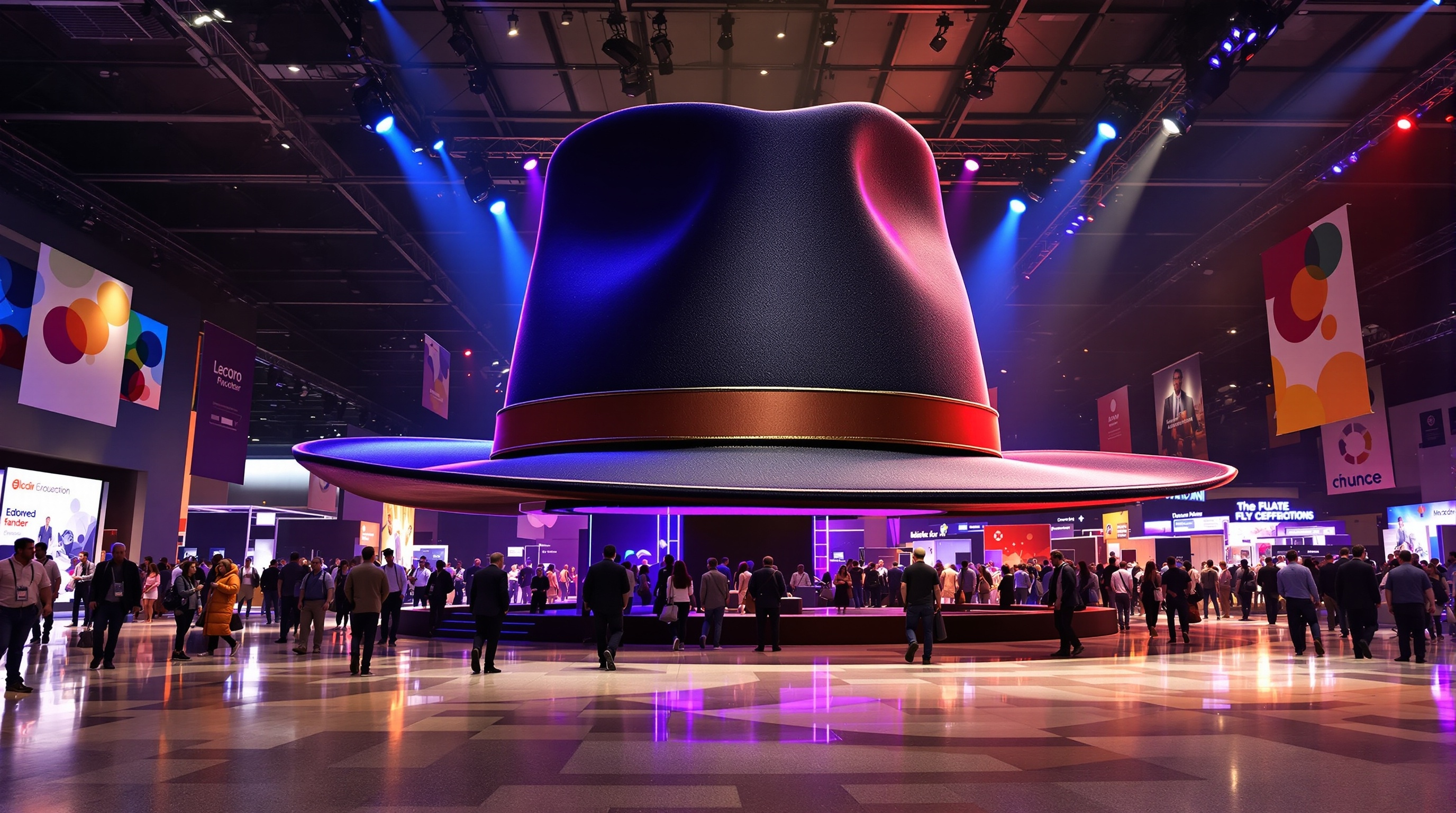
Define the Fedora Hat Form
Fedora Hat physical scope: one oversized fedora-hat prop defined by a pinched crown, lengthwise crease, surrounding brim, and supplied hatband. Its geometry includes overall height and width, crown height, top crease, pinch depth, brim projection, brim curve, band width, opening, and support footprint. Its defining visual cues are the indented crown top, front pinch, crown taper, brim width and edge, hatband position, bow or trim, and selected tilt.
Fedora Hat presentation: a static fedora form staged level or tilted with the crown pinch and full brim readable from the principal approach. The visual treatment can use approved felt-like color and texture direction, contrasting band, authorized ornament, and controlled edge treatment. Keep the fedora hat scope separate from straight top-hat crowns, cowboy-hat creases and upturned sides, protective hard hats, wearable fit, unsupported felt construction, and invented character associations.
Draw the fedora from crown and brim views before surface styling. The top view controls the teardrop or center crease, front pinch, crown opening, and brim outline; the side view establishes crown taper, front-to-back brim angle, and crease depth. Band width, bow position, edge treatment, and any supplied ornament can then be placed precisely. If the hat is tilted, record its axis and support relationship so the pose does not hide the crown indentation that separates it from nearby hat authorities.
Fedora proportions can change from compact trilby-like forms to wider-brim dress styles, so the reference should state crown height, brim width at front and sides, front pinch spacing, crease length, and the amount of brim sweep. The hatband may be a simple contrasting strip, a dimensional wrap, or a supplied graphic band, with its join and bow located deliberately. A very low display angle can hide the crease; a high view can flatten the crown. Choose the camera and visitor height before finalizing the tilt. Keep trench-coat scenery, characters, logos, and period decor outside the hat scope unless they are shown as separately approved elements.
Control the Details That Identify the Fedora Hat
Fedora Hat planning variables include overall height and width, crown height, top crease, pinch depth, brim projection, brim curve, band width, opening, and support footprint; the indented crown top, front pinch, crown taper, brim width and edge, hatband position, bow or trim, and selected tilt; approved felt-like color and texture direction, contrasting band, authorized ornament, and controlled edge treatment; and a static fedora form staged level or tilted with the crown pinch and full brim readable from the principal approach.
Fedora Hat form
For the fedora hat, set overall height and width, crown height, top crease, pinch depth, brim projection, brim curve, band width, opening, and support footprint. Show one oversized fedora-hat prop defined by a pinched crown, lengthwise crease, surrounding brim, and supplied hatband, and keep the complete outline readable from the primary approach.
Fedora Hat recognition
Preserve the indented crown top, front pinch, crown taper, brim width and edge, hatband position, bow or trim, and selected tilt. Rank the fedora hat cues for the expected viewing distance, and make every permitted simplification explicit.
Fedora Hat surface
Develop approved felt-like color and texture direction, contrasting band, authorized ornament, and controlled edge treatment. Place each requested fedora hat graphic on the reference views with usable artwork, orientation, and scale.
Fedora Hat setting
Plan a static fedora form staged level or tilted with the crown pinch and full brim readable from the principal approach. Record the footprint and visible sides for the fedora hat, then add circulation around the fedora hat, access limits, support preference, and fixed site constraints.
Plan Scale, Viewing, and Placement
Fedora Hat scale issue: the crown crease and front pinch must remain visible without flattening the brim or drifting into top-hat, cowboy-hat, or hard-hat geometry. Resolve that relationship through overall height and width, crown height, top crease, pinch depth, brim projection, brim curve, band width, opening, and support footprint, then test the fedora hat against its principal view and available floor or site area.
Fedora Hat settings may include fashion or retail campaign; film-noir, theatrical, or period setting; event, exhibit, stage, or photo display. Useful buyer inputs include fedora reference and style; crown and brim dimensions; crease and pinch profile; band and trim details; pose and viewing side; site and date. State any requested fedora hat contact, movement, lighting, or exterior exposure as a separate requirement.
Compare Fedora Hat Directions
Fedora Hat reference 1: Shows the fedora silhouette from a clear front three-quarter view. Fedora Hat reference 2: Provides a second crown-and-brim proportion and visitor scale.
Compare the fedora hat concepts as visual directions. They do not identify a prior fedora hat customer or commission. Use the fedora hat views to compare overall height and width, crown height, top crease, pinch depth, brim projection, brim curve, band width, opening, and support footprint and approved felt-like color and texture direction, contrasting band, authorized ornament, and controlled edge treatment. The images do not establish final fedora hat dimensions, construction, performance, transport, installation, or outcome.

Prepare the Fedora Hat Project Brief
Fedora Hat quote inputs should connect the defining fedora hat cues with its intended dimensions and display setting. Include each applicable fedora hat item below.
- fedora reference and style
- crown and brim dimensions
- crease and pinch profile
- band and trim details
- pose and viewing side
- site and date
- Physical subject: one oversized fedora-hat prop defined by a pinched crown, lengthwise crease, surrounding brim, and supplied hatband
- Geometry: overall height and width, crown height, top crease, pinch depth, brim projection, brim curve, band width, opening, and support footprint
- Recognition cues: the indented crown top, front pinch, crown taper, brim width and edge, hatband position, bow or trim, and selected tilt
- Surface direction: approved felt-like color and texture direction, contrasting band, authorized ornament, and controlled edge treatment
- Display direction: a static fedora form staged level or tilted with the crown pinch and full brim readable from the principal approach
- Scale issue: the crown crease and front pinch must remain visible without flattening the brim or drifting into top-hat, cowboy-hat, or hard-hat geometry
- Fedora Hat setting: fashion or retail campaign
- Fedora Hat setting: film-noir, theatrical, or period setting
- Fedora Hat setting: event, exhibit, stage, or photo display
- Excluded scope: straight top-hat crowns, cowboy-hat creases and upturned sides, protective hard hats, wearable fit, unsupported felt construction, and invented character associations
- Requested fedora hat contact, movement, lighting, or exterior exposure
Request a Custom Quote
Send the fedora hat reference, fedora reference and style, crown and brim dimensions, crease and pinch profile, band and trim details, pose and viewing side, site and date, destination, and required date. Also describe a static fedora form staged level or tilted with the crown pinch and full brim readable from the principal approach. WhiteClouds can review the defined scope and prepare a custom quote. The concept images support visual planning and do not depict a completed WhiteClouds project.