
The Benefits of Lightweight Foam and Resin Statues
A material and planning guide for large statues that use shaped foam, resin-based shells, fiberglass, or related lightweight assemblies
Lightweight construction can make large sculptural forms easier to transport and place than solid stone or cast metal, but the useful assembly depends on structure, shell, finish, exposure, audience access, and handling.
Technical Overview
Use Lightweight Construction to Manage Scale
A shaped foam core or hollow resin-based shell can create substantial volume without the mass of a solid sculpture. That can make some large forms more practical for stages, exhibits, interiors, temporary installations, and sites with limited handling access.
Lightweight is relative, not a guarantee that a statue can be lifted by hand or placed anywhere. Finished dimensions, internal support, base, coatings, hardware, center of gravity, and modular joints all contribute to the actual weight and installation requirements.
Separate Core, Structure, Shell, and Finish
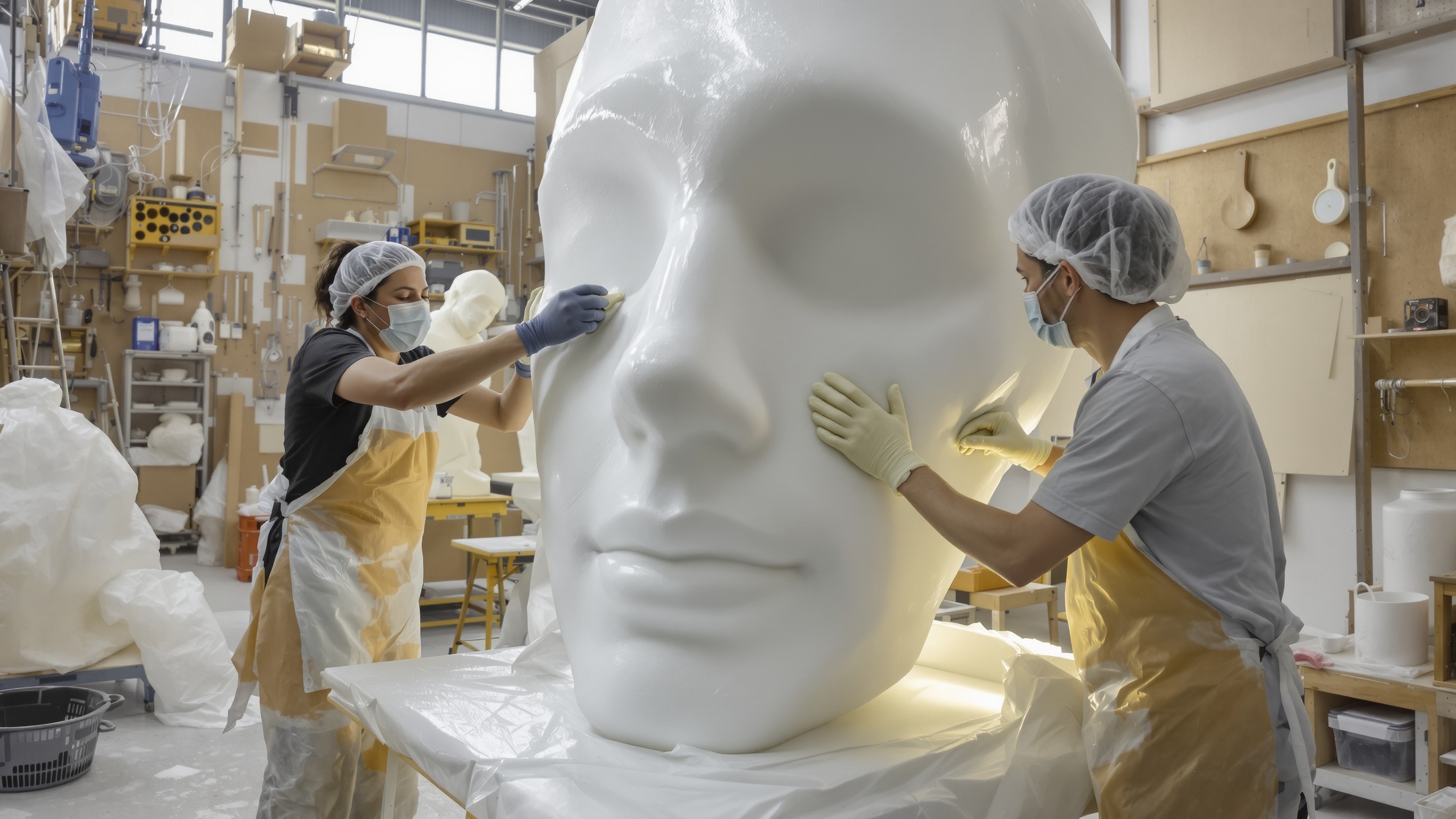
Foam may establish volume, while a frame or localized reinforcement handles selected loads. Resin and fiberglass can form a rigid outer shell, and paint or textured coatings provide the final appearance. Not every project uses every layer or the same material order.
Each interface matters. Adhesives, fillers, coatings, fasteners, and finish products must be compatible, and the shell should retain required detail while addressing joints, impact expectations, exposure, and future repair.
Shape Complex Forms and Surface Detail
Foam can be CNC cut, hot-wire shaped where suitable, assembled, and hand carved, allowing large curves and volumes to be developed from digital or physical sculpture references. Printed or molded parts may be added when they better reproduce small or repeated detail.
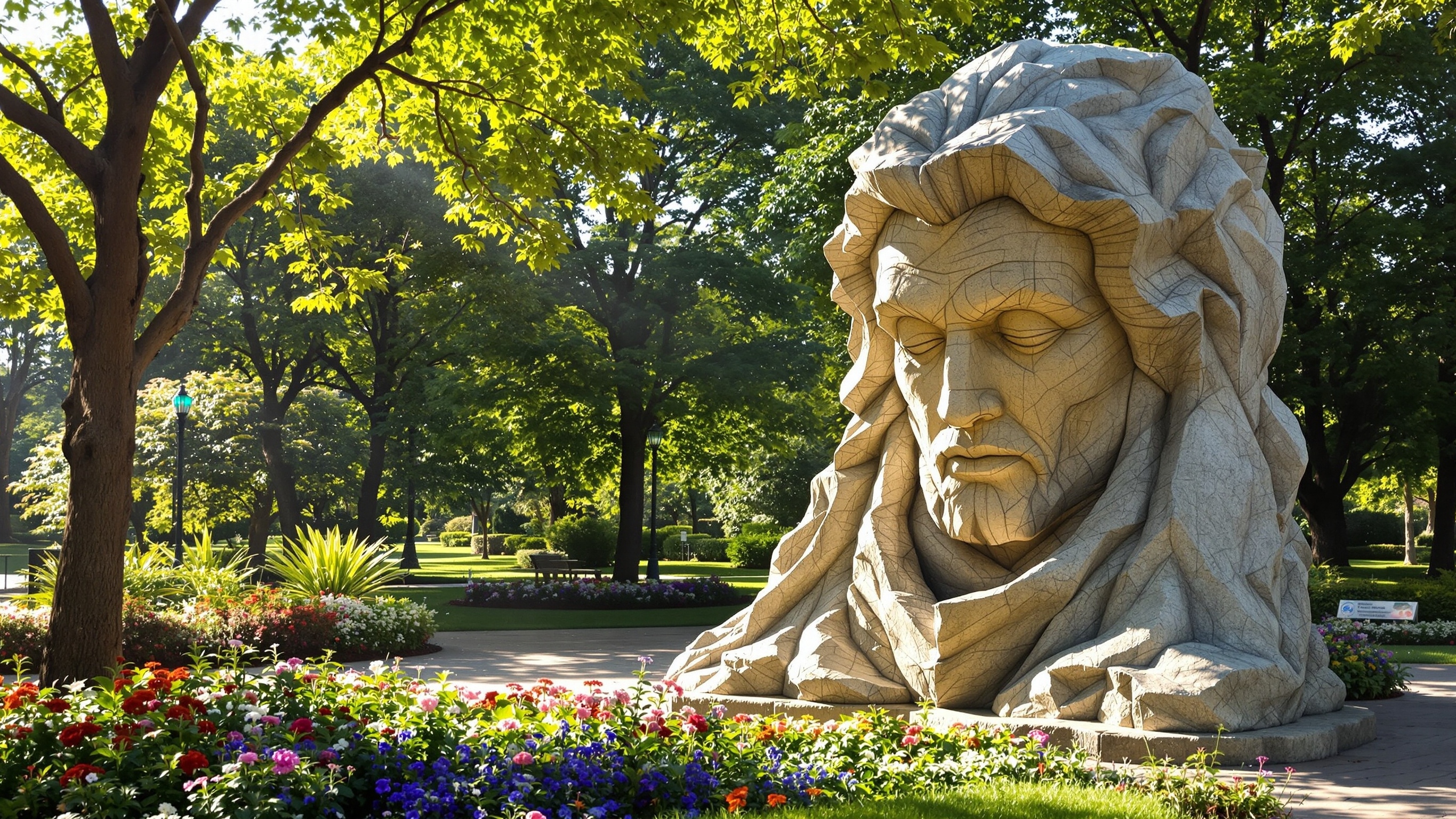
The surface can be refined for smooth painted work or intentionally textured to suggest stone, metal, skin, fabric, bark, or another material. Visual resemblance does not give the assembly the physical properties of the material it imitates.
Plan Modularity and Transport
Lightweight statues can be divided into sections that fit crates, vehicles, doors, elevators, or venue handling equipment. Modular construction is most effective when seams, connections, lift points, alignment, and assembly access are part of the original design.
Packing still needs to protect projections, corners, painted surfaces, and joints. Repeated-use work should include setup instructions, hardware control, inspection points, and a storage plan matched to the finished materials.
Evaluate Exposure, Contact, and Support
Indoor display, controlled event use, permanent exterior exposure, and interactive public placement are different specifications. Structure, coating, ultraviolet exposure, water paths, temperature, wind, anchoring, barriers, and maintenance should be reviewed for the actual site.
Lower mass does not automatically make a statue safer or structurally adequate. Qualified review, secure mounting, controlled access, and appropriate installation remain necessary where the size, pose, location, or public use requires them.
Prepare the Lightweight Statue Brief
Provide concept art or a digital model, dimensions, pose, viewing directions, detail, finish references, exposure, audience access, base and mounting information, transport envelope, delivery route, installation responsibility, expected moves, and schedule.
WhiteClouds can use those requirements to determine whether a foam, resin, fiberglass, or mixed lightweight assembly is appropriate and to plan the form, support, surface, finish, and handling together.
Plan a lightweight large statue
Review custom prop-making services and examples of large sculptural and dimensional display work.
Tell us what your model needs to communicate
Share the intended audience, approximate size, level of detail, available source files, and project timeline.