
How Oversized Statues Are Fabricated Without Bronze
A fabrication sequence for creating monumental sculptural forms with lightweight cores, fabricated shells, and bronze-like or other custom finishes
An oversized statue can achieve substantial scale without foundry casting by combining digital or physical sculpting, sectional construction, appropriate support, a shaped form, a durable surface system, and layered finishing.
Technical Overview
Develop the Sculpture at Full-Scale Intent
The process begins with approved concept art, a physical maquette, a digital sculpt, scan data, or a combination of references. Proportion, pose, silhouette, facial or surface detail, viewing angles, and finished dimensions should be resolved before the form is divided for fabrication.
Enlargement exposes small design problems. Thin projections, unsupported limbs, deep undercuts, balance, and access may need controlled adjustments so the full-size object can be supported, finished, transported, and installed without losing its identity.
Engineer Support and Sectioning for the Project
Some statues need an internal frame, while others use shell geometry, bases, or localized reinforcement. The support approach depends on size, pose, material, center of gravity, exposure, audience access, mounting, transport, and the applicable structural review.
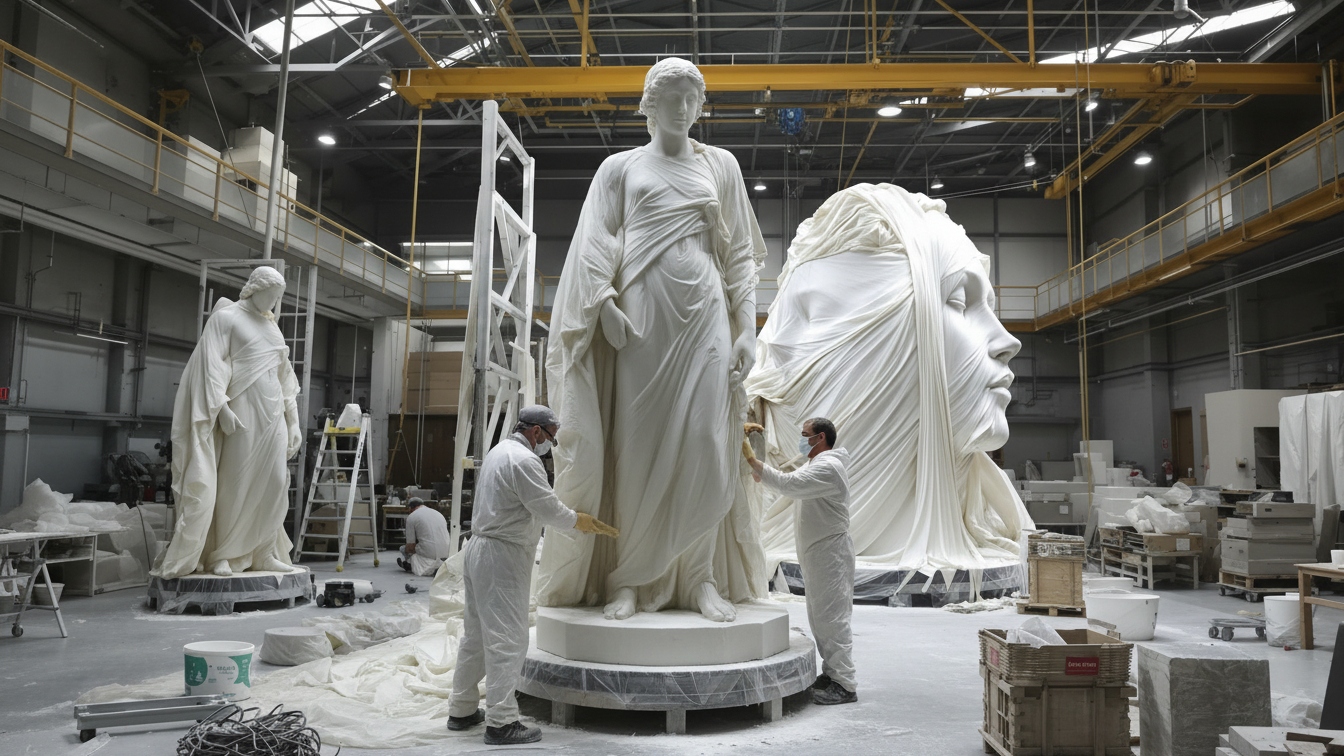
Large work may be divided into modules that fit equipment, doors, vehicles, or shipping cases. Seam locations, lifting points, connectors, alignment, and access for fastening are planned with the sculpture so assembly does not introduce visible breaks in critical detail.
Create the Large Sculptural Form
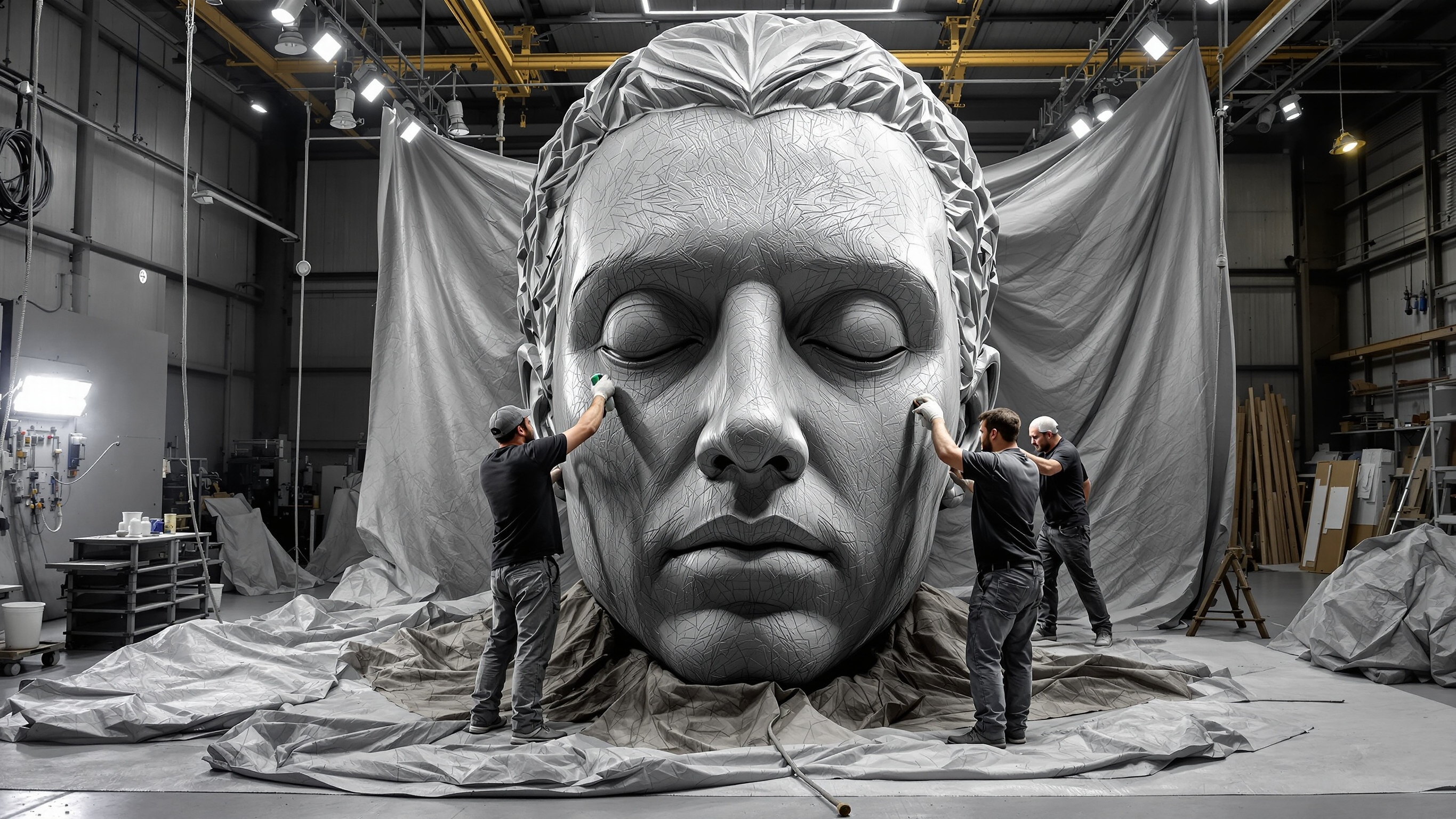
Foam blocks can be CNC cut, hot-wire shaped where suitable, assembled, and hand refined to establish volume and surface. Other projects may use printed sections, molds, rigid skins, or mixed fabrication methods according to geometry and the number of required copies.
Digital tools can control enlargement, but hand finishing remains useful for transitions, expression, texture, and the relationship between assembled sections. Review should occur before the surface shell makes major shape changes more difficult.
Apply the Specified Surface System
The shaped form may receive a compatible resin, fiberglass, elastomeric coating, filler, or another shell selected for the project. Material compatibility, thickness, joints, detail retention, handling, exposure, and repair method should be evaluated as one system.
Surface preparation after the shell can include filling, sanding, texturing, and priming. The goal is not always a perfectly smooth surface; tool marks, cast texture, skin, fabric, stone, or aged metal effects may require controlled relief.
Create a Non-Bronze Visual Finish
Metallic paints, translucent layers, washes, highlights, and patina effects can suggest cast bronze without making the object bronze. Reference images and physical samples should define color, sheen, texture, variation, and the degree of aging.
Other finishes can resemble stone, painted sculpture, ceramic, or a stylized graphic surface. A compatible protective layer may be added when specified, but its appearance and exposure limits need to be tested with the complete finish stack.
Plan Delivery and Installation Before Fabrication
Site access, foundation or base, anchoring, equipment, installers, audience distance, wind or indoor conditions, utilities, and final seam access should be known before section sizes and connection details are frozen.
WhiteClouds can develop an oversized non-bronze statue around those constraints, coordinating sculpture, structure, modules, surface, finish, packing, and installation as one custom object.
Plan a monumental non-bronze statue
Review custom prop fabrication and examples of large physical 3D props and sculptural displays.
Tell us what your model needs to communicate
Share the intended audience, approximate size, level of detail, available source files, and project timeline.