
Planning a Giant Backpack Prop
Giant Backpack Prop: one oversized backpack prop defined by a soft-sided bag body, shoulder straps, carrying handle, pockets, and supplied closures. Recognition depends on the main bag volume, paired shoulder straps, top handle, front pocket, flap or zipper paths, seam layout, and controlled depth. The central scale question is that the straps, pockets, and closure paths must remain legible without making the enlarged bag look like rolling luggage or an ordinary cabinet. The images are backpack design concepts rather than photographs of completed WhiteClouds work.
Plan a Backpack Display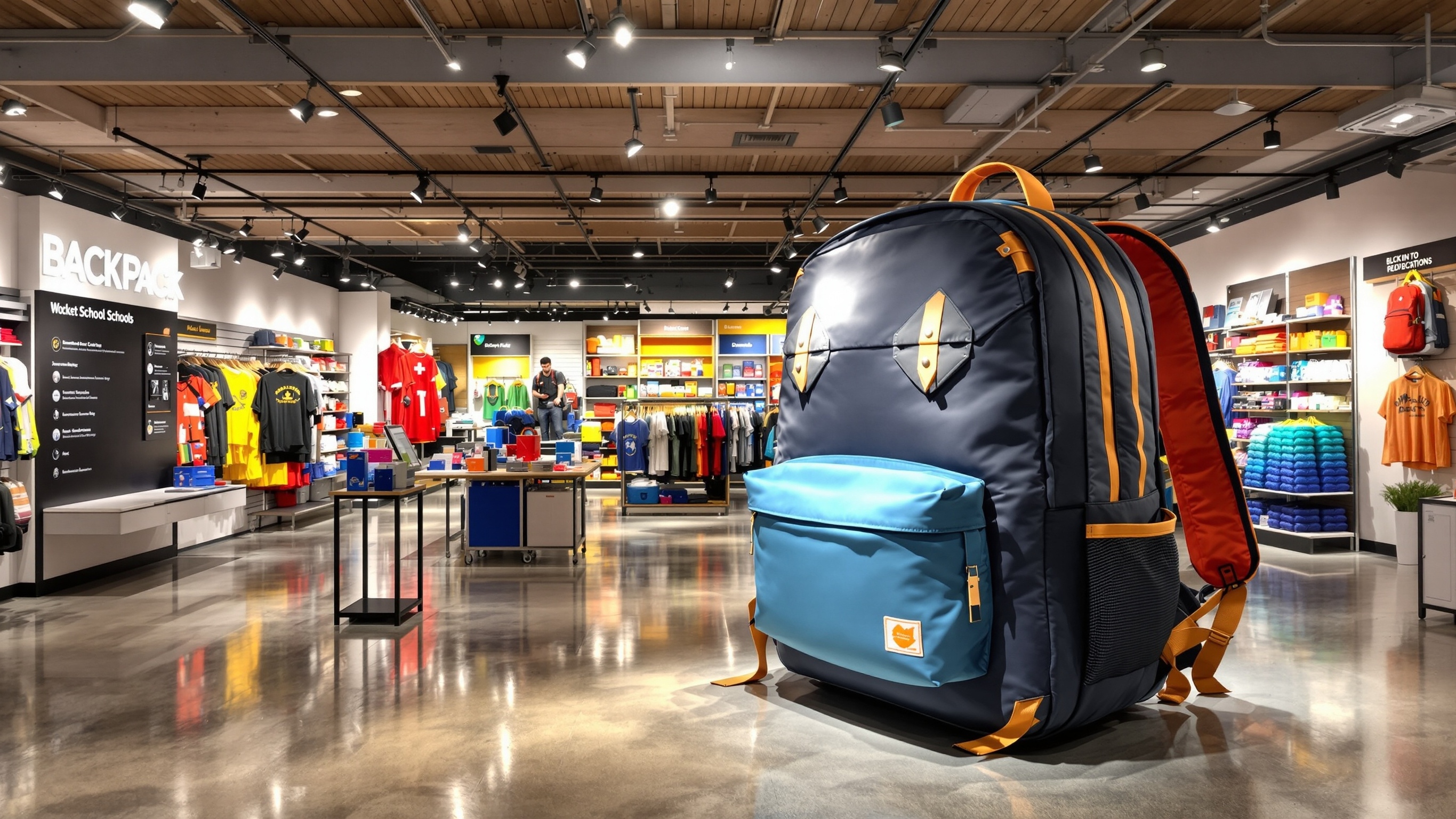
Define the Backpack Form
Backpack physical scope: one oversized backpack prop defined by a soft-sided bag body, shoulder straps, carrying handle, pockets, and supplied closures. Its geometry includes overall height, width and depth, body taper, pocket projection, flap shape, strap width and route, handle opening, and support footprint. Its defining visual cues are the main bag volume, paired shoulder straps, top handle, front pocket, flap or zipper paths, seam layout, and controlled depth.
Backpack presentation: a static shoulder-carried bag replica shown upright, leaned, or opened to a defined degree with the straps and front organization readable. The visual treatment can use approved textile-like color blocking, seam and zipper cues, authorized patches or graphics, and selected hardware-like accents. Keep the backpack scope separate from rolling cases, telescoping luggage handles, working zippers, wearable straps, storage capacity, load ratings, textile-performance claims, and invented brands or commissions.
Backpack identity begins with the relationship between the main compartment and the harness side. The reference should show whether the body is rectangular, tapered, rounded, or structured; how the front pocket projects; where the flap or zipper path begins; and how the two shoulder straps attach. A front elevation controls pocket and graphic placement, while a rear or three-quarter view establishes strap spacing, handle clearance, and depth. The pose should preserve the bag silhouette without implying that visitors can wear, open, or load the display.
A backpack brief should distinguish front organization from rear harness geometry. List each pocket by location, projection, opening direction, and relationship to the main compartment. Then identify whether the top closes with a flap, zipper-like path, roll, drawcord-like cue, or supplied custom form. Shoulder straps should be fixed in a declared position: visible behind the body, swept outward, resting against a support, or omitted from the principal view only when another view documents them. Side pockets, compression-strap cues, buckles, patches, and zipper pulls are optional identifying details rather than a reason to imply that the enlarged object opens or carries gear.
The rear elevation is the backpack's strongest separation from a suitcase. Document two shoulder-strap paths, their upper anchor spacing, lower attachment points, padding-like panel shapes, back-panel divisions, and any chest-strap or waist-belt cues shown in the approved reference. Those forms can be simplified for a frontal presentation, but they cannot be replaced by wheels, hard-shell ribs, or an extending rail handle. A school-pack direction may emphasize a front pouch and loop; a hiking-pack direction may use a taller body and more external strap cues. Select one family and keep its compartment hierarchy consistent across every view.
Control the Details That Identify the Backpack
Backpack planning variables include overall height, width and depth, body taper, pocket projection, flap shape, strap width and route, handle opening, and support footprint; the main bag volume, paired shoulder straps, top handle, front pocket, flap or zipper paths, seam layout, and controlled depth; approved textile-like color blocking, seam and zipper cues, authorized patches or graphics, and selected hardware-like accents; and a static shoulder-carried bag replica shown upright, leaned, or opened to a defined degree with the straps and front organization readable.
Backpack form
For the backpack, set overall height, width and depth, body taper, pocket projection, flap shape, strap width and route, handle opening, and support footprint. Show one oversized backpack prop defined by a soft-sided bag body, shoulder straps, carrying handle, pockets, and supplied closures, and keep the complete outline readable from the primary approach.
Backpack recognition
Preserve the main bag volume, paired shoulder straps, top handle, front pocket, flap or zipper paths, seam layout, and controlled depth. Rank the backpack cues for the expected viewing distance, and make every permitted simplification explicit.
Backpack surface
Develop approved textile-like color blocking, seam and zipper cues, authorized patches or graphics, and selected hardware-like accents. Place each requested backpack graphic on the reference views with usable artwork, orientation, and scale.
Backpack setting
Plan a static shoulder-carried bag replica shown upright, leaned, or opened to a defined degree with the straps and front organization readable. Record the footprint and visible sides for the backpack, then add circulation around the backpack, access limits, support preference, and fixed site constraints.
Plan Scale, Viewing, and Placement
Backpack scale issue: the straps, pockets, and closure paths must remain legible without making the enlarged bag look like rolling luggage or an ordinary cabinet. Resolve that relationship through overall height, width and depth, body taper, pocket projection, flap shape, strap width and route, handle opening, and support footprint, then test the backpack against its principal view and available floor or site area.
Backpack settings may include education or back-to-school display; outdoor or travel campaign; retail, exhibit, stage, or photo setting. Useful buyer inputs include specific backpack reference; overall dimensions and viewing side; pocket and closure layout; strap and handle positions; approved colors and graphics; site access and date. State any requested backpack contact, movement, lighting, or exterior exposure as a separate requirement.
Compare Backpack Directions
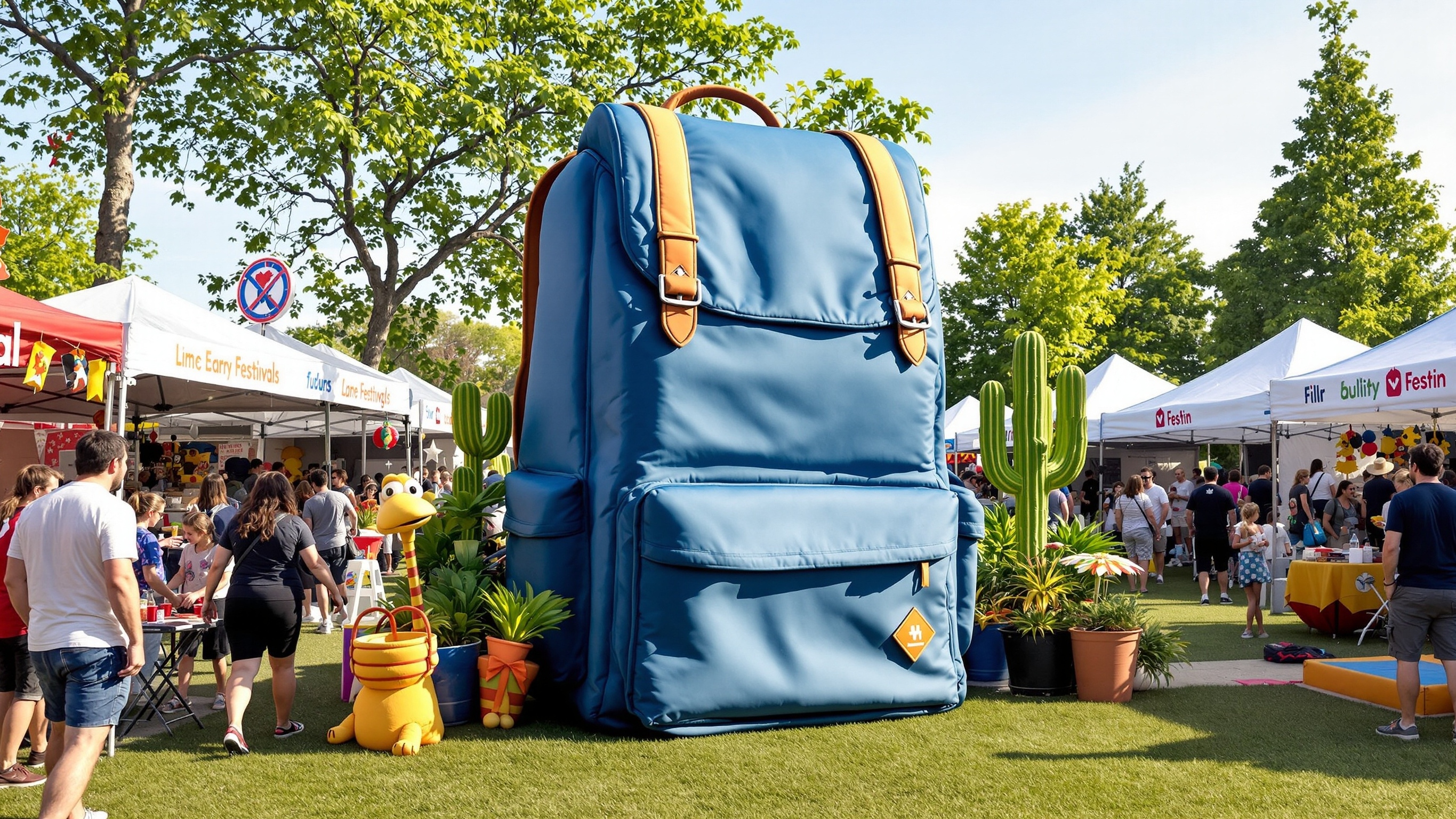
Backpack reference 1: Shows the complete bag silhouette and front organization at visitor scale. Backpack reference 2: Provides a second body shape and a clear public-space scale comparison.
Compare the backpack concepts as visual directions. They do not identify a prior backpack customer or commission. Use the backpack views to compare overall height, width and depth, body taper, pocket projection, flap shape, strap width and route, handle opening, and support footprint and approved textile-like color blocking, seam and zipper cues, authorized patches or graphics, and selected hardware-like accents. The images do not establish final backpack dimensions, construction, performance, transport, installation, or outcome.
Prepare the Backpack Project Brief
Backpack quote inputs should connect the defining backpack cues with its intended dimensions and display setting. Include each applicable backpack item below.
- specific backpack reference
- overall dimensions and viewing side
- pocket and closure layout
- strap and handle positions
- approved colors and graphics
- site access and date
- Physical subject: one oversized backpack prop defined by a soft-sided bag body, shoulder straps, carrying handle, pockets, and supplied closures
- Geometry: overall height, width and depth, body taper, pocket projection, flap shape, strap width and route, handle opening, and support footprint
- Recognition cues: the main bag volume, paired shoulder straps, top handle, front pocket, flap or zipper paths, seam layout, and controlled depth
- Surface direction: approved textile-like color blocking, seam and zipper cues, authorized patches or graphics, and selected hardware-like accents
- Display direction: a static shoulder-carried bag replica shown upright, leaned, or opened to a defined degree with the straps and front organization readable
- Scale issue: the straps, pockets, and closure paths must remain legible without making the enlarged bag look like rolling luggage or an ordinary cabinet
- Backpack setting: education or back-to-school display
- Backpack setting: outdoor or travel campaign
- Backpack setting: retail, exhibit, stage, or photo setting
- Excluded scope: rolling cases, telescoping luggage handles, working zippers, wearable straps, storage capacity, load ratings, textile-performance claims, and invented brands or commissions
- Requested backpack contact, movement, lighting, or exterior exposure
Request a Custom Quote
Send the backpack reference, specific backpack reference, overall dimensions and viewing side, pocket and closure layout, strap and handle positions, approved colors and graphics, site access and date, destination, and required date. Also describe a static shoulder-carried bag replica shown upright, leaned, or opened to a defined degree with the straps and front organization readable. WhiteClouds can review the defined scope and prepare a custom quote. The concept images support visual planning and do not depict a completed WhiteClouds project.