Exploring the Size, Spirit, and Scale of Self-Sufficiency
There’s something irresistible about the word homestead. It conjures images of rolling meadows, tidy gardens bursting with tomatoes, and the quiet rhythm of a life lived close to the land. But when you start planning your own homestead, one of the first questions to pop up is surprisingly practical: How big should it be? Is a homestead five acres? Fifty? Can you really call it a homestead if you’re working with half an acre and a balcony garden? The truth is, there’s no single answer — and that’s what makes homesteading so wonderfully personal. “How big” is less about acreage and more about ambition, sustainability, and creativity. Still, let’s dig into the numbers, the lifestyle, and the realities that shape what size homestead might be right for you.
The Meaning of “Homestead”: More Than Just Land
Before we talk size, we have to understand what a homestead really is. Historically, the term comes from the U.S. Homestead Act of 1862, which offered 160 acres of free land to settlers willing to live on and improve it for at least five years. It was the government’s way of encouraging westward expansion — and for many families, it was a dream come true. But in the modern sense, homesteading is less about claiming land and more about reclaiming independence. It’s about growing your own food, generating your own energy, making instead of buying, and learning to live more deliberately. Some people homestead on sprawling rural properties, while others do it in suburban backyards or even city rooftops. So the modern homestead is defined not by its size, but by its self-sufficiency.
The Acreage Spectrum: From Urban Plots to Rural Retreats
When people imagine a homestead, they often picture a farmhouse surrounded by wide-open fields. But the range of homesteads today stretches far beyond that.
Let’s break down a few general categories to get a sense of scale:
Urban Homesteads: 1/10 to 1 Acre
Urban homesteaders are the magicians of limited space. They transform small backyards, patios, and community plots into thriving gardens that yield fresh produce year-round. You might not have a cow or a field of wheat, but with clever container gardening, composting, and perhaps a few backyard chickens (if local ordinances allow), you can live surprisingly self-sufficiently on less than an acre. These small-scale homesteads are proof that sustainability isn’t about size—it’s about intention and innovation.
Suburban Homesteads: 1–5 Acres
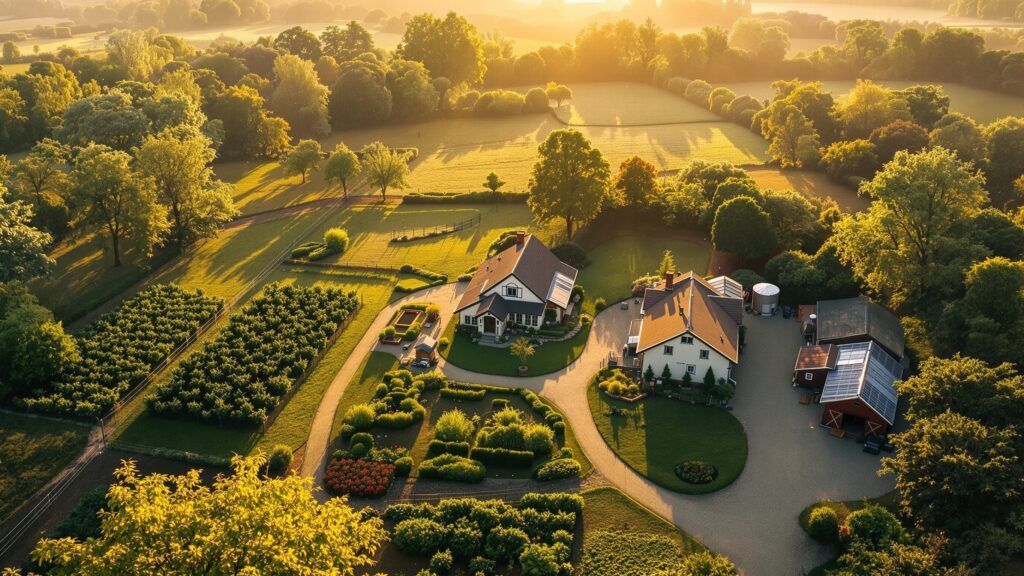
This is the “sweet spot” for many modern homesteaders. A few acres allow room for gardens, fruit trees, small livestock like goats or chickens, and even renewable energy setups like solar panels. It’s enough space to feed a family and generate surplus to sell at local markets, but not so much that it becomes overwhelming. Many people find that 2–3 acres strike a beautiful balance between manageability and productivity. You can grow, preserve, and raise much of what you need—while still having access to town for supplies or school.
Rural Homesteads: 5–50 Acres (and Beyond)
When you picture a “classic” homestead, this is probably it: sprawling pastures, woodlots, barns, and fields that stretch to the horizon. A 10–20 acre homestead can sustain livestock like cattle, pigs, or horses, plus large gardens and orchards. Go bigger—say, 40 to 100 acres—and you can add serious forestry, rotational grazing, and long-term sustainability projects like ponds and renewable energy systems. But here’s the catch: the more land you have, the more you need to manage. Fencing, mowing, irrigation, and maintenance all scale up fast. For many people, the dream of “more land” turns into a full-time job—and sometimes, that’s exactly what they want.
The Self-Sufficiency Equation
Acreage is only part of the equation. What really determines the size of a homestead is how self-sufficient you want to be. If your goal is to supplement your grocery bill and enjoy a hobby farm lifestyle, one or two acres may be plenty. If your dream is total independence—producing your own food, fuel, fiber, and power—you might need more like 10–50 acres, depending on your methods and location.
Let’s think about what a self-sufficient lifestyle might include:
- A half-acre garden can feed a small family year-round with proper planning.
- One acre of pasture can support about one cow or two goats (depending on grass quality).
- An orchard of 20–30 fruit trees can thrive on a single acre.
- Solar panels and rainwater collection systems don’t need much space at all.
When you start to add these elements together—gardens, orchards, livestock, and resource systems—you begin to see how a few acres can go a very long way.
Soil, Sun, and Strategy: Why Location Trumps Size
A homestead’s success has less to do with how much land you have and more to do with how well you use it. Two acres of fertile soil with good sun exposure and water access will outperform 20 acres of rocky, dry scrubland. In other words, location matters more than sheer size.
Think about these key variables:
- Climate and Growing Season: How long can you grow crops each year? Is irrigation necessary?
- Water Sources: Do you have a well, stream, or reliable rainfall?
- Soil Health: Can you grow directly, or will you need to amend and rebuild your soil over time?
- Zoning and Regulations: Are you allowed to keep livestock, dig ponds, or build off-grid structures?
The best homesteaders learn to read the land like a story. They position gardens near the kitchen for convenience, build coops where morning sun dries dew quickly, and use slopes to harvest rainwater. These small strategic choices can make even a modest property incredibly productive.
The Human Factor: Time, Energy, and Skill
There’s another dimension to “how big is a homestead?”—the human one. A homestead’s size should match your time, energy, and skill level. Five acres might sound idyllic, but it won’t feel that way if you’re mowing, feeding, planting, and fixing fences from sunrise to sunset without help.
Many new homesteaders start too big and end up scaling down. The trick is to grow into your land, not let the land grow over you. Start with a manageable garden, maybe a few hens, and expand as your confidence and routines develop. In the end, a sustainable homestead is not about conquering acres—it’s about cultivating balance.
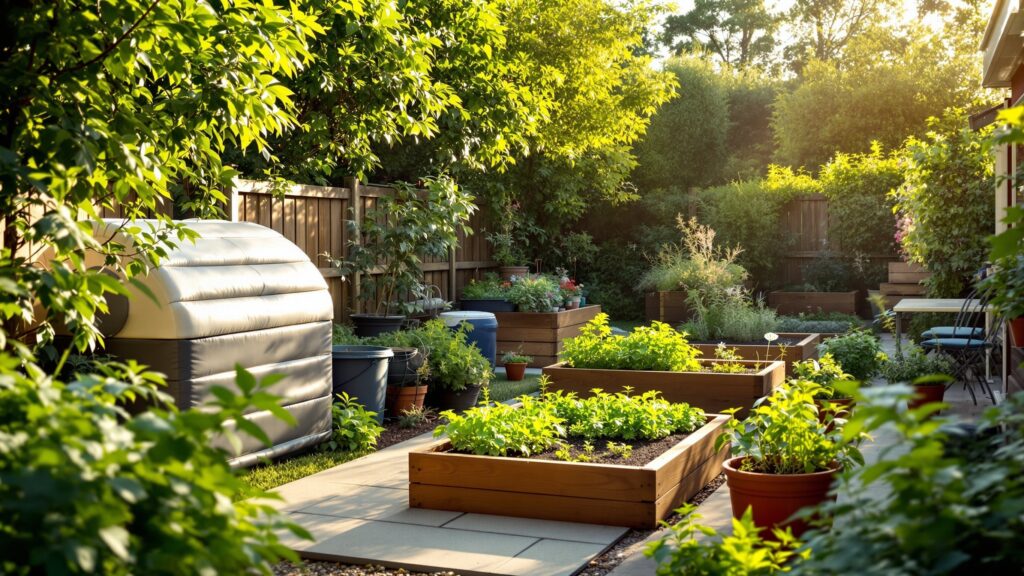
Micro-Homesteads: Doing More With Less
In recent years, a fascinating trend has emerged: the micro-homestead.
These are incredibly efficient setups on small parcels—sometimes less than half an acre—that use raised beds, vertical gardens, hydroponics, aquaponics, and permaculture design to produce stunning amounts of food.
A single suburban backyard can yield:
- Hundreds of pounds of vegetables annually.
- A steady supply of eggs from a handful of hens.
- Home compost, herbs, and medicinal plants.
- Even honey from a small beehive.
Micro-homesteaders prove that you don’t need to “go off-grid” to live abundantly. You can turn even the smallest space into a thriving ecosystem of growth and renewal.
Mid-Scale Homesteads: The 5–10 Acre Dream
For many modern families, five to ten acres is the “goldilocks zone” of homesteading—big enough to support livestock, gardens, and trees, yet small enough to manage with a couple of people.
Here’s what that might look like:
- Two acres of gardens and orchards.
- Three acres for pasture, goats, and chickens.
- One acre for the house, outbuildings, and workshops.
- A few acres of forest or wild land for firewood, hunting, or nature.
With smart rotation, composting, and permaculture principles, this scale can sustain food, energy, and income streams. It also leaves room for experimentation: a greenhouse, a small pond, or even a guest cabin for visiting friends (or Airbnb guests).
Large-Scale Homesteads: When the Land Becomes a Legacy
Beyond 20 acres, you enter the realm of heritage homesteads—properties that support multiple generations, businesses, or community ventures. At this scale, a homestead becomes a landscape, not just a home.
Large homesteads can include:
- Woodlots for lumber or maple syrup production.
- Rotational grazing systems for cattle or sheep.
- Renewable energy setups with wind or hydro power.
- Market gardens or CSA (Community Supported Agriculture) programs.
These properties often require significant investment in infrastructure—barns, tractors, fencing, irrigation—but they can also provide full-time livelihoods. The dream of total independence is most attainable here, though it demands deep knowledge, teamwork, and often, generational stewardship.
Zoning, Taxes, and Practical Realities
Of course, not all land is created equal in the eyes of the law. Before you decide how big your homestead should be, it’s essential to understand zoning laws, agricultural exemptions, and property taxes. Some regions classify properties under a certain size as “residential,” limiting what you can build or raise. Others offer agricultural tax breaks if you maintain a minimum acreage for farming or livestock. These details can make a huge difference in your annual costs and legal flexibility.
If you plan to sell produce, host workshops, or operate a business from your homestead, you’ll also need to ensure compliance with local regulations. Sometimes, the most productive homesteads aren’t the biggest—they’re the most strategically designed within their zoning framework.
The Emotional Acre: How Much Land Feels Like Freedom?
Beyond the practicalities, there’s an emotional dimension to homestead size. For some, the idea of ten open acres is exhilarating—a blank canvas of possibility. For others, it’s intimidating. The size of your homestead should feel right. It should reflect your rhythm, your values, and your dreams. A cozy one-acre garden can be every bit as fulfilling as a sprawling 50-acre ranch if it aligns with your lifestyle and brings you peace. Some people want goats and orchards. Others want solitude and sunsets. The beauty of homesteading is that you get to decide what “enough” looks like.
Homesteading in the Modern World: A Scalable Dream
We live in an era where sustainability and simplicity are both rare and revolutionary. You don’t need to move to the wilderness to homestead—you can begin right where you are. Start with a compost bin, a window herb garden, or a few raised beds. Learn the rhythms of planting, harvesting, and preserving. Then expand as your passion grows. Think of your homestead not as a static size, but as a scalable dream. Every jar of home-canned sauce, every solar panel, every handful of homegrown greens is a victory. Over time, you’ll discover what your perfect scale feels like.
Finding Your Homestead Sweet Spot
So, how big is a homestead? The real answer is simple: as big as your dream—and your effort—can sustain.
- On a quarter-acre, you can feed your family and cut grocery costs dramatically.
- On five acres, you can grow a small business alongside your self-sufficient life.
- On fifty acres, you can build a legacy that lasts for generations.
But every homestead, no matter the size, begins with the same spark: a desire to live closer to nature, to reclaim skills, and to live intentionally in a fast, disposable world. Whether your land stretches for miles or fits behind a white picket fence, if your hands touch the soil and your heart beats in rhythm with the seasons, you’re already a homesteader.
The Measure of a Homestead
In the end, “how big is a homestead?” isn’t really about acres — it’s about attitude. A homestead isn’t measured in fences, fields, or deeds; it’s measured in commitment, creativity, and connection. Maybe your homestead is a ¼-acre city lot, a 10-acre family plot, or a 100-acre woodland retreat. Whatever its size, the magic is the same: the satisfaction of self-sufficiency, the joy of nurturing life, and the pride of building something enduring. So go ahead — measure your homestead not in acres, but in abundance. That’s the truest scale of all.