
Mistakes to Avoid With Trade Show Displays
A practical review of message, layout, lighting, fabrication, logistics, and staffing problems that weaken exhibit displays
Most exhibit problems are easier to correct in the brief and drawings than on the show floor. The most useful review asks whether the booth communicates quickly, fits the contracted space, supports people and products, and can be delivered and assembled as planned.
Technical Overview
Avoid Competing Messages
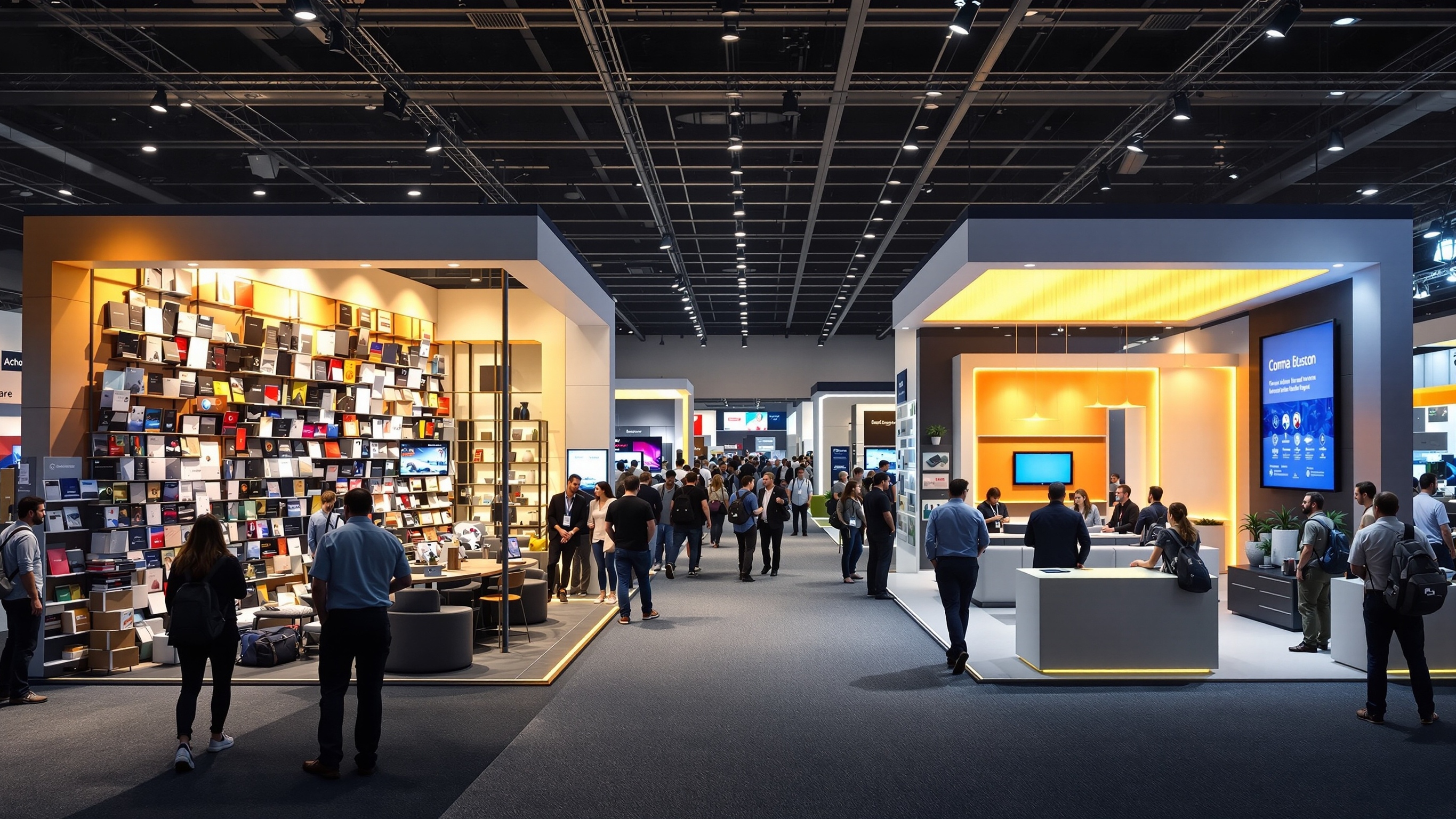
Trying to give every product, benefit, and campaign equal prominence creates a booth that is difficult to scan from the aisle. Establish one primary identity, one concise reason to stop, and a clear path to more detailed information.
Graphics, dimensional elements, screens, and props should support that hierarchy. If several objects all demand attention, remove or subordinate the ones that do not help the visitor understand the exhibitor's main purpose.
Do Not Design Beyond the Real Booth
A concept can fail when it ignores the contracted footprint, open sides, height limits, sightline rules, utilities, columns, or neighboring booths. Use the current exhibitor manual and floor information before committing to walls, hanging elements, or large dimensional forms.
Crowded furniture and blocked entrances also reduce usable space. Draw products, counters, people, doors, demonstrations, and storage at scale so the booth can support movement and conversation without relying on an empty rendering.
Do Not Leave Fabrication Decisions Late
A shape that has no resolved joints, base, attachment points, cable path, or shipping division is not ready to build. Late structural and connection decisions can alter the appearance, graphics, weight, packing, and setup sequence.
Complete interface dimensions for walls, counters, dimensional logos, props, screens, and lighting before separate vendors produce dependent parts. A controlled drawing set reduces the risk of graphics or hardware arriving for an earlier version of the design.
Do Not Rely on Hall Light or Screen Content Alone
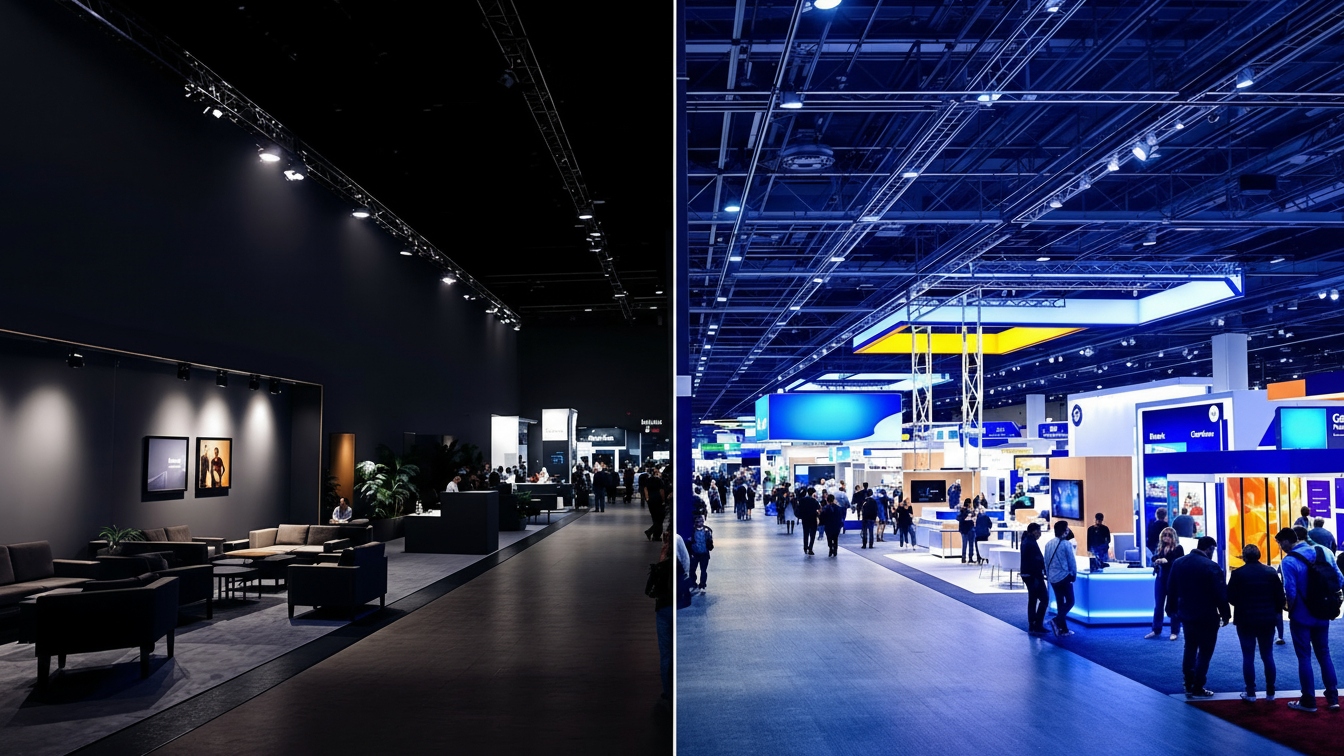
Convention-hall light may not reveal products, graphics, textures, or dimensional forms as intended. Plan fixture type, angle, brightness, power, cable routing, and control around the booth rather than assuming the overhead system will provide useful emphasis.
Screens can fail, be occupied, or be difficult to hear and see. The company identity and main message should remain understandable when digital content is paused, while technology supports a defined demonstration or visitor task.
Do Not Skip Test Assembly and Logistics
A test assembly can expose missing hardware, unstable parts, misaligned graphics, lighting conflicts, unclear instructions, and components that are awkward to handle. Skipping that step moves preventable discoveries to a more expensive and time-limited venue environment.
Budget and schedule should include packing, freight, drayage, installation, dismantling, storage, return shipping, replacement graphics, and show services. Fabrication cost alone does not describe the resources required to put a booth on the floor.
Do Not Forget the Operating Team
Staff need a clear understanding of the booth zones, demonstrations, storage, technology, lead capture, and visitor handoff. A well-built display can still perform poorly if representatives block entrances, leave counters cluttered, or cannot operate the equipment.
Prepare a setup and operating handoff that covers opening checks, controls, cleaning, replenishment, closing, and dismantling. WhiteClouds can address custom dimensional display components when these practical requirements are included with the design request.
Avoid preventable exhibit-display problems
Review custom trade show display capabilities and examples of completed event and exhibit installations.
Tell us what your model needs to communicate
Share the intended audience, approximate size, level of detail, available source files, and project timeline.