
Planning a Giant Three-Ring Binder Prop
Giant Three-Ring Binder Prop: one oversized three-ring binder prop defined by front and back covers, spine, page block, and visible ring mechanism. Recognition depends on a hinged cover pair, broad spine, three evenly spaced rings, punched pages or inserts, and a supplied open or closed pose. The central scale question is that the rings, hinges, and page holes need enough scale to read clearly without turning the object into a generic open book. The images are three-ring binder design concepts rather than photographs of completed WhiteClouds work.
Plan a Three-Ring Binder Display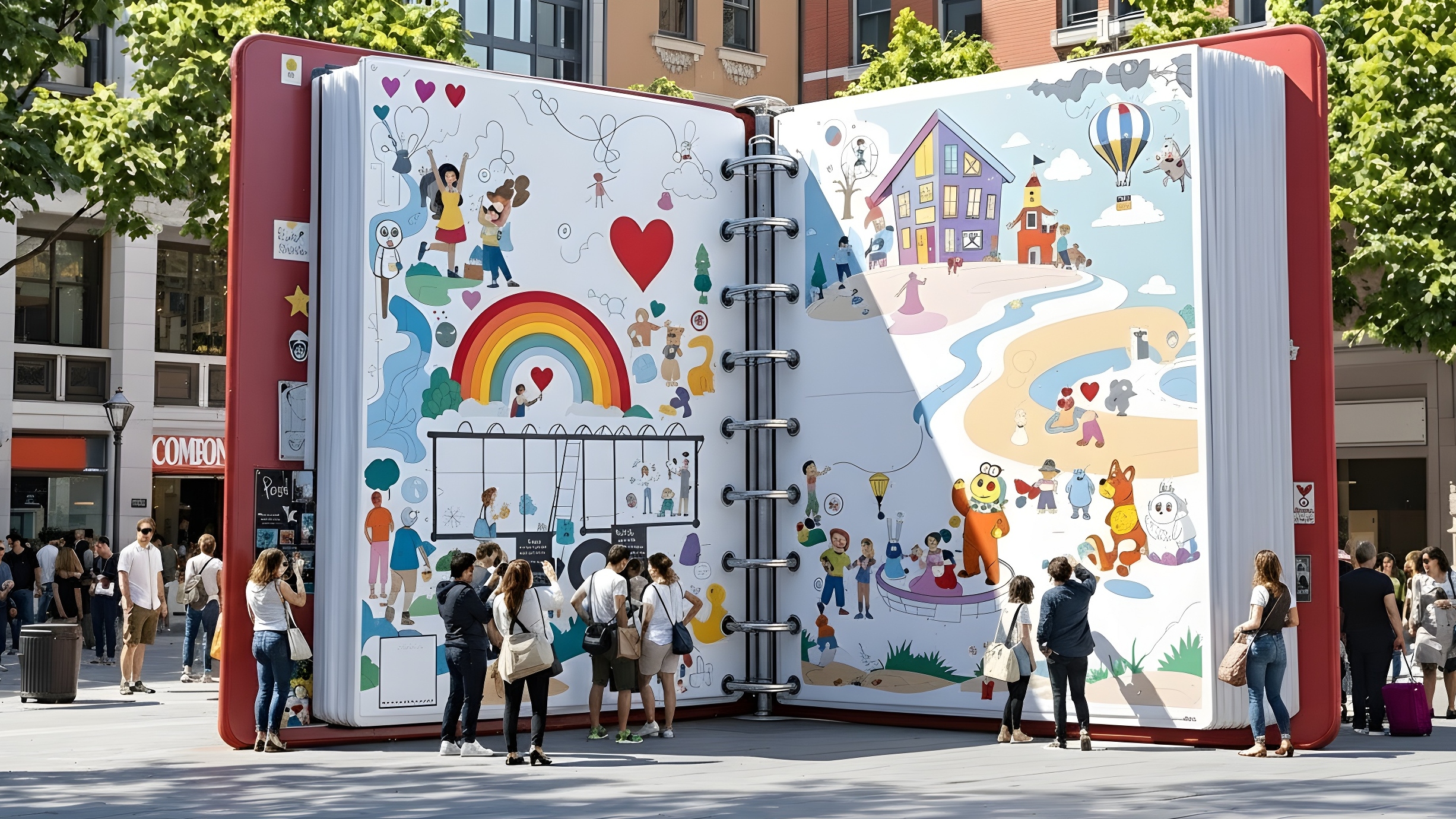
Define the Three-Ring Binder Form
Three-Ring Binder physical scope: one oversized three-ring binder prop defined by front and back covers, spine, page block, and visible ring mechanism. Its geometry includes binder height and width, spine depth, cover angle, ring diameter and spacing, page thickness, and support footprint. Its defining visual cues are a hinged cover pair, broad spine, three evenly spaced rings, punched pages or inserts, and a supplied open or closed pose.
Three-Ring Binder presentation: a binder-specific exhibit or photo prop planned around the ring mechanism, page inserts, and readable cover or spine. The visual treatment can use approved cover color, edge treatment, labels, pockets, dividers, and authorized graphics. Keep the three-ring binder scope separate from spiral binding, generic hardbound books, functional office storage, moving ring mechanics unless separately reviewed, unauthorized document content, and invented commissions.
A three-ring binder depends on its hinged cover pair, broad spine, punched page block, and three evenly spaced rings. An open pose makes the mechanism and page relationship immediately visible; a closed or partly open pose gives more room to the cover and spine graphics. Binder height, cover width, spine depth, ring diameter, ring spacing, page thickness, and support footprint should be coordinated before artwork is placed. Pockets, dividers, tabs, labels, and supplied documents can deepen the office or education theme, but they should not crowd the ring mechanism. The viewer should be able to distinguish the object from an open book at the planned camera angle. The page does not promise working rings, ordinary document storage, functional office use, or reproduction of protected document content without permission.
Binder planning should begin with the open-cover angle and the three-ring centerline. Specify whether the rings appear round, D-shaped, or another supplied profile, then map their diameter, equal spacing, and relationship to the punched page margin. A broad spine can carry an authorized label panel; front and back covers can include separate artwork, pockets, or edge bands. Divider tabs and staged document leaves may help explain the organizational theme, but a continuous coil must never appear. A nearly closed binder emphasizes spine depth and cover graphics, while a fully open display prioritizes the ring assembly. The visual mechanism can be fixed in one pose without promising that visitors can open, close, or use it for storage. Training-manual, records, onboarding, catalog, registration, and organizational themes can each use a different divider hierarchy. Index colors, sleeve-like windows, spine-title placement, corner reinforcement, and cover embossing are useful visual decisions when they are supplied. A tabletop stance, upright open presentation, or low easel angle changes how clearly the metal-like ring trio can be seen. Whatever the staging, the broad hinged case and removable-leaf arrangement should dominate instead of notebook ruling, coils, or literary bookbinding.
Control the Details That Identify the Three-Ring Binder
Three-Ring Binder planning variables include binder height and width, spine depth, cover angle, ring diameter and spacing, page thickness, and support footprint; a hinged cover pair, broad spine, three evenly spaced rings, punched pages or inserts, and a supplied open or closed pose; approved cover color, edge treatment, labels, pockets, dividers, and authorized graphics; and a binder-specific exhibit or photo prop planned around the ring mechanism, page inserts, and readable cover or spine.
Three-Ring Binder form
For the three-ring binder, set binder height and width, spine depth, cover angle, ring diameter and spacing, page thickness, and support footprint. Show one oversized three-ring binder prop defined by front and back covers, spine, page block, and visible ring mechanism, and keep the complete outline readable from the primary approach.
Three-Ring Binder recognition
Preserve a hinged cover pair, broad spine, three evenly spaced rings, punched pages or inserts, and a supplied open or closed pose. Rank the three-ring binder cues for the expected viewing distance, and make every permitted simplification explicit.
Three-Ring Binder surface
Develop approved cover color, edge treatment, labels, pockets, dividers, and authorized graphics. Place each requested three-ring binder graphic on the reference views with usable artwork, orientation, and scale.
Three-Ring Binder setting
Plan a binder-specific exhibit or photo prop planned around the ring mechanism, page inserts, and readable cover or spine. Record the footprint and visible sides for the three-ring binder, then add circulation around the three-ring binder, access limits, support preference, and fixed site constraints.
Plan Scale, Viewing, and Placement
Three-Ring Binder scale issue: the rings, hinges, and page holes need enough scale to read clearly without turning the object into a generic open book. Resolve that relationship through binder height and width, spine depth, cover angle, ring diameter and spacing, page thickness, and support footprint, then test the three-ring binder against its principal view and available floor or site area.
Three-Ring Binder settings may include education, training, or office campaign; conference, records, or organizational exhibit; retail, stage, or photo display. Useful buyer inputs include binder reference and pose; cover and spine dimensions; ring size and spacing; page, divider, or pocket scope; approved cover and spine artwork; venue and deadline. State any requested three-ring binder contact, movement, lighting, or exterior exposure as a separate requirement.
Compare Three-Ring Binder Directions
Three-Ring Binder reference 1: Shows the complete ring mechanism, open-cover angle, page field, and audience scale. Three-Ring Binder reference 2: Provides a contrasting cover treatment and a different open display angle.
Compare the three-ring binder concepts as visual directions. They do not identify a prior three-ring binder customer or commission. Use the three-ring binder views to compare binder height and width, spine depth, cover angle, ring diameter and spacing, page thickness, and support footprint and approved cover color, edge treatment, labels, pockets, dividers, and authorized graphics. The images do not establish final three-ring binder dimensions, construction, performance, transport, installation, or outcome.

Prepare the Three-Ring Binder Project Brief
Three-Ring Binder quote inputs should connect the defining three-ring binder cues with its intended dimensions and display setting. Include each applicable three-ring binder item below.
- binder reference and pose
- cover and spine dimensions
- ring size and spacing
- page, divider, or pocket scope
- approved cover and spine artwork
- venue and deadline
- Physical subject: one oversized three-ring binder prop defined by front and back covers, spine, page block, and visible ring mechanism
- Geometry: binder height and width, spine depth, cover angle, ring diameter and spacing, page thickness, and support footprint
- Recognition cues: a hinged cover pair, broad spine, three evenly spaced rings, punched pages or inserts, and a supplied open or closed pose
- Surface direction: approved cover color, edge treatment, labels, pockets, dividers, and authorized graphics
- Display direction: a binder-specific exhibit or photo prop planned around the ring mechanism, page inserts, and readable cover or spine
- Scale issue: the rings, hinges, and page holes need enough scale to read clearly without turning the object into a generic open book
- Three-Ring Binder setting: education, training, or office campaign
- Three-Ring Binder setting: conference, records, or organizational exhibit
- Three-Ring Binder setting: retail, stage, or photo display
- Excluded scope: spiral binding, generic hardbound books, functional office storage, moving ring mechanics unless separately reviewed, unauthorized document content, and invented commissions
- Requested visitor contact, movement, lighting, or exterior exposure
Request a Custom Quote
Send the three-ring binder reference, binder reference and pose, cover and spine dimensions, ring size and spacing, page, divider, or pocket scope, approved cover and spine artwork, venue and deadline, destination, and required date. Also describe a binder-specific exhibit or photo prop planned around the ring mechanism, page inserts, and readable cover or spine. WhiteClouds can review the defined scope and prepare a custom quote. The concept images support visual planning and do not depict a completed WhiteClouds project.