
Planning a Giant Egyptian-Inspired Statue
A giant Egyptian-inspired statue should be based on one clearly identified visual direction rather than a loose mixture of familiar motifs. Figure type, posture, headdress, hand position, pedestal, surface treatment, and any symbols need a consistent reference package and a defined relationship to the surrounding architecture.
Discuss an Egyptian-Inspired Statue
Identify the subject before combining visual elements
A precise source direction prevents unrelated costumes, symbols, and poses from being blended into a generic figure.
Historical-person reference
Use the selected portrait, period clothing, headdress, and pose sources, and distinguish documented likeness from decorative interpretation.
Deity-inspired figure
Specify the chosen figure and the exact head, body, attributes, and stance rather than relying on a broad mythological label.
Architectural guardian
Plan a frontal or paired stance around a doorway, stair, or axis, including spacing and the relationship between base and building.
Original themed character
Provide a complete model sheet that uses Egyptian-inspired design intentionally without presenting the figure as an artifact reproduction.
Keep hands, headwear, and symbols readable
Formal figures often depend on symmetry and a small number of attributes. Mark the position of each hand, any staff or object, the angle of the head, and the complete outline of the crown or headdress. If the figure holds an item away from the body, include that projection in the maximum width and depth.
For seated or striding figures, the base and leg position become part of the identity. Provide front and side references that agree. Any inscription, cartouche-like graphic, or symbolic pattern should be supplied as approved artwork and reviewed for accuracy rather than improvised as surface decoration.
Measure the statue against the room or facade
A tall formal figure is strongest when its centerline and surrounding clearances are deliberate.
- Floor-to-ceiling or grade-to-overhang height
- Door, stair, column, or wall centerline
- Pedestal height and maximum footprint
- Headwear and hand-held projection envelope
- Primary front view and secondary side views
- Visitor circulation and camera location
- Largest access opening and turning area
- Indoor, covered, or exposed placement and required date
Compare exterior symmetry with interior scale
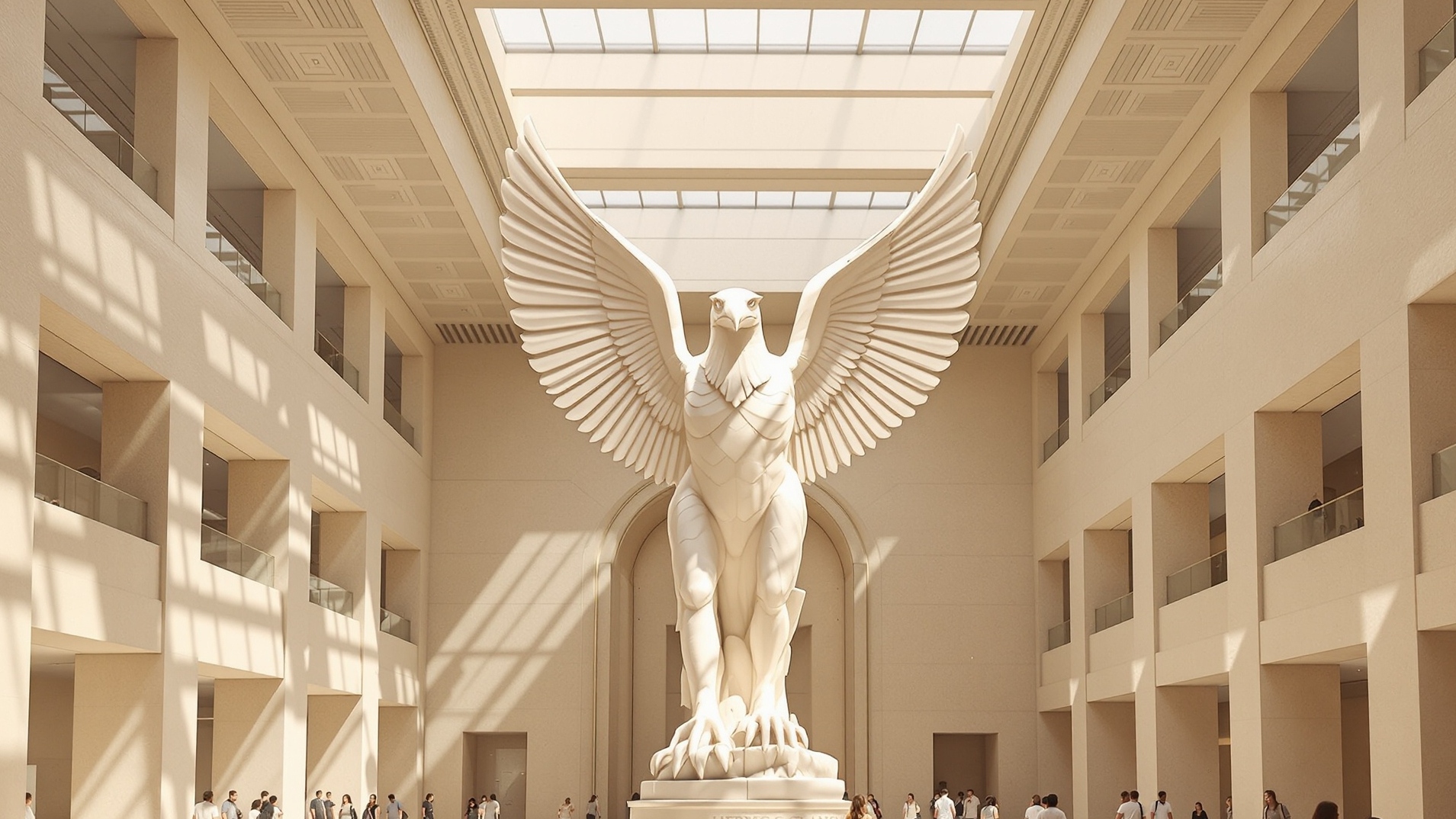
The pharaoh-inspired concept uses a frontal pose and pedestal aligned to a museum facade. The falcon-headed figure uses a tall interior hall where wings of the headdress, shoulders, and aisle relationship become more apparent. These scenes are conceptual and do not represent completed commissions.
Choose a finish that supports the stated interpretation
The visual direction may suggest carved stone, painted sculpture, aged metal, or a cleaner scenic treatment. Supply examples of the desired color, contrast, and degree of aging without assuming a specific fabrication material or protective system. Surface language should support the selected figure and setting rather than combine several unrelated historical effects.
If the display is educational, include the approved interpretive text and the viewing distance for it. If it is scenic, identify the surrounding walls, columns, lighting, and neighboring objects that share the frame. Keep biography and historical exposition in separate interpretive content; the fabrication brief should remain focused on the physical figure.
Request pricing for a giant Egyptian-inspired statue
Send the exact figure and cultural references, pose, headwear, hand-held attributes, approved symbols, target dimensions, pedestal plan, architectural context, visitor route, access limits, destination, and deadline.