
Giant Werewolf Statue Ideas
A giant werewolf statue must reconcile human posture with canine anatomy in one readable character. Muzzle, ears, shoulders, hands or paws, legs, claws, fur masses, and clothing remnants should support a chosen stage of transformation and a clearly directed pose.
Plan a Werewolf Statue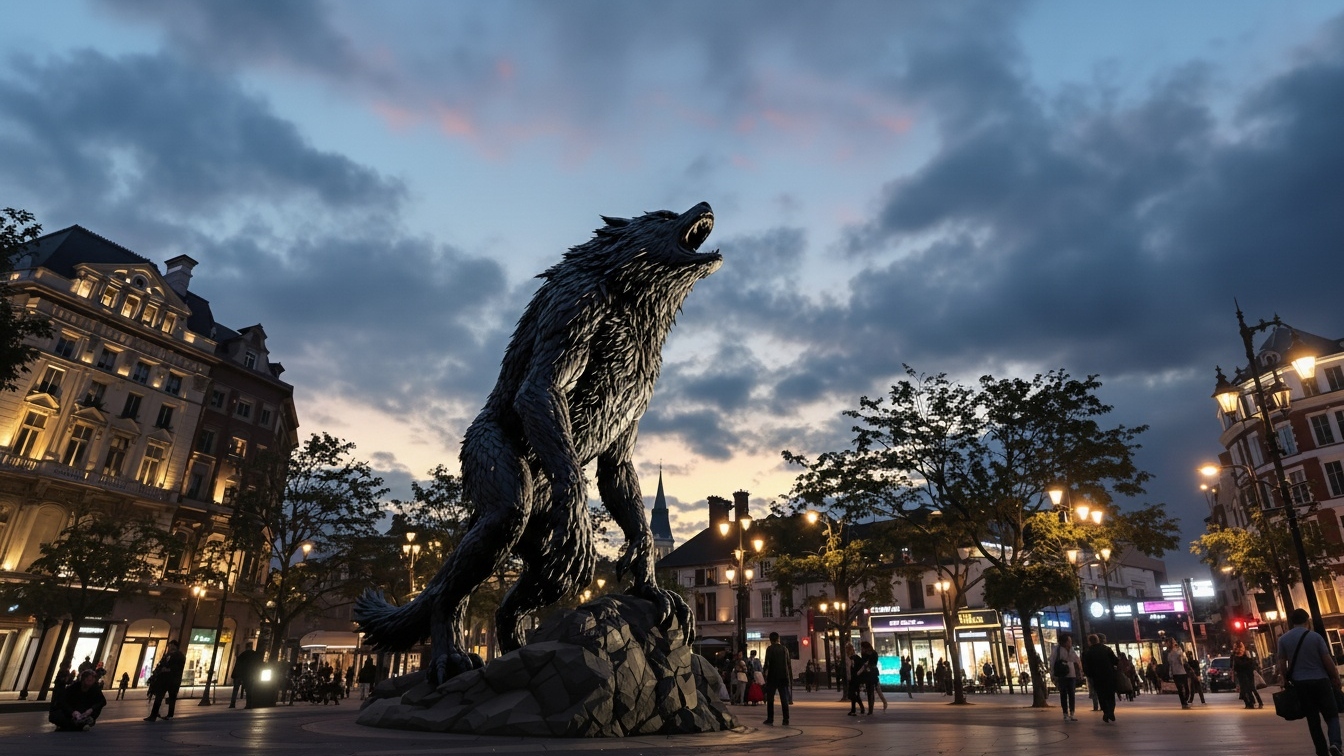
Decide where human anatomy gives way to the wolf
One design may retain a human torso and clothing with a wolf head and clawed hands. Another may use digitigrade legs, heavier fur, a longer muzzle, and a more animal-like spine. Select the combination intentionally and provide front, side, back, hand, foot, and face views that agree.
The transformation choice controls proportions throughout the statue. A large wolf head on a mostly human body needs a neck and shoulder transition that appears deliberate. Long forearms, raised heels, or an arched back change the total height and depth, so they should be resolved before surface texture.
Give the figure one readable behavior
The pose should communicate before visitors see teeth, claws, or fur detail.
Standing watch
An upright stance and turned head can frame an entrance while keeping hands and claws closer to the body.
Stalking forward
Bent knees, lowered shoulders, and reaching arms create depth and require clear space in front of the figure.
Crouched encounter
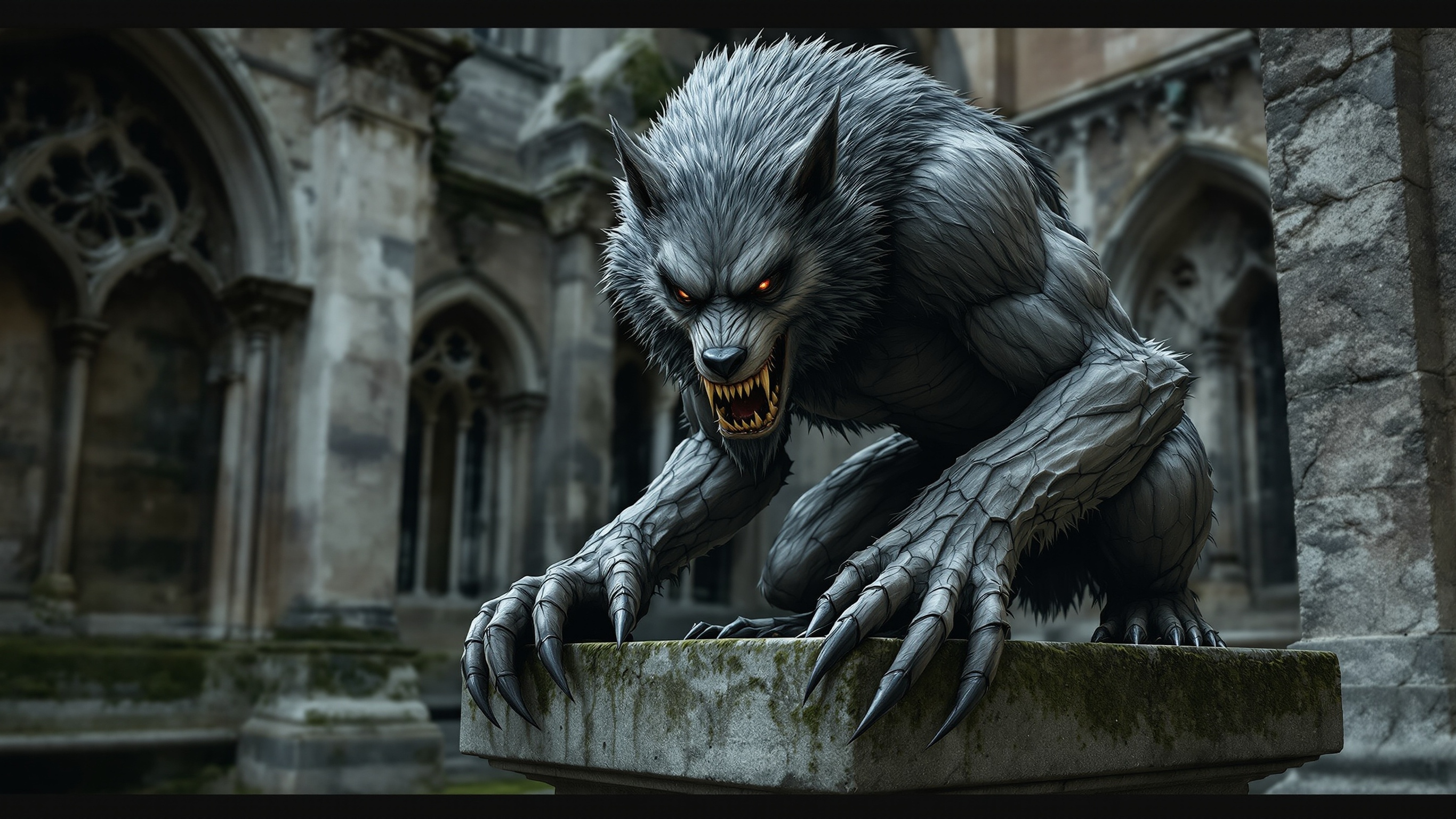
A compressed pose brings the face closer to visitors but expands the side-to-side footprint through elbows, knees, and hands.
Howling profile
A lifted muzzle and open chest create a strong side silhouette and make overhead height more important than direct eye contact.
Rank the features that define this werewolf
Specific approved references prevent a generic creature from accumulating unrelated horror details.
- Muzzle length, ear angle, eye direction, and expression
- Human, paw-like, or hybrid hands and feet
- Claw length and direction
- Fur grouping around face, shoulders, arms, and legs
- Clothing type, damage pattern, and approved colors
- Tail presence, length, and pose
- Any separate accessory or scenic object
Compare forward motion with a low architectural crouch
The plaza illustration uses a tall advancing stance with long arms and open surrounding space. The castle illustration lowers the figure into a compact crouch and places the face nearer the viewing level. Both are concepts; neither scene represents a completed WhiteClouds commission.
Use the face and hands to control the encounter
A close photo display needs enough room for the muzzle, elbows, hands, and claws to remain visible around a person. A more distant scenic figure can use a broader silhouette and fewer small facial changes. Mark the desired camera point, nearest visitor position, and main line of approach on the site plan.
Claws, teeth, torn clothing edges, and bent limbs can create many projections. Include the full envelope and any audience boundary, not only the figure's standing height. Provide doorway, corridor, dock, and turning limits, and state whether the statue remains installed or must divide for transport between uses.
Request pricing for a giant werewolf statue
Send the approved original character views, transformation level, pose, expression, anatomy and clothing details, target dimensions, visitor and camera positions, site envelope, access limits, environment, destination, and deadline.