
Designing a Giant Tortoise Statue
A giant tortoise statue is organized around one dominant shell volume set close to the ground. Species, shell profile, scute pattern, head extension, leg stance, and visitor eye line determine whether the figure appears realistic, character-led, monumental, or approachable.
Discuss a Tortoise Statue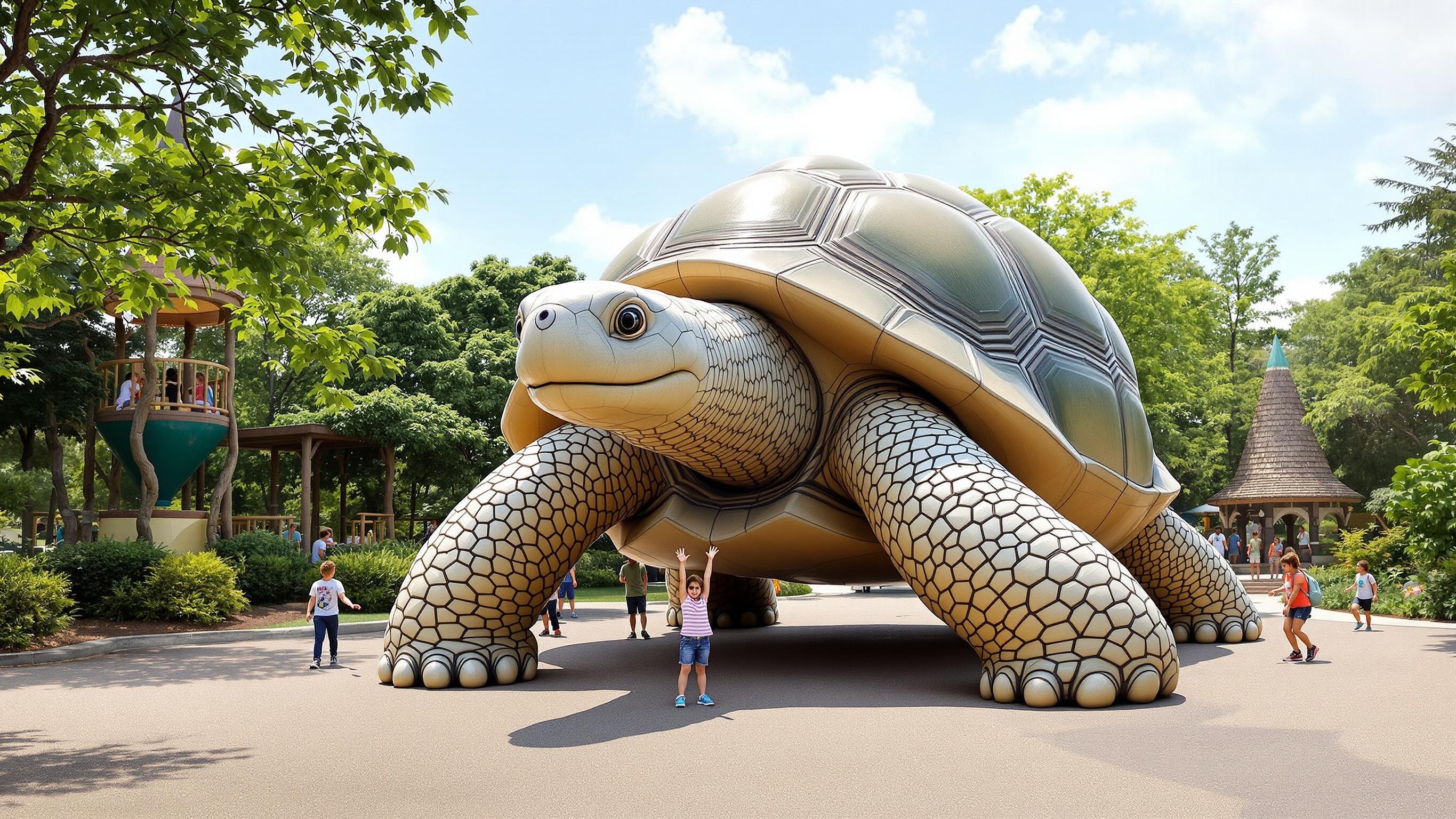
Use shell geometry to establish species and scale
The shell is both the largest surface and the main source of recognition.
High dome
A tall rounded carapace creates a monumental mass and may remain visible above low planting or nearby visitors.
Longer profile
A lower extended shell shifts emphasis toward total body length, head reach, and the relationship between front and rear legs.
Species pattern
Scute layout, growth rings, ridges, and color changes should follow the chosen animal reference at an appropriate visual scale.
Character shell
A simplified pattern can support a friendlier figure, but it should still wrap consistently across the top, sides, and rear.
Show how the animal emerges from the shell
The head can extend forward toward visitors, turn to one side, lift slightly, or tuck closer to the opening. Neck length and eye direction influence both personality and total footprint. Provide a face reference that defines beak shape, eye size, wrinkles or scales, and the intended degree of realism.
Front and rear legs should appear to carry the shell mass. Mark their angle, toe direction, and visible contact with the ground. A walking pose can offset the legs and create movement; a square stance feels steadier and keeps the figure compact. Avoid treating the legs as identical supports without species-specific form.
Protect the figure from visual obstruction
Because the body sits close to grade, planting, benches, railings, and crowds can hide the head and legs. Include the approach path and expected vegetation height in the site plan. A subtle rise, open foreground, or directed head can improve visibility without turning the base into a competing object.
Children and adults may encounter the statue at very different eye levels. If the figure is intended for photographs, identify where people stand and whether the shell, head, or full side profile must remain visible. Do not imply that visitors may climb or sit on the statue unless that use is explicitly requested and evaluated.
Compare an open path with a planted garden
The zoo concept leaves the tortoise visible from a broad pedestrian approach. The garden concept brings planting closer to the shell and makes the side texture more prominent. Both images are illustrative settings, not records of fabricated WhiteClouds statues.
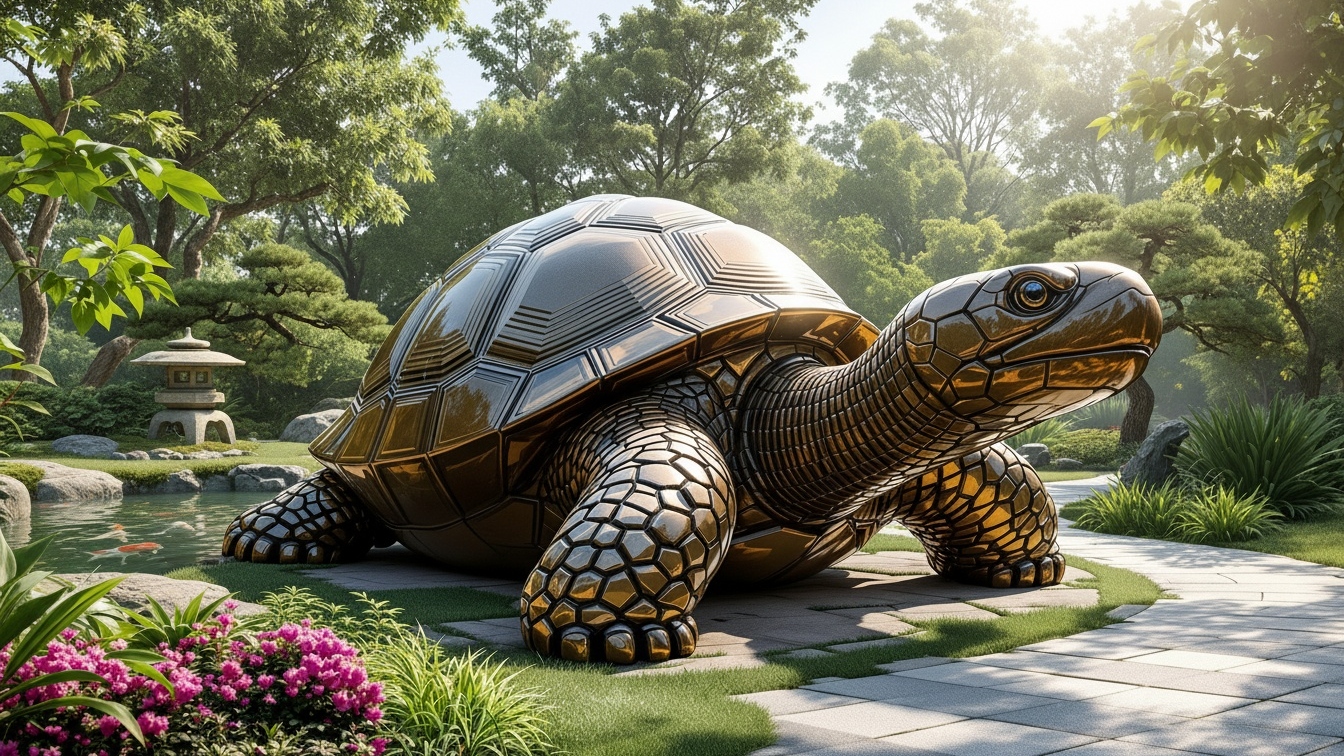
Details that define shell, posture, and landscape fit
Length and shell height should be considered separately.
- Species or approved character reference
- Top, side, front, rear, and head views
- Shell profile and scute pattern
- Head extension and direction of gaze
- Standing or walking leg position
- Overall length, width, and shell height
- Visitor approach and surrounding landscape
- Access route, environment, destination, and date
Request a quote for a giant tortoise statue
Share the species or character references, shell geometry and pattern, head and leg pose, target length and height, visitor sightline, landscape context, access measurements, environment, destination, and required date.