

The Enchantment of the Giant Owl Statue
Few creatures embody wisdom, mystery, and majesty quite like the owl. Revered in mythologies across the globe, the owl has always symbolized intelligence, guardianship, and the ability to see beyond the veil of ordinary perception. It’s no wonder then that artists, architects, and communities have chosen to honor this nocturnal bird in monumental form—a giant owl statue. These awe-inspiring sculptures don’t just stand as decorative art; they serve as cultural icons, gathering places, tourist attractions, and spiritual symbols that resonate with people of all ages. In this article, we’ll take a journey through the world of giant owl statues: exploring their cultural significance, design inspirations, real-world examples, community impact, and even the technical artistry that makes fabricating such a massive sculpture possible.
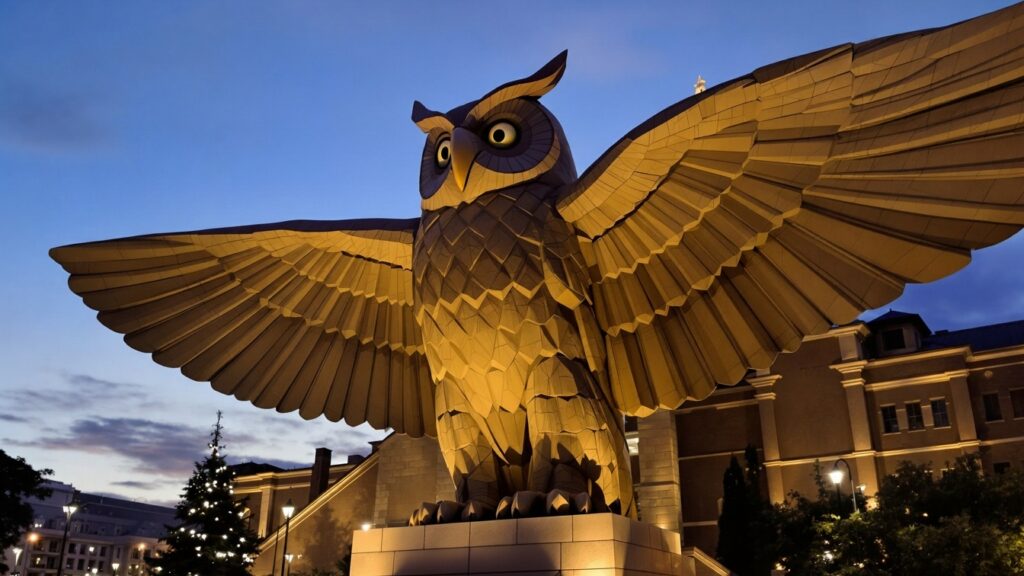
The Owl as a Timeless Symbol
Before diving into towering statues, it’s important to understand the rich symbolism of the owl. Across history and geography, owls have been revered as creatures of wisdom and mystery. In ancient Greece, the owl was sacred to Athena, goddess of wisdom, and became a universal emblem of knowledge. In Native American traditions, owls often act as guardians or messengers, symbols of change and spiritual truth. Meanwhile, in Japan, the owl—or fukurō—is considered a charm of luck and protection. By elevating the owl into statue form, artists and communities tap into these deep symbolic associations. A giant owl statue doesn’t just look impressive—it carries centuries of meaning, standing as a sentinel of insight and watchfulness.
Real-Life Inspirations: Where Owls Tower
Around the world, giant owl statues and owl-inspired architecture attract millions of visitors. Some of the most notable include:
- The Owl of Penelles, Spain – A massive street-art-inspired sculpture that celebrates the artistic culture of the region. Its intricate design blends modern creativity with timeless symbolism.
- Owl-shaped Temples and Gateways in Asia – Several shrines in India and Thailand feature owl statues carved from stone, some dating back hundreds of years. These monuments link spirituality with the enduring presence of owls.
- Public Art Installations – Cities such as London, New York, and Toronto have temporary or permanent owl sculptures created by contemporary artists, often designed to provoke thought and delight passersby.
Each example shows how the owl can be adapted into local tradition, architecture, or modern urban spaces. The sheer variety of interpretations demonstrates the flexibility of this symbolic bird—it can be both whimsical and solemn, playful or majestic.
Why Owls Captivate in Giant Form
So why do owls, when magnified into colossal statues, capture our imaginations so deeply? Part of it lies in the owl’s natural anatomy. Its enormous eyes, circular face, and upright stance make it almost human-like—yet distinctly otherworldly. When scaled up, these features become striking focal points: massive watchful eyes gazing over a plaza, wings extended in silent dominance, or talons gripping a stylized pedestal.
Another factor is the sense of guardianship. A giant owl statue placed at the entrance of a town, park, or university feels like a protector—an overseer that symbolizes safety and wisdom. It reminds visitors they are entering a space of knowledge or reflection. Finally, there’s the universal element of wonder. People are instinctively drawn to oversized art because it recontextualizes the familiar. A creature we associate with the quiet of night suddenly towers over us in daylight, sparking imagination and conversation.
The Role of Giant Owl Statues in Communities
These statues are more than decorative. They serve practical, cultural, and economic functions:
Tourist Attractions
Giant owl statues often become landmarks. Visitors take photos, families gather around them, and local businesses benefit from the added foot traffic. A statue can singlehandedly put a small town on the tourist map.
Educational Value
Placed near universities, libraries, or museums, a giant owl can become a visual metaphor for wisdom. Many institutions have adopted owls as mascots, making statues a perfect representation of their mission.
Cultural Storytelling
Communities with indigenous or historical connections to the owl use statues to keep traditions alive. For example, an owl carved in traditional style can honor local myths, serving as a reminder of heritage.
Public Identity
Cities frequently adopt such installations as symbols of civic pride. A giant owl statue, with its associations of protection and insight, can represent the aspirations of a community—intelligent growth, environmental harmony, and cultural respect.
Artistic Styles: From Realism to Fantasy
The design possibilities for a giant owl statue are nearly endless, depending on the artistic vision:
- Hyper-realistic Owls – Sculptures that capture every feather detail, talon curve, and eye glint. These statues can feel like a frozen moment of nature, as though the bird might suddenly take flight.
- Stylized Owls – Geometric or abstract interpretations. Some artists create owls with angular wings, circular cut-outs, or futuristic metal patterns, emphasizing symbolism over naturalism.
- Fantasy Owls – Inspired by mythology or literature, these statues might have glowing eyes, exaggerated wingspans, or a magical aura, drawing from fantasy genres.
- Interactive Owls – Some modern sculptures invite visitors to climb, sit, or pass through, turning the statue into part of the environment.
Each artistic approach brings its own emotional resonance: realism grounds us in nature, abstraction challenges perception, and fantasy transports us into imagination.
The Fabrication of a Giant Owl Statue
Now comes the fascinating part: how does one actually make a statue of an owl that could tower above buildings or dominate a public square? Fabrication is a complex marriage of art, engineering, and logistics.
Concept and Design
The process begins with sketches, digital 3D models, and scale miniatures. Artists and engineers collaborate to balance aesthetics with stability. A giant owl must not only look inspiring but also withstand wind, weather, and sometimes interaction from visitors.
Material Selection
Materials vary depending on the scale and purpose:
- Bronze or Metal Alloys – Durable, weather-resistant, and traditional for monumental art. Bronze gives the statue a timeless look.
- Fiberglass and Resin – Lightweight, cost-effective, and flexible for detailed shaping. These materials are ideal for temporary or transportable statues.
- Stone or Concrete – Heavy and permanent, these give statues a commanding presence. However, they require strong foundations.
- Recycled Materials – Some modern artists construct owls out of scrap metal, wood, or plastics, giving an eco-conscious message while creating striking visuals.
Structural Engineering
Inside many giant statues lies a hidden skeleton. A steel framework provides strength, with armatures branching into wings or head structures. Engineers carefully calculate weight distribution, especially if the owl’s wings are extended or perched on a narrow pedestal.
Fabrication Techniques
The outer shell can be cast, carved, welded, or molded depending on material choice. Feather textures might be etched or layered for realism. Some statues incorporate lighting inside the eyes, making them glow at night. Others may include sound elements, such as subtle owl calls.
Installation
Transporting a giant owl is often as challenging as creating it. Sections may be built off-site and assembled in place with cranes. The foundation must be reinforced to hold the statue’s immense weight and withstand environmental conditions for decades.
Famous Imagined Settings for Giant Owls
Even if you’ve never seen a giant owl statue in person, it’s easy to imagine the breathtaking impact it could have in different settings. At the entrance of a university, it might tower above students, symbolizing wisdom and guidance. In a forest park, a giant owl could appear to emerge from the trees, blending with its natural surroundings while surprising hikers. In bustling city squares, such statues could serve as modern meeting points, cultural hubs, and iconic backdrops for photos. And within theme parks or fantasy-inspired venues, an owl with glowing eyes and magical features might embody mystery and wonder. Each setting transforms the meaning of the statue, highlighting just how versatile this powerful motif can be.
The Emotional Experience of Encountering One
To stand beneath a giant owl statue is to feel both humbled and inspired. The wide eyes seem to see into your soul, the feathers remind you of nature’s intricacy, and the scale reminds you of humanity’s drive to create monuments. People describe the feeling as protective, magical, and deeply moving. It’s the type of art that resonates with children and adults alike: kids marvel at the size, while adults reflect on the symbolism. Couples pose for photos, travelers write stories about it, and locals adopt it as part of their daily landscape.
The Future of Giant Owl Statues
As technology and artistic expression evolve, so too will the giant owl statue. We’re likely to see interactive digital elements: augmented reality features, projection mapping, or eco-friendly designs that incorporate solar panels. Imagine a statue whose eyes glow with renewable energy, or one that tells owl folklore through an app when scanned. The future also leans toward inclusivity—artworks that involve community participation. Local residents may help paint, design, or fund giant owl statues, making them collective creations rather than single-artist projects.
Conclusion: A Monument to Wisdom and Wonder
The giant owl statue is more than an oversized bird made of stone or metal. It is a living cultural landmark, a visual poem, a reminder of both nature’s brilliance and human creativity. Whether perched in a quiet park, standing guard at a university, or glowing in the heart of a bustling city, these statues captivate us because they bridge the ordinary and extraordinary. In a world where people constantly seek connection, inspiration, and meaning, the giant owl statue offers all three. It teaches us to pause, reflect, and perhaps see the world with wiser eyes.
Check out WhiteClouds’ 3D Statues for more information.
Contact us today to learn more about our 3D services and how we can help you achieve your goals.