
Designing a Giant Dinosaur Statue
A giant dinosaur statue is read first through species, posture, and overall mass. The head, spine, tail, and legs must form one clear silhouette at the intended viewing distance, while the footprint and approach keep long projections from becoming an afterthought.
Plan a Dinosaur Statue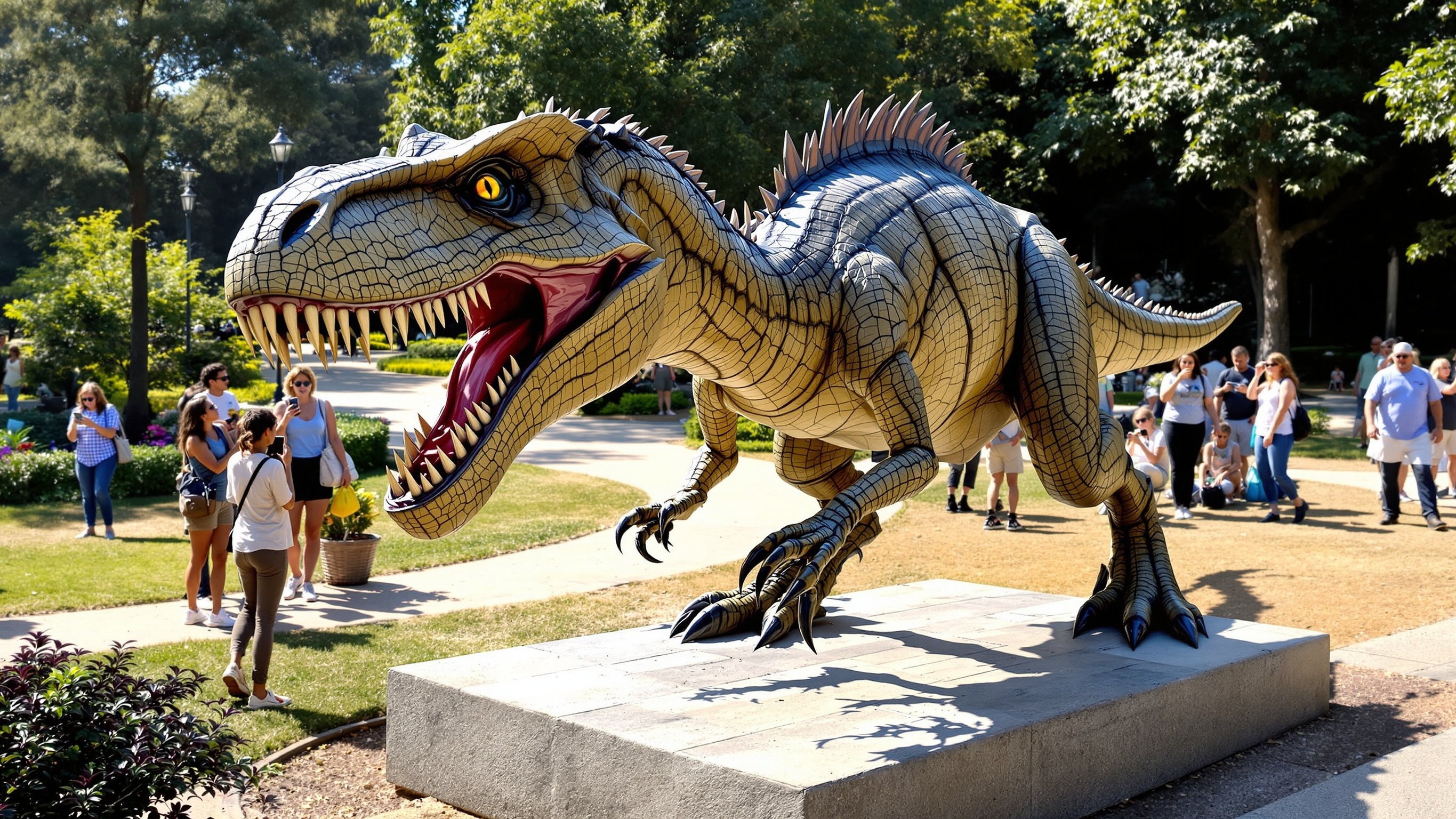
Resolve species and posture before surface detail
A useful brief identifies the animal and the stance from several angles.
Long-tailed theropod
Head height, torso angle, leg position, and tail reach define a long display envelope even when the feet occupy little floor area.
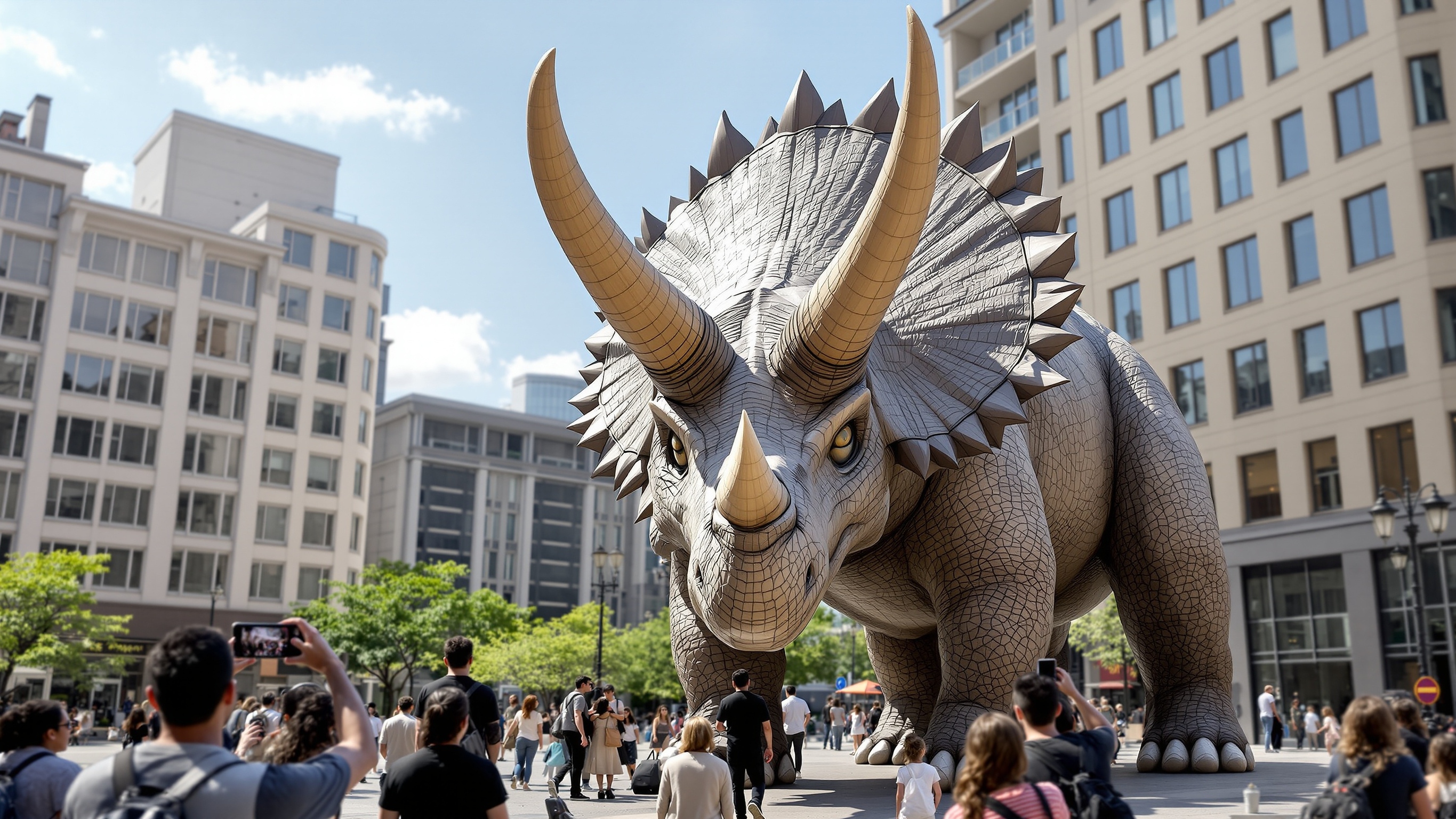
Horned quadruped
A broad skull, low body, and four-point stance shift attention toward width, horn clearance, and the relationship between head and shoulders.
Juvenile or mascot style
Larger eyes, simplified anatomy, and a friendlier stance can suit family-facing settings without imitating a realistic museum reconstruction.
Grouped scene
Several dinosaurs need a shared scale rule, open sightlines, and enough space that tails and heads do not merge into one unreadable mass.
Build recognition through proportion and weight
Select reliable views for the skull, teeth or beak, torso, limbs, feet, and tail. If scientific accuracy matters, identify the chosen reconstruction and the details that must follow it. If the figure is stylized, provide the approved model sheet rather than relying on a species name to determine expression and proportions.
Pose changes perceived weight. A raised head and open mouth can create height and drama; a level spine and planted stance may feel heavier and require a wider viewing area. Test the outline from the main visitor approach and from any side that appears in photographs.
Use related work as a scale and placement reference
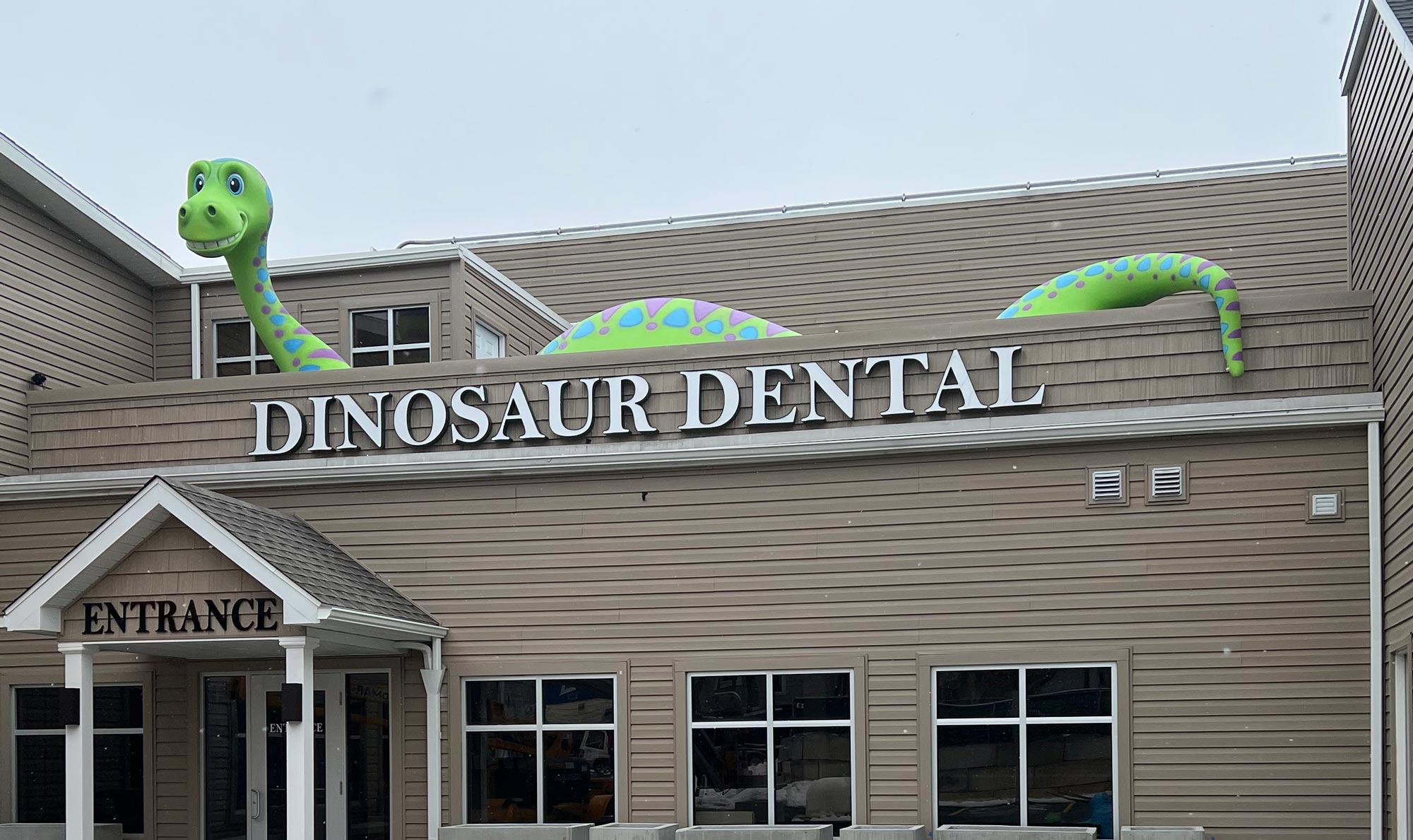
WhiteClouds fabricated the dinosaur mascots shown on the Children's Dental Building. The figures use friendly shapes and varied positions as part of the facade identity. That completed project demonstrates one stylized direction; it does not make the two illustrated dinosaur scenes completed commissions.
Measure for the full animal, not only its stated height
The usable site volume includes every projection and the space people need around it.
- Nose-to-tail length and maximum body width
- Head, horn, claw, and tail clearance
- Primary approach and photography angles
- Visitor distance and any touch boundary
- Base or landscape area available
- Indoor, covered, or exposed placement
- Door, dock, corridor, and crane limits if relevant
- Destination, installation window, and display duration
Choose realism, expression, and context as one system
A realistic exhibit may emphasize anatomy, restrained coloration, and a ground treatment that does not compete with the animal. A mascot-oriented figure can use a more direct gaze, simplified texture, and color choices tied to the setting. Define the audience and desired emotional tone before facial expression and skin treatment are approved.
Nearby signs, planting, walls, and rooflines affect how the silhouette reads. Include them in the site photographs or elevation. If the dinosaur must be divided for access or moved later, identify the largest allowable component early so connection locations can be considered alongside the pose.
Request a quote for a giant dinosaur statue
Send the species or approved character design, pose references, realism level, overall dimensions, viewing sides, site plan, audience conditions, access measurements, environment, destination, and required date.