
Creating a Giant Cow Display Statue
A giant cow statue is a broad four-legged figure whose identity depends on breed, body proportion, head shape, horns or ears, udder details, and coat pattern. The design should begin with a complete animal profile and a clear display purpose, then resolve how people see and move around its long body.
Plan a Cow Statue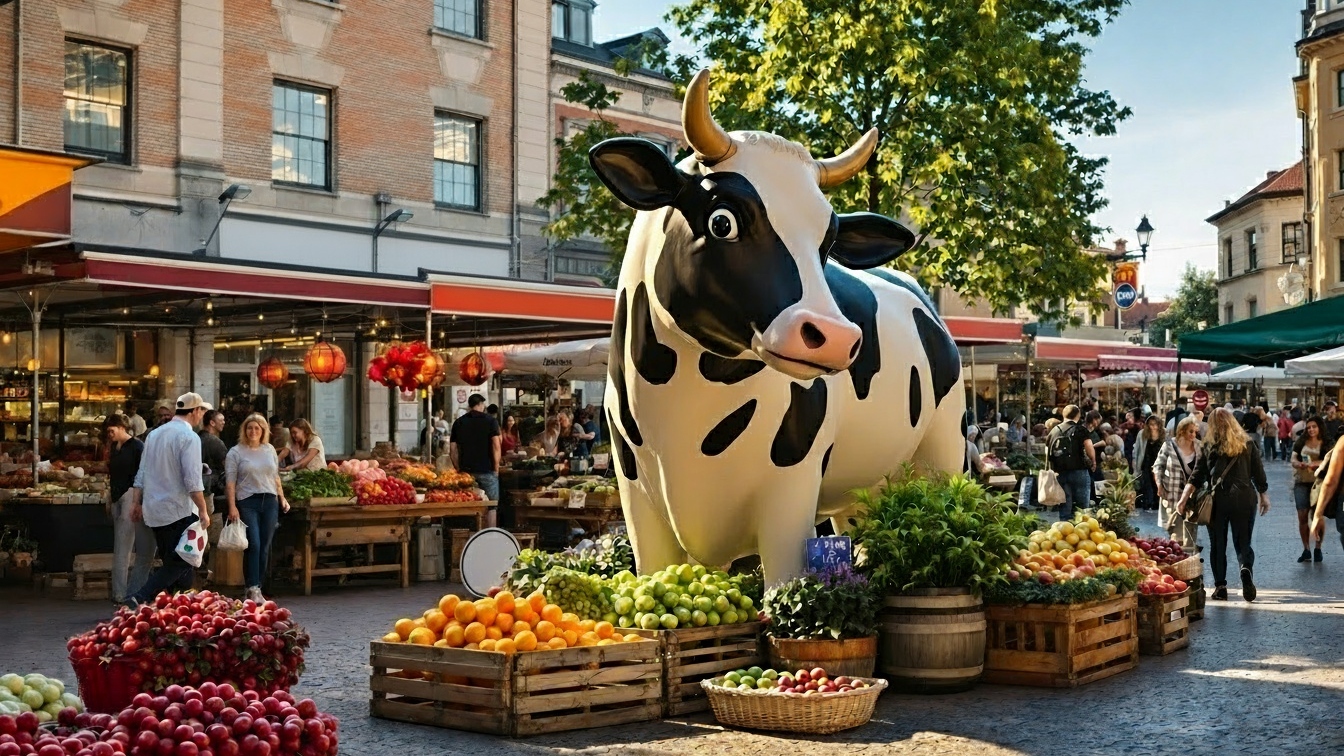
Use one consistent anatomical reference set
A breed name can guide the body depth, shoulder line, head profile, ear shape, horn direction, and leg proportions, but photographs should still show the intended animal from both sides. If the statue is a mascot rather than a realistic cow, use the approved character model for expression, eye size, clothing, and posture.
Mark whether the figure represents a cow, bull, calf, or non-specific brand character. Those choices affect the neck, torso, face, and stance. Avoid mixing a realistic body with unrelated cartoon facial features unless that combination is part of the supplied design.
See a documented realistic exhibit approach
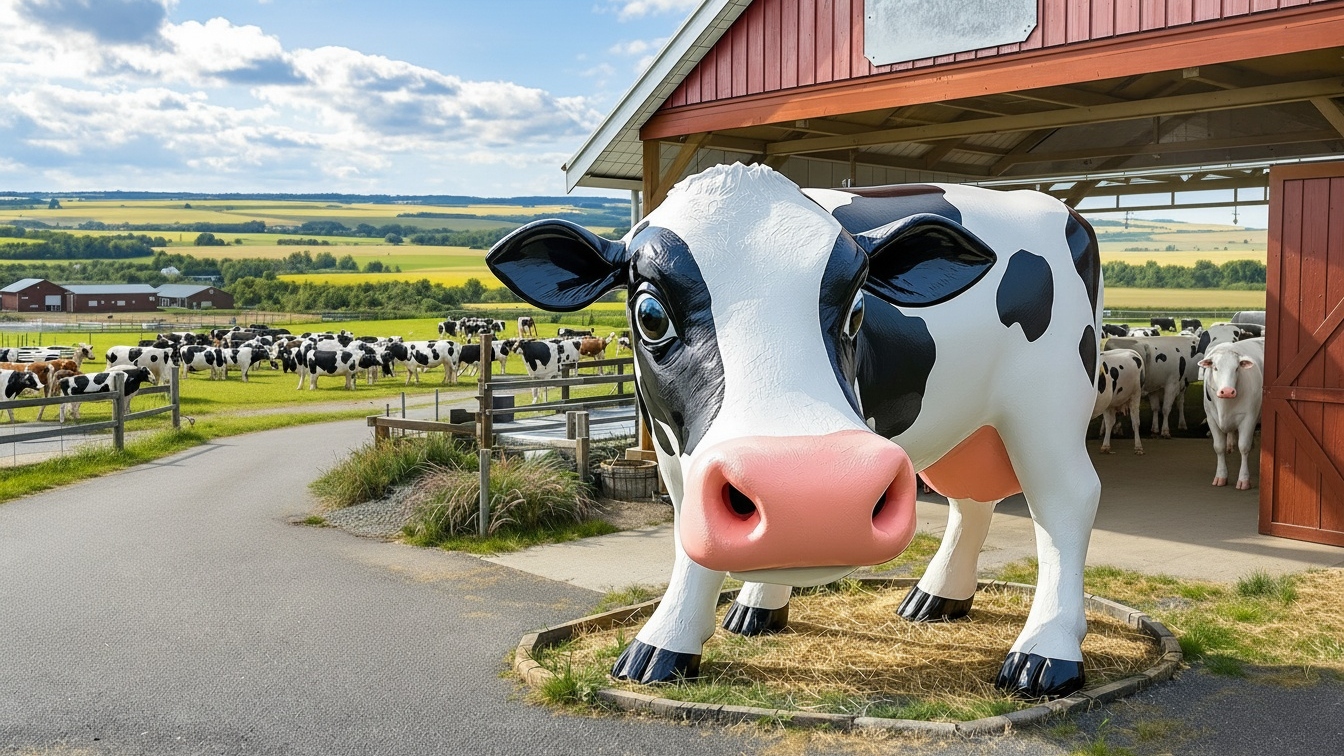
WhiteClouds fabricated the realistic white cow shown here for an Alltech display at World Dairy Expo. The completed sculpture demonstrates clear breed-like proportion and presentation within an exhibit. It is a separate, smaller project and does not make either giant outdoor scene a completed WhiteClouds installation.

Choose where the animal directs attention
Body angle and head position can organize a long figure within the site.
Square stance
Four planted hooves create a calm profile and make both flanks available for markings, graphics, or visitor photographs.
Turned head
A head directed toward an entrance or camera adds interaction without changing the main body footprint.
Grazing pose
A lowered neck shifts the visual center downward and increases the importance of ground clearance around the face and horns.
Walking animal
Offset legs create motion but require careful hoof spacing and a site plan that keeps the full stride visible.
Map markings instead of describing them loosely
Spots, patches, facial blazes, and color transitions should be shown on left and right elevations. A single side photograph cannot define markings around the back, belly, or opposite flank. For a brand character, supply approved colors and any graphics at usable resolution and identify where they must appear in the audience view.
Decide whether visitors see one side, walk around the animal, or approach the face first. That route determines where the strongest detail belongs and how much open space is needed near horns, ears, tail, and legs. A photo position beside the shoulder may work differently from one directly in front of the head.
Information needed for a useful first estimate
The animal and the site should be described with the same level of specificity.
- Cow, bull, calf, breed, or approved mascot
- Left, right, front, and head references
- Standing, grazing, walking, or turned-head pose
- Horn, ear, udder, tail, and hoof requirements
- Two-sided coat pattern or brand graphics
- Overall body length, height, and width
- Visitor route, photo position, and site footprint
- Environment, access, destination, and required date
Request a quote for a giant cow statue
Provide the breed or mascot references, full profile views, selected pose, coat map, target dimensions, visitor position, site plan, environment, access measurements, destination, and deadline.