
Giant Acorn Statue Ideas
A giant acorn is built visually from three parts: the textured cap, the smoother nut body, and the stem. Their proportions and the direction of the acorn determine whether it appears upright, tipped, freshly fallen, graphic, or naturalistic. The contact point with the floor is as important as the outer silhouette.
Plan a Giant Acorn Statue
Set the relationship among cap, nut, and stem
Choose a botanical reference or an approved stylized drawing. Define how far the cap overlaps the nut, where the body is widest, how sharply it tapers, and whether the stem is straight, curved, broken-looking, or simplified. These proportions control recognition more than added decoration.
An upright acorn may use a discreetly flattened lower curve or a designed base. A tipped acorn creates a longer footprint and different viewing sides. If the object belongs in a larger scenic arrangement, provide the surrounding elements so the ground line can be planned with them.
Coordinate texture with the overall form
Cap detail should support the acorn silhouette rather than turn the surface into an unrelated pattern.
Cap texture
Select the scale, rhythm, and depth of the cap pattern from approved natural or graphic references.
Nut surface
Choose a smooth, gently faceted, or intentionally stylized body and define any color transitions.
Stem
Set its direction, thickness, and projection so it remains readable from the primary approach.
Ground contact
Resolve an upright base, tipped contact points, or integration into a plinth or scenic floor.
Compare upright and tipped acorn directions
The upright concept concentrates the footprint beneath the nut body. The tipped version extends farther across the floor and exposes more of the cap edge. Both are planning references rather than depictions of completed commissions.
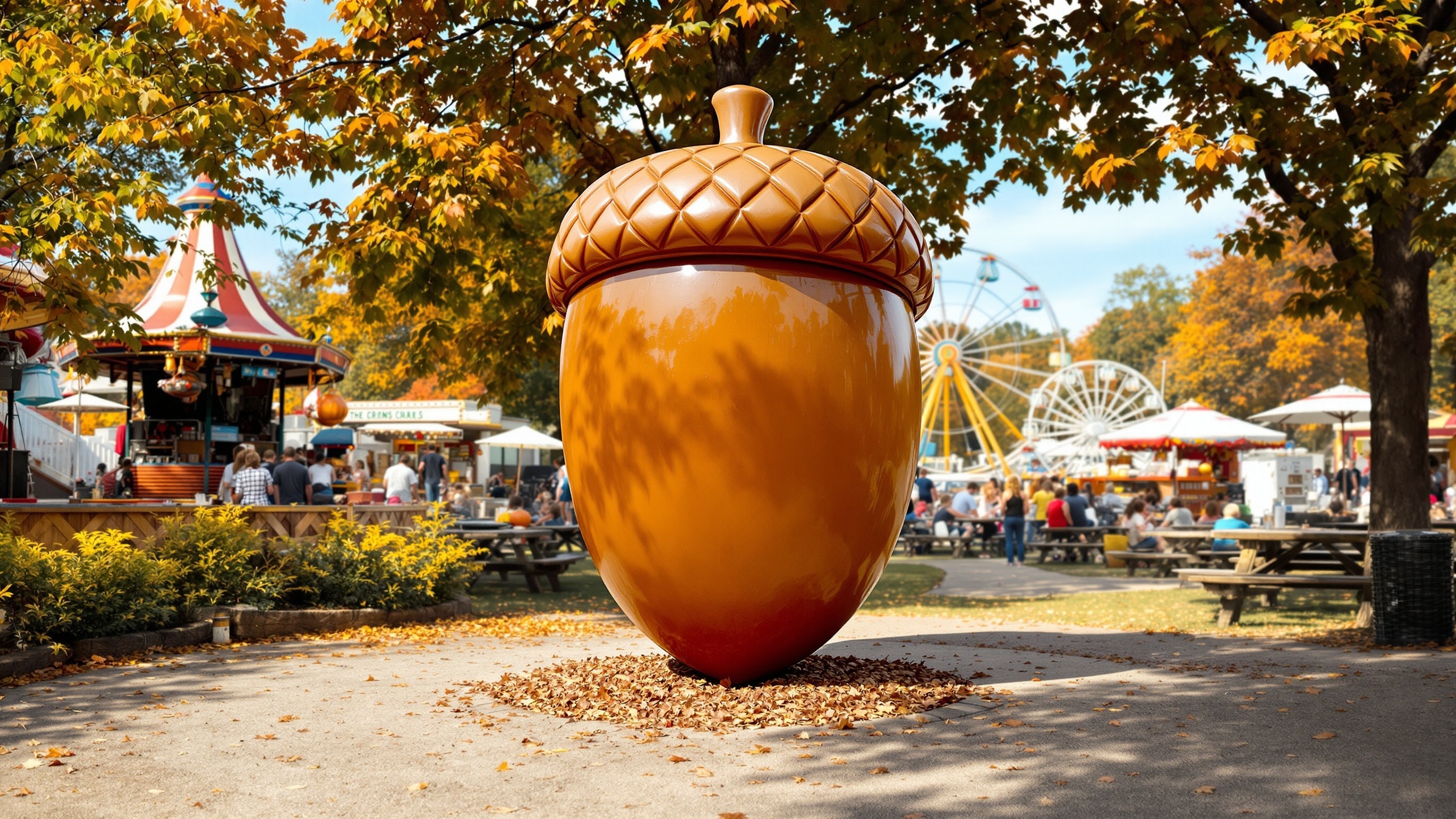
Measure the full volume, not only the height
Provide the maximum width, depth, and height available at the destination. Include the stem projection, cap diameter, and clearance around a tipped pose. Mark the normal approach direction, nearby walls or landscaping, and whether people may circulate around the entire statue.
Describe the installation environment, including weather exposure when outside, and explain expected audience contact. Loading doors, elevators, stairs, turns, and lifting access may affect section planning. If the acorn is part of a temporary installation, include setup and removal windows as well as the public opening date.
The cap pattern deserves a viewing-distance check before it is finalized. Texture that reads well on a small reference may become coarse when enlarged, while very fine repetition can disappear from across a room. Provide a preferred pattern sample and identify whether the cap should feel botanical, simplified, or strongly graphic from the main approach. Mark where the pattern stops along the lower cap edge.
Information for an acorn-statue estimate
The acorn reference, orientation, and available footprint establish the core scope.
- Natural or stylized reference
- Upright, tipped, or suspended direction
- Overall dimensions
- Cap texture and overlap
- Stem profile
- Primary viewing sides
- Base and audience contact
- Site access, destination, and deadline
Request pricing for a giant acorn statue
Send the approved acorn reference, orientation, finished dimensions, cap and nut surface direction, stem shape, base preference, expected audience contact, photographs of the placement area, access measurements, shipping destination, and date.