
Planning a Giant Reptile Prop
A giant reptile prop should begin with one exact animal or original creature reference. Snake, lizard, turtle, and crocodilian bodies have different silhouettes, footprints, supports, and viewing problems; the species choice must lead the design.
Plan a Reptile Figure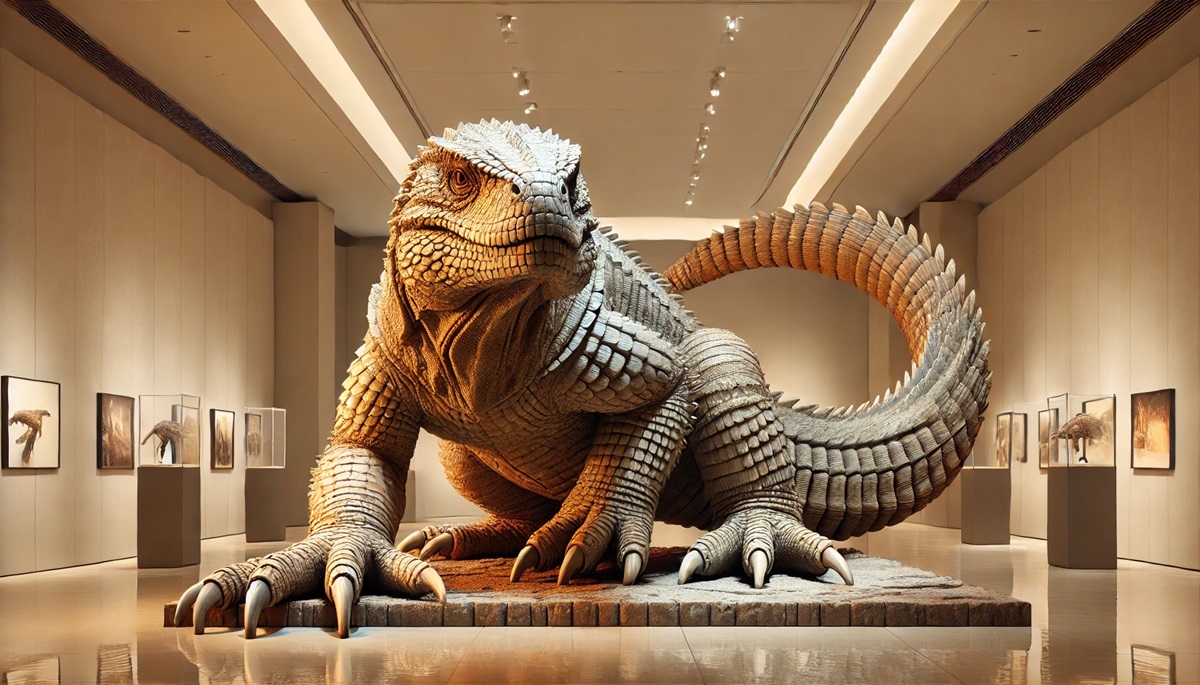
Choose one reptile form before setting dimensions
Identify the species, stylized character, or original creature and provide matching front, side, and three-quarter references. A lizard needs limb and tail planning; a snake is organized around one continuous body path; a turtle adds shell mass; a crocodilian creates a long jaw and low armored body.
Do not combine features from unrelated reptiles unless the project intentionally calls for an original hybrid. When scientific accuracy matters, supply an approved reference and indicate the body details that must remain exact.
Build recognition through body plan and pose
The reptile's overall axis and ground relationship should be resolved before fine scales or pattern are added.
Head profile
Define snout length, jaw position, eye placement, crest or horn details, and the direction of the gaze.
Body and tail
Set torso length, belly height, back line, tail taper, curve, and the farthest point of the complete body path.
Limbs or shell
Map feet, claws, limb spread, and joints for a lizard-like form, or establish shell profile and openings for a turtle-like subject.
Surface map
Use supplied scale groups, plates, color bands, spots, or graphic treatment without claiming undocumented biological precision.
Measure the tail, limbs, and audience clearance
A low reptile may occupy much more floor area than its height suggests. Show the entire tail curve, toe or claw projections, head reach, base, scenery, and available circulation on a plan view.
A fixed pose can be dramatic without implying movement. Animatronics, opening jaws, climbable areas, public contact, lighting, or outdoor exposure are separate requirements that must be described directly.
Compare body height, head direction, and tail path
These concepts provide broad reptile-form directions. A project request still needs one exact animal or original creature reference; the images are not completed WhiteClouds project photographs.

Supply the animal, pose, and complete site envelope
One coordinated reference set prevents incompatible species features from being mixed.
- Exact reptile species, character art, or original creature reference
- Front, side, top, and three-quarter views
- Fixed pose and head direction
- Overall length, height, width, and tail path
- Limb, claw, shell, or body-specific details
- Surface pattern and color map
- Base, scenery, viewing sides, and clearances
- Destination, access route, and required date
Request pricing for a giant reptile prop
Send the reptile reference, fixed pose, dimensions, surface direction, site plan, destination, and schedule.