
Planning a Giant Wasp Prop
A giant wasp prop should preserve the insect's pinched waist, wing relationship, long legs, antennae, and directional abdomen. Pose and support need to be considered at the same time because the narrow projections create a much larger envelope than the central body.
Define a Wasp Figure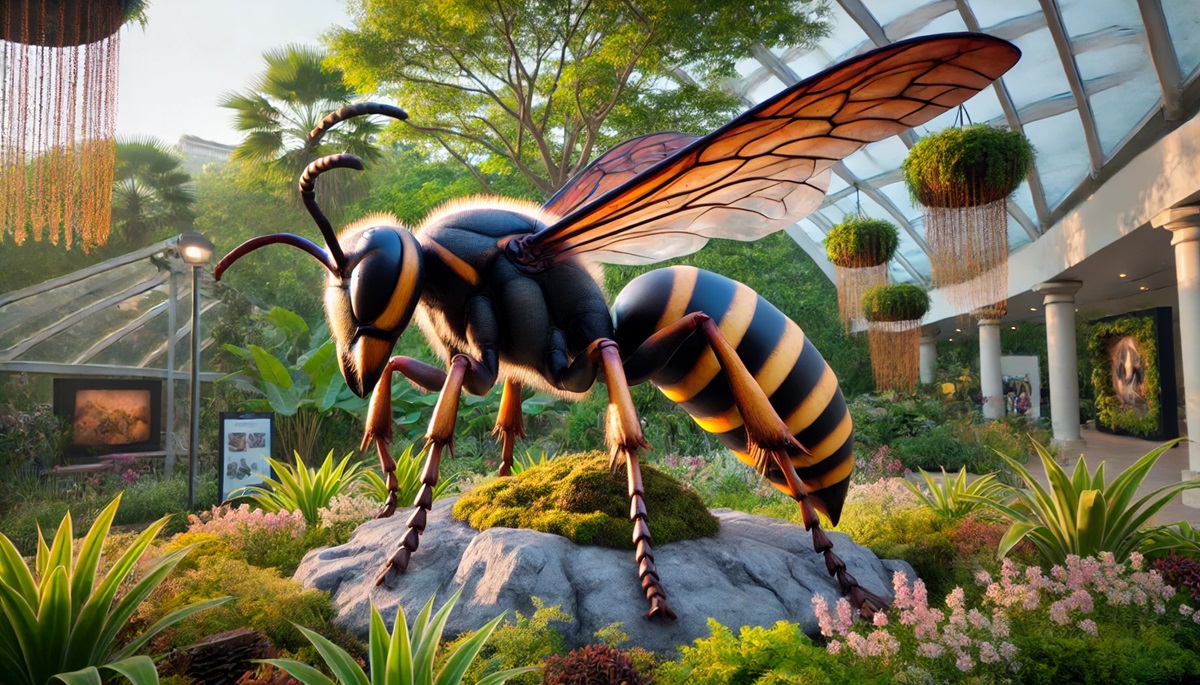
Establish the waist and abdomen before surface detail
Start with the head, thorax, narrow connector, and abdomen as four readable masses. If the waist thickens too much at large scale, the form can lose its wasp-specific character. If it becomes too visually slight, the body may appear disconnected. Provide top and side references that define this transition.
Color bands help organize the abdomen but should follow its volume and viewing angle. Facial markings, mouthparts, and smaller surface detail can be added after the major body proportions are approved.
Coordinate wings, legs, antennae, and support
Every projection should be included in the measured display envelope.
Wing pair
Set the sweep, overlap, and tilt of each wing relative to the thorax and the principal view.
Leg reach
Mark every foot or hanging leg endpoint so a standing pose and a flight pose do not share the same assumed footprint.
Antenna direction
Use antennae to reinforce the head direction while keeping their reach clear of paths and nearby scenery.
Support relationship
Identify floor, wall, platform, scenic, or overhead support as part of the first pose drawing.
Compare a planted stance with an overhead flight angle
The illustrative images show how support and audience position change the reading of the same subject. They are not finished WhiteClouds projects, and their settings and proportions should not be treated as specifications.

Prepare the anatomy and display envelope
A dimensioned pose is more informative than an overall body length alone.
- Species or stylized wasp reference
- Head, thorax, waist, and abdomen proportions
- Wing count, sweep, overlap, and tilt
- Leg and antenna endpoints
- Standing, landing, hovering, or directional flight pose
- Primary and secondary viewing angles
- Support location and visitor clearances
- Access route, destination, and display date
Request pricing for a giant wasp prop
Share the visual reference, pose, complete appendage envelope, wing angles, support conditions, audience views, access route, destination, and required date.