
Planning Giant Fake Food Props
A useful giant fake food prop begins with one specific portion or prepared form. A donut, pancake stack, scoop, sandwich, or plated dish has its own edge profile, surface cues, and center of mass. Choosing the exact serving state prevents the page or project from becoming an unfocused catalog of foods.
Discuss a Giant Food Prop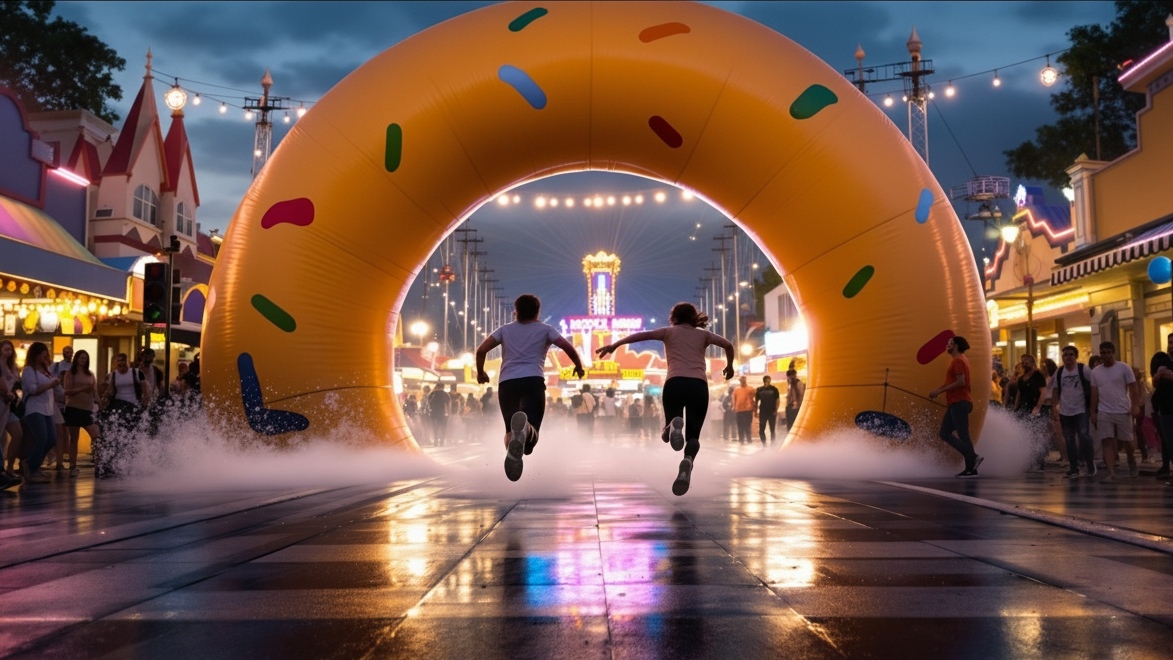
Specify the portion, not only the food name
The prepared state determines the enlarged object's outline and visible details.
Whole or cut
A whole item, slice, bite, cross-section, or broken piece reveals different interior and edge information.
Single or grouped
One oversized portion has a different footprint from a stack, pile, plate, or arranged assortment.
Plain or finished
Toppings, sauces, crumbs, wrappers, utensils, and garnish should be listed as separate visible components.
Generic or exact
A generic food can follow visual direction; a product replica requires current approved shape, color, and graphic references.
Choose the view that best explains the food
Some foods read from above, others from the side, and some need a cutaway or three-quarter angle. A pancake lying flat may require elevation or tilt to reveal its top. A scoop or donut can stand upright, but that changes the natural serving orientation. Decide whether realism or display legibility has priority.
Set height, width, depth, and any plate or base dimensions. Do not assume that an enlarged item will be proportionally scaled in every direction; selective thickness or spacing may be needed for the intended view. Those adjustments should be approved in drawings before detailed surface work.
Compare round, flat, and irregular food volumes
The donut, pancake, ice cream scoop, and cookie are completed WhiteClouds props or replicas. Their different profiles demonstrate why each food needs its own geometry and surface plan. No project-specific material or use is carried from these images into a new request.
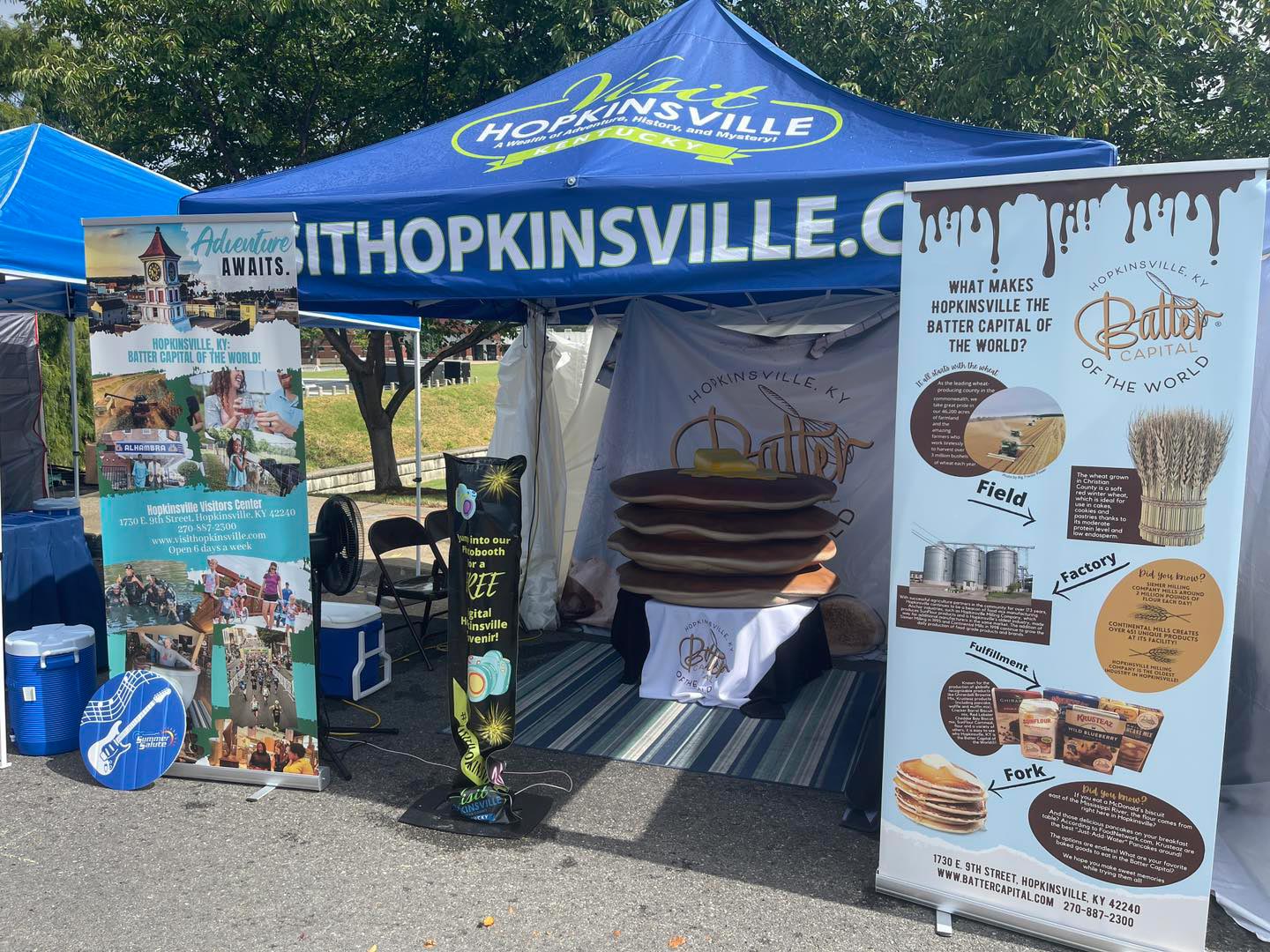
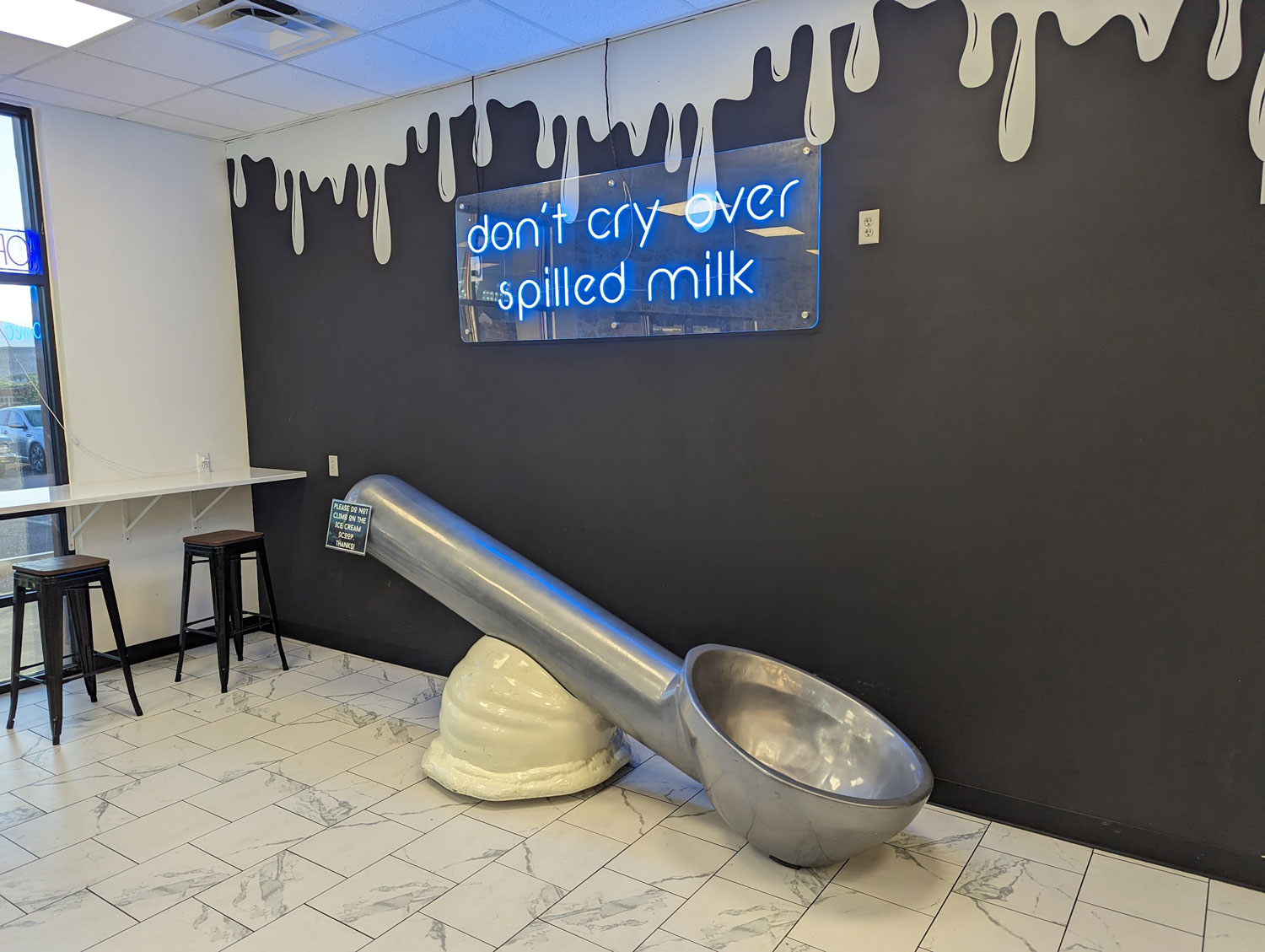
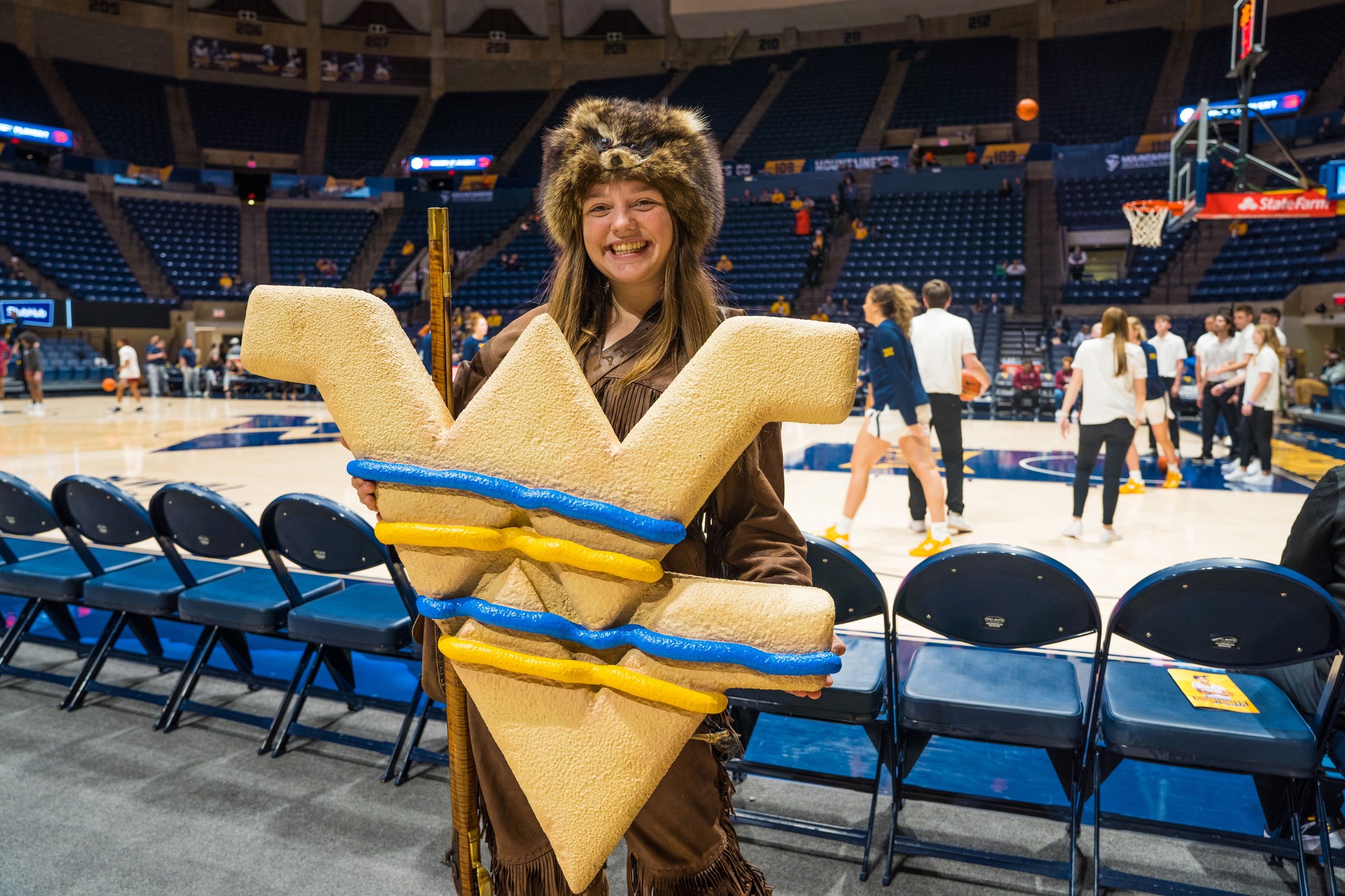
Map the details that remain visible at large scale
List the traits that make the selected food recognizable: browning, pores, crumb, grill marks, layers, icing edges, seeds, or melting contours. Rank them by viewing distance. Broad color changes and raised forms usually read farther away than subtle microtexture, which may matter mainly for close viewing.
The support can resemble a plate, tray, wrapper, skewer, stand, or quiet structural base. Identify whether all sides must be finished and whether separate toppings or utensils need removal for transport. Visitor contact, food-contact use, seating, outdoor exposure, or mechanical movement must be expressly requested and evaluated.
Prepare one focused giant-food brief
Clear inputs keep the estimate attached to one physical food object or coordinated set.
- Exact food and prepared state
- Generic or product-specific direction
- Overall dimensions and orientation
- Toppings, layers, and surface cues
- Plate, wrapper, utensil, or base
- Primary viewing sides
- Access and handling expectations
- Delivery address and required date
Request pricing for giant fake food props
Send the selected food, serving state, dimensions, orientation, surface references, toppings, support plan, viewing sides, and site constraints. Include destination and deadline, and separate each item clearly when the request contains a coordinated set of props.