
Planning a Giant Skeleton Prop
A giant skeleton prop is defined by the connected relationship among skull, spine, rib cage, pelvis, arms, legs, pose, and support. Establishing that body structure first prevents the figure from becoming a loose collection of oversized bones.
Plan a Skeleton Figure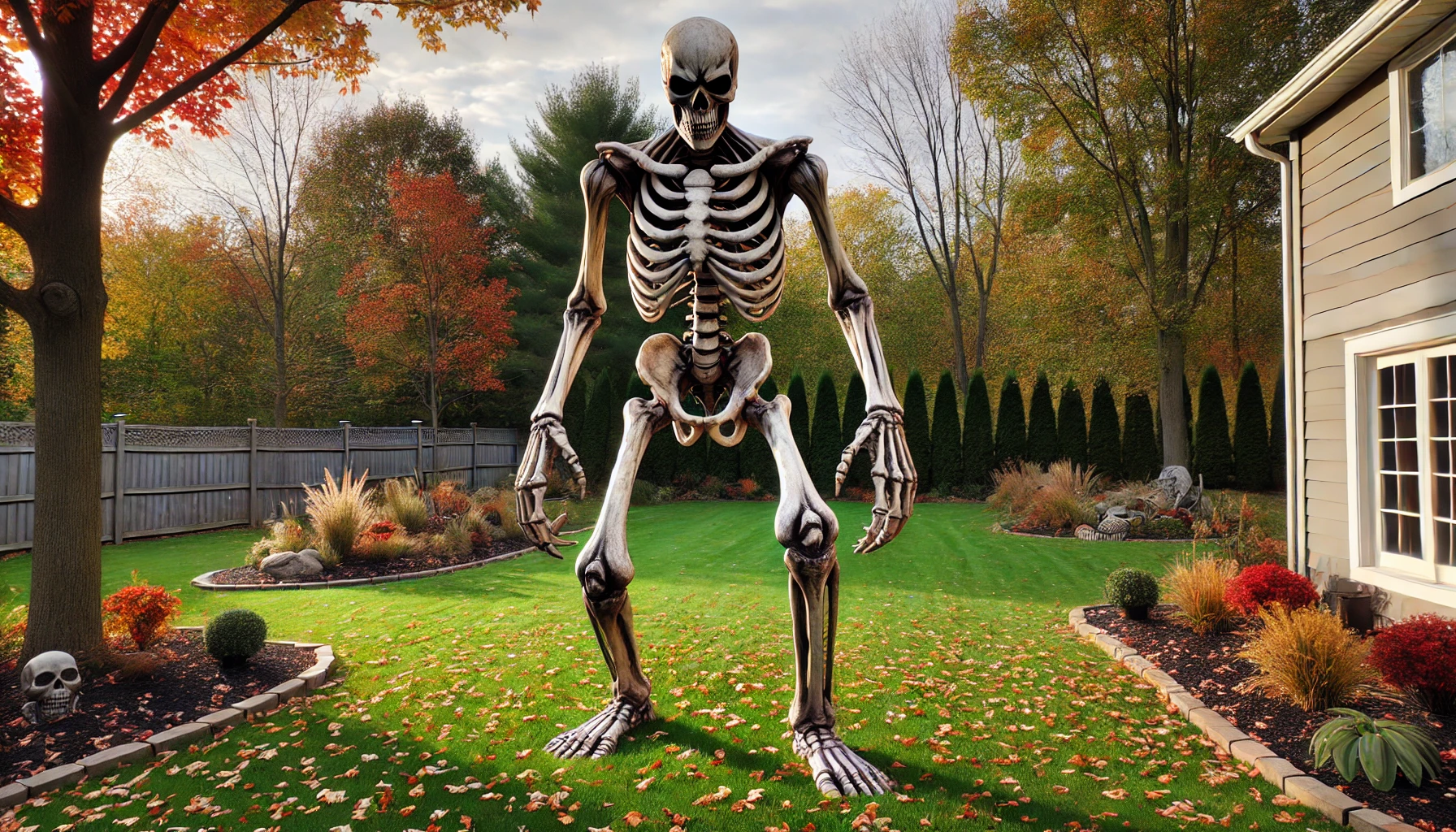
Set the pose from skull to feet
Begin with a complete pose drawing that places the skull, spine, rib cage, pelvis, shoulders, elbows, hands, knees, and feet on one coordinated axis. A standing skeleton, crouched figure, emerging figure, and suspended pose require different clearances and supports.
Choose realistic, stylized, or graphic anatomy and keep that level of detail consistent. Enlarged joints and gaps may need simplification for readability, but the primary relationships should remain clear from the intended viewing distance.
Coordinate anatomy, expression, and support
The skeleton's open structure creates many projections and negative spaces that must be planned together.
Skull and jaw
Define head direction, eye openings, jaw position, teeth treatment, and the connection to the upper spine.
Rib cage and spine
Set the torso curve, rib spacing, sternum, spine line, and gap between the chest and pelvis.
Limbs and joints
Map shoulder, elbow, wrist, hip, knee, and ankle positions so the silhouette and reach remain intentional.
Pose and base
Choose the ground contacts, concealed or visible support direction, and complete floor envelope for the fixed pose.
Measure the projections, not only the height
Hands, elbows, ribs, knees, and feet can extend beyond the central body line. Record the farthest projection in front, behind, and to each side, then compare that envelope with paths, walls, scenery, and camera positions.
Seasonal styling can change color, surface, or setting without creating a different skeleton object. Keep the core page on the full figure and treat separate ground scenery, costumes, lighting, or motion as additional scope.
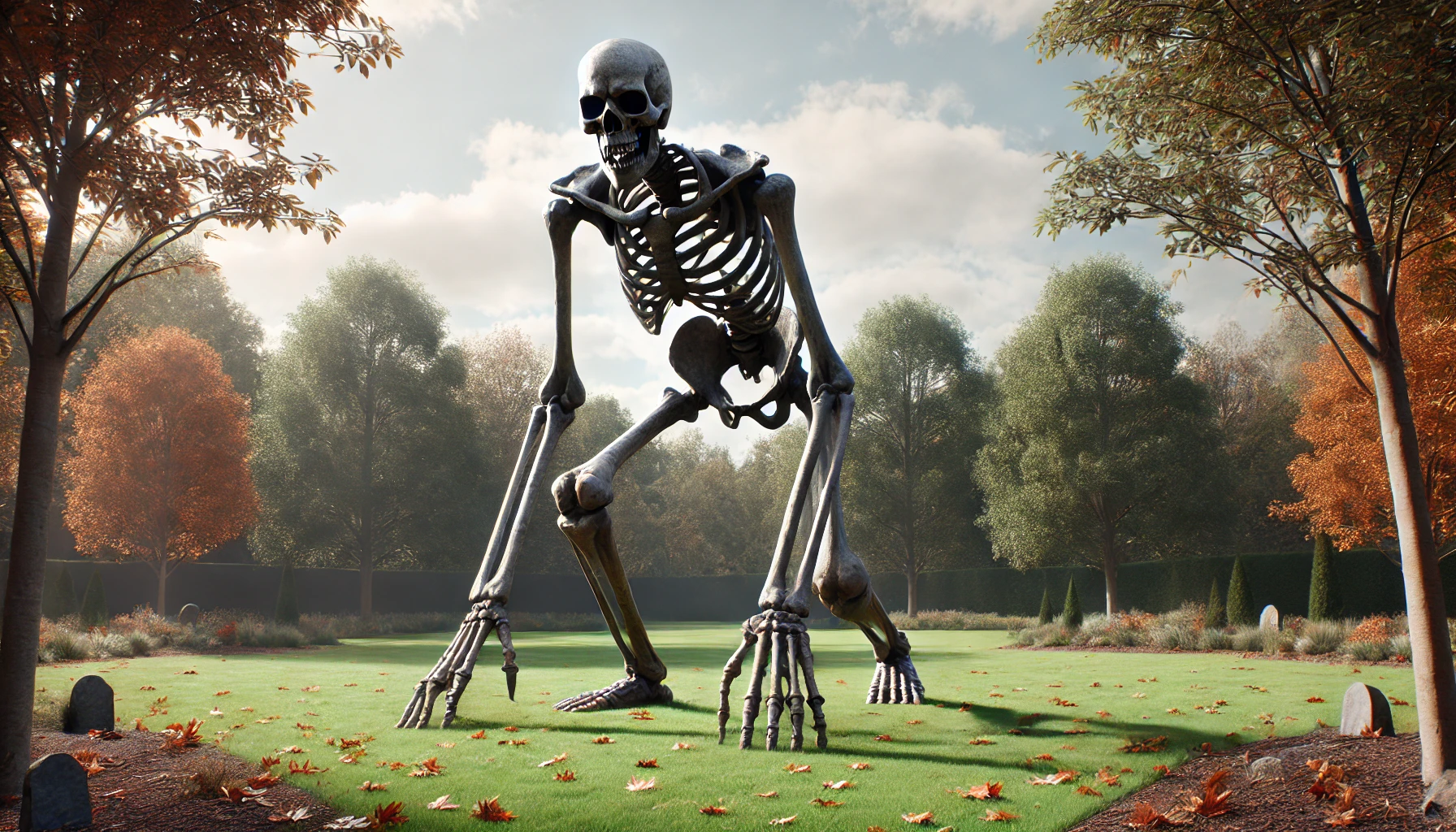
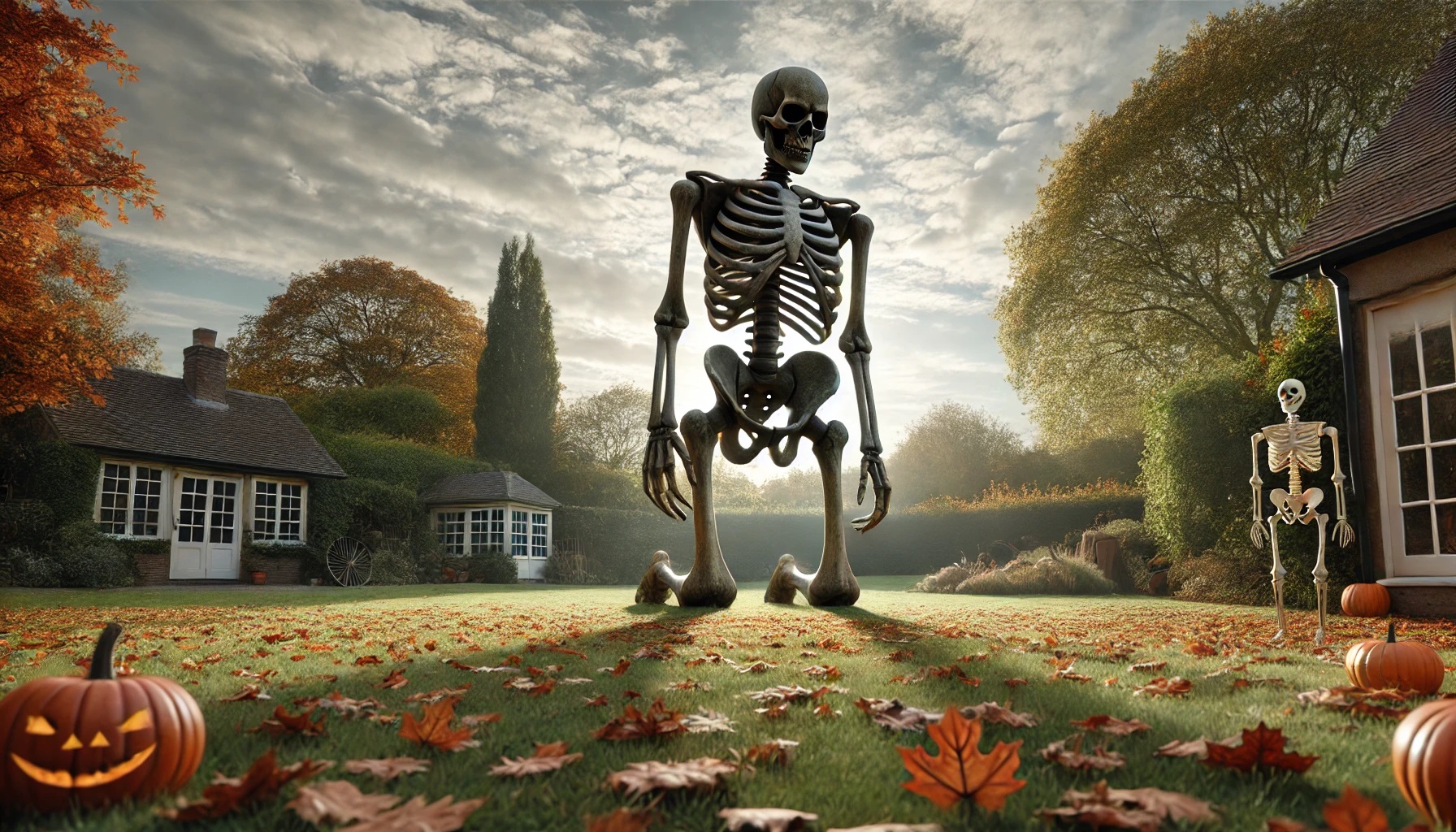
Compare upright and posed skeleton directions
The concepts show how stance, arm reach, torso angle, and surface direction change the same full-skeleton planning task. They do not depict a completed WhiteClouds commission.


Define the complete fixed pose
Matching front and side views are especially important for an open anatomical figure.
- Approved skeleton or original character reference
- Realistic, stylized, or graphic anatomy direction
- Complete front, side, and three-quarter pose views
- Overall height, width, depth, and limb reach
- Skull direction and jaw position
- Ground contacts and base preference
- Viewing sides and audience clearances
- Destination, access route, and required date
Request pricing for a giant skeleton prop
Send the anatomy or character reference, fixed pose, dimensions, surface direction, site clearances, destination, and schedule.