
Planning Giant Mushroom and Toadstool Props
A giant mushroom or toadstool prop is organized around the cap, stem, underside, and the way those parts meet the floor or surrounding scenery. Shape and grouping matter before spots, color, or fantasy styling are added.
Plan a Mushroom Display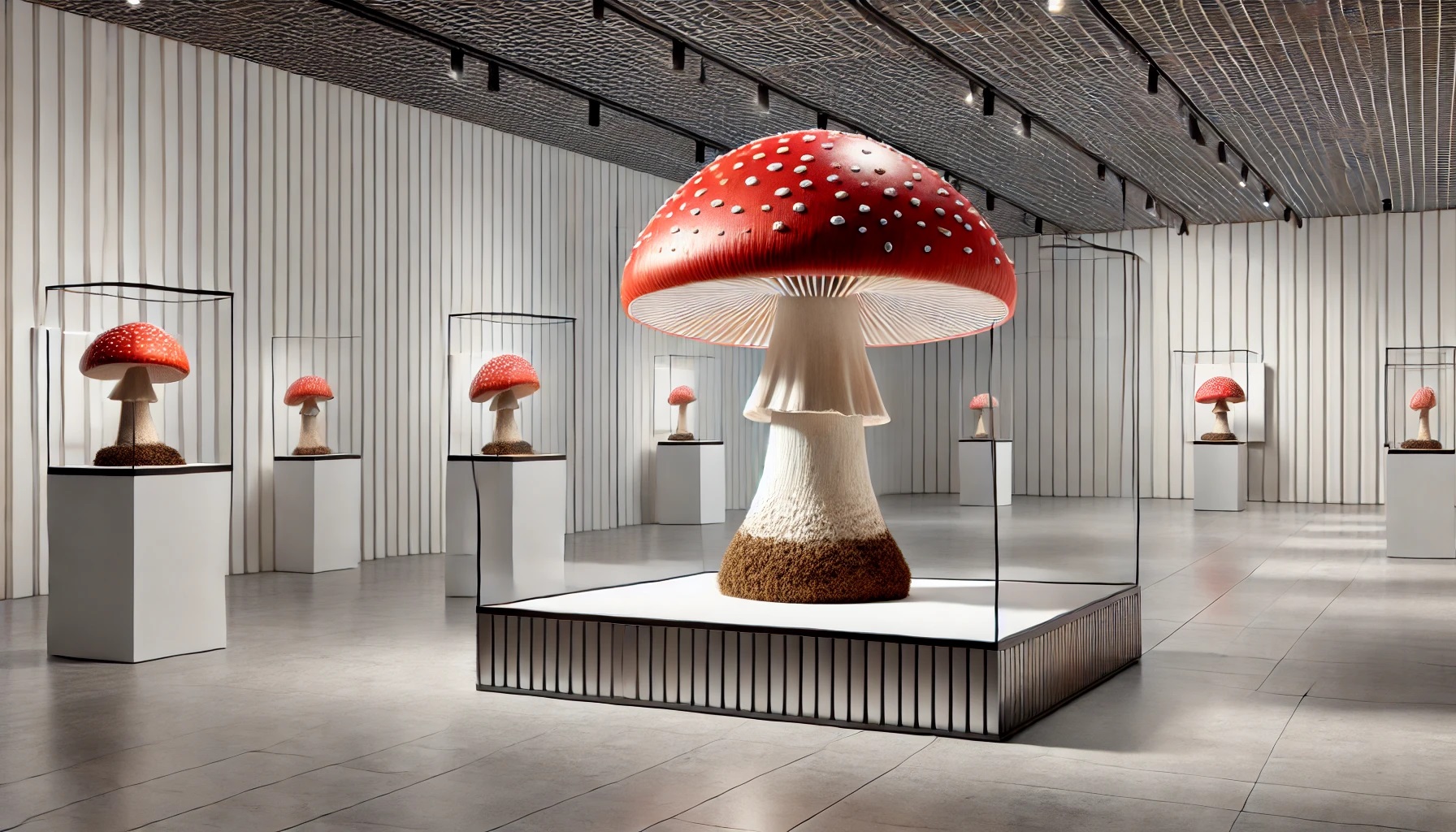
Choose one mushroom profile before adding surface detail
A domed cap, shallow umbrella, bell shape, flattened shelf, or irregular fantasy cap creates a different height and footprint. Match the stem diameter and lean to the selected cap so the prop reads as one balanced form rather than two unrelated shapes.
If the underside can be seen, identify whether it needs gill-like lines, a smooth graphic treatment, or another supplied reference. The cap overhang and the viewer's eye level determine how much of that underside remains visible.
Develop a single toadstool or a coordinated cluster
Repeated mushrooms work best when their differences in height, cap direction, and spacing are planned as one composition.
Single hero cap
Use one strong cap-to-stem ratio when the prop needs to read clearly from a distant approach or camera position.
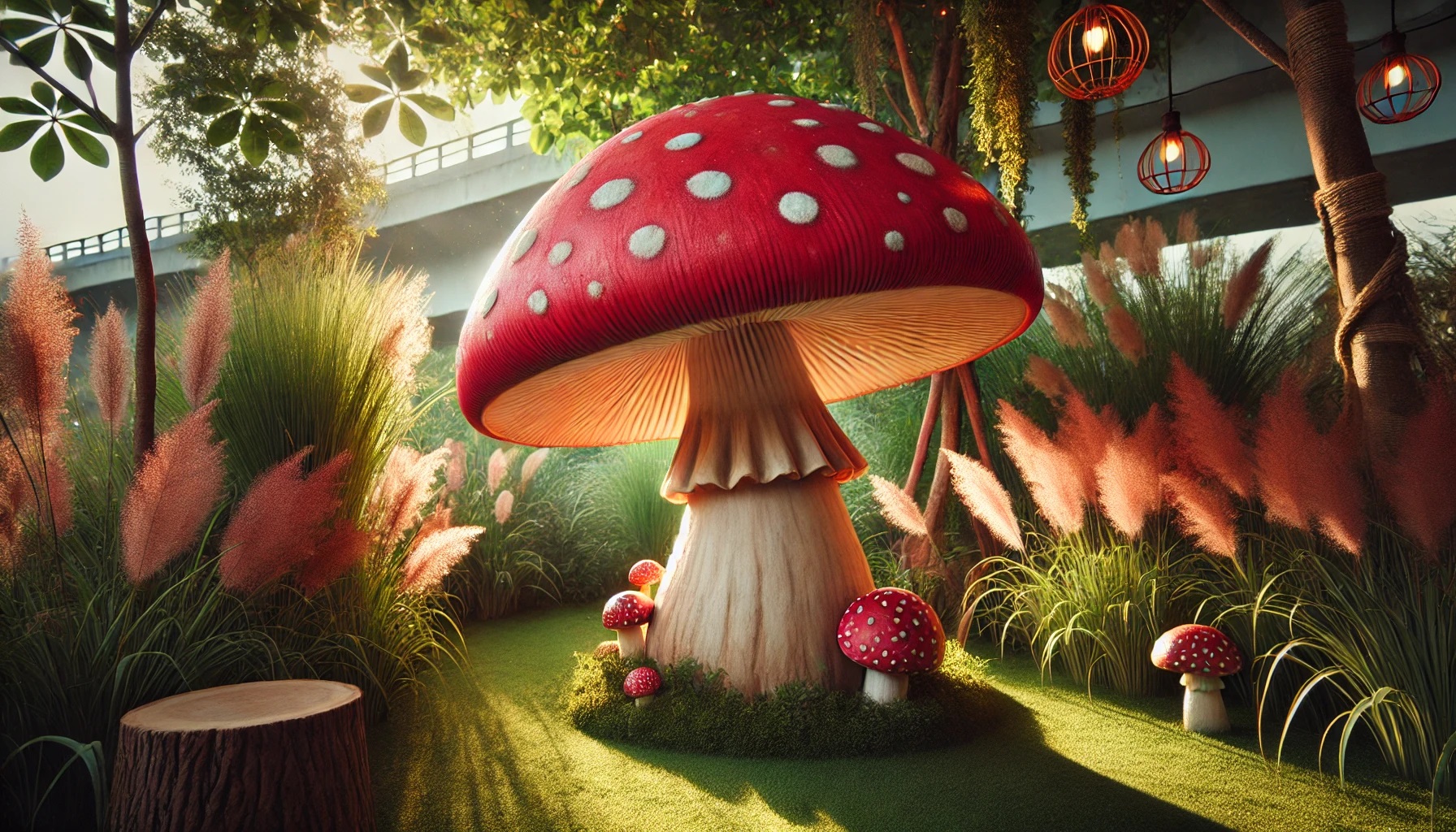
Mushroom cluster
Vary height, cap width, lean, and overlap while preserving enough negative space to see the individual stems.
Underside view
Raise or tilt the cap when gill-like lines and the cap-to-stem connection are important to the composition.
Fantasy surface
Map spots, bands, gradients, texture, and color to the approved art without presenting a fictional species as botanical reference.
Plan the footprint around cap overhang and visitor paths
The widest cap edge may extend far beyond the visible stem. Measure the full overhead envelope as well as the base, especially when several forms sit near a walkway, backdrop, doorway, or platform.
State whether the mushrooms are view-only scenery or need a separately reviewed interaction. A low cap can resemble seating, but that appearance does not establish an occupancy requirement.
Compare a single toadstool with a clustered scene
The concepts show two distinct composition paths: one dominant cap and a grouped environment with varied silhouettes. They are planning images, not completed-project photographs.
Define the cap, stem, group, and setting
Use a small set of coordinated references rather than mixing unrelated mushroom types.
- Approved mushroom, toadstool, or original-art reference
- Single form or number of forms in the cluster
- Cap width, height, profile, and direction
- Stem height, diameter, lean, and base relationship
- Underside treatment and visible viewing angles
- Color, pattern, spots, and surface direction
- Site footprint and audience path
- Destination, access route, and required date
Request pricing for a mushroom or toadstool prop
Send the selected cap and stem references, quantity, dimensions, palette, display plan, destination, and schedule.