
3D Logos - Foam and Acrylic Sandwich Models
Layered 3D logo displays that combine a lightweight foam core with acrylic faces and other specified surface treatments
A foam-and-acrylic sandwich construction gives a logo physical depth while reserving a crisp face for color, graphics, or a polished surface. The layers need to be designed as one assembly around scale, edges, mounting, and use.

Technical Overview
Choose Sandwich Construction for the Right Reason
A sandwich logo uses a shaped foam core with one or more applied face layers, commonly including acrylic. The core supplies most of the depth without the mass of a solid acrylic object, while the face can provide a more controlled graphic or reflective surface.
This approach is useful when a brand mark needs to read as a dimensional object but still retain a clean front elevation. It is not one fixed product specification; core thickness, face material, back treatment, and attachment method should be selected for the actual display.
Prepare the Logo Geometry
Vector artwork is usually the best starting point for the front profile. The file should contain the approved mark, current proportions, color references, and any minimum clear areas. Complex logos may need a three-dimensional model to resolve depth and overlapping forms.
Thin strokes, small counters, floating elements, and sharp inside corners require special review when translated into physical layers. Some features may need added support or a controlled adjustment so the assembly remains stable without visibly changing the identity.
Plan the Layered Construction

The foam core can be cut to establish the overall silhouette and depth, while acrylic faces are cut to match the approved front geometry. Alignment between those parts matters because even a small offset becomes visible along the edge of a high-contrast logo.
The design should define which layers are visible from the side, how they meet at the edge, and where attachments or supports can be concealed. Adhesive selection and mechanical support depend on the materials, size, orientation, and display conditions.
Resolve Faces, Edges, and Brand Color
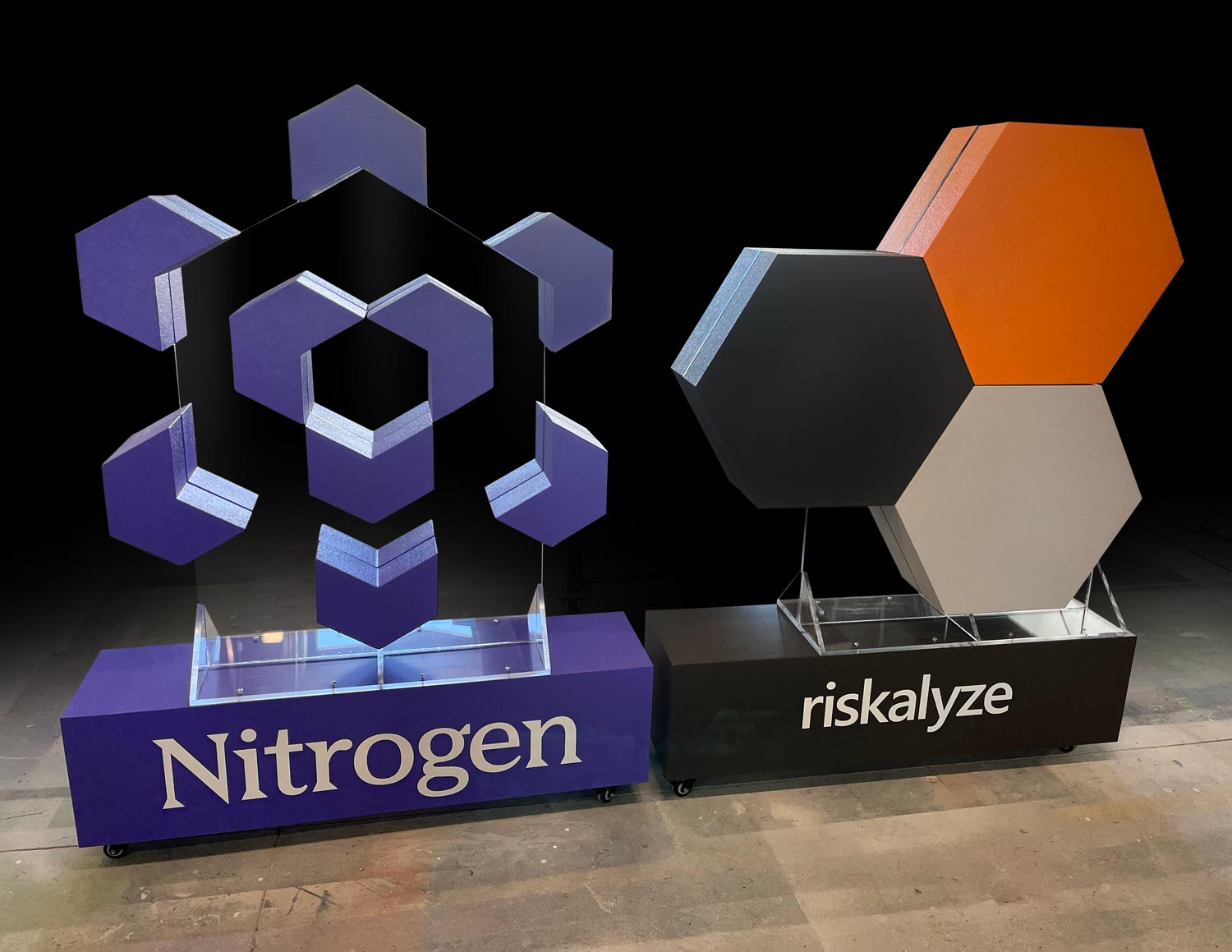
Acrylic can be opaque, transparent, translucent, colored, painted, or combined with applied graphics. The foam edge can remain visually separate or receive a finish that coordinates with the face. Samples help evaluate color and reflectivity under the expected room lighting.
Edge quality is especially important on freestanding or suspended displays that will be seen from several angles. The brief should identify the primary view and every secondary side that needs a presentation finish rather than leaving those decisions until assembly.
Design the Mounting and Display Format
Layered logos may be wall mounted, suspended, placed on a base, or built as freestanding displays. Each format changes the center of gravity, visible back, attachment points, and amount of handling the piece must tolerate.
If lighting, casters, removable sections, or a fillable feature is required, include it in the initial design. Those systems need space and access within the assembly and can affect the layer thickness and support plan.
Prepare the Project Specification
Supply vector artwork, finished dimensions, target depth, face material and color, edge treatment, viewing directions, mounting method, indoor or outdoor conditions, handling plan, delivery access, and any lighting or graphic requirements.
WhiteClouds can use those inputs to evaluate a foam-and-acrylic logo as a complete physical assembly, preserving the brand mark while resolving the structure, layers, finish, and display method together.
Plan a layered 3D logo display
Review custom 3D logo services, completed logo displays, and dimensional-letter planning guidance.
Tell us what your model needs to communicate
Share the intended audience, approximate size, level of detail, available source files, and project timeline.