
Defining a Giant Jaguar Prop
A giant jaguar prop needs a deliberate feline stance, head direction, paw placement, tail line, and spot pattern. Resolving those elements for one scene creates a distinct jaguar display rather than a generic big-cat statue or a retelling of a completed installation.
Plan a Jaguar Prop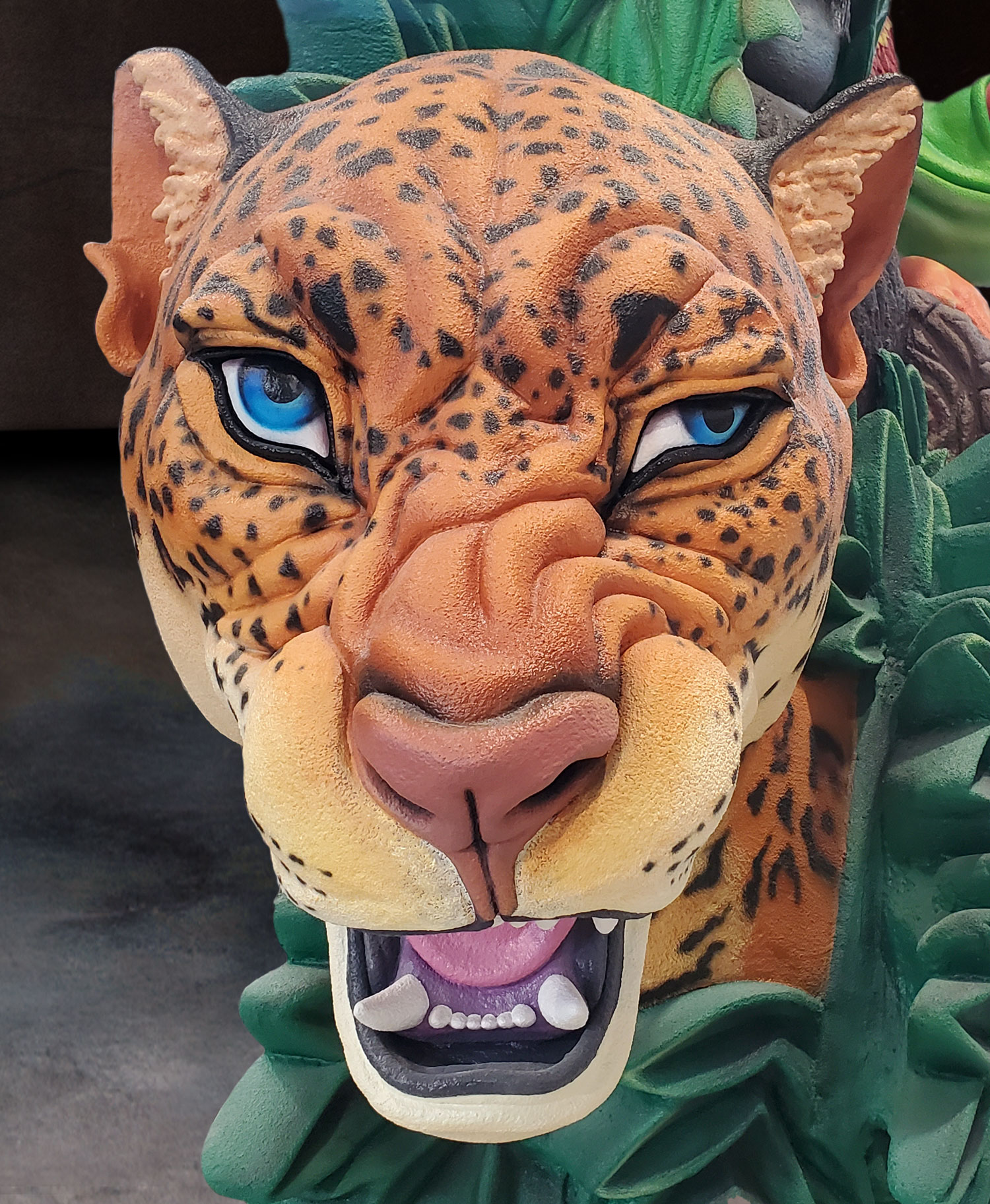
Choose the line from the nose through the tail
A resting jaguar uses a low back and folded or extended paws. A crouch compresses the legs and raises the shoulder line. A stalking pose lengthens the body, while an elevated or leaping-looking composition introduces scenic contacts beyond the floor. Select one stance before refining markings.
Provide side, front, and three-quarter references that agree on head direction, spine curve, paw positions, and tail path. If the design follows an original character, identify the protected facial and pattern details that must remain unchanged.
See form and markings integrated with scenery
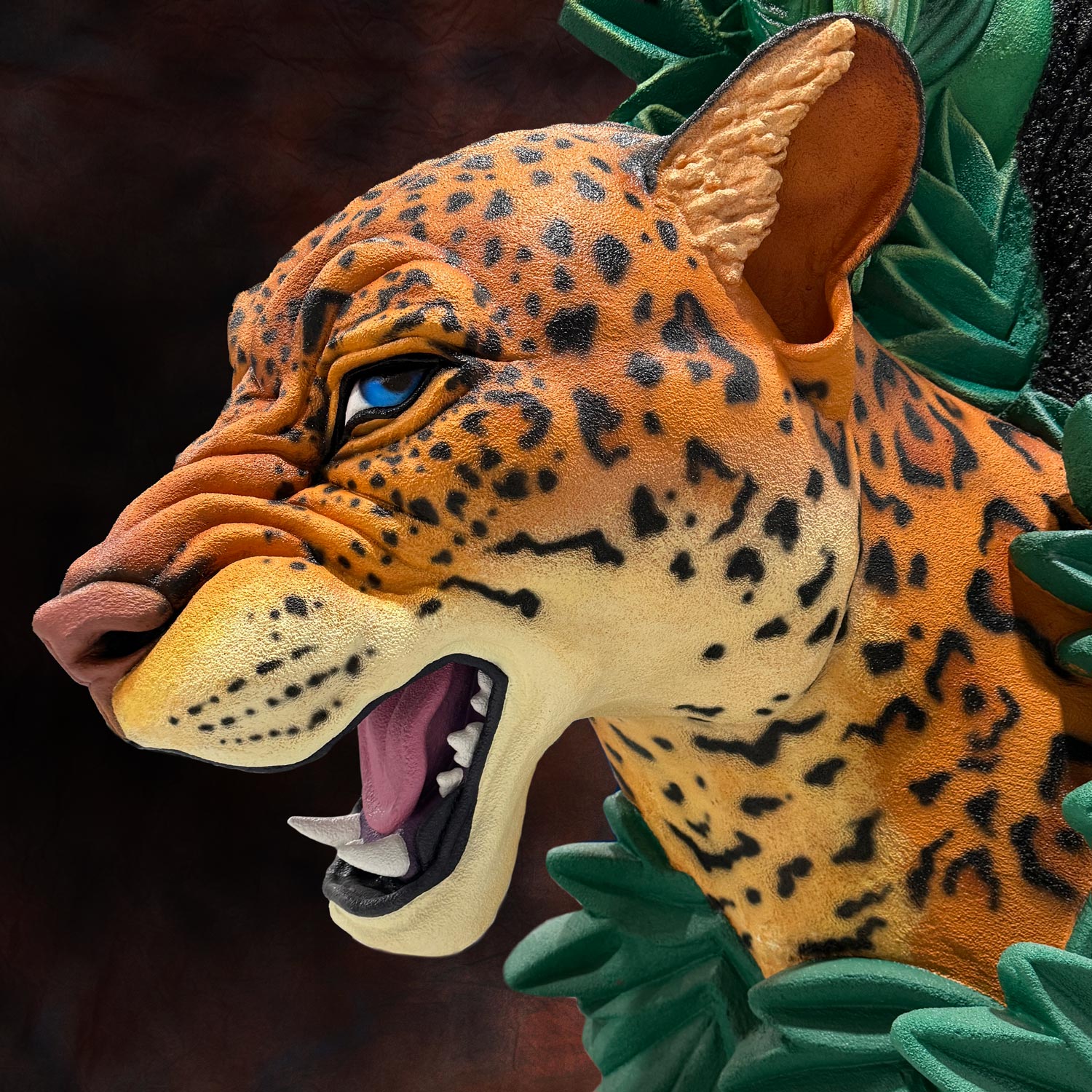
WhiteClouds fabricated Maya the jaguar for the Rainforest Cafe sign at Disney's Animal Kingdom. One view shows the head and forequarters emerging through the scenic composition; the closer image reveals the muzzle, ears, eye direction, and markings.
The example demonstrates one completed treatment rather than a standard design. A new jaguar needs its own stance, approved pattern, scale, expression, site, and scenic relationships.
Build recognition from form before spots
Pattern supports the species silhouette but should not carry the entire design.
Head and muzzle
Set the forehead, cheek width, muzzle projection, nose, ear position, eye direction, and mouth line as a coordinated expression.
Torso and legs
Define shoulder height, back curve, chest depth, hindquarter mass, leg angles, and every visible paw.
Tail
Draw the full taper and curve, including the final tip and its clearance from people or scenery.
Rosette layout
Supply approved spot and rosette direction with the density and scale needed on the head, torso, legs, and tail.
Protect the face, paws, and patterned body
Position the principal audience approach so foliage, signs, rocks, rails, or another animal do not cover the face or reduce the figure to a patterned fragment. Mark secondary views if visitors pass along the side or behind the display.
Show each paw and scenic contact in plan. A long tail can enter a walkway even when the torso fits comfortably. If visitors will stand near, beneath, or within a marked photo area, include that relationship and the closest audience line in the project requirements.
Define the animal and its occupied space
The brief should connect markings and expression to a complete physical stance.
- Approved jaguar or original character artwork
- Resting, crouching, stalking, climbing, or another fixed stance
- Overall body, shoulder, head, paw, and tail dimensions
- Expression, ear position, eye direction, and mouth treatment
- Approved rosette and color pattern
- Ground, branch, rockwork, sign, or scenic contacts
- Front and side sightlines with the nearest public boundary
- Loading constraints, final site, available install period, and handoff date
Request pricing for a custom giant jaguar
Send the approved artwork, stance, dimensions, expression, rosette pattern, tail route, scenic contacts, audience sightlines, access information, destination, and schedule.