
Planning a Giant Bobblehead Prop
A giant bobblehead depends on a deliberate mismatch: the head must be oversized enough to read as a bobblehead while the body, pose, and base still support a coherent figure. Likeness, caricature level, neck transition, and any requested head movement should be defined as related decisions.
Discuss a Giant Bobblehead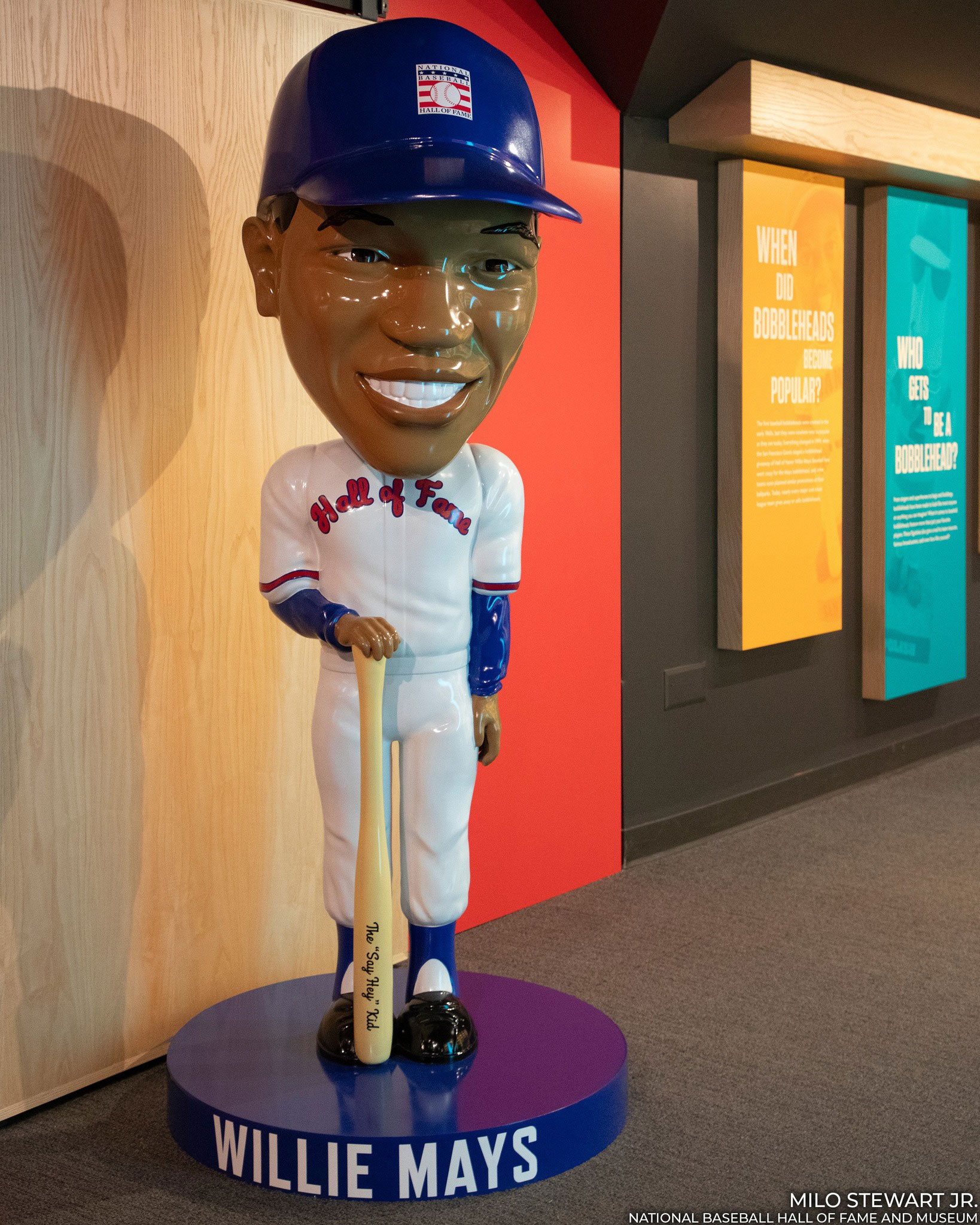
Establish what makes the figure a bobblehead
The head-to-body ratio should be selected before facial refinement. A moderately enlarged head can keep more realistic body proportions, while a much larger head shifts the figure toward a graphic collectible style. The neck, shoulders, and pose must be composed around that choice rather than scaled independently.
Overall height should include the base and the highest feature of the head, cap, or hair. Provide limits for width and depth as well. A bat, extended arm, broad stance, or angled torso may define the shipping envelope more than the figure's stated height.
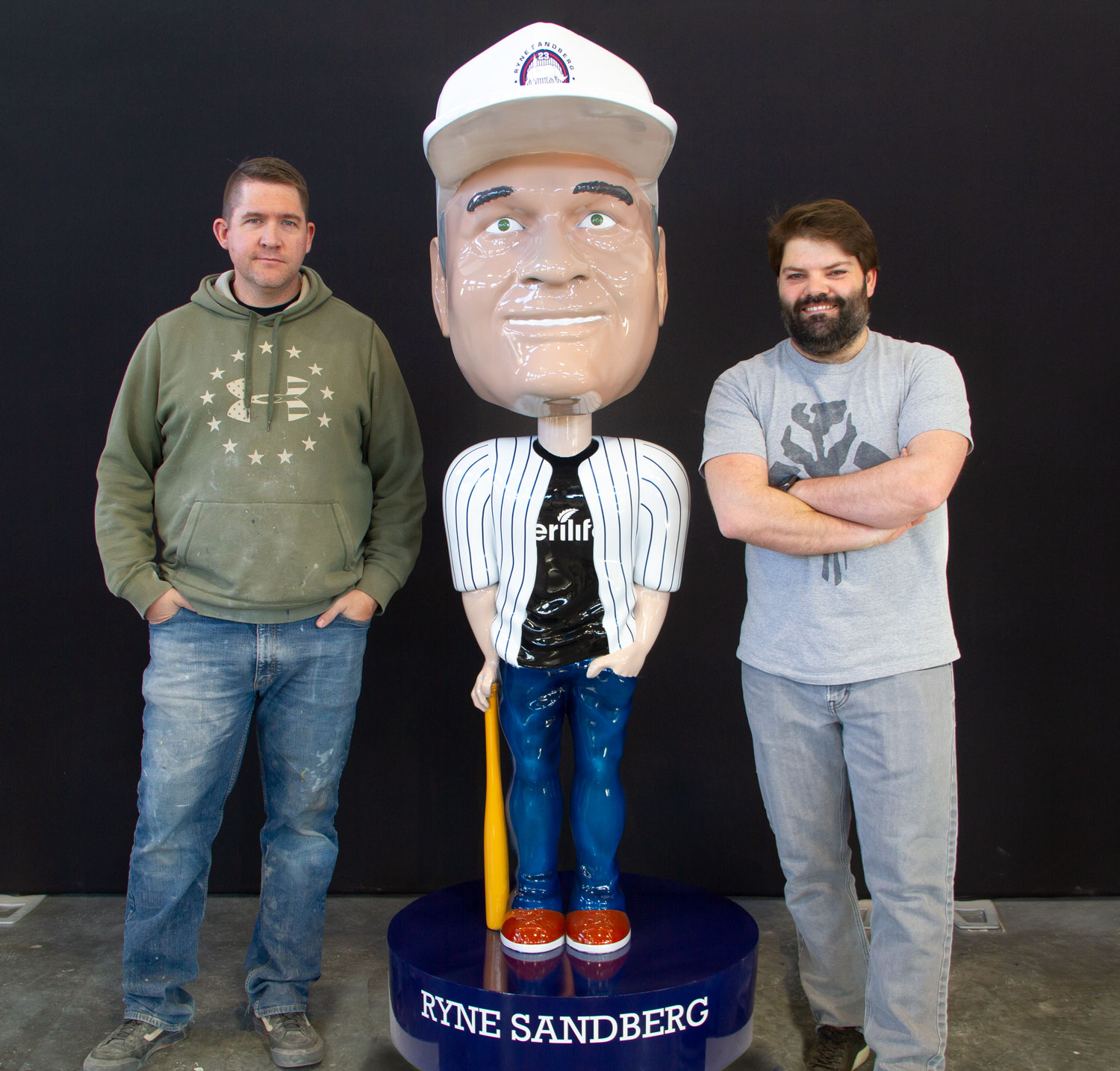
Compare two full-size working figures
The Willie Mays and Ryne Sandberg statues are completed WhiteClouds bobbleheads. Their poses, uniforms, head proportions, and bases differ, showing why a new project requires its own approved references. Their presence here does not imply affiliation with another proposed subject.
Separate identity cues from caricature choices
A consistent reference set helps facial and costume decisions move in the same direction.
Face
Supply clear front, profile, and three-quarter views, plus guidance on expression and the desired degree of exaggeration.
Hair and headwear
Hair shape, helmets, caps, and other head details affect both recognition and the moving head assembly.
Clothing
Uniform cut, colors, numbers, logos, and footwear should come from current approved artwork or photographs.
Pose and accessories
Held objects and hand positions need dimensions, orientation, and an explanation of what must remain removable or fixed.
State whether the head must actually move
A visual bobblehead and a working bobblehead are different scopes. If movement is required, describe the desired direction, approximate range, expected activation, operating environment, and whether visitors may touch the figure. Do not assume that every oversized bobblehead is designed to move.
The base can provide stability, carry a name or graphic panel, and establish the figure's stance. Define its maximum footprint, visible sides, and any floor or platform constraints. For repeated travel, include packing, setup, and handling expectations in the initial request.
When the head moves, access for inspection and the way the figure is switched on or secured also belong in the planning discussion. Identify who will operate it, how close viewers may stand, and whether the display needs to be disconnected or divided before it leaves the site.
What to assemble before requesting pricing
The quote package should identify both the person or character and the physical behavior of the display.
- Authorized likeness references
- Desired caricature level
- Overall height including base
- Target head-to-body ratio
- Pose, clothing, and accessories
- Static or working head
- Viewing sides and site access
- Delivery city and required date
Request a giant bobblehead prop quote
Provide approved likeness images, target dimensions, head proportion, expression, pose, costume artwork, base limits, and whether movement is required. Include display access, travel expectations, destination, and schedule so the prop request can be evaluated as a complete physical system.