
Giant Car Props for Events and Exhibits
A giant car prop can turn a vehicle silhouette into a launch centerpiece, exhibit landmark, stage element, retail feature, or unexpected photo setting. WhiteClouds can begin with an existing vehicle, an original sketch, campaign artwork, or a general automotive theme. The body profile, color, details, and presentation can prioritize a close replica or a more stylized scenic impression.
Plan a Giant Car Display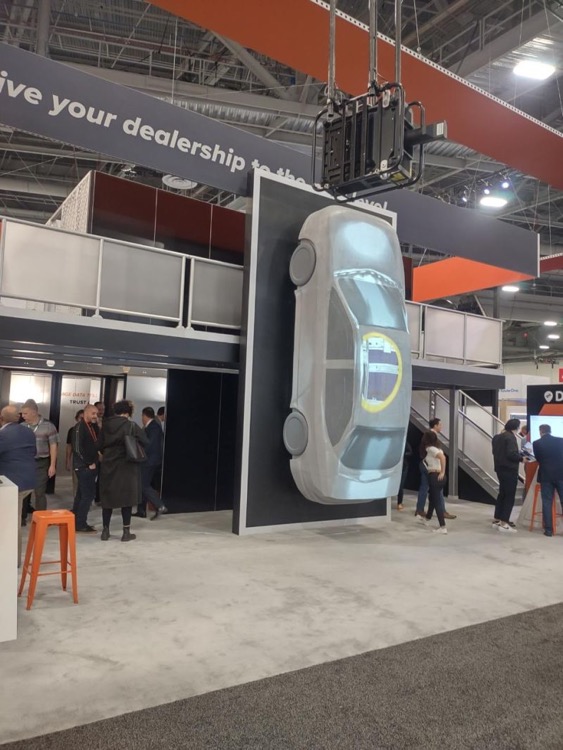
- Strong wheel openings, windows, and body contours identify the form as a car without implying that it functions as a vehicle.
Start with the car's defining lines
A car is read through its roofline, hood, wheel placement, windows, and stance. At an event or exhibit, those broad proportions usually matter more than every mechanical detail. Emphasizing the defining profile can produce a clear display object while leaving room to simplify areas that will never be viewed closely.
Some projects closely follow a vehicle reference, while others use automotive design language more freely. A launch may center on a particular body shape, a themed attraction might want a playful original vehicle, and a stage could need only the most visible exterior surfaces. WhiteClouds can help translate the desired viewpoint into a focused sculptural composition.
Move from product silhouette to imaginative scenery
The car can be treated as a faithful visual reference, a bold graphic object, or one element in a larger world.
Launch centerpiece
Use the vehicle's profile, color, and approved exterior cues to tie the prop to the campaign.
Stylized scenic car
Exaggerate the stance, wheels, proportions, or surface character for theater, attractions, or original storytelling.
Photo-scale landmark
Compose the car and its base so guests can stand beside it while the full vehicle remains visible in photographs.
Useful across launches, exhibits, retail, and entertainment
A vehicle-shaped display can signal motion, engineering, nostalgia, or adventure without being drivable.
Brand and dealer events
Create a recognizable physical focal point for reveals, anniversaries, press settings, and campaign photography.
Museums and visitor experiences
Support transportation, design, history, or technology stories with a large dimensional form.
Stages and themed spaces
Place an original car within performance scenery, roadside worlds, retail windows, or attraction environments.
Coordinate body shape, visible detail, and display stance
The primary angle should determine where development effort creates the greatest visual return.
Body geometry
Identify the roofline, front end, wheel arches, windows, and stance that define the reference.
Surface identity
Consider approved paint color, graphics, dimensional trim, lighting appearance, or a deliberately simplified finish.
Presentation
Choose a floor-level pose, platform, wall treatment, partial vehicle, or scenic surroundings based on the venue.
Show the car from the angle that matters most
A reference photograph and a venue image can establish a useful direction before a complete model is available.
Send photographs, drawings, or an original concept from several useful angles.
Explain the launch, exhibit, performance, attraction, or photo experience.
Share the available area, audience path, viewing distance, and display duration.
What may shape the quote
Scale, body complexity, viewing sides, surface detail, graphics, finish, base, quantity, and installation setting can affect a quote. A sculptural shell and a highly detailed replica require different levels of development.
Useful context for an early conversation
Is a giant car prop a functioning vehicle?
No. The page concerns a physical display object. Any movement, access, or other interaction must be defined and reviewed as a separate project requirement.
Can the display follow a specific vehicle?
Yes, when suitable references and any necessary approvals are available. The team can also develop an original automotive form that avoids copying a protected design.
Share the vehicle or automotive scene you have in mind
Send the reference, primary viewing angle, approximate scale, event or exhibit context, approved graphics, and deadline. WhiteClouds can help define the display.