
Planning a Boo Berry Character Display
A Boo Berry display depends on the character's floating ghost shape, relaxed expression, hat, bow tie, and blue color palette. Turning that graphic identity into a dimensional prop calls for a deliberate pose, readable depth, and a display format suited to the way visitors will encounter it.
Plan a Character Display
Preserve the ghostly shape before adding scenery
The character should remain understandable without relying on a busy background. Start with the rounded head, floating body, hand position, facial expression, and recognizable accessories. Decide whether the pose should feel welcoming, mischievous, surprised, or theatrical, because that choice changes the face and the overall curve of the figure.
A front-facing treatment can closely follow familiar character art. A three-quarter turn gives the body more depth and works well when people approach from several directions. If the lower form appears to float, the base or support relationship should be included in the concept rather than hidden until production planning.
Give the character a specific job in the display
The same figure can be composed differently for a floor feature, photo moment, or overhead scene.
Freestanding figure
A floor display can emphasize the full silhouette and use a coordinated base to establish position and viewing height.
Photo moment
Leave comfortable visitor space and keep important hands, facial features, and accessories visible beside a standing guest.
Themed vignette
A doorway, graveyard detail, sign, or small scenic element can support the character without overwhelming it.
Suspended presentation
A floating arrangement requires the overhead location, intended height, access, and attachment conditions to be identified early.
See two completed WhiteClouds display approaches
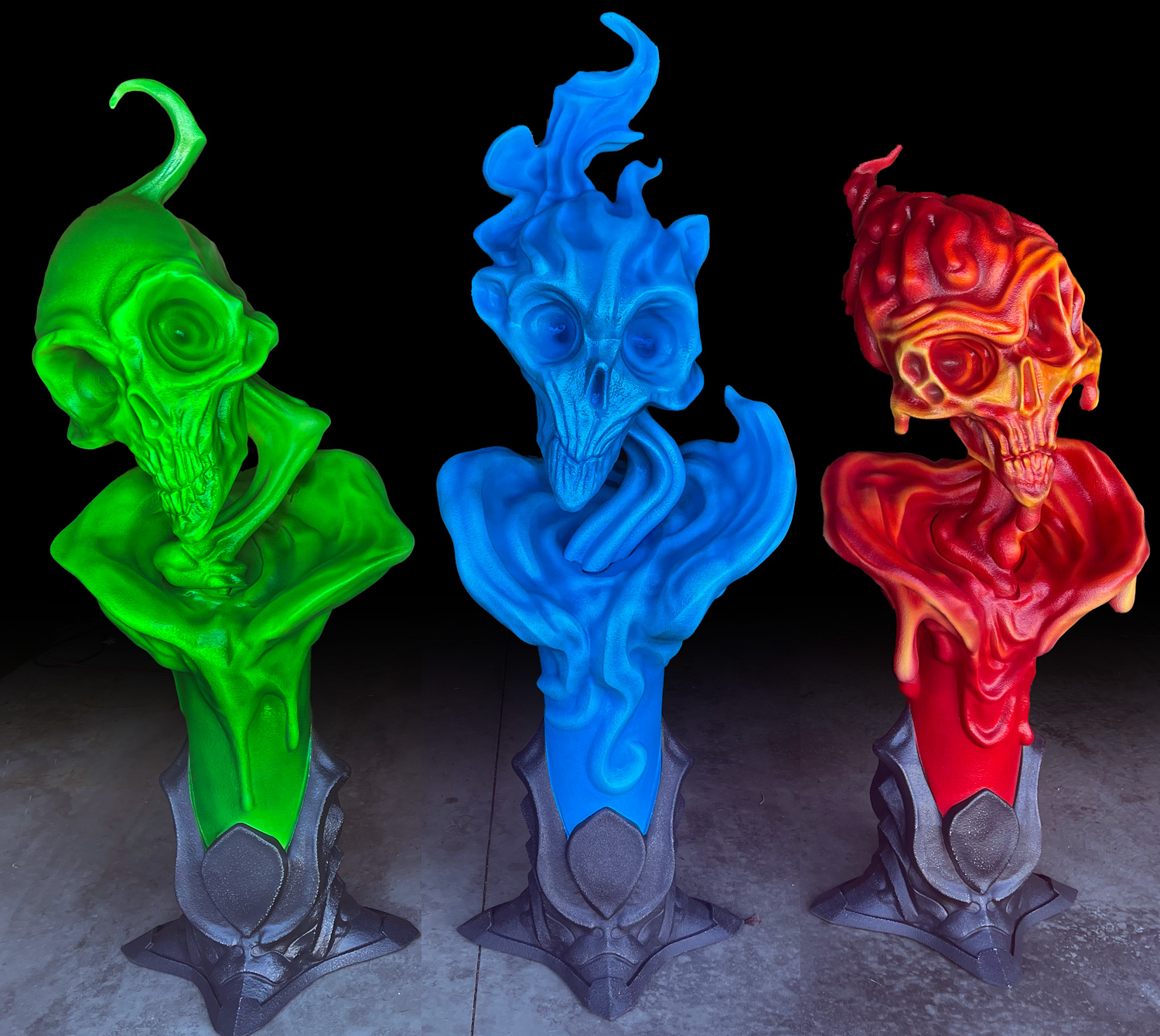
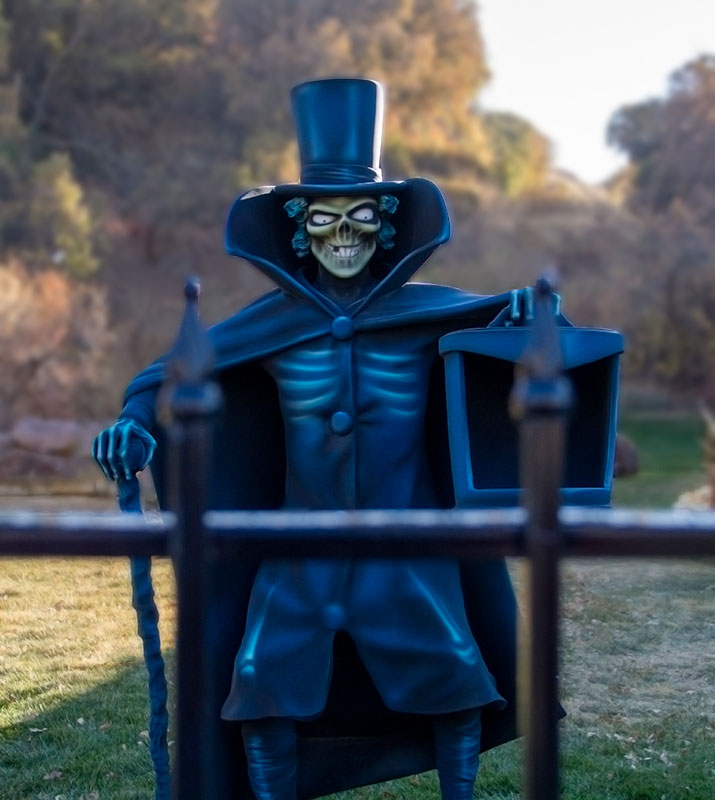
The illuminated skull candles use repeated forms and colored light to create a coordinated seasonal display. The Hatbox Ghost is a single detailed figure with a strong vertical silhouette. These completed projects illustrate different ways to establish a spooky visual tone around a physical object.
Design for the expected viewing distance
Fine facial lines can disappear across a lobby or event aisle, while the eyes, smile, hat, bow tie, and broad body shape remain visible. Rank those identity cues before specifying secondary textures. For close viewing, the transition from the face to the floating body and the dimensional treatment of hands and clothing deserve more attention.
Give the target height, maximum width and depth, normal viewing distance, and display duration. Also state whether the prop will be indoors, under cover, or exposed; whether it travels; and how close visitors may come. Those conditions can affect the base, finish, separable elements, packing, and setup plan.
Information to include with a Boo Berry display request
Clear visual and site inputs make the first conversation more concrete.
- Final character reference
- Expression and pose direction
- Target height, width, and depth
- Freestanding, scenic, or suspended format
- Primary viewing side
- Lighting or photo-op request
- Venue access and display conditions
- Ship-to location and needed date
Request a quote for a Boo Berry character display
Share the character art, pose, target dimensions, display format, intended environment, viewing distance, access limits, destination, and deadline. Note any lighting, suspension, base, packing, or repeated-use needs at the outset.