
Enlarged Decorative Object Replica Ideas
A small decorative object can become a large physical display without losing the shape, color relationships, and identifying details that made the original appealing. The useful starting point is a specific object or coordinated collection, followed by a clear decision about scale, viewing distance, and how closely the enlargement should follow the source.
Discuss a Decorative Replica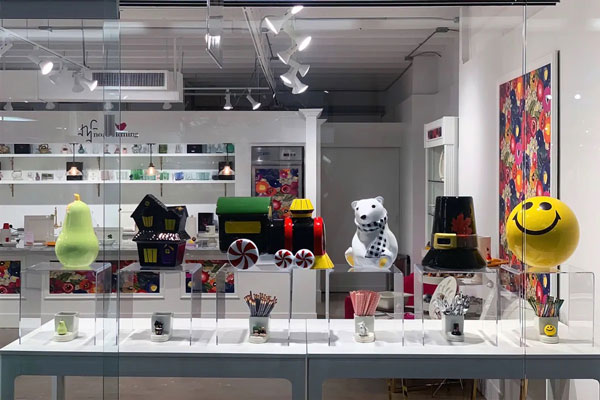
Choose the object features that survive enlargement
Start with views that explain the complete form, not only its most attractive face. A front photograph may establish the color and graphic layout while leaving the depth, back, underside, or attachment points unresolved. A physical sample, measured drawing, scan, or coordinated photo set can clarify those missing relationships before the object is translated to a much larger size.
List the visual cues that make the object recognizable. They may be an unusual profile, a tiny accessory, a particular edge, a repeated pattern, or the proportion between two parts. Enlarging every detail equally can produce visual clutter, so mark which features carry identity from across a room and which can remain quiet.
Decide what kind of likeness the display needs
The desired relationship to the source should be settled before dimensions and surface details are developed.
Faithful enlargement
Preserve the source proportions, prominent contours, and approved colors when the object itself needs to be recognized immediately.
Curated interpretation
Simplify very small texture or fragile detail while retaining the outline and visual hierarchy that define the original.
Branded presentation
Treat logos, patterns, and color breaks as approved artwork with a planned reading distance and visible face.
Coordinated collection
Use a common scale rule, base language, or spacing system so different objects read as one intentional group.
See how small decorative forms can become a display family
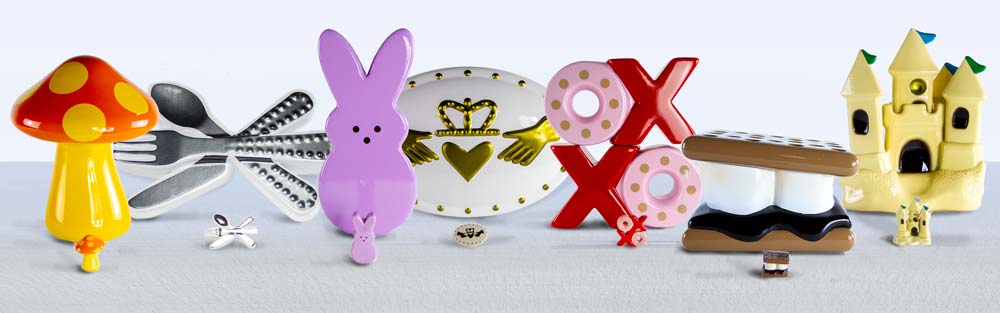
The completed WhiteClouds examples show two approaches to enlarged decorative objects. One presents many different plate decorations in a retail-style arrangement. The Nora Fleming set applies a consistent enlargement strategy to seven sculptures modeled from the client's plate miniatures. These are separate projects, not proof that the legacy article described one commission.
Set scale from the room rather than the source object
Target size should answer a viewing problem. A display seen through a storefront needs a different scale than one examined at arm's length. Provide the normal approach, closest visitor position, ceiling height, and nearby fixtures so the enlargement has enough presence without overwhelming circulation or hiding important parts of the collection.
Orientation matters as much as height. A narrow object may work on a shelf-like platform, while a broad or top-heavy form may need a deeper footprint. For a grouped display, sketch the lineup and sightlines before setting each object's final dimensions. Also note whether the pieces remain installed, move within one building, or travel between venues.
Details to define before estimating an enlarged decorative replica
A concise source and site package lets the form, finish direction, and display method be evaluated together.
- Physical sample, measured drawing, scan, or full photo set
- Features that must remain exact
- Desired height, width, and depth
- Approved colors, patterns, and brand files
- Single object or coordinated collection
- Primary and secondary viewing sides
- Available floor, wall, shelf, or case space
- Access limits, destination, and required date
Request a quote for an enlarged decorative-object replica
Share the source object or reference set, target dimensions, required likeness, approved graphics, viewing sides, display arrangement, site limits, destination, and schedule. Note whether the piece stands alone or belongs to a larger collection.