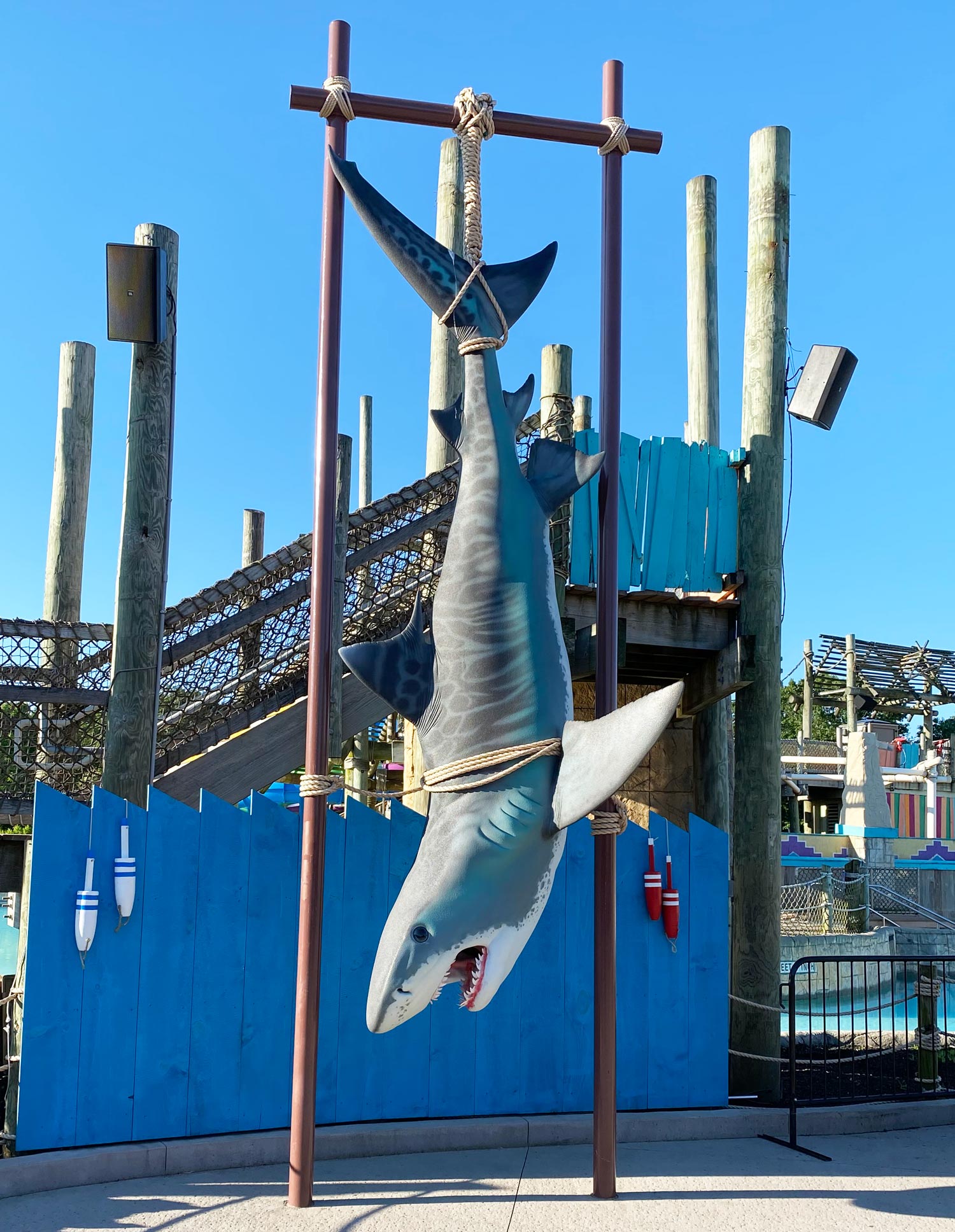
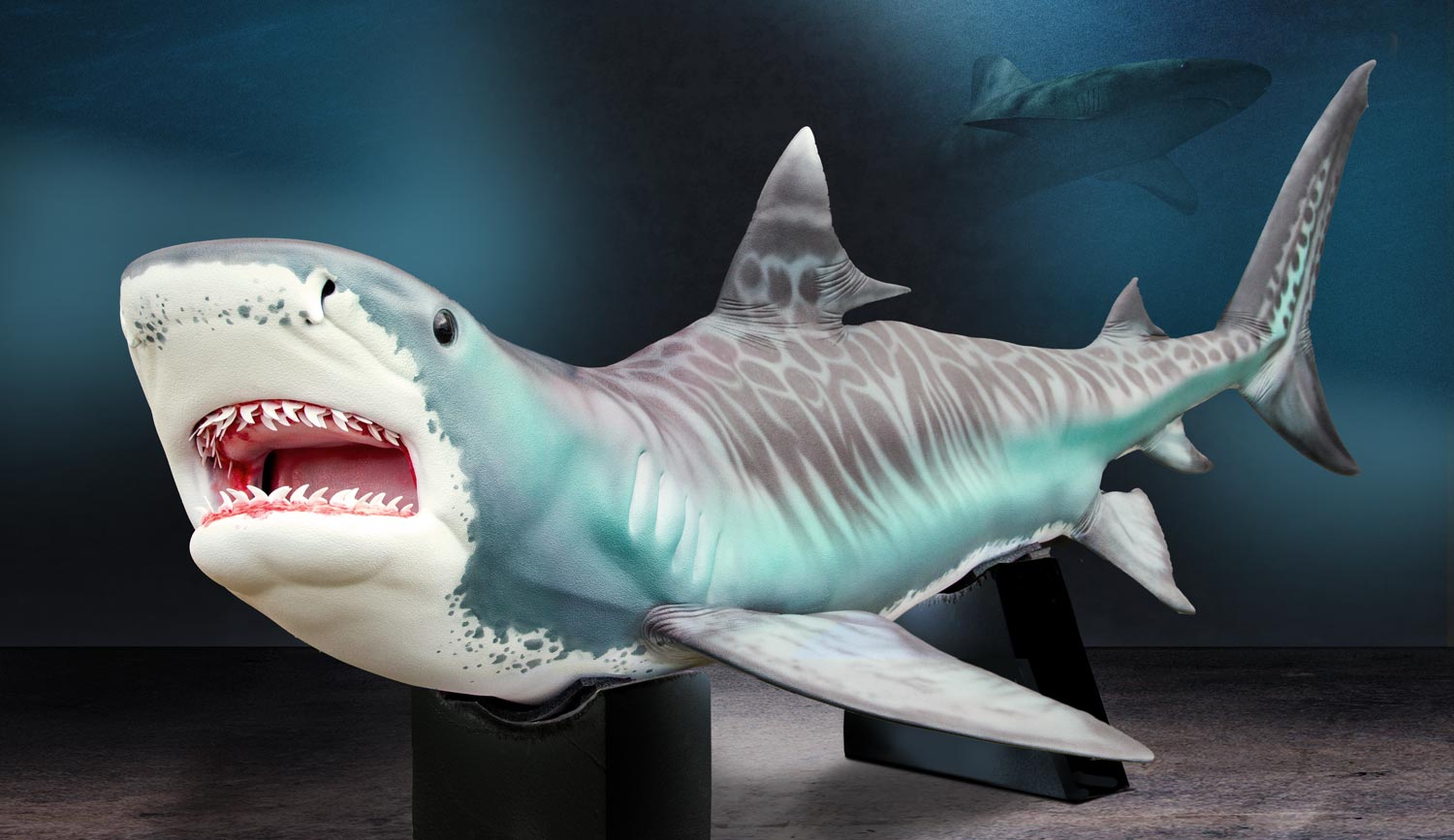
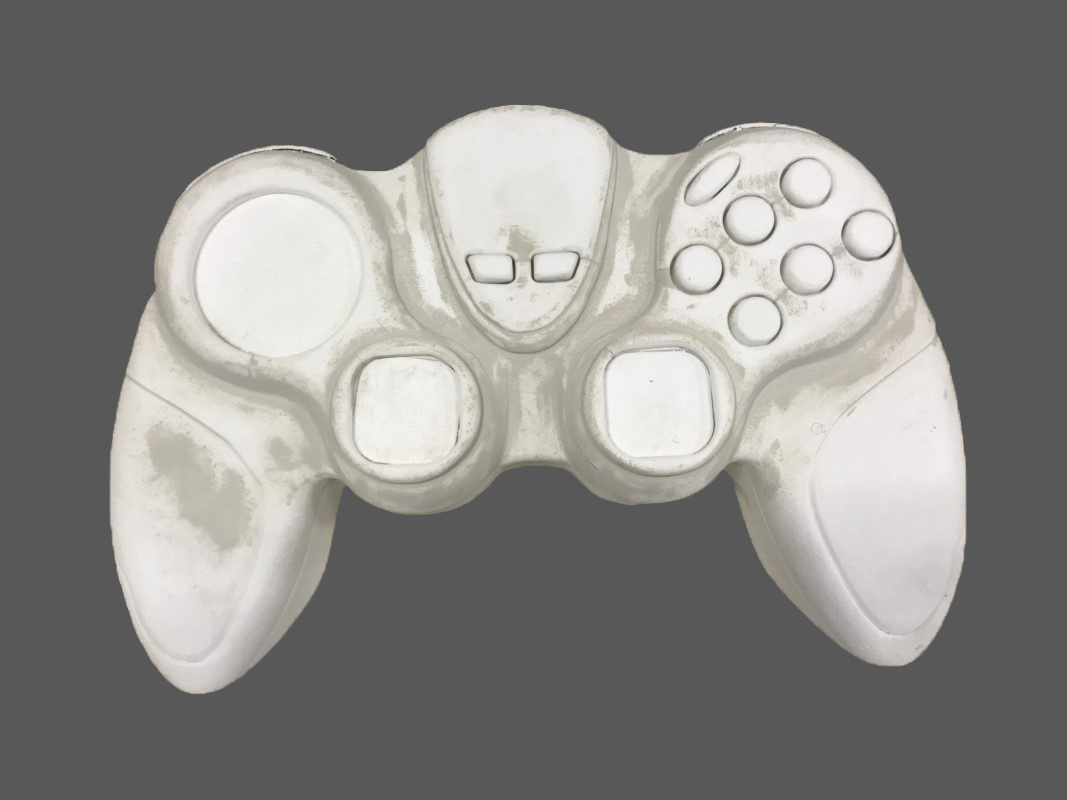
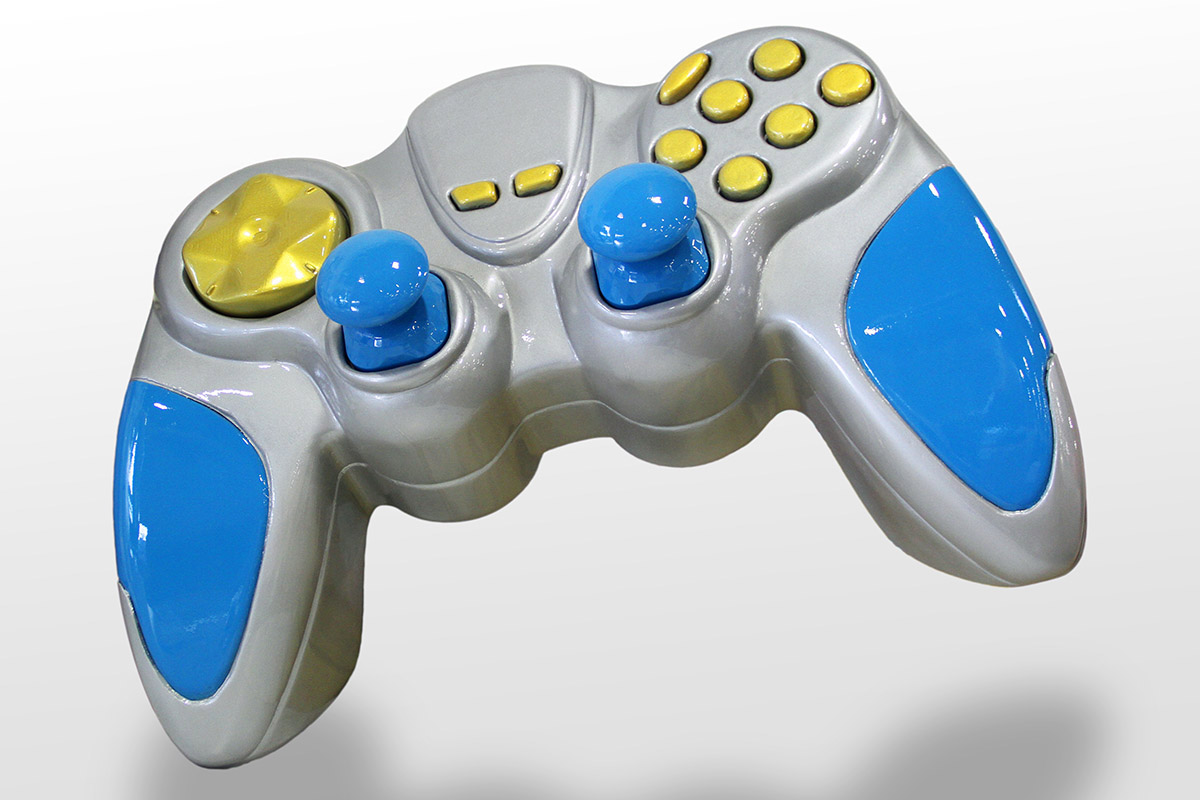
Custom carved foam props, replicas, sculptures and displays
Custom Foam Carving, Sculpting & Fabrication
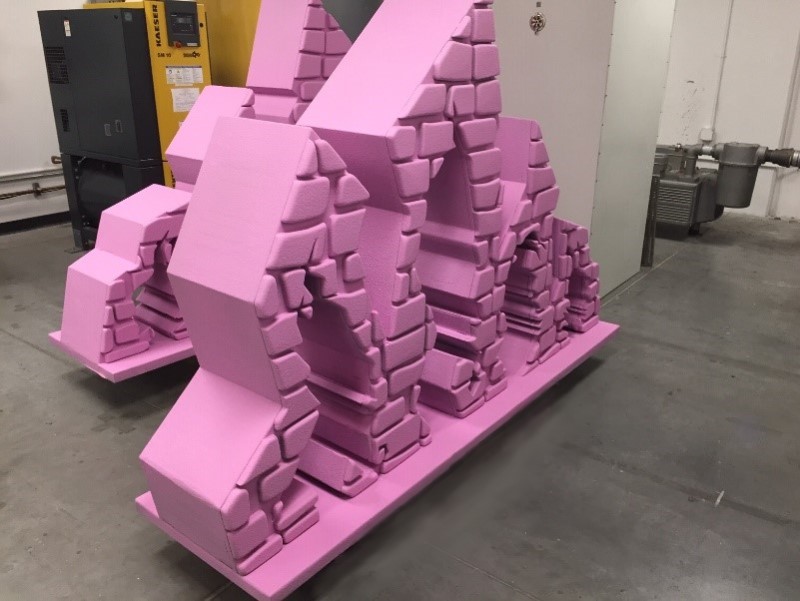
WhiteClouds creates custom foam forms for oversized props, product replicas, characters, signs, scenery, exhibits and decorative display features.
Foam is often selected when a project needs large scale, lower weight, sculptural shaping, protective coatings, specialty finishes and practical installation planning.
Professional foam carving turns block, sheet or laminated foam into a finished physical form through digital setup, cutting, shaping, assembly, coating and finishing. The foam provides the sculptural mass, while the supporting structure, surface system and finish determine how the completed piece behaves in the real environment.
The foam creates the volume. The structure, coating and finish determine how the completed piece performs.
01
▧IMAGE NEEDEDRaw EPS foam block
Square or landscape · 1:1 or 4:3
02
▧IMAGE NEEDEDRough-cut foam form
Square or landscape · 1:1 or 4:3
03
▧IMAGE NEEDEDHand-sculpted foam
Square or landscape · 1:1 or 4:3
04
▧IMAGE NEEDEDHard-coated foam surface
Square or landscape · 1:1 or 4:3
05
▧IMAGE NEEDEDFinished painted foam display
Square or landscape · 1:1 or 4:3
One complete project path
A start-to-finish foam sculpture workflow
A large foam project usually moves through digital planning, block preparation, shaping, surface refinement, structure, coatings and final finish. The example below uses available WhiteClouds project imagery where it fits the stage.
01
▧IMAGE NEEDEDDesign or digital model for foam sculpture
Landscape · 16:9
Design or digital model
02
▧IMAGE NEEDEDFoam sectioning or block preparation
Landscape · 16:9
Foam sectioning or block preparation
03
Rough cutting
04
Hand sculpting and sanding
05
▧IMAGE NEEDEDArmature or structural assembly for large foam prop
Landscape · 16:9
Armature or structural assembly
06
Sealing or coating
07
Painting and detailing
08
Completed installation
Foam materials and densities
Different foams shape, finish and perform differently.
Material choice affects carving detail, surface preparation, coating strategy, weight, durability and budget. The right choice is usually based on the intended use rather than the material name alone.
▧IMAGE NEEDEDEPS foam bead structure and block
Detail or product photo · 4:3
▧IMAGE NEEDEDXPS foam sheet and closed-cell surface
Detail or product photo · 4:3
▧IMAGE NEEDEDHDU tooling board or sign foam
Detail or product photo · 4:3
▧IMAGE NEEDEDHand sanding and surface refinement
Detail photo · 4:3
▧IMAGE NEEDEDTemplates and profile guides on foam block
Detail photo · 4:3
Foam lamination and adhesives
Large forms often begin as joined sheets or blocks.
Sheets and blocks can be laminated before or during carving when the final shape exceeds a single foam blank. Adhesive selection depends on foam type, surface preparation, coating plan and the expected stress on the assembly.
Surface preparation
Foam-safe adhesive
Layer alignment
Clamping or weighting
Seam location
Block assembly
Final shaping across seams
▧IMAGE NEEDEDFoam-safe adhesive being applied
Process photo · 4:3
▧IMAGE NEEDEDEPS blocks laminated into large carving blank
Process photo · 4:3
▧IMAGE NEEDEDLayered XPS foam assembly
Process photo · 4:3
▧IMAGE NEEDEDFoam seam after carving and filling
Process photo · 4:3
Armatures, bases and hybrid construction
Foam volume can be supported by hidden structure and mixed materials.
▧IMAGE NEEDEDCutaway foam sculpture with internal metal armature
Cutaway illustration or photo · 16:9
Steel armaturesAluminum framesWood structuresPVC or tube supportsBase platesHidden mounting hardwareThreaded hard pointsHanging pointsCastersRemovable sectionsIntegrated seats or interaction areasAcrylic, graphics, electronics and 3D-printed details
▧IMAGE NEEDEDFoam attached to structural base plate
Construction photo · 4:3
▧IMAGE NEEDEDModular foam sections and hidden connectors
Construction photo · 4:3
▧IMAGE NEEDEDHybrid foam, metal and 3D-printed assembly
Construction photo · 4:3
Hard coats and protective surface systems
The coating system bridges carved foam and real-world use.
Foam substrateSealer or preparation layerHard coat or reinforced shellPrimerPaint or scenic finishOptional clear finish
Light-Duty Sealed Display Finish
Useful for controlled indoor display pieces where weight and finish smoothness matter more than impact resistance.
Epoxy Fillers and Coatings
Can help fill, smooth and reinforce selected surfaces when compatible with the foam and finish plan.
The same foam form can support very different final appearances.
Smooth branded paint
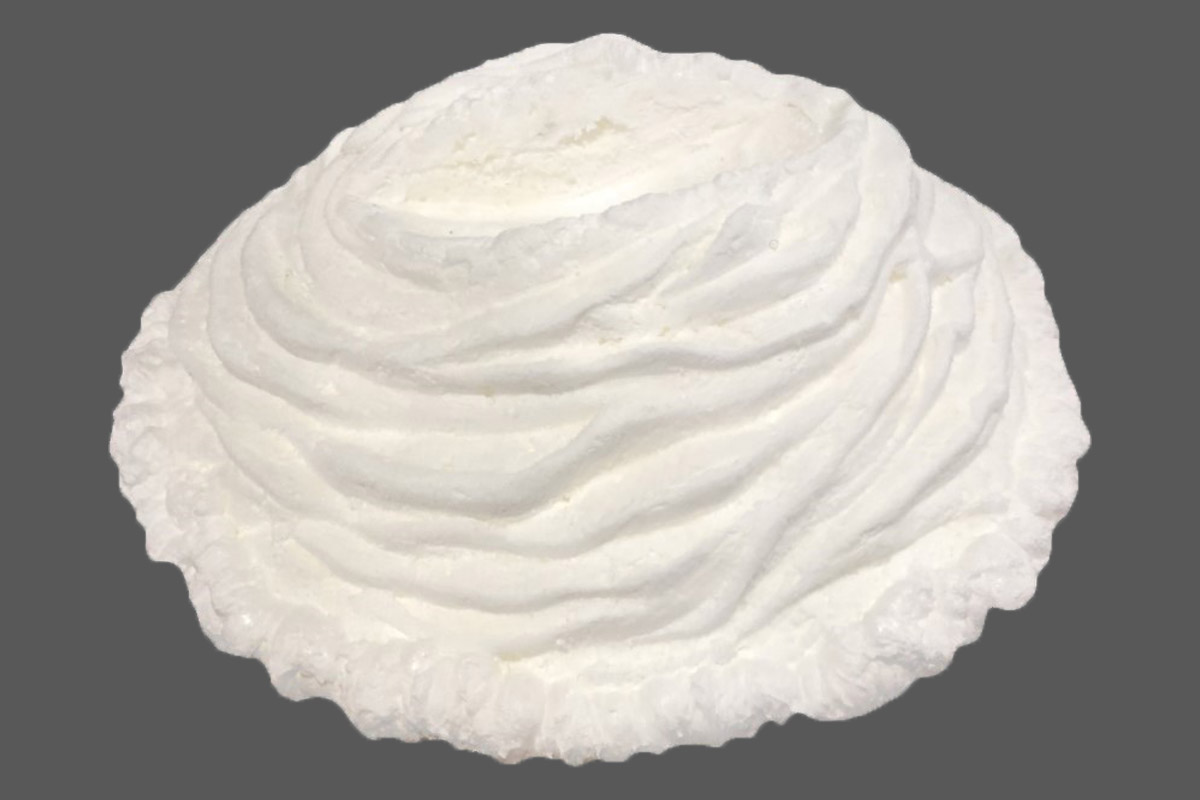
Carved or coated foam
Completed finish
Faux metal and metallic finish
Carved or coated foam
▧IMAGE NEEDEDFaux metal and metallic foam finish before
Matched before image · 4:3
Completed finish
▧IMAGE NEEDEDFaux metal and metallic foam finish after
Matched after image · 4:3
Faux stone, concrete or masonry
Carved or coated foam
▧IMAGE NEEDEDFaux stone, concrete or masonry foam finish before
Matched before image · 4:3
Completed finish
▧IMAGE NEEDEDFaux stone, concrete or masonry foam finish after
Matched after image · 4:3
Faux wood, bark or natural texture
Carved or coated foam
▧IMAGE NEEDEDFaux wood, bark or natural texture on foam before
Matched before image · 4:3
Completed finish
▧IMAGE NEEDEDFaux wood, bark or natural texture on foam after
Matched after image · 4:3
Realistic organic surfaces such as food, skin, fur or scales
Carved or coated foam
Completed finish
Graphics, vinyl, greenery and mixed-media finishes
Carved or coated foam
▧IMAGE NEEDEDGraphics, vinyl, greenery and mixed-media foam finish before
Matched before image · 4:3
Completed finish
Choosing a fabrication method
Fabrication planning starts with the project conditions, not a single machine.
WhiteClouds evaluates size, form, detail, finish, handling and installation requirements before selecting a method. This is a planning conversation, not a customer self-specification tool.
Overall sizeGeometryOrganic versus geometric formRequired repetitionSurface detailViewing distanceExpected interactionIndoor or outdoor useTransportationInstallation accessFinish requirementsBudgetSchedule
Most complex foam projects use more than one fabrication method.
Tool reach and bit shape affect achievable detail.
Five-axis milling
Complex curved forms and multi-sided shapes
Setup and fixturing influence budget and schedule.
Robotic milling
Large forms with flexible approach angles
Programming and registration are important.
Hand carving
Expression, transitions, textures and final refinement
Depends on sculptural labor and reference quality.
Hybrid method
Complex projects that need multiple processes
Often the practical path for large custom work.
Browse foam projects by type
Six ways carved foam is commonly used.
Props & Product Replicas
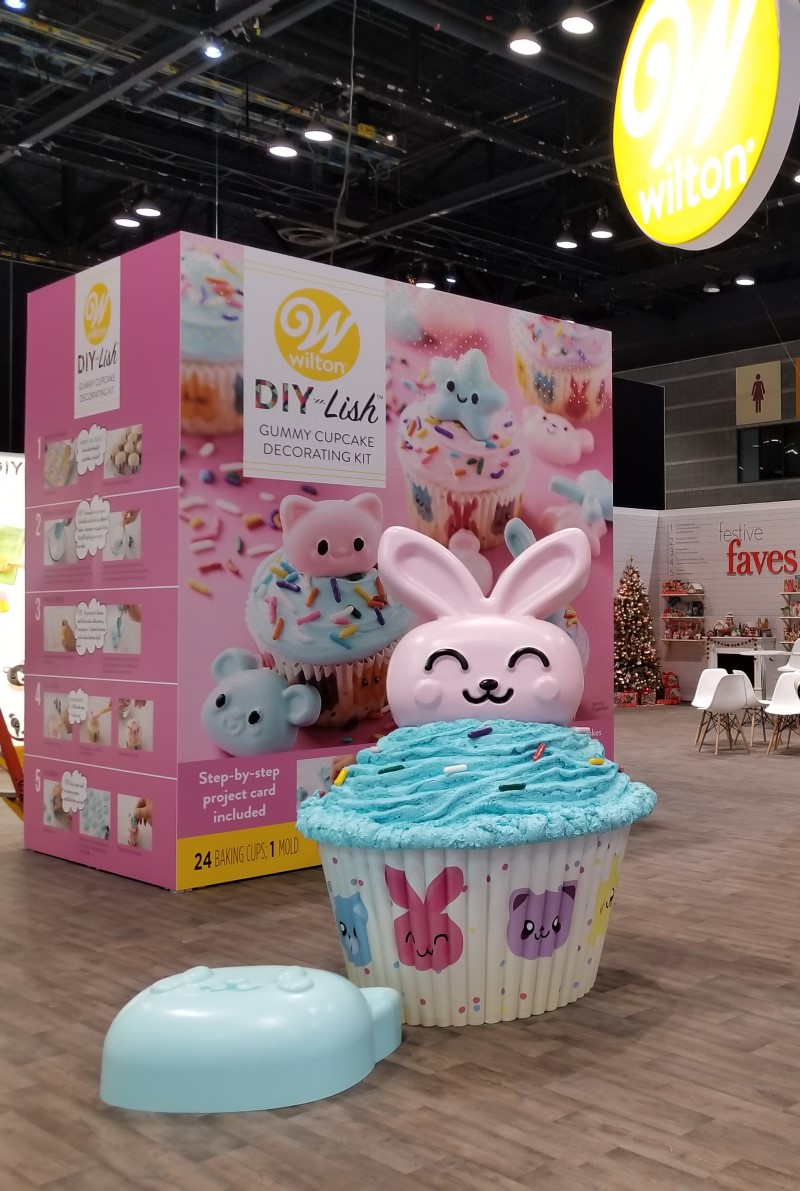
Oversized products, branded objects, food replicas, footwear, tools, equipment and promotional props made wholly or partly from carved foam. These projects are commonly created for exhibits, events, retail displays, photo opportunities and public installations.
Mascots, animals, people, fantasy creatures, sculptural figures and character displays shaped through digital cutting, hand sculpting or a combination of methods. Internal structures and protective coatings can be added according to the project’s scale and intended use.
Freestanding words, dimensional logos, wall signs, numbers and sculptural message displays. Foam makes it practical to create substantial size and depth while keeping many displays light enough for events, stages, exhibits and temporary installations.
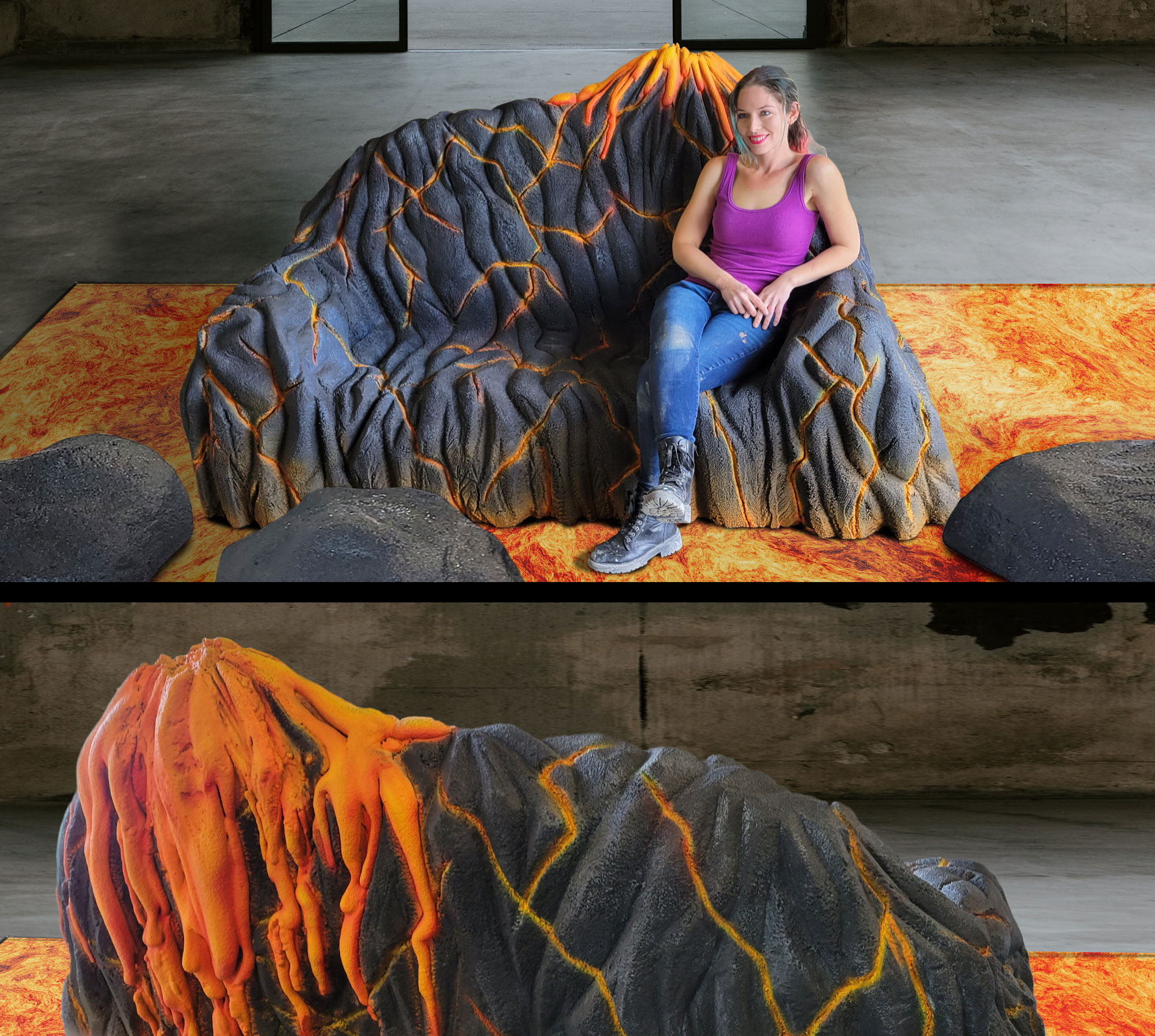
Rocks, trees, furniture, arches, scenic walls, stage elements and dimensional decor created for immersive spaces. Carved foam can be textured and finished to resemble natural materials, masonry, architecture or fantasy environments.
Columns, facades, reliefs, molding, ornament, wall features and decorative structures. Foam can reproduce complex forms at large scale and may be reinforced or coated according to the installation and viewing conditions.
Terrain, exhibit components, interpretive structures, presentation models and educational displays. Foam may provide the primary landform or sculptural volume while other materials add buildings, labels, graphics, lighting and interactive elements.
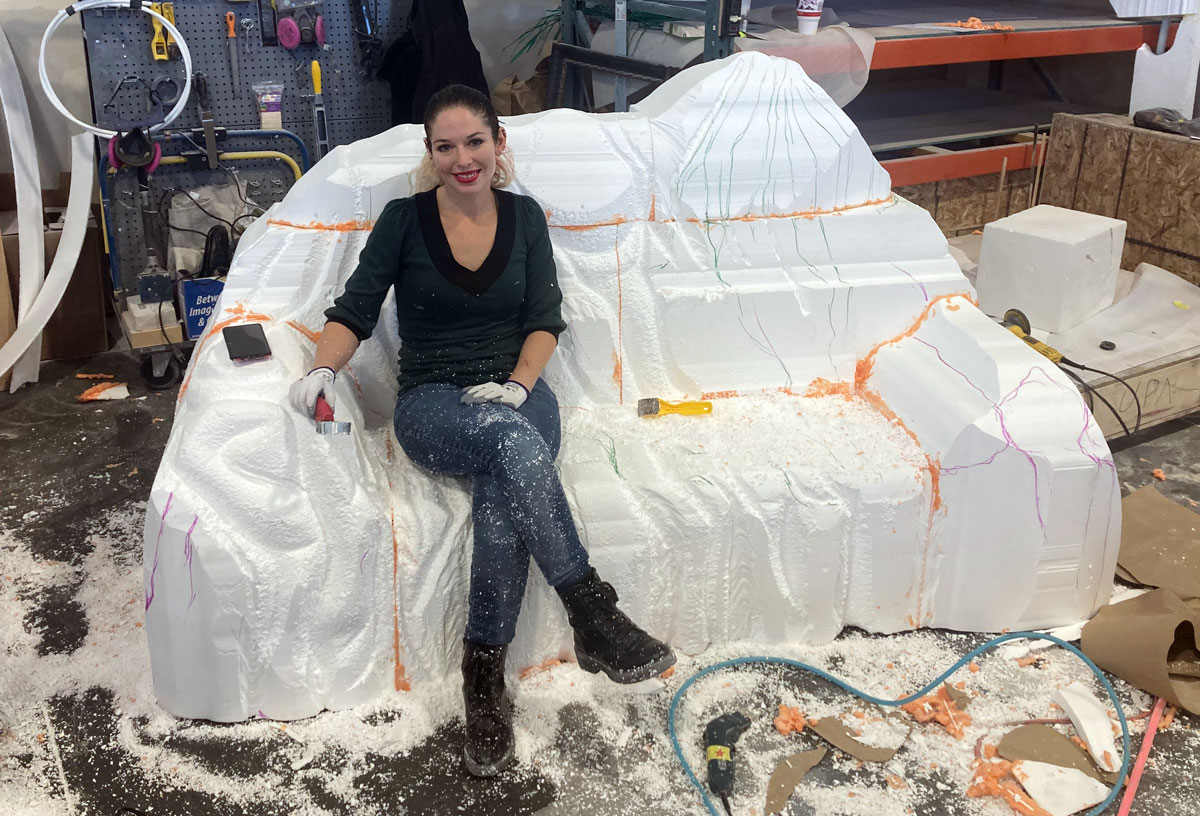
▧IMAGE NEEDEDLava couch Surface and detail development
Process image · 4:3
Surface and detail development
Finished themed display
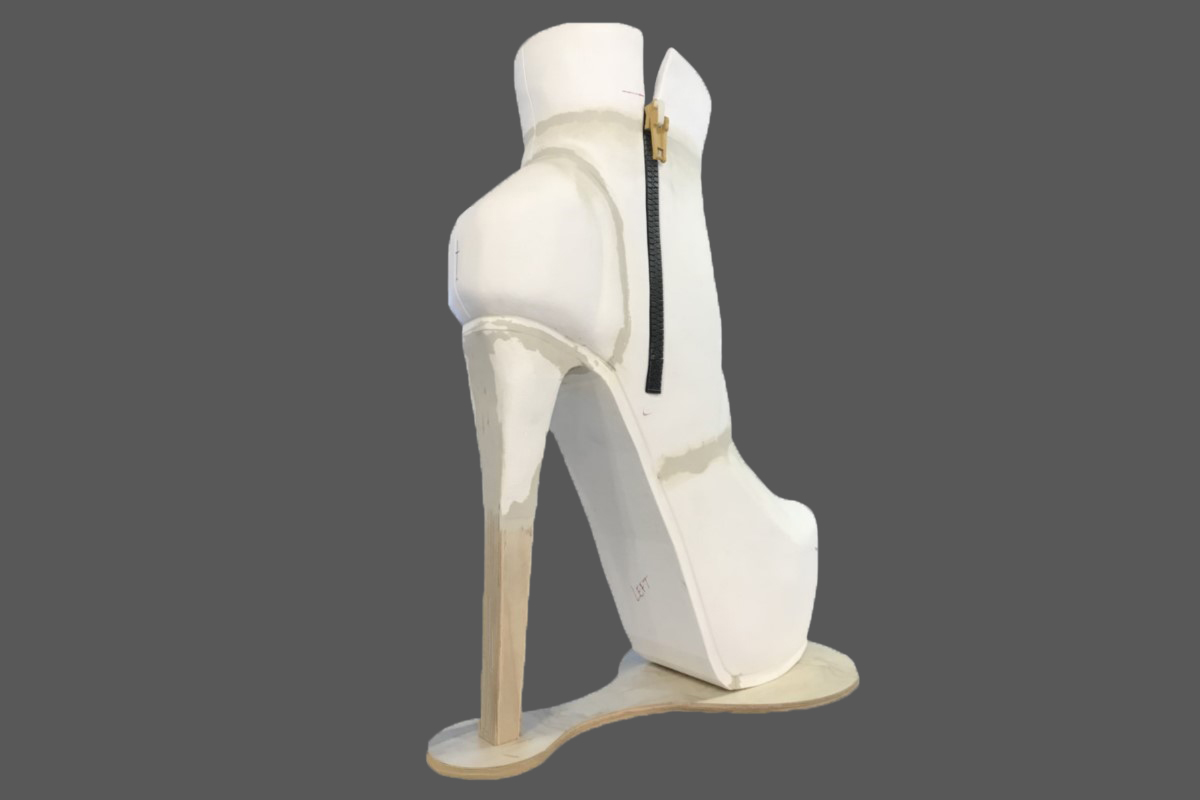
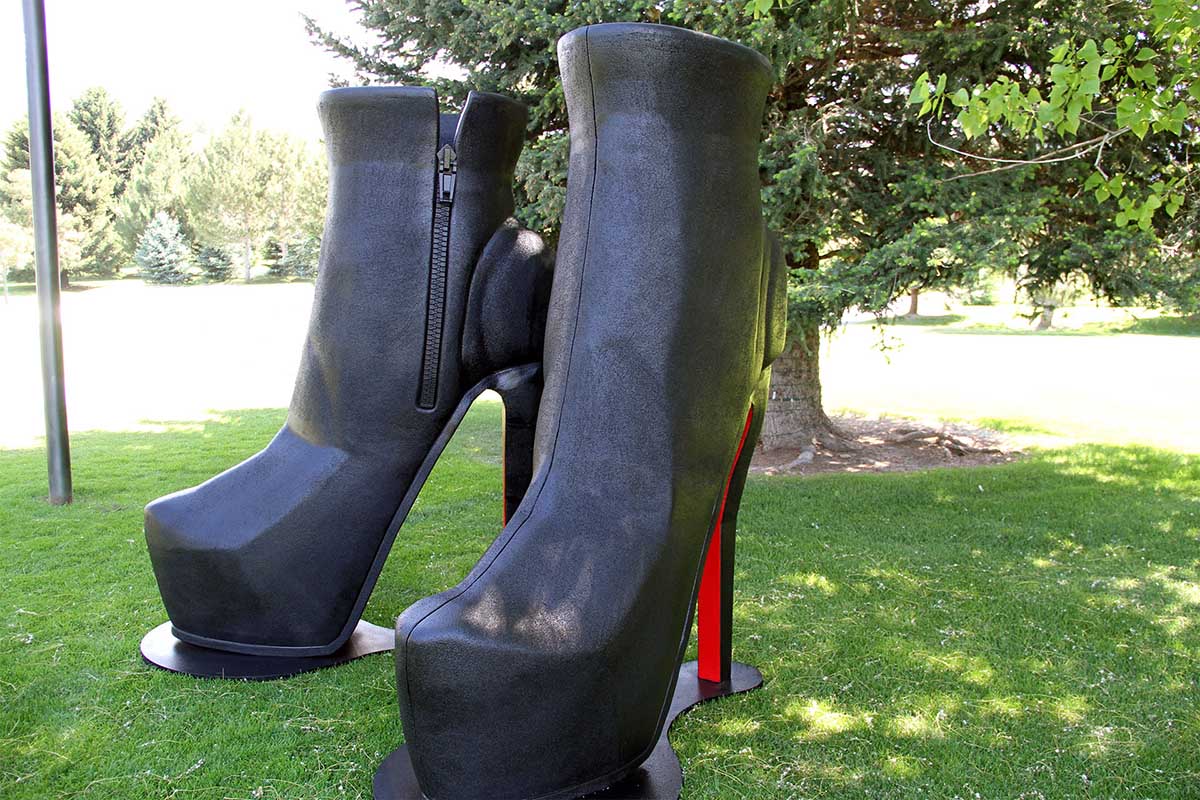
Oversized high heel
Initial shaped foam
▧IMAGE NEEDEDOversized high heel Refined product form
Process image · 4:3
Refined product form
Finished oversized display
Budget and quote factors
Foam carving pricing depends on the complete build system.
Cost is shaped by the size of the form, the chosen foam, the cutting and carving method, the surface system, the finish level and the practical requirements for transportation and installation.
Overall size and section countFoam material and densityDigital modeling, slicing and toolpath setupCNC cutting, milling and hand sculpting timeArmatures, bases, hardware and modular jointsCoating system and surface preparationPaint, texture, graphics, lighting or mixed mediaPacking, freight, access and installation support
What kinds of projects can be made with carved foam?
Foam can be used for props, product replicas, characters, statues, signs, scenery, exhibit components and decorative architectural forms.
Which foam material should my project use?
Material choice depends on size, detail, coating, finish, handling and environment. EPS, XPS, HDU and hybrid assemblies each solve different problems.
Can foam displays be used outdoors?
Yes, but outdoor use should be planned early with suitable structure, coatings, finishes, drainage, hardware and anchoring.
Can carved foam include internal structure?
Yes. Foam can be combined with metal, wood, tube supports, bases, hard points, connectors, casters and other materials.
What is Polyurea ULXT66 used for?
Polyurea ULXT66 is a WhiteClouds hardcoat option for prepared foam surfaces. It can add a durable shell, and sprayed application may create a subtle textured surface.
Can people touch a foam prop or display?
Touchable displays need to be planned for interaction with the right structure, coating, edge treatment, base and finish.
Do all foam projects use CNC cutting?
No. Many projects combine digital cutting, milling, lamination and hand sculpting. Some smaller or highly organic details may rely more heavily on hand work.
Can foam be painted to look like other materials?
Yes. Foam can be finished to suggest branded paint, metal, stone, masonry, wood, organic textures, graphics and mixed-media surfaces.
What information helps with a quote?
Helpful details include size, use case, deadline, location, reference files, finish goals, interaction level, indoor or outdoor use and shipping or installation needs.
Can large foam pieces ship in sections?
Yes. Large builds can be designed as modular sections to support fabrication, freight, access and on-site assembly.
Start your foam project
Get a custom quote for foam carving, sculpting and fabrication.
Share the approximate size, use case, event date, location, reference materials, finish goals and any structural or outdoor requirements.