How Big Is Mount Everest? Exploring the World’s Tallest Giant
Mount Everest is a name that echoes with awe. It conjures images of snow-swept peaks, climbers battling the elements, and the ultimate symbol of nature’s grandeur. But behind the romance and danger of Everest lies a simple question: just how big is it? Numbers tell one story—29,032 feet of elevation—but the real scale of Everest can only be understood by comparing, imagining, and experiencing. Let’s take a creative journey into the immensity of the world’s tallest mountain.
The Official Numbers: Everest by Measurement
Mount Everest stands at 29,032 feet (8,849 meters) above sea level, according to the most recent joint survey conducted by China and Nepal in 2020. That makes it the tallest mountain on Earth, towering over every other peak on the planet.
If you picture Everest in miles, its summit rises to about 5.5 miles above sea level. To put that in perspective, commercial airplanes typically cruise at around 6 to 7 miles high. That means standing on Everest’s summit brings you close to the domain of jetliners.
The base-to-peak measurement is just as impressive. From its base in Tibet’s plateau, Everest rises roughly 15,000 feet, while from the Nepalese side, the elevation gain is closer to 12,000 feet. Either way, the sheer vertical rise is staggering.
Everest Compared to Other Mountains
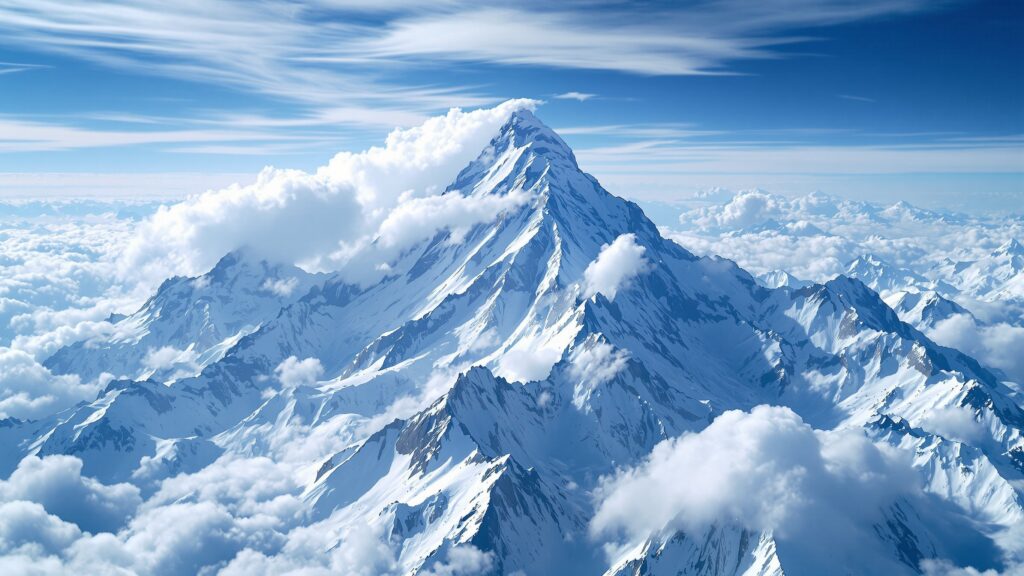
The numbers come alive when we compare Everest to other giants. Denali in Alaska, the tallest peak in North America, stands at 20,310 feet—remarkable in its own right, but still almost 9,000 feet shorter than Everest. Kilimanjaro in Tanzania, one of the most famous standalone peaks, measures 19,341 feet, still dwarfed by Everest. Even K2, the second-highest mountain in the world, reaches only 28,251 feet. That extra 781 feet between K2 and Everest may seem minor on paper, but in mountaineering terms, it’s monumental. It cements Everest as the “roof of the world,” the ultimate pinnacle of climbing ambition.
Visualizing Everest in Everyday Terms
To grasp Everest’s size, it helps to step out of pure numbers. Imagine stacking almost 20 Empire State Buildings one on top of the other—that’s roughly Everest’s height. The Burj Khalifa, the world’s tallest building at 2,717 feet, would need to be stacked more than 10 times to match the summit.
Everest is so tall that if you submerged it in the ocean at the deepest part of the Mariana Trench, its peak would still be more than a mile underwater. These comparisons move the mountain from abstract measurement to jaw-dropping visualization.
The Mass and Footprint of Everest
Everest isn’t just tall—it’s massive. Its base sprawls across hundreds of square miles, with ridges and valleys extending outward like arms of a colossal pyramid. The mountain itself is composed primarily of limestone, shale, and marble, weighing billions of tons. Glaciers such as the Khumbu Glacier flow from its slopes, providing a crucial water source for millions of people downstream. In fact, the sheer volume of ice on Everest is astounding—glaciers in the region hold more than 600 billion gallons of water. Its size is not only vertical but volumetric, shaping ecosystems and influencing entire regions.

Everest’s Weather: The Size of Its Climate
Part of Everest’s immensity lies in its ability to shape weather. Its towering height forces winds and clouds to change course, creating conditions unique to the mountain. At the summit, winds can exceed 200 miles per hour, temperatures can plunge below -40 degrees Fahrenheit, and oxygen levels are only about a third of what they are at sea level.
Climbers experience firsthand how Everest’s size dictates its danger. The “death zone,” the region above 26,000 feet, is so inhospitable that human survival is limited to hours, not days. No other place on Earth combines elevation and exposure with such extremes.
Everest in Human Terms: The Climbing Experience
Numbers tell one story, but human stories tell another. For climbers, Everest’s size isn’t just about altitude—it’s about endurance. The journey to the summit takes weeks, with time spent acclimatizing at various camps scattered along the mountain’s face.
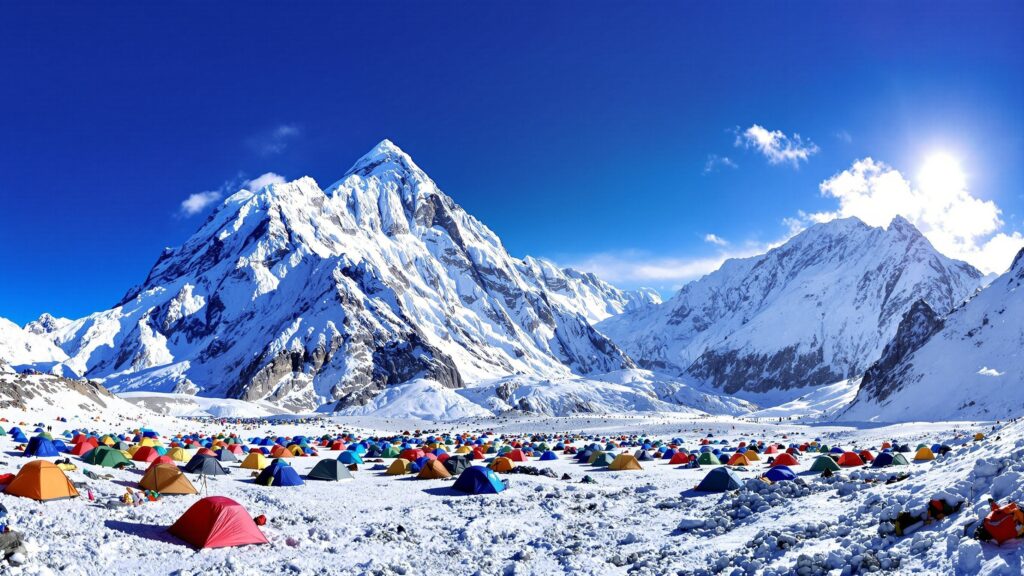
From Base Camp at 17,600 feet, climbers ascend through the Khumbu Icefall, traverse the Western Cwm, climb the Lhotse Face, and finally reach the South Col before making their summit push. Each section of the climb feels like scaling an entirely new mountain. That’s how big Everest is: one peak, but a journey of many stages.
Even reaching Base Camp is an adventure, involving a trek through Nepal’s rugged Khumbu Valley. For many, standing at Base Camp itself is already the experience of a lifetime.
Everest Compared to Air Travel and Space
Another way to frame Everest’s size is by comparing it to the sky itself. Commercial airplanes fly at 30,000 to 40,000 feet. That means Everest’s summit is essentially grazing the cruising altitude of jets. Imagine looking out your plane window and realizing you’re flying just above the world’s tallest peak. Even more astonishing, astronauts aboard the International Space Station orbit at about 250 miles above Earth. From their vantage point, Everest is just a bump on the globe, a reminder that even the planet’s tallest mountain is small in cosmic terms. This contrast highlights both the immensity and humility of Everest’s size.
Everest and Its Place Among Natural Wonders
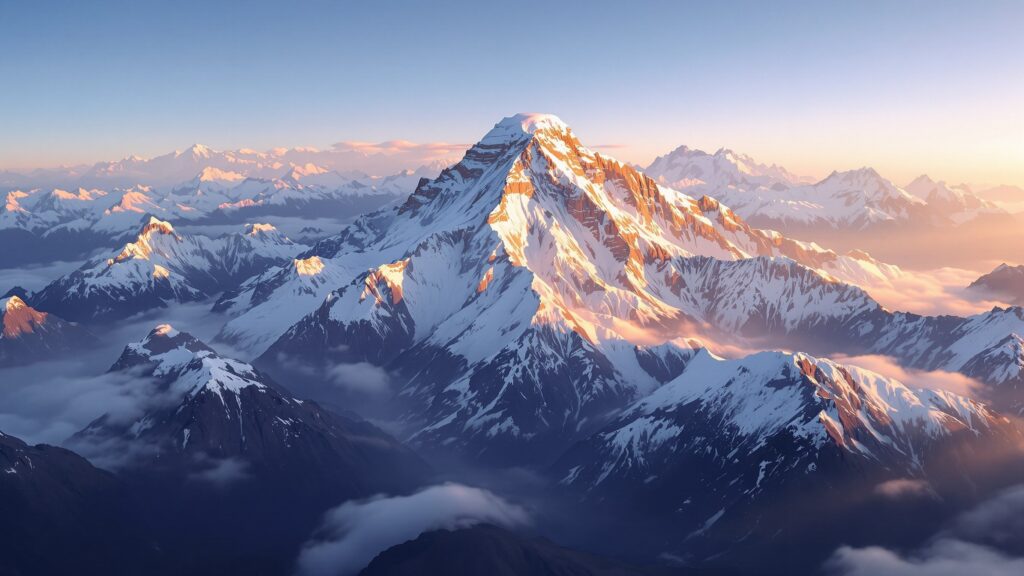
Size isn’t just about measurement—it’s about significance. Everest dominates not only the Himalayas but also global imagination. Its scale makes it a symbol of challenge, perseverance, and human ambition.
For the people of Nepal and Tibet, the mountain is sacred. Known as Sagarmatha in Nepali and Chomolungma in Tibetan, it has long been revered as a goddess or a mother of the world. Its immensity isn’t just physical—it’s spiritual. That kind of cultural significance adds another layer to how we perceive its size.
Everest’s Changing Size: Erosion, Tectonics, and Earthquakes
Believe it or not, Everest is not static. The mountain continues to grow as tectonic plates beneath it collide, pushing the Himalayas upward by about 4 millimeters per year. At the same time, erosion slowly wears it down, and earthquakes can shift its height suddenly. The 2015 Nepal earthquake, for example, was powerful enough to alter parts of the Himalayas, sparking debate about whether Everest’s height had changed. This ongoing dynamism means Everest’s size isn’t fixed—it’s alive, changing with the Earth itself.
Comparing Everest to Depths and Space
To fully appreciate Everest’s height, it’s fun to compare it with the opposite extreme: the deepest parts of Earth. The Mariana Trench plunges nearly 36,000 feet into the ocean, making it deeper than Everest is tall. If you placed Everest at the bottom, more than 7,000 feet of water would still cover its peak.
Meanwhile, if you launched Everest upward into space, its peak would poke into the stratosphere, beyond where weather balloons typically travel. These comparisons highlight how Everest straddles the boundary between land and sky.
Why Everest Feels Bigger Than Numbers Suggest
Numbers can’t fully capture why Everest feels so immense. Its scale is amplified by its environment. The Himalayas themselves are the highest mountain range on Earth, and Everest rises above them like a monarch on a throne. Standing in its shadow, humans feel smaller than anywhere else on the planet. Climbers often describe looking up at the peak as a humbling experience, one that reshapes their understanding of size and endurance. Everest isn’t just tall—it’s overwhelming. It commands respect not only for its height but for its ability to dominate the senses.
Conclusion: The True Scale of Everest
So, how big is Mount Everest? It’s 29,032 feet tall, towering more than 5.5 miles into the sky. It’s taller than any building, larger than most countries’ mountains, and massive enough to influence weather patterns and water supplies. It’s a geological marvel still growing, a cultural icon, and a climber’s ultimate test.
But beyond the numbers, Everest is big in imagination, big in danger, and big in spirit. It represents the pinnacle of Earth’s natural scale, reminding us of our limits while inspiring us to push beyond them. Everest’s immensity is not just measured in feet or meters—it’s measured in awe.