How Big Is a Square Mile? Turning Numbers Into Real-World Scale
When someone says “a square mile,” it sounds simple enough. But pause for a moment and try to picture it. What does a square mile actually look like? Can you visualize walking across it, or imagine what fits inside it? While the number itself—640 acres—gives us a mathematical definition, the size of a square mile becomes much more fascinating when we translate it into everyday experiences, comparisons, and history. Let’s dive into this deceptively simple unit of measurement and discover just how big a square mile really is.
The Definition: Breaking Down the Numbers
A square mile is exactly what it sounds like: a square with sides one mile long. That means one mile by one mile, or 5,280 feet on each side. Multiply those numbers, and you get 27,878,400 square feet. That’s a lot of ground to cover.
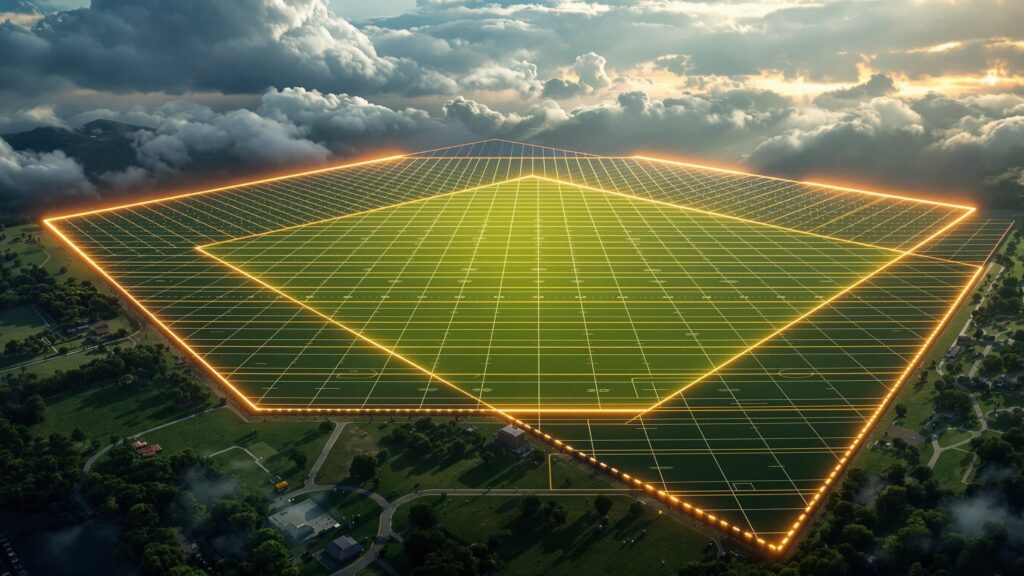
For another perspective, a square mile is equal to 640 acres. Since an acre itself is about the size of a football field without the end zones, imagine 640 football fields arranged together in a perfect square. Suddenly, the scale becomes easier to grasp.
This neat geometric unit is widely used for measuring land, especially in the United States. From farmland and city planning to wilderness areas and real estate, the square mile is a building block for understanding space.

Walking Across a Square Mile: A Human Perspective
Numbers are useful, but walking brings the idea closer to home. If you were to start at one corner of a square mile and walk straight to the other side, you’d cover one mile—or roughly 20 minutes at an average walking pace. To circle the perimeter, you’d walk four miles, which is about the same as a 5K race. Now imagine filling that space with people. If you packed a square mile tightly with a standing crowd, it could theoretically hold more than two million people shoulder-to-shoulder. Of course, that wouldn’t be comfortable, but it illustrates just how vast the area is. A square mile is enough to feel big, even when you’re in the middle of it on foot.
Square Miles in Cities: Urban Comparisons
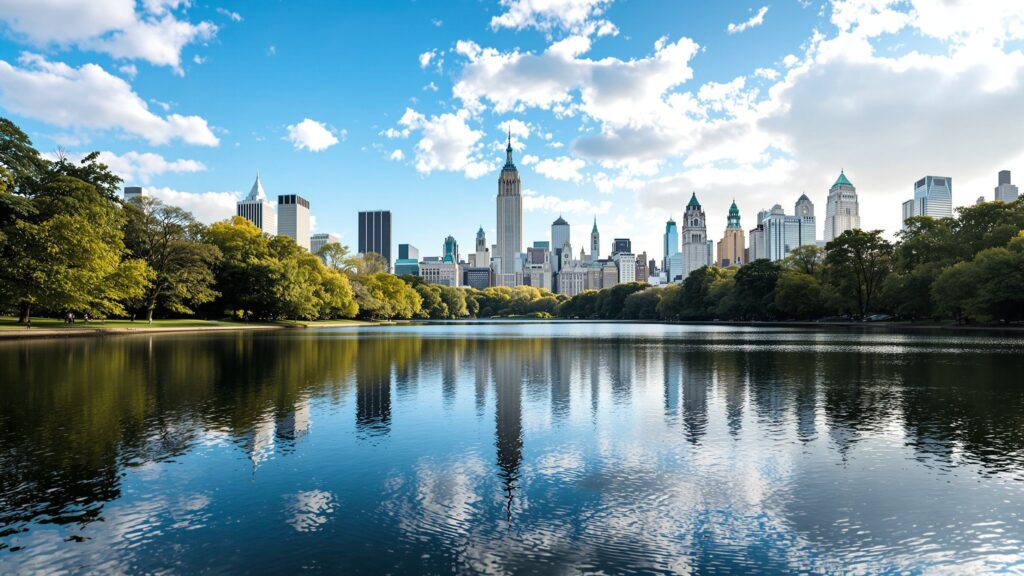
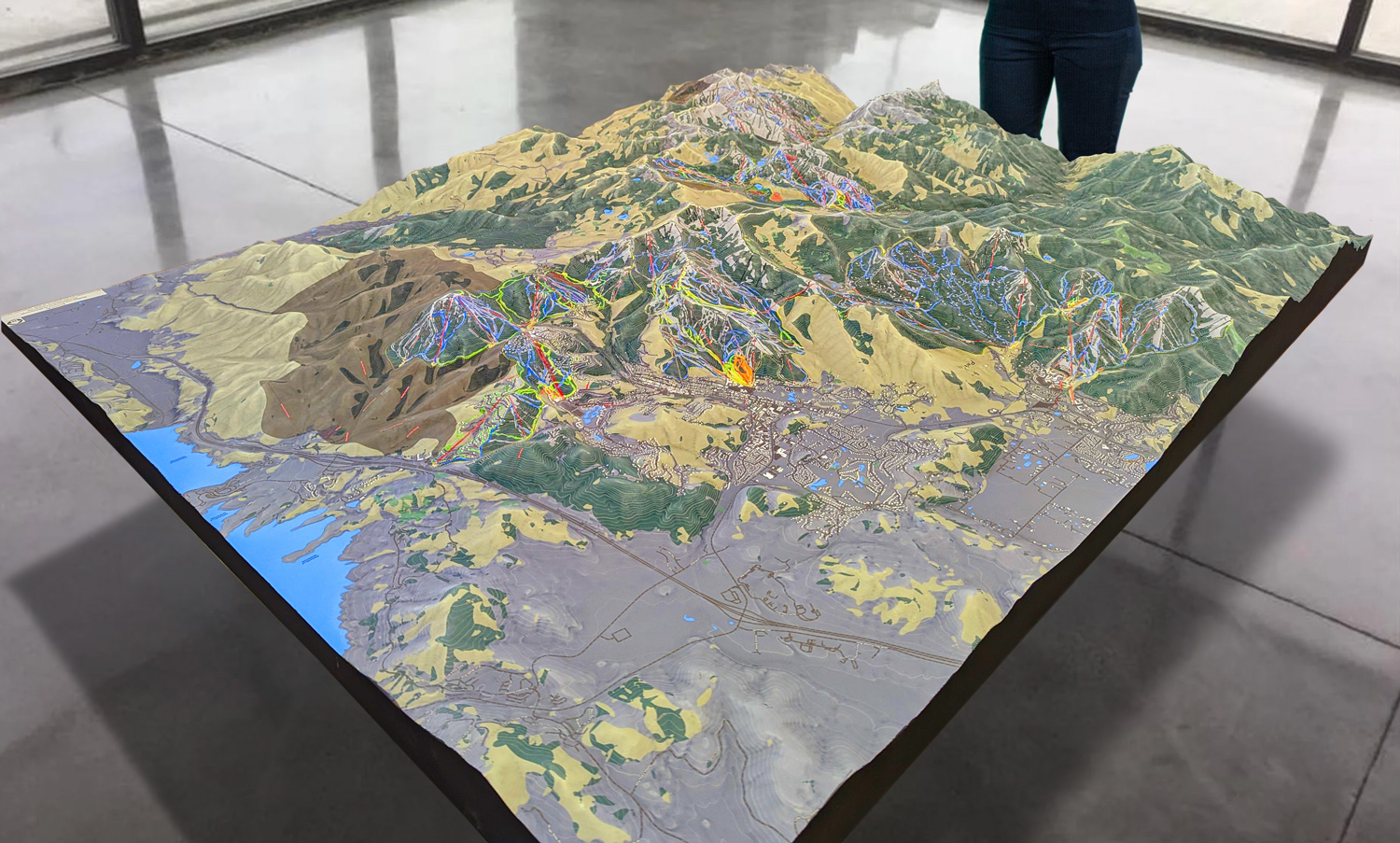
One of the most engaging ways to picture a square mile is by comparing it with familiar city layouts. Manhattan, for example, is about 22 square miles in total. That means the entire island could be divided into just 22 perfect square-mile sections. When you’re strolling through Central Park—which itself is 1.3 square miles—you’re essentially walking across more than one “unit” of this measure.
Other cities highlight the difference in density. Downtown San Francisco measures about a square mile, yet within that space are high-rises, thousands of apartments, and bustling streets. Compare that to a square mile of suburban housing where single-family homes dominate, and the contrast is striking. Same size, completely different experience.
Nature and Wilderness on a Square Mile Scale
Out in nature, a square mile can feel endless. In dense forests, walking across one can take hours because of uneven terrain, rivers, or thick vegetation. In deserts, the openness makes the distance seem deceivingly short, but the heat and environment stretch the challenge. Many national parks measure their land area in square miles. Yellowstone National Park, for example, is a staggering 3,472 square miles—showing how this unit scales from the human level to continental landmarks. Thinking of Yellowstone as 3,472 squares, each a mile on each side, brings its immensity into focus.
Farmland and Agriculture: The Square Mile at Work
The square mile has deep roots in farming and land management. Since one square mile equals 640 acres, farmers often use it as a benchmark for land ownership. In fact, in many parts of the United States, the land survey system divided territories into “sections,” each measuring one square mile.
On such a plot, a farmer might raise hundreds of acres of crops, graze cattle, or divide the land into different uses. Even today, when you see patchwork patterns of farmland from an airplane, those neat squares often reflect the legacy of the square-mile system.
Square Mile vs. Square Kilometer: A Global Comparison
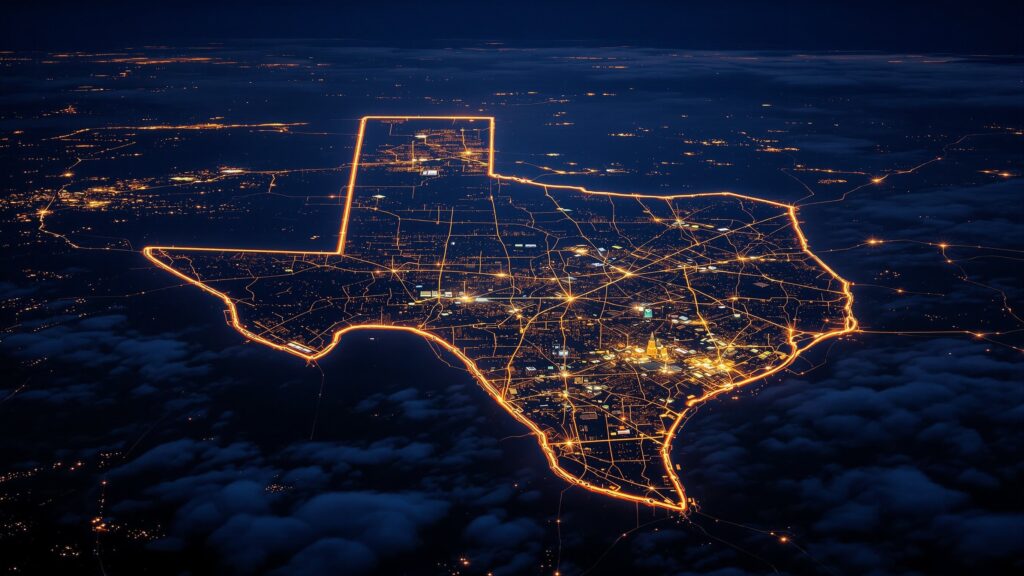
In much of the world, land is measured in square kilometers instead of square miles. One square mile is equal to about 2.59 square kilometers. So while Americans might talk about the size of a city in square miles, Europeans, Asians, and Africans are more likely to use kilometers. To compare, Paris, France covers about 41 square miles, while London sprawls across 607 square miles. Texas alone contains more than 268,000 square miles, while the entire United States stretches over 3.8 million. Thinking in terms of square miles provides a consistent way to visualize scale across the globe.
Sports and Recreation: Square Miles in Play
If sports help you picture size, a square mile offers plenty of comparisons. A professional baseball field, including the outfield, covers about 3 acres. That means you could fit more than 200 full-size baseball fields inside a single square mile. Football stadiums fit even more neatly—roughly 450 fields could be laid side by side to cover the same area.
Think about golf courses, which average 120 to 200 acres. That means you could fit between 3 and 5 golf courses within one square mile. Recreational spaces add up quickly, proving that a single square mile holds more entertainment potential than you might imagine.
Square Miles in Population Density
Population density is often measured in people per square mile, and it’s a key way governments and researchers understand human geography. Take New York City, which has a population density of around 29,000 people per square mile. That means, in every one of those square units, tens of thousands of people live, work, and interact. Compare that with Wyoming, which has fewer than 7 people per square mile statewide. The difference shows how the same area can feel like a metropolis in one location and an untouched wilderness in another. The square mile acts as a universal scale to measure these extremes.
Famous Square Miles Around the World
Certain places are iconic not just for what they are, but for their size in square miles. The Las Vegas Strip, for instance, fits comfortably within about four square miles. Vatican City, the world’s smallest country, doesn’t even reach a full square mile—it covers just 0.17.
On the other end, countries like Luxembourg, at 998 square miles, and Singapore, at 280, show how a handful of square miles can represent an entire nation. Suddenly, the unit of a square mile becomes more than abstract—it becomes a way to think about entire countries and cultures.
Why the Square Mile Matters
At first glance, the square mile might feel like a technical detail best left to surveyors or statisticians. But in reality, it’s a way we connect with space. It helps city planners decide where to put parks, farmers determine crop rotations, and conservationists measure wildlife habitats. It allows us to compare human settlement, economic activity, and even global geography with a simple, repeatable standard. Most importantly, the square mile matters because it gives us a framework for imagination. Whether picturing the number of football fields, the density of skyscrapers, or the quiet of a mountain meadow, this unit helps us scale the world into something we can understand.
The Square Mile in Culture and Language
Beyond geography, the square mile has slipped into culture and language. Expressions like “every square mile” suggest thoroughness, while “within a square mile” might emphasize proximity and connection. It’s not just a number—it’s shorthand for vastness or intimacy, depending on context.
Writers, poets, and journalists use the term to frame stories in relatable scale. When a news report says a wildfire covered 30 square miles, you can immediately visualize it in units you understand. In this way, the square mile has become part of the shared vocabulary of size.
Conclusion: More Than Just Math on a Map
So, how big is a square mile? It’s 640 acres, 27.9 million square feet, and four miles around the perimeter. It’s a unit that can fit hundreds of sports fields, entire neighborhoods, or sprawling farms. It can feel like a tiny piece of Manhattan or an endless stretch of wilderness. The square mile is both simple and profound—a square, one mile on each side, yet capable of containing so many stories, landscapes, and lives. By learning to see it not just as math but as experience, we turn numbers into something tangible. And the next time you hear about a square mile, you’ll know it’s not just land on a map—it’s a world waiting to be imagined.