
Hero-scale objects
Define the closest shot, important surfaces, performer relationship, and continuity requirements for a primary oversized object.
Oversized screen props are shaped by the shot list, performer relationship, stage access, and production schedule. A useful brief identifies what the camera must see, which surfaces need close inspection, and whether the piece is static, handled, moved, or rebuilt between takes.
Scope a Screen Prop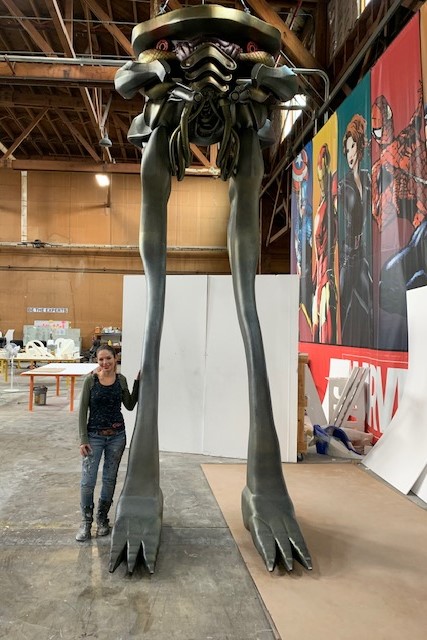
A film or screen package can include hero objects, background pieces, replicas, scenic forms, and promotional versions. Separate them by camera importance and use so the required detail is not applied uniformly.
Define the closest shot, important surfaces, performer relationship, and continuity requirements for a primary oversized object.
Use simplified depth or detail where a piece supports the scene from a controlled distance and angle.
Provide approved reference files and identify which faces, graphics, seams, and proportions must match the source.
Supply rights-cleared artwork and clarify whether the form is static, supported, worn, moved, or combined with another structure.
Coordinate dimensional doors, controls, relief panels, signs, or partial structures with the set plan and camera coverage.
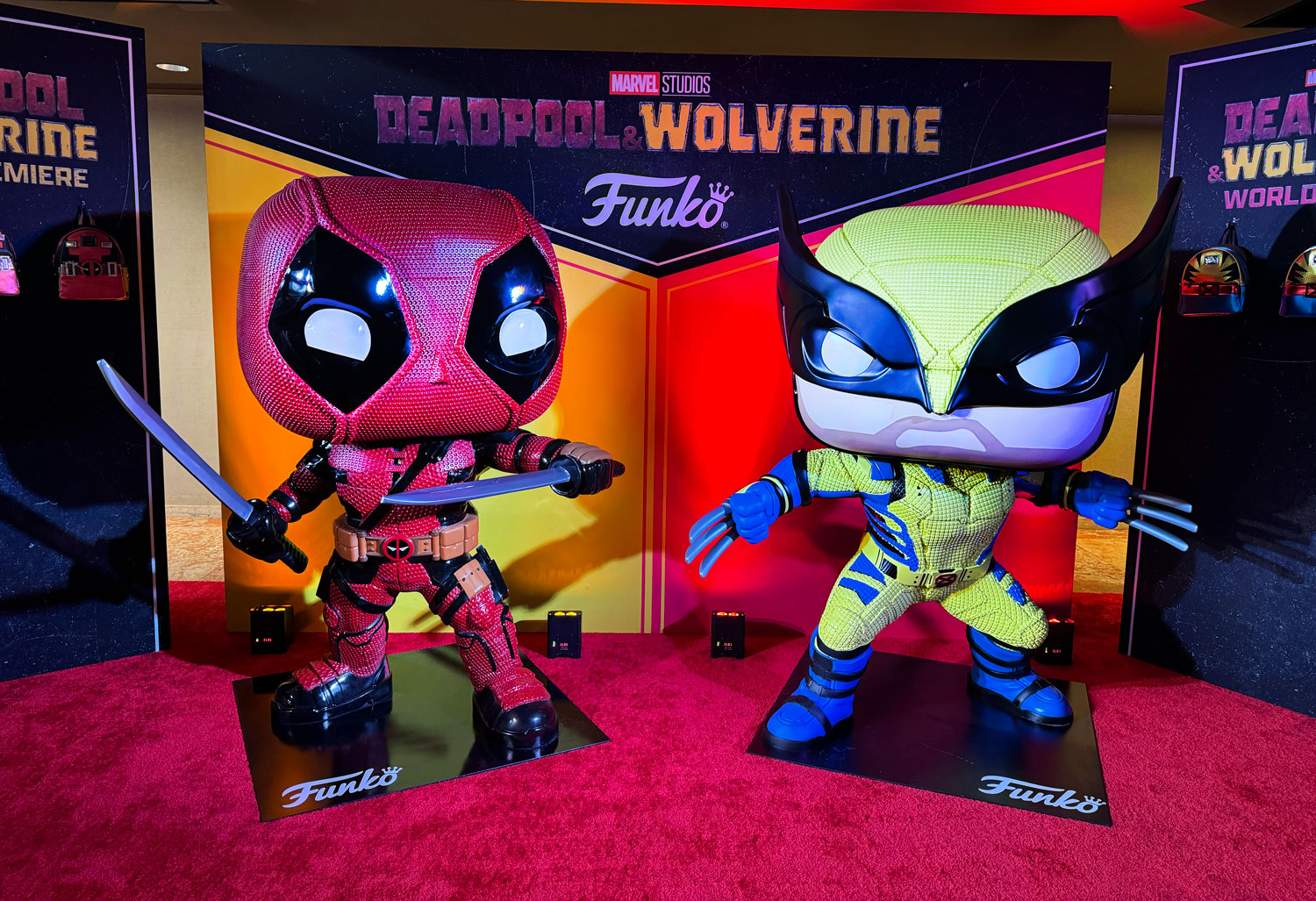
Treat red-carpet, premiere, or publicity versions as their own display scope when handling and finish differ from set use.
Provide storyboards, marked frames, lens or camera-distance guidance, and the planned actor or product position when available. A surface that fills the frame may require more detail than an opposite face never shown. If lighting creates strong reflections, gloss and texture direction should be discussed before finishing.
Continuity also affects the build. State whether the piece must return to a repeatable position, separate for a specific action, or exist in multiple versions. Do not assume movement, breakaway behavior, or performer contact from a reference image; each must be documented and engineered.
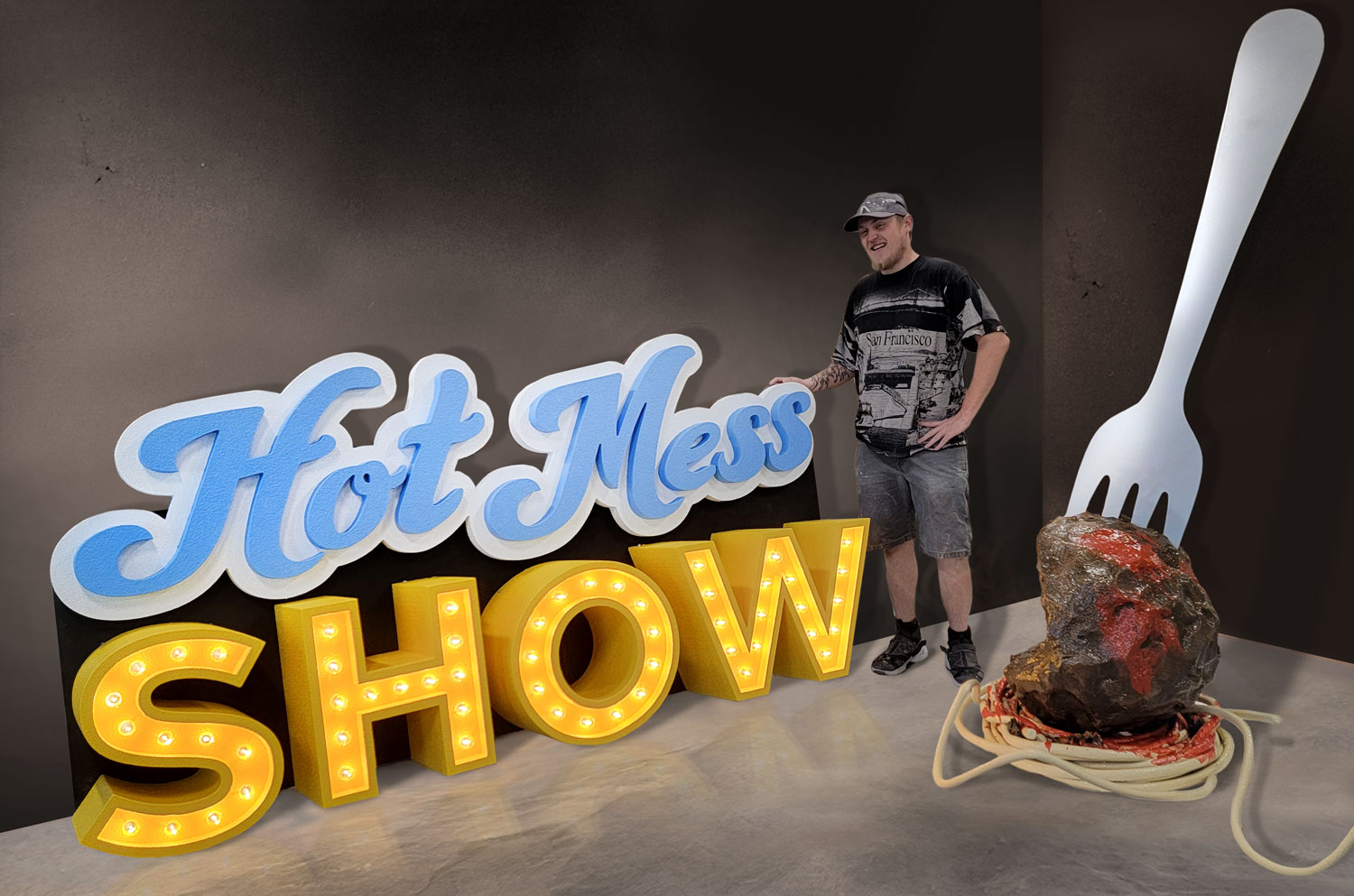
These completed WhiteClouds projects show a giant character model, a movie-premiere character display, and a large practical prop with an illuminated sign. The examples support scale, viewing-side, and handling discussions without defining one fixed production package.
Confirm stage doors, loading route, ceiling limits, elevator capacity, and any restrictions on onsite assembly. A large object may need planned sections, but connection placement should respect camera angles and handling points.
List who moves the prop, how often it moves, and where it waits between setups. Casters, lift points, bases, or protective packing are not automatic features. They are separate physical requirements that should be reviewed with the production team.
When more than one copy is required, identify whether each version must match exactly or whether background versions can use simplified detail. Also note continuity marks, replaceable graphics, and repair materials the production expects to keep with the prop during the shoot.
The estimate should be based on the intended screen use rather than on object size alone.
Use the prop-making service for broad fabrication scope and the 3D props gallery to compare physical forms, scale, and display configurations.
Send the prop list, approved references, shot requirements, finished dimensions, performer or handling notes, access limits, and delivery schedule. Flag confidential materials and the production contact authorized to approve the build.