
The Buffalo as a Symbol of the Plains
Before diving into the story of this monumental statue, it’s important to understand why the buffalo—technically the American bison—holds such deep cultural and historical meaning. Once numbering in the tens of millions, bison roamed the North American plains in vast herds, shaping ecosystems and sustaining Indigenous cultures for centuries. For Native American tribes, the buffalo was more than food. It was life itself. Nearly every part of the animal was used: meat for sustenance, hides for shelter and clothing, bones for tools, and even sinew for bowstrings. Beyond material use, the buffalo symbolized strength, endurance, and a spiritual connection to the land. When European settlers expanded westward, bison populations were decimated—reduced from millions to only a few hundred by the late 19th century. The near-extinction of the buffalo became both a tragedy and a turning point in American history. Today, thanks to conservation efforts, bison herds have made a comeback, though never again in the numbers of centuries past. Against this backdrop, Jamestown’s massive buffalo statue carries even greater significance: it serves as a monument to an animal that once ruled the plains.
A Roadside Attraction Is Born
The 1950s were the golden age of roadside attractions in America. Families piled into cars, hit newly built highways, and sought out quirky, photo-worthy stops along the way. Towns competed to lure travelers off the road with promises of “the world’s largest” this or “the world’s first” that. From giant balls of twine to oversized hot dogs, roadside America was booming.
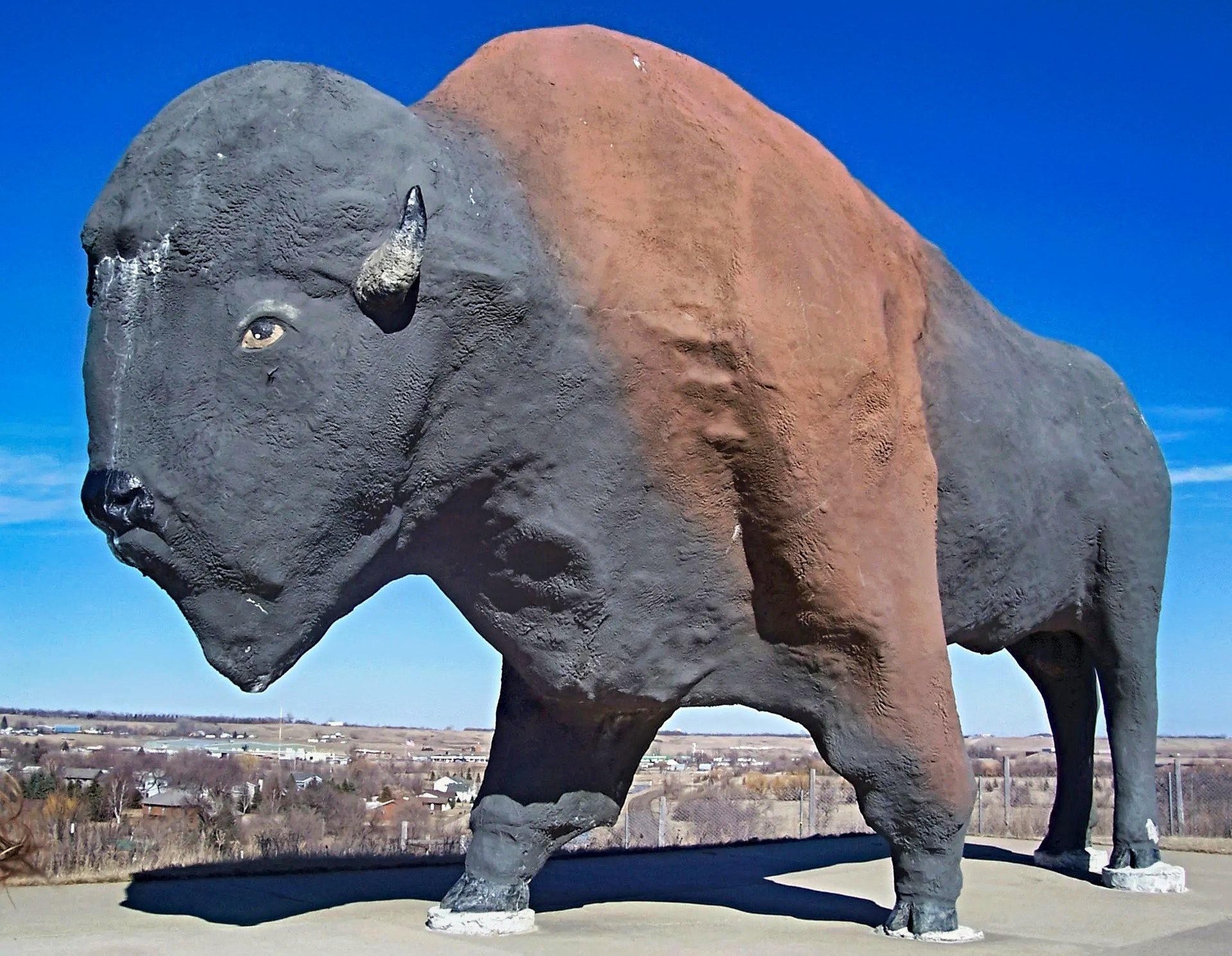
Jamestown, eager to establish itself as a memorable destination on U.S. Highway 281, commissioned the creation of a giant buffalo prop. Sculptor Elmer Petersen, then a professor of art at Jamestown College, took on the challenge. Built of steel beams, wire mesh, and tons of concrete, the buffalo took nearly two years to complete. On October 26, 1959, the World’s Largest Buffalo was unveiled, immediately becoming a sensation.
What began as a way to attract tourists quickly transformed into a source of civic pride. The statue stood not just as a roadside oddity but as a towering reminder of the heritage and natural history of North Dakota.
How Big Is the World’s Largest Buffalo?
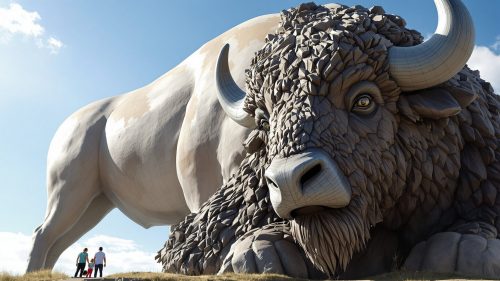
To truly appreciate this statue, let’s put its size into perspective. At 26 feet tall, the buffalo is taller than a two-story house. Its 46-foot length makes it longer than a city bus. And its 60-ton weight equals that of nearly 20 full-grown elephants. Visitors often find themselves standing in its shadow, craning their necks to take in the enormity of the sculpture. Photographs can capture its scale, but nothing compares to the sense of wonder that comes from standing before it.
The Making of a Monument
Building something of this magnitude in the 1950s required creativity, engineering, and a little bit of trial and error. The internal structure is made of steel beams welded together to form a skeleton. Over this framework, workers stretched heavy wire mesh, which was then coated in layers of concrete. The surface was carefully shaped and textured to mimic the shaggy fur of a buffalo.
Elmer Petersen wanted the statue to feel lifelike despite its enormous size. From its humped shoulders to its powerful stance, the details reflect both artistry and respect for the animal. The buffalo faces west, as if keeping watch over the prairies and the setting sun, embodying the enduring spirit of the frontier.
Dakota Thunder: A Name with Power
In 2010, the World’s Largest Buffalo was officially given the name Dakota Thunder following a community naming contest. The name perfectly captures the essence of the statue. “Dakota” ties it to the land and people of North Dakota, while “Thunder” reflects both the rumble of bison herds that once shook the prairie and the awe-inspiring power of the monument itself. Since then, Dakota Thunder has become more than just a nickname—it’s a brand. The buffalo appears on local merchandise, postcards, and travel brochures, further cementing its role as Jamestown’s proud ambassador.
A Tourist Destination That Keeps Growing
The World’s Largest Buffalo isn’t a solitary roadside stop. It’s the centerpiece of a larger attraction known as the National Buffalo Museum and Frontier Village. Visitors who come to see the giant statue can also explore exhibits about the history of bison, Indigenous culture, pioneer life, and conservation efforts.
Frontier Village recreates a historic prairie town, complete with old-timey shops, a post office, a jail, and a barbershop. The combination of living history and oversized sculpture creates an experience that blends education with spectacle. For families on summer road trips, it’s an irresistible stop.
And if that weren’t enough, visitors also get the chance to see live bison herds roaming nearby pastures. For years, this herd included the famous albino bison White Cloud, who became a beloved local legend until her passing in 2016. Today, her offspring continue to graze near the statue, connecting the symbolic with the living.
Why the World’s Largest Buffalo Matters
At first glance, the World’s Largest Buffalo might seem like just another oversized roadside attraction. But its meaning runs deeper. For Jamestown, it’s a source of identity and pride. For travelers, it’s a reminder of the Great Plains’ history. And for conservationists, it’s a way to keep the story of the bison alive for future generations.
Unlike quirky attractions that fade into obscurity, Dakota Thunder has endured because it represents something real. The buffalo is not a gimmick—it’s an icon. And when made monumental, it becomes a way of telling the story of a region, a people, and an animal that once defined an entire continent.
The Buffalo in Pop Culture
Thanks to its fame, the World’s Largest Buffalo has popped up in everything from postcards to travel blogs. It has been featured in TV documentaries about roadside America and even served as a backdrop for music videos and photography projects. Travelers share photos on social media, often posing in humorous ways that highlight the statue’s massive size. Like the Gateway Arch in St. Louis or Mount Rushmore in South Dakota, the buffalo has become more than a regional landmark. It’s an icon of Americana, capturing the spirit of road trips, quirky stops, and the joy of discovering something unexpectedly grand in the middle of nowhere.
Inspiring Other Giants
Dakota Thunder has also inspired other communities to celebrate the buffalo in oversized form. From fiberglass buffalo statues scattered across towns to mural-sized tributes, the image of the buffalo continues to appear in artistic and cultural expressions. But none compare in scale or impact to Jamestown’s original.
Other “world’s largest” statues—from a Paul Bunyan in Minnesota to a Holstein cow in Wisconsin—have followed the same playbook: take a beloved regional symbol and make it huge. Yet, the World’s Largest Buffalo stands out because its subject carries genuine weight in American history.
The Emotional Impact of Standing Beneath It
Ask anyone who has visited Jamestown’s giant buffalo, and you’ll hear the same refrain: pictures don’t do it justice. Standing at the base of Dakota Thunder is a humbling experience. The sheer size makes you feel small, while the realism reminds you of the power and dignity of the real animal. For children, it feels magical—like stepping into a land where everyday animals become giants. For adults, it sparks nostalgia for childhood road trips and admiration for the artistry behind it. For history lovers, it’s a visual reminder of the stories that shaped the plains.
Could There Ever Be a Bigger Buffalo?
The Guinness World Records has recognized Dakota Thunder as the largest buffalo statue, and no other community has seriously attempted to outdo it. The sheer cost, engineering challenge, and symbolic weight make it unlikely that anyone would build a bigger buffalo anytime soon. And maybe that’s a good thing. The World’s Largest Buffalo isn’t just about being the biggest—it’s about being authentic, meaningful, and tied to a community that cares for it.
The Future of Dakota Thunder
As roadside attractions go, Dakota Thunder has aged remarkably well. Renovations and repaintings over the years have kept the statue in excellent condition. Local organizations continue to promote it, ensuring that new generations of travelers will make the pilgrimage.
The National Buffalo Museum plays a key role in preserving both the statue and the living bison herd nearby. By combining education with spectacle, they’ve guaranteed that Dakota Thunder won’t just be a curiosity—it will be part of a larger, ongoing story about conservation, culture, and community.
A Monument That Roars Without Moving
The World’s Largest Buffalo is more than a roadside oddity. It’s a monument that roars without moving, a tribute to an animal that once thundered across the plains in numbers beyond imagination. For Jamestown, it’s a beacon of pride. For travelers, it’s a must-see stop that mixes fun with meaning. For America, it’s a reminder of the strength and resilience embodied by the buffalo itself. Whether you know it as Dakota Thunder, the World’s Largest Buffalo, or simply that giant statue off the highway, one thing is certain: this colossal bison continues to inspire awe, spark conversations, and capture hearts more than 60 years after it first rose above the prairie. If you ever find yourself driving through North Dakota, don’t just pass by. Stop, take in the view, and stand beneath this towering symbol of strength and history. Because in the shadow of the world’s largest buffalo, you’ll discover not just a statue, but a story—a story as big as the plains themselves.