
A 471-Piece E-Axle Display Model for Allison Transmission
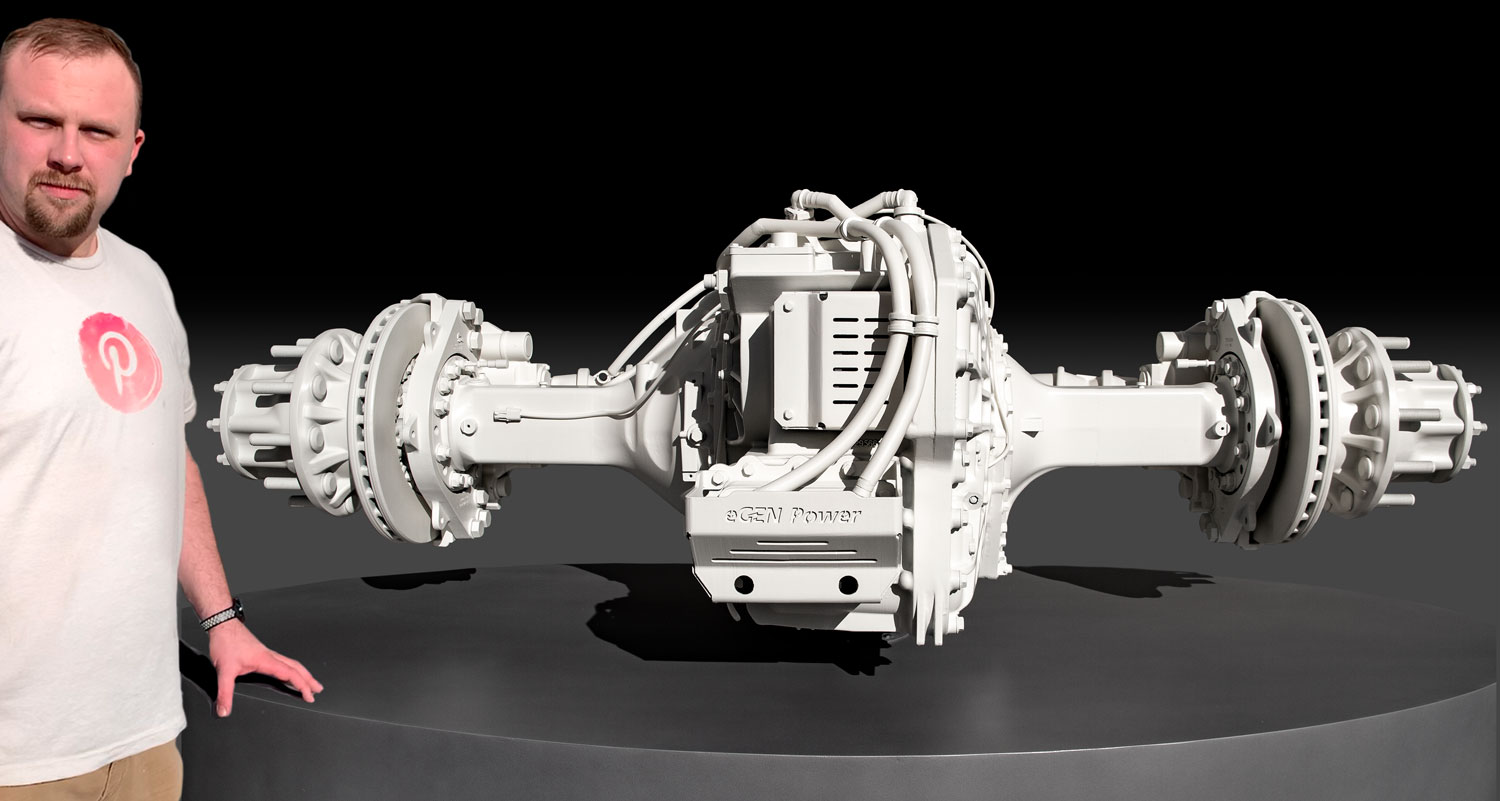
Allison Transmission commissioned WhiteClouds to build a three-quarter-scale replica of its eGen Power electric axle. The 60-inch-long display model combines 471 printed pieces with internal steel reinforcement and a textured white automotive finish.
The finished model weighs approximately 200 pounds. Producing its parts required more than 4,000 accumulated printing hours across over 70 printers, followed by detailed assembly and surface finishing.
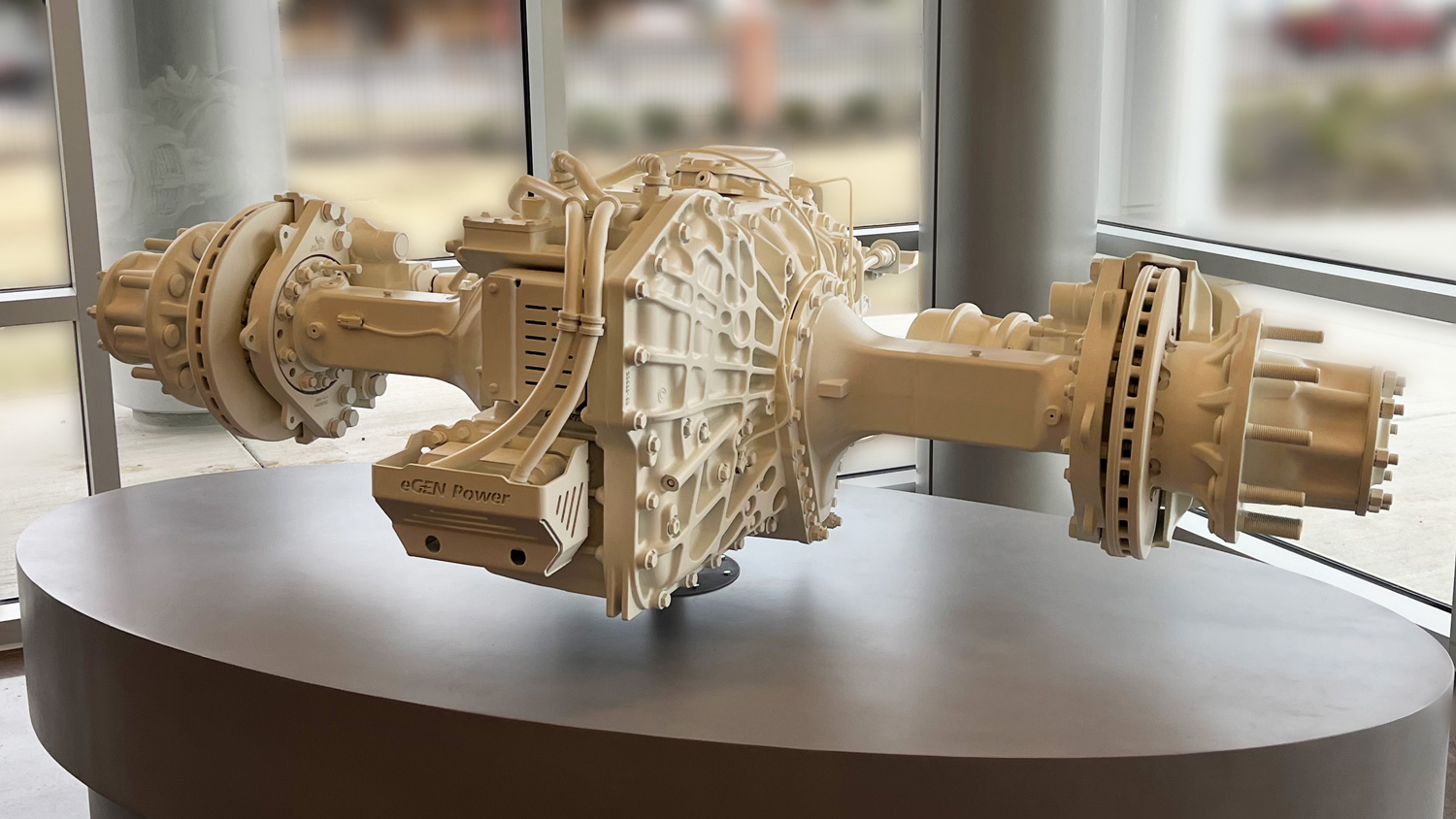
An integrated electric axle presented in physical form.
Allison Transmission, founded in 1915, commissioned the replica as a physical representation of its eGen Power system. The electric axle integrates the motor, power electronics and transmission for medium- and heavy-duty vehicle applications.
The WhiteClouds build reproduced the exterior form as a display model, combining the axle’s many separate component shapes in one assembly.
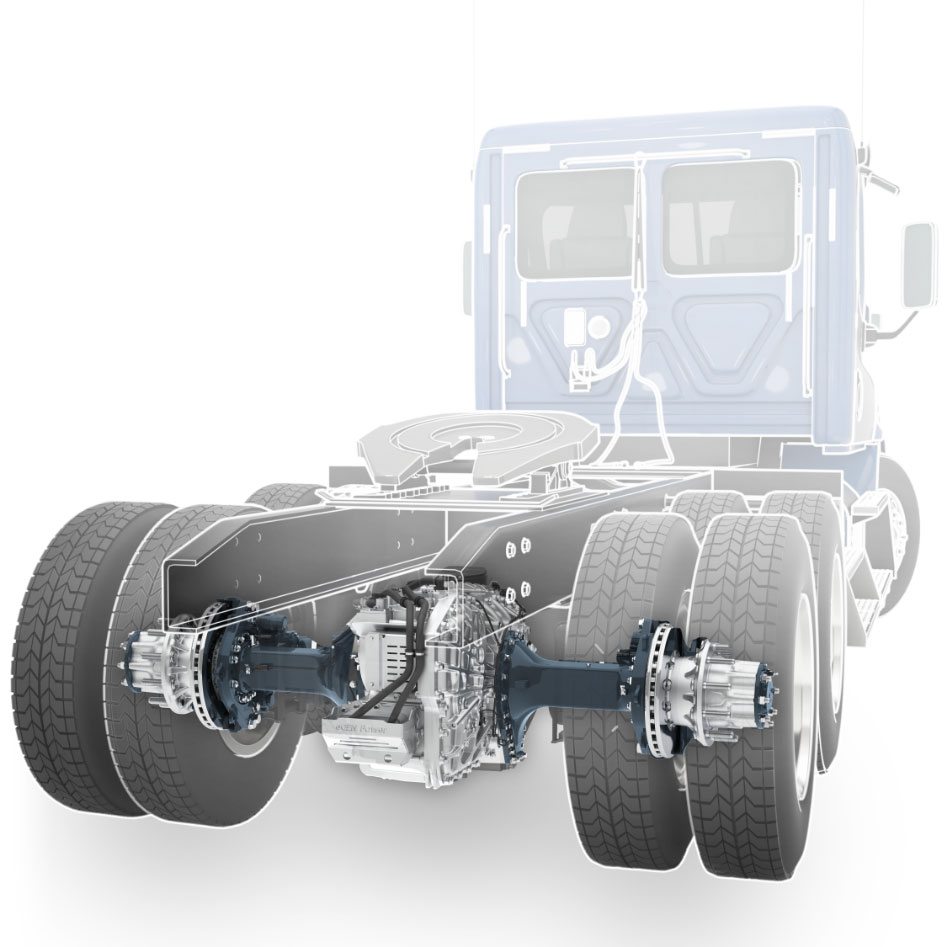
Hundreds of parts came together around steel reinforcement.
The model was designed with a hollow interior so steel bolts and an internal steel armature could provide support. The 471 printed pieces were produced across more than 70 printers, totaling over 4,000 hours of machine time.
The main fabrication challenge was reproducing the appearance of the actual axle. Every piece had to be positioned correctly, and flaws from printing and assembly had to be corrected before the surface could be finished.


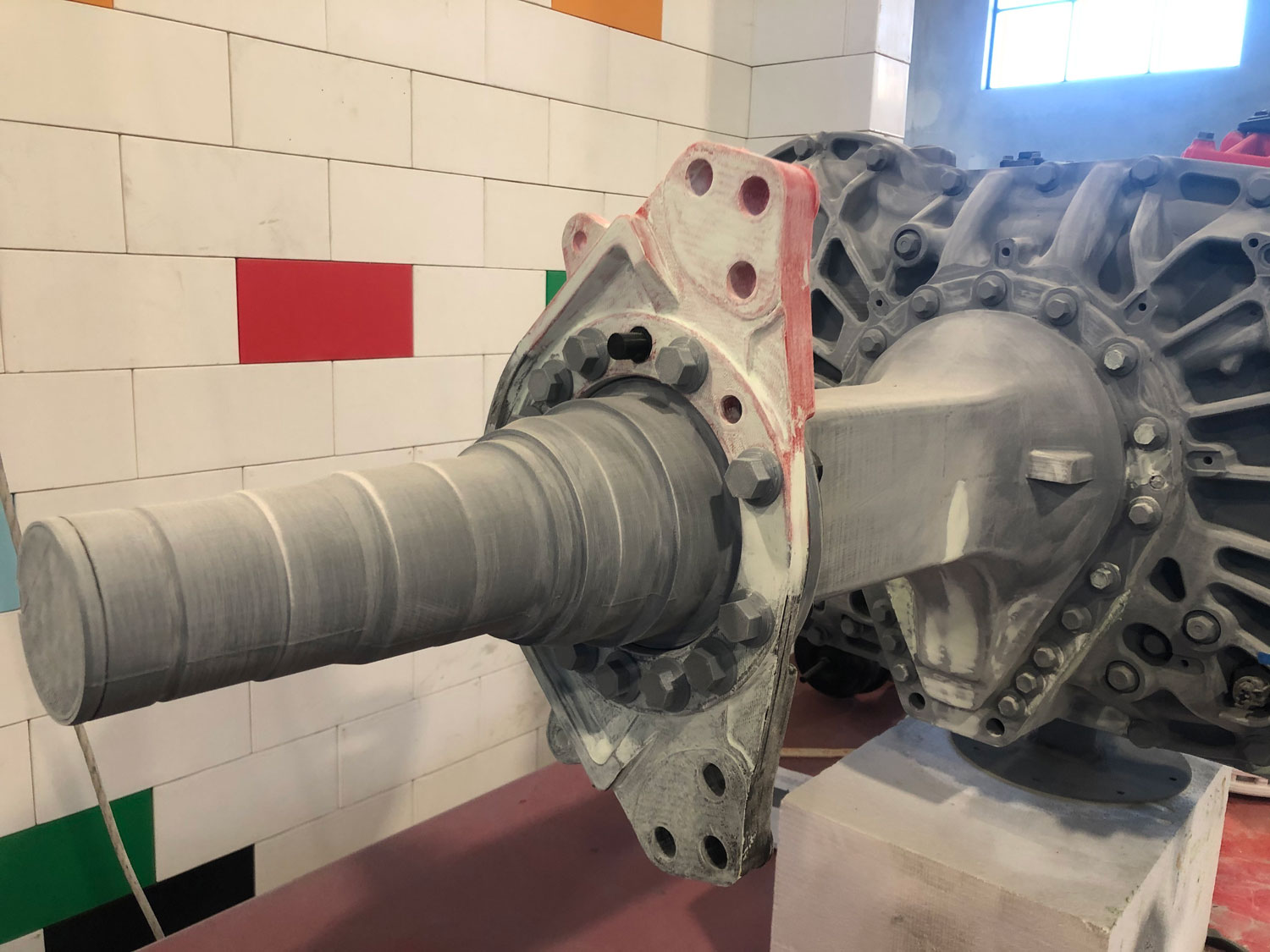
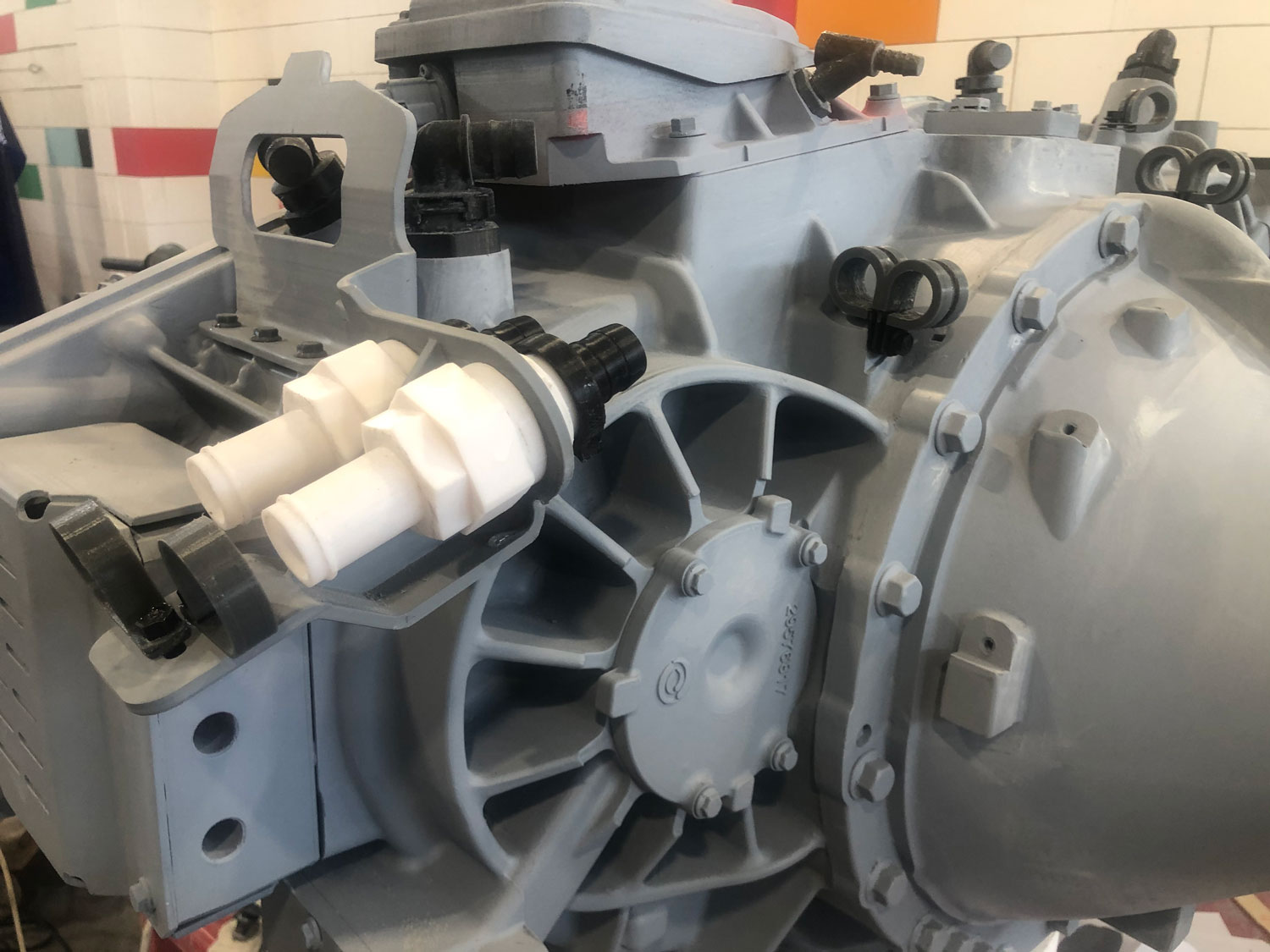
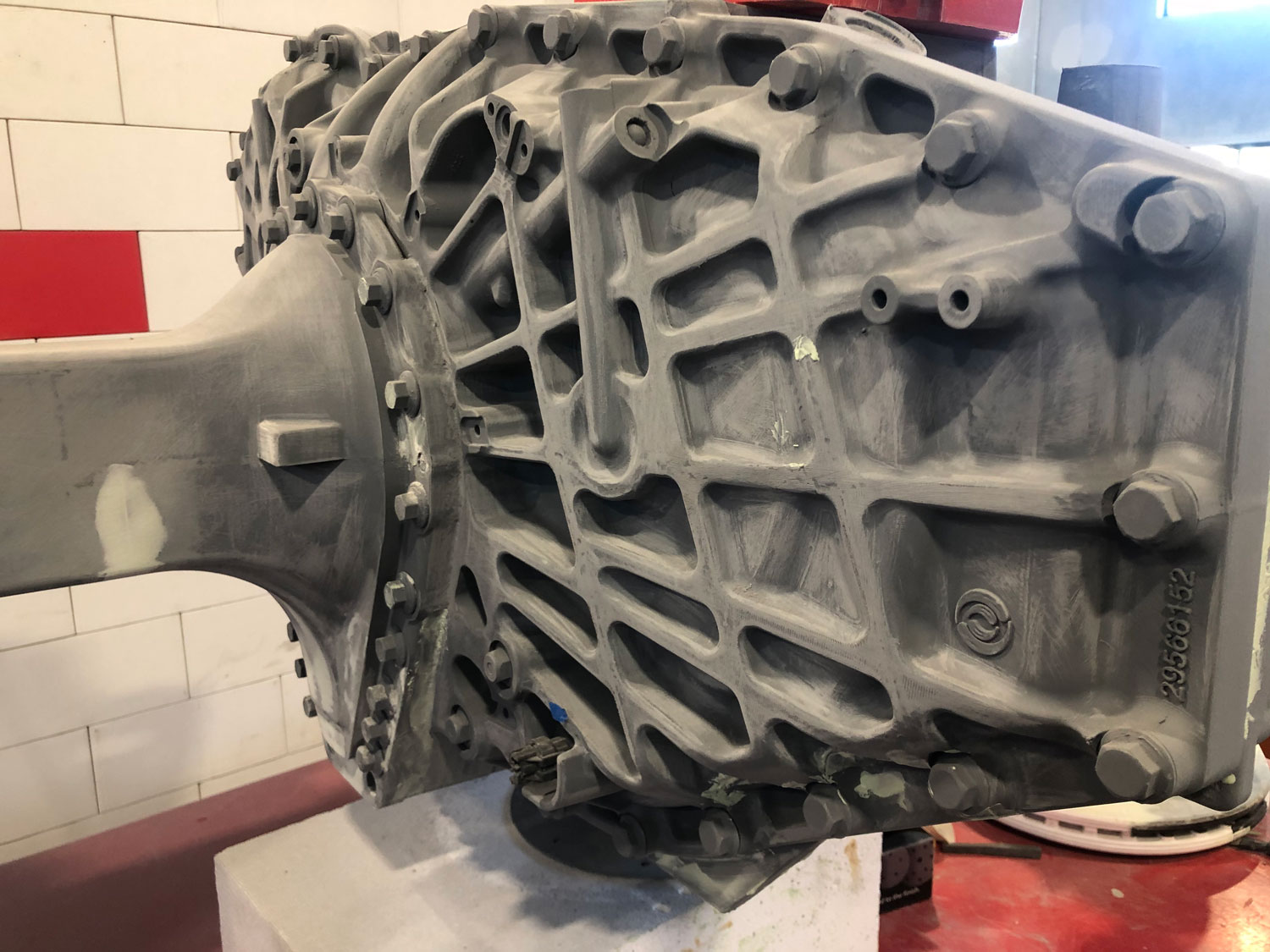
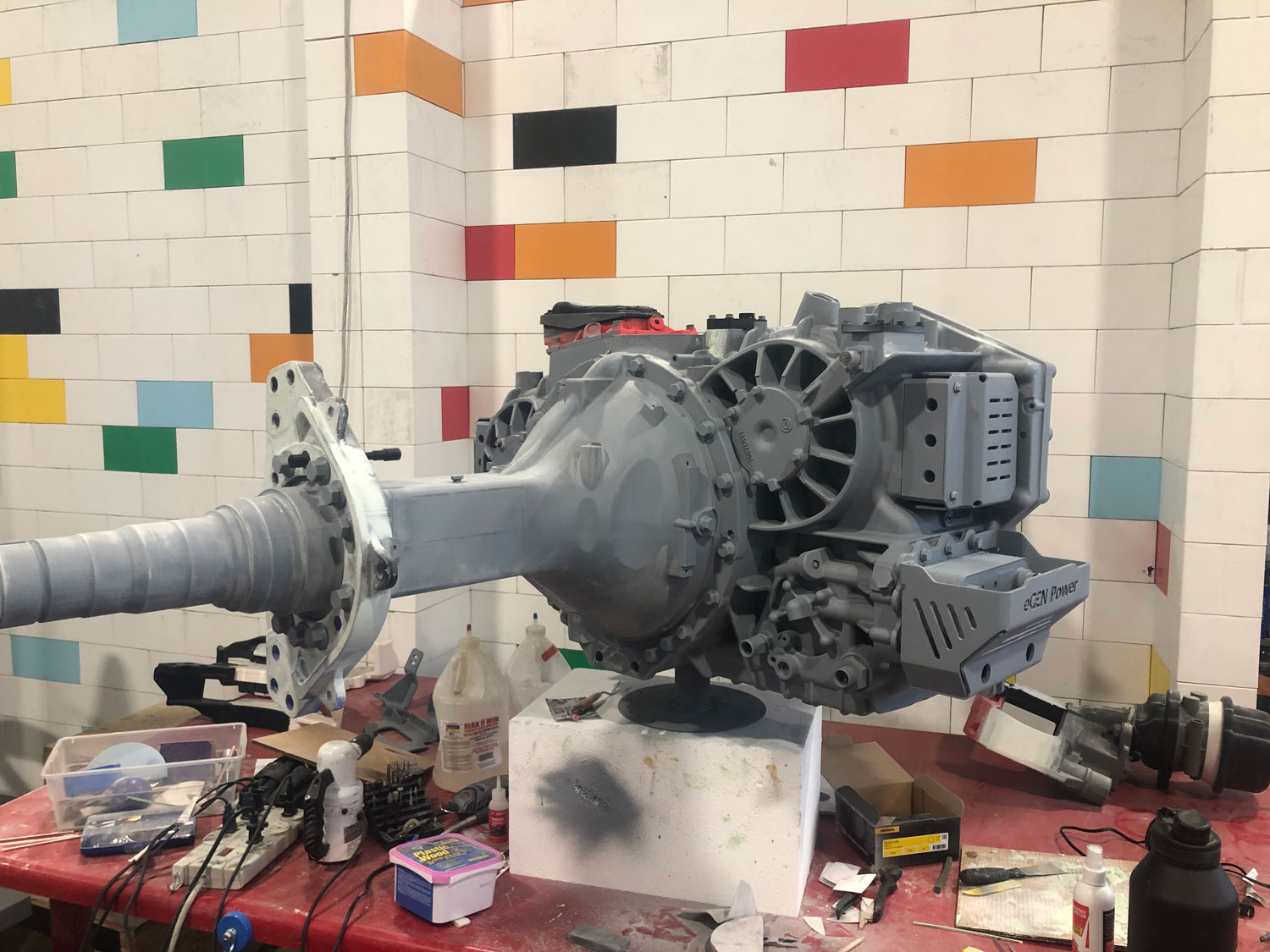
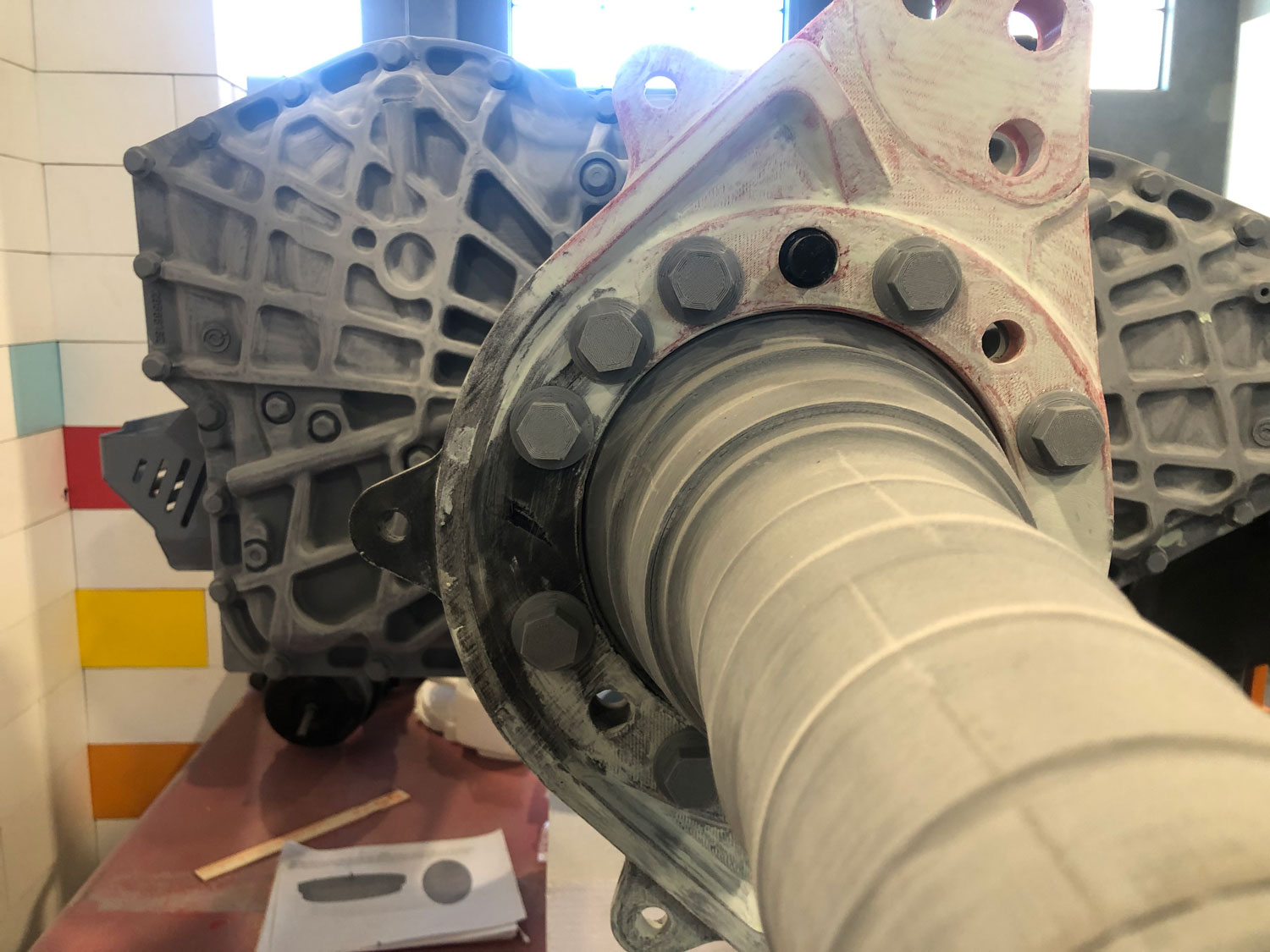
Textured hard coating and white paint unified the assembly.
WhiteClouds applied textured hard coating and white automotive-grade paint to match Allison’s specifications. The finishing work brought the many separate components together visually while retaining the axle’s detailed forms.
The completed model measured 60 inches long, with height and width kept in proportion at three-quarter scale. At approximately 200 pounds, it was a smaller, lighter representation of the full-size product.

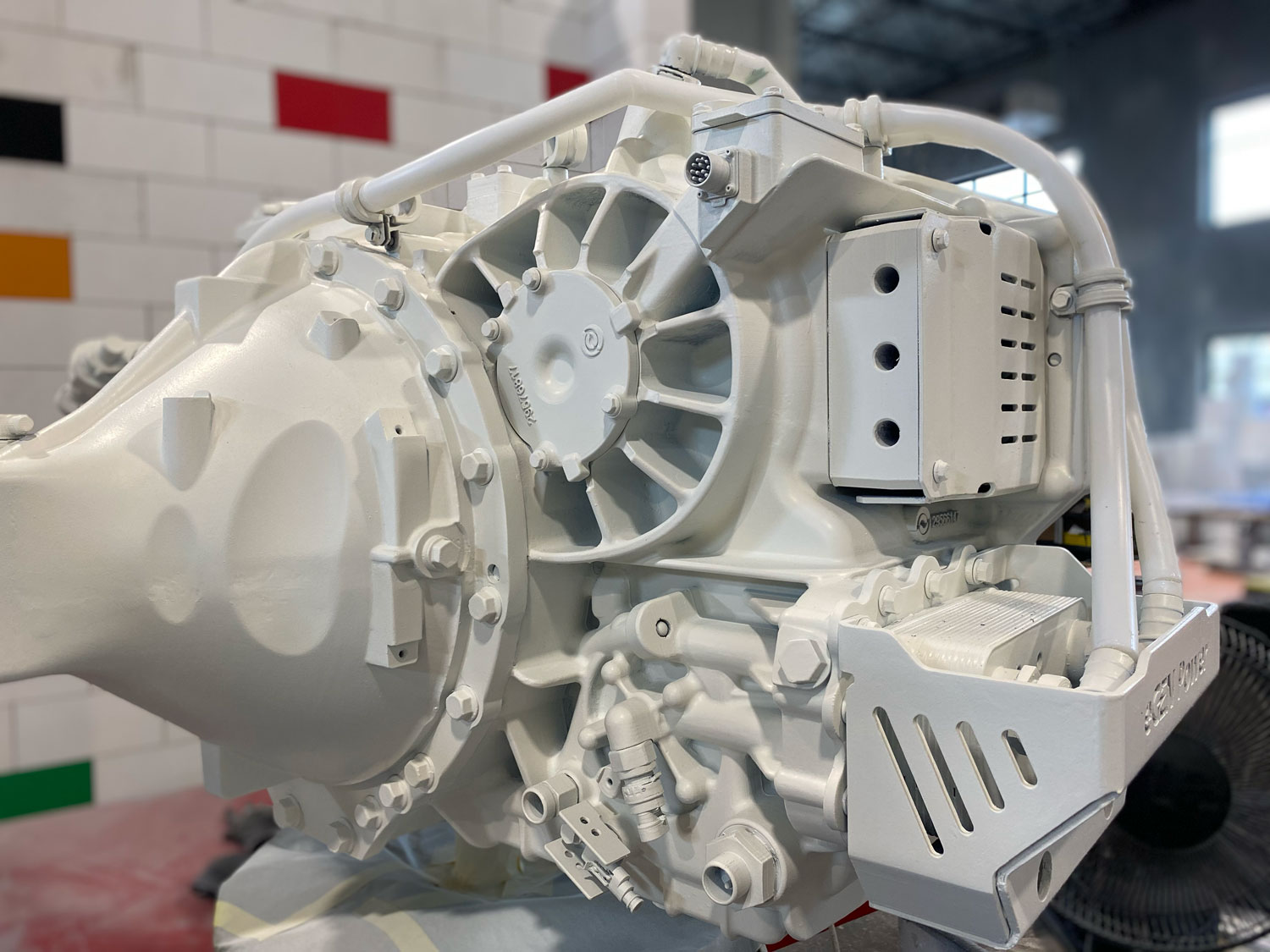


A detailed replica of the eGen Power axle.
The finished model combined printed housings and component details with concealed steel support. Its scale, finish and assembled geometry allowed Allison to present the axle as one physical display.
Plan an industrial display model
Share the product files, intended scale, display setting and features that need to be visible. Those details help define the model’s sections, support structure and finish.