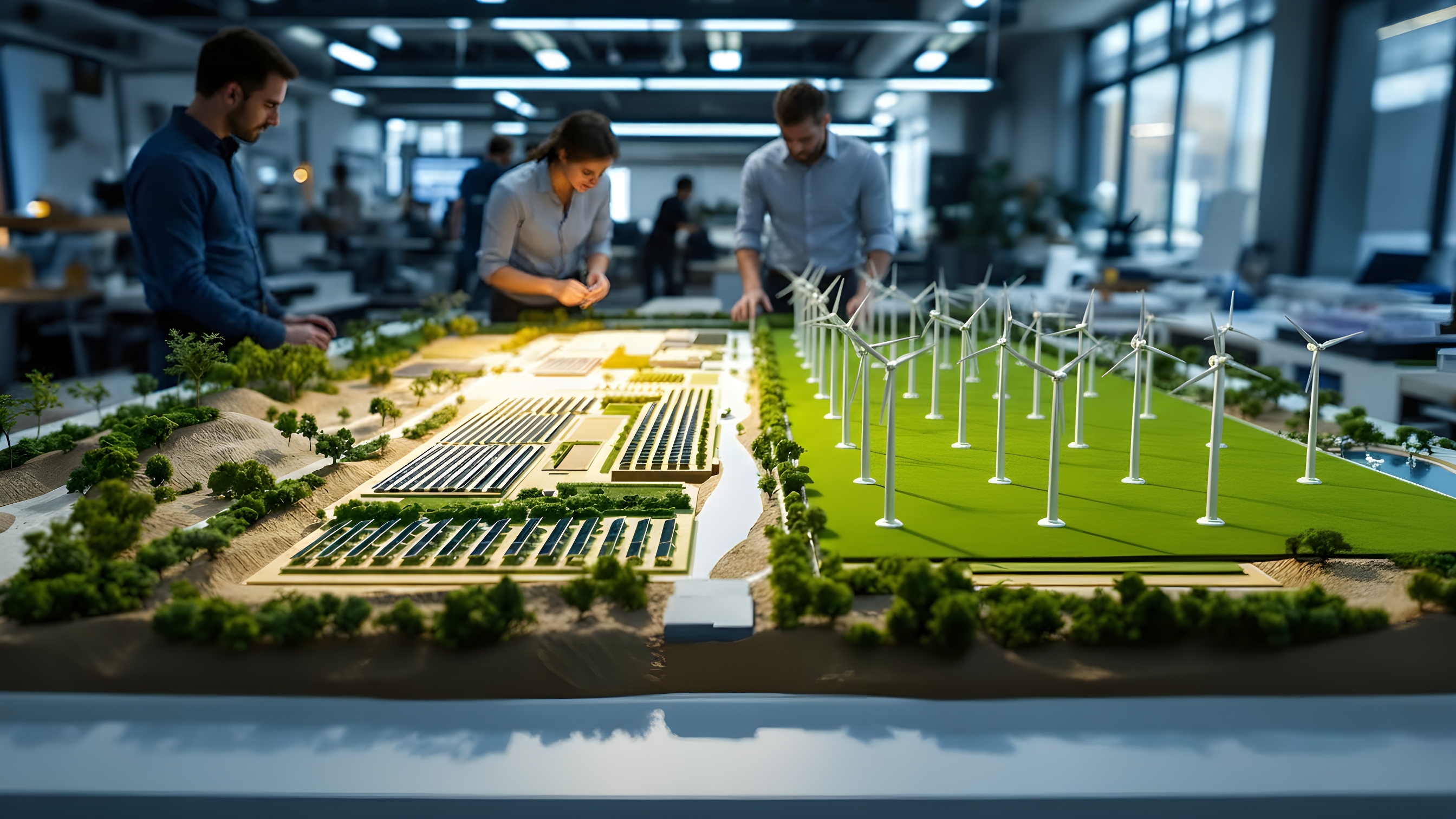
Renewable Energy Models: Wind and Solar Farms

Renewable Energy Models: Wind and Solar Farms

We Build Custom Scaled 3D Industrial Models

Did you know we make

custom

3D industrial models?

Industrial Plant Scale Model

The Power Shift That’s Reshaping the Planet

Drive past a hillside dotted with spinning wind turbines or a desert glittering with endless rows of solar panels, and you’re witnessing a quiet revolution. The world is rewriting its energy playbook, and renewable energy models—especially wind and solar farms—are leading the charge. The global push toward clean power isn’t just about saving the planet. It’s about efficiency, resilience, and design—how we harness natural forces, how we build the infrastructure to support them, and how we visualize and fabricate the systems that will define the next century. From digital simulations to physical scale models, these renewable energy layouts are not just engineering feats—they are architectural poetry in motion.

Renewable Energy Models: Wind and Solar Farms

Why Renewable Energy Models Matter

Every megawatt of clean power starts with a model—a vision of what could be. Before the first solar panel is installed or a turbine blade lifted into the sky, energy planners use advanced modeling to simulate, test, and optimize the system. These models determine how much energy a site can produce, how the equipment will interact with the terrain, and how to make every gust of wind and every ray of sunlight count.

The efficiency of a renewable energy system depends on how intelligently it’s designed. Wind and solar farms aren’t random clusters of machines—they are meticulously arranged ecosystems where technology and nature collaborate. A single misplaced turbine can create wind turbulence that robs its neighbors of energy. A poorly angled solar panel array can lose hours of sunlight every day. That’s where renewable energy modeling becomes the silent backbone of success.

These models guide everything—orientation, spacing, materials, transmission efficiency, and even maintenance pathways. They transform empty fields and open deserts into living blueprints of sustainability.

The Science of Wind Farms: Dancing With the Atmosphere

There’s something mesmerizing about a wind farm. The synchronized rotation of turbines looks almost choreographed, but beneath that beauty lies a deep science of fluid dynamics, geography, and precision engineering. Wind energy models begin long before the first concrete foundation is poured. Meteorologists and engineers study wind maps, which show prevailing directions, speeds, and seasonal variations. Sophisticated computer simulations—known as Computational Fluid Dynamics (CFD)—predict how wind flows over mountains, through valleys, and across plains.

Once the data is collected, layout designers determine the optimal turbine spacing. Too close, and they create wake interference that reduces performance. Too far, and they waste valuable land. Typically, turbines are arranged in long rows or staggered clusters, aligned to face prevailing winds while minimizing turbulence. Modern wind farms also factor in smart grid integration, energy storage, and real-time monitoring. Sensors on turbine blades measure stress, vibration, and efficiency, while drones inspect for damage. The result is a constantly adapting, self-optimizing energy organism—one that responds to nature’s moods minute by minute.

The Design Philosophy of Solar Farms: Choreographing the Sun

If wind farms are kinetic sculptures, solar farms are radiant mosaics. They capture the most predictable of all renewable forces—the daily arc of the sun—and turn it into power through a dance of angles, reflections, and timing. A solar energy model begins with sunlight data: Global Horizontal Irradiance (GHI) and Direct Normal Irradiance (DNI) values that define how much usable sunlight hits a given location. Engineers then simulate shading, atmospheric loss, and temperature effects to map out the most productive panel layouts.

There are two dominant models in large-scale solar generation:

  • Photovoltaic (PV) Farms – Arrays of solar panels convert sunlight directly into electricity.
  • Concentrated Solar Power (CSP) Plants – Mirrors focus sunlight onto a receiver, heating fluid to drive turbines.

Every array angle, row height, and orientation is chosen to minimize shading and maximize energy output throughout the year. In some cases, panels track the sun’s path automatically—rotating slowly across the day like a field of mechanical sunflowers. Even small adjustments in tilt can translate into massive efficiency gains. The art of solar farm design lies in balancing geometric precision with cost-effective practicality.

Comparing Wind and Solar Farm Models

Both wind and solar energy share the goal of clean power, but their design philosophies differ dramatically.

Wind farms thrive in open, elevated spaces where air movement is reliable—coastal cliffs, mountain passes, and wide plains. Solar farms, by contrast, love flat, sun-drenched expanses with minimal cloud cover—deserts, farmlands, and industrial zones. Wind operates best at night and during colder months when air pressure differences are strongest. Solar peaks in daytime and summer. This natural complementarity is why hybrid renewable energy models—combining both technologies on a shared grid—are becoming increasingly popular.

The ideal energy layout often merges both systems, supported by battery storage or hydrogen production facilities. The future isn’t one or the other—it’s about orchestration: an energy symphony where turbines hum and panels gleam in perfect harmony.

How Renewable Energy Models Are Created

Designing a wind or solar farm is equal parts science, simulation, and creative problem-solving. Before the first bolt is tightened, engineers build digital twins—precise 3D simulations of real-world environments.

Site Analysis

Using drone imagery, satellite data, and environmental sensors, engineers evaluate topography, land use, and weather conditions. Soil stability, slope angle, and proximity to transmission lines determine where heavy infrastructure can safely rest.

Simulation and Optimization

Power output is modeled using specialized software. Tools like WindPRO, OpenWind, or SAM (System Advisor Model) simulate real-world conditions to predict output under various configurations. AI algorithms test thousands of arrangements, adjusting turbine positions or panel spacing for maximum efficiency.

Environmental and Community Impact

Layouts must consider local ecosystems, noise levels, and visual impact. The best energy models not only generate power—they coexist gracefully with wildlife and neighboring communities.

Prototyping and Scale Modeling

Before full-scale construction, teams often create physical models—miniature versions of the proposed layout. These models allow stakeholders to visualize design, identify access routes, and showcase the project to investors or local councils. The interplay between digital and physical modeling ensures that renewable projects are not just powerful, but also beautifully engineered.

Fabricating Renewable Energy Models: Turning Vision Into Tangible Form

Behind the sleek animations and CAD renderings lies a hands-on art: fabricating the physical models of wind and solar farms. These scale models bring abstract concepts into tactile reality—perfect for exhibitions, planning meetings, or educational displays.

Step 1: Planning and Scaling

Designers first determine the scale—often between 1:100 and 1:500 depending on the project size. A desert solar field covering miles of terrain might be reduced to a tabletop footprint, while a smaller wind installation could use a more detailed model.

Step 2: Base and Terrain Construction

The foundation starts with high-density foam board or MDF cut to represent the site’s topography. Laser-cut layers or CNC-milled contours capture slopes, ridges, and access roads. The surface is finished with paint and scenic texture to simulate natural land features.

Step 3: Creating the Energy Components

Wind turbines are fabricated using acrylic rods and resin-cast blades, carefully proportioned to suggest realism while remaining durable. Solar panels are crafted from thin acrylic sheets or reflective foils, mounted on angled supports that mimic tilt angles.

Step 4: Detailing and Assembly

Each structure is hand-painted or airbrushed for material accuracy—white gloss for turbine towers, dark blue for PV arrays. Miniature service roads, power lines, and maintenance buildings complete the composition.

Step 5: Lighting and Motion Enhancements

Some advanced models include micro LEDs to simulate energy flow or motorized turbine blades for dynamic realism. These additions transform static models into living showcases of renewable innovation.

Step 6: Integration with Digital Displays

Many modern fabrication studios merge physical and digital worlds by overlaying AR or projection mapping. Visitors can point a tablet at the model to see live energy metrics, turbine rotations, or sunlight simulations.

The result is more than a display—it’s an interactive experience that inspires investment and imagination alike.

The Beauty of Scale: Why Physical Models Still Matter

Even in the age of virtual simulations, physical renewable energy models retain a special power. They make the invisible tangible. Investors can see how hundreds of turbines will dot a coastline. Students can trace the flow of power from sunlight to socket. Communities can visualize the project that will define their landscape for decades. Fabricated models bridge emotion and engineering. They help build consensus, attract funding, and communicate complex environmental data in a single glance. More importantly, they remind us that renewable energy isn’t just about technology—it’s about design, creativity, and human connection.

Offshore Wind Farm

Engineering the Future: Emerging Innovations in Renewable Design

The renewable energy world is evolving rapidly, and the models used to design these systems are evolving with it.

Hybrid Microgrids

Future farms may no longer rely on a single energy source. Hybrid systems combine wind, solar, hydro, and battery storage, managed by AI-driven control centers that balance load and supply in real time.

Floating Solar Farms

In land-scarce regions, solar panels are being deployed on lakes and reservoirs. Floating arrays reduce water evaporation and stay cooler, boosting efficiency.

Vertical and Offshore Wind

New vertical-axis wind turbines and offshore floating systems allow wind energy to expand into previously unreachable territories—coastal waters and dense urban environments.

Bifacial Solar Panels and Smart Surfaces

Next-generation panels capture sunlight from both sides, reflecting energy off the ground to increase total output. Others integrate nanocoatings for self-cleaning and anti-reflective performance.

AI-Driven Optimization

Machine learning now predicts maintenance schedules, monitors efficiency, and dynamically adjusts operations to maximize lifespan and power yield. Renewable energy models aren’t static blueprints—they’re intelligent systems that learn and adapt continuously.

Environmental Harmony: Designing With Nature, Not Against It

Every wind turbine and solar array interacts with its surroundings. The best renewable energy models respect local ecosystems and cultural landscapes.

Wind farms are now designed to minimize bird collisions and noise pollution through advanced acoustic modeling. Solar fields incorporate pollinator-friendly ground cover, transforming sterile land into habitats for bees and butterflies.

In some regions, solar panels double as agrivoltaic systems, shading crops and conserving soil moisture. Farmers harvest both sunlight and produce from the same land—a win-win for sustainability and food security.

This intersection of ecology and technology is redefining what it means to “build green.” Renewable energy design isn’t just about efficiency—it’s about coexistence.

The Human Side of Renewable Energy

Beyond the machines and algorithms lies the heartbeat of renewable energy: people. The technicians maintaining turbines in freezing winds, the engineers fine-tuning solar inverters, the communities embracing these projects as symbols of progress. Energy models shape not just power systems but livelihoods. In remote regions, decentralized microgrids bring electricity where it never existed before—powering schools, hospitals, and small industries.

Wind and solar farms also inspire new generations of designers and fabricators. The physical models they create—scaled down yet full of imagination—become educational tools that spark curiosity about science, climate, and innovation. Every spinning blade and glinting panel tells a story of human ingenuity harnessing natural elegance.

From Concept to Construction: The Lifecycle of a Renewable Model

Every renewable energy project follows a distinct narrative, from abstract model to full-scale infrastructure.

  • Ideation: Concept sketches, resource studies, and design simulations.
  • Modeling: Digital twin creation and physical model fabrication.
  • Testing: Environmental, structural, and electrical simulations.
  • Approval: Public consultations, visual impact assessments, and investor showcases.
  • Construction: Groundbreaking, component installation, and commissioning.
  • Monitoring: Real-time data integration and predictive analytics.

Each stage reinforces the importance of modeling as a decision-making tool. Models don’t just predict performance—they guide creativity, safety, and sustainability.

Aesthetic and Architectural Considerations

Renewable energy design is entering a new era—one that embraces beauty alongside function. Architects and industrial designers now collaborate with engineers to integrate renewable farms seamlessly into landscapes. Wind turbines with sculptural silhouettes, solar canopies shading pedestrian paths, even artistic arrangements of panels that create geometric harmony from the air—all reflect the shift toward aesthetic engineering. The design philosophy has evolved from utility to artistry. Renewable energy farms are not only clean—they’re breathtaking monuments to innovation.

Sustainability Beyond Energy

True sustainability extends beyond the generation of power. It includes how facilities are built, maintained, and eventually decommissioned. Modern renewable energy layouts are designed for recyclability. Turbine blades can be repurposed into bridges or playground structures. Solar panels are now manufactured with recyclable materials and modular frames for easier replacement. The fabrication of renewable energy models also reflects this shift. Studios are moving toward biodegradable foams, eco-resins, and reclaimed wood bases, ensuring that even the prototypes echo the sustainability of their full-scale counterparts. This circular approach closes the loop—proving that green design begins long before the first electron flows through the grid.

The Future Landscape: An Earth Powered by Imagination

Picture a world where the glow of every city is powered by sunlight stored during the day and wind captured at night. Highways lined with vertical turbines hum softly. Rooftops shimmer with sleek photovoltaic films. And in university labs and design studios, miniature renewable energy models continue to evolve—each one a glimpse of the next breakthrough. The evolution of energy is really a story of imagination—our ability to reimagine how we power life itself. The wind and the sun have always been there; what’s changed is our capacity to design systems that listen to them.

From Models to Momentum

Wind and solar farms are more than machines—they’re metaphors for progress. Every rotation of a turbine and every spark of photovoltaic current is the product of thousands of hours of modeling, simulation, and fabrication. Behind every renewable energy installation stands an invisible framework of design intelligence.

From digital twins to meticulously crafted scale models, renewable energy models allow us to test, refine, and perfect the world’s most ambitious sustainability dreams. They turn physics into art, sunlight into structure, and air currents into inspiration. As we stand at the dawn of a clean energy era, these models remind us of one truth: the future isn’t waiting to be powered—it’s waiting to be designed.

Check out WhiteClouds’ 3D Industrial Models for more information.
 
Contact us today to learn more about our 3D services and how we can help you achieve your goals.   

Get a Free Quote on a Custom 3D Billboard

Get a Free Quote