Plant Layout Models for Manufacturing Efficiency

Plant Layout Models for Manufacturing Efficiency

We Build Custom Scaled 3D Industrial Models

Did you know we make

custom

3D industrial models?

Industrial Plant Scale Model

The Hidden Blueprint Behind Every Efficient Factory

Walk into any modern factory, and you’ll notice an almost choreographed flow of movement—raw materials glide in one end, finished products roll out the other, and workers and machines perform with a kind of silent synchronization. Behind that harmony lies one of the most underestimated arts in industrial design: plant layout modeling. A plant layout model isn’t just a floor plan—it’s the physical and conceptual foundation of manufacturing efficiency. It determines how materials travel, how space is used, how safety is ensured, and how costs are minimized. Whether you’re designing a high-tech robotics facility or a custom woodworking shop, the layout model dictates whether your operation hums like a symphony or trips over its own cords. Let’s dive into how smart plant layout models transform productivity, save time and energy, and even inspire innovation within manufacturing.

Plant Layout Models for Manufacturing Efficiency


Why Plant Layout Matters More Than Ever

In the past, plant layout decisions were largely intuitive—based on gut feel and decades of experience. But with global supply chains, digital fabrication, lean manufacturing, and space-cost optimization, today’s factories need layouts rooted in data, simulation, and flexibility. A good plant layout can reduce material handling costs by 20–50%, improve production output by 30%, and significantly reduce downtime. The logic is simple: every extra foot a component travels, every unnecessary turn a forklift takes, or every blocked pathway steals time, money, and energy. Modern manufacturers view layout modeling as an ongoing process—not a one-time event. The best plants evolve like living organisms, constantly reconfiguring for new products, new machines, and smarter workflows. The secret to success? Choosing the right layout model.

The Core Types of Plant Layout Models

Before building, remodeling, or even simulating your plant, it’s crucial to understand the primary layout archetypes. Each has its own rhythm and is suited to specific manufacturing philosophies.

Product (Line) Layout

Think of an assembly line—like those in automotive or electronics manufacturing. In this model, machines and workstations are arranged sequentially based on the steps of production. Each operation flows directly into the next, minimizing handling and waiting.

  • Strengths: High efficiency for mass production, reduced transport time, excellent for standardized products.

  • Challenges: Limited flexibility. Any change in product design may require reconfiguring the entire line.

This model thrives in industries where consistency rules—cars, phones, packaged foods, or even foam props built in sequence from carving to coating.

Process (Functional) Layout

In this setup, machines performing similar operations are grouped together—like all drills in one area, all welders in another. This is the go-to model for job shops or custom production environments.

  • Strengths: Highly flexible, easy to accommodate custom orders or product variations.

  • Challenges: Increased material handling, complex scheduling, and potentially uneven workflow.

Imagine a fabrication workshop producing custom large-scale sculptures: foam carving, fiberglassing, sanding, painting—all in their specialized zones. Each project travels through these in varying sequences depending on its requirements.

Fixed-Position Layout

Here, the product stays put while tools, materials, and workers come to it. This is common for massive products—like ships, airplanes, or industrial foam displays too large to move safely.

  • Strengths: Perfect for heavy, immobile, or oversized products.

  • Challenges: Complex coordination, higher worker fatigue, and potential for congestion around the work site.

For example, building a giant trade show installation or a massive statue prop—everything from cranes to paint sprayers moves to the object’s position rather than vice versa.

Cellular Layout

A hybrid approach designed to blend flexibility and efficiency. Equipment and workstations are grouped into “cells,” each capable of producing a family of similar products.

  • Strengths: Shorter material paths, improved quality control, strong team ownership.

  • Challenges: Requires careful balancing of workloads and cell design.

This model mirrors lean manufacturing principles—ideal for industries like electronics, 3D printing hubs, or precision foam modeling where modular, multi-stage production reigns.

Combination (Hybrid) Layout

Real factories rarely fit into neat boxes. A hybrid layout merges two or more models to fit unique requirements. A large-scale prop fabrication plant, for instance, might have a process layout for its carving and coating departments and a product layout for its finishing line. The key to success is blending the right elements—arranging workflow to minimize backtracking, overlap, and downtime, while supporting multiple production scales.

The Science Behind Manufacturing Efficiency

At the heart of every efficient layout is flow—the smooth, logical progression of materials, tools, and people through the production system. To master this, engineers focus on three intertwined goals: minimizing waste, maximizing motion, and optimizing space.

Material Flow Efficiency – Every extra foot of conveyor, every forklift trip, and every turnaround costs both time and energy. Efficient layouts shorten travel distances, use gravity-fed systems, and eliminate unnecessary handling. Many plants use Spaghetti Diagrams—simple sketches of actual material paths—to reveal hidden inefficiencies.

Space Utilization – Square footage is expensive. Smart layout modeling maximizes vertical space, ensures safe clearance zones, and allows easy expansion. Today’s 3D modeling tools even simulate human ergonomics—showing where an operator can comfortably reach, lift, or move.

Flexibility and Future-Proofing – With product lines constantly evolving, plants must remain adaptable. Modular machinery, moveable partitions, and plug-and-play utilities make reconfiguration less painful. Digital twins—virtual replicas of the factory floor—allow simulation of new workflows before a single machine is moved.

plant layout digital scan

Digital Transformation: The Era of Smart Layout Modeling

Gone are the days when layouts lived only on blueprints. Modern design teams employ 3D CAD, BIM (Building Information Modeling), and simulation software to visualize every detail—from airflow to forklift traffic.

Simulation and Virtual Walkthroughs – Software like FlexSim, AutoCAD Factory, or Siemens Tecnomatix allows engineers to test how different layouts affect production time, bottlenecks, and worker fatigue. Virtual reality headsets can even let teams “walk” through the plant before construction begins.

AI-Driven Optimization – Artificial intelligence is revolutionizing layout design. Algorithms can now generate thousands of configurations automatically, ranking them based on space efficiency, safety, and flow metrics. This is evolutionary design—where machines help humans create better factories.

The Rise of the Digital Twin – A digital twin mirrors every real-time operation of the factory. Managers can simulate line changes, predict maintenance issues, or test new layouts virtually, all without halting production. The twin learns and adapts—making it an invaluable tool for continuous improvement.

Reimagining Efficiency in a Fabrication Facility

Consider a foam prop manufacturing facility specializing in large custom sculptures and trade show installations. The original layout was a patchwork of process areas: carving, coating, sanding, and painting zones arranged in an L-shaped hall. Material often crisscrossed paths, and workers had to double back with oversized pieces—a logistical nightmare. A redesign using cellular and product-flow hybrid modeling transformed the space. The carving area moved closer to coating, shared exhaust systems were centralized, and clear directional pathways were introduced. The outcome? Handling time dropped by 40%, production throughput increased by 25%, and worker fatigue reduced significantly. The new layout wasn’t just efficient—it became part of the creative process. Artists could collaborate directly with fabricators in shared zones, leading to faster prototyping and improved client satisfaction.

How Plant Layout Models Are Fabricated (Yes, the Models Themselves!)

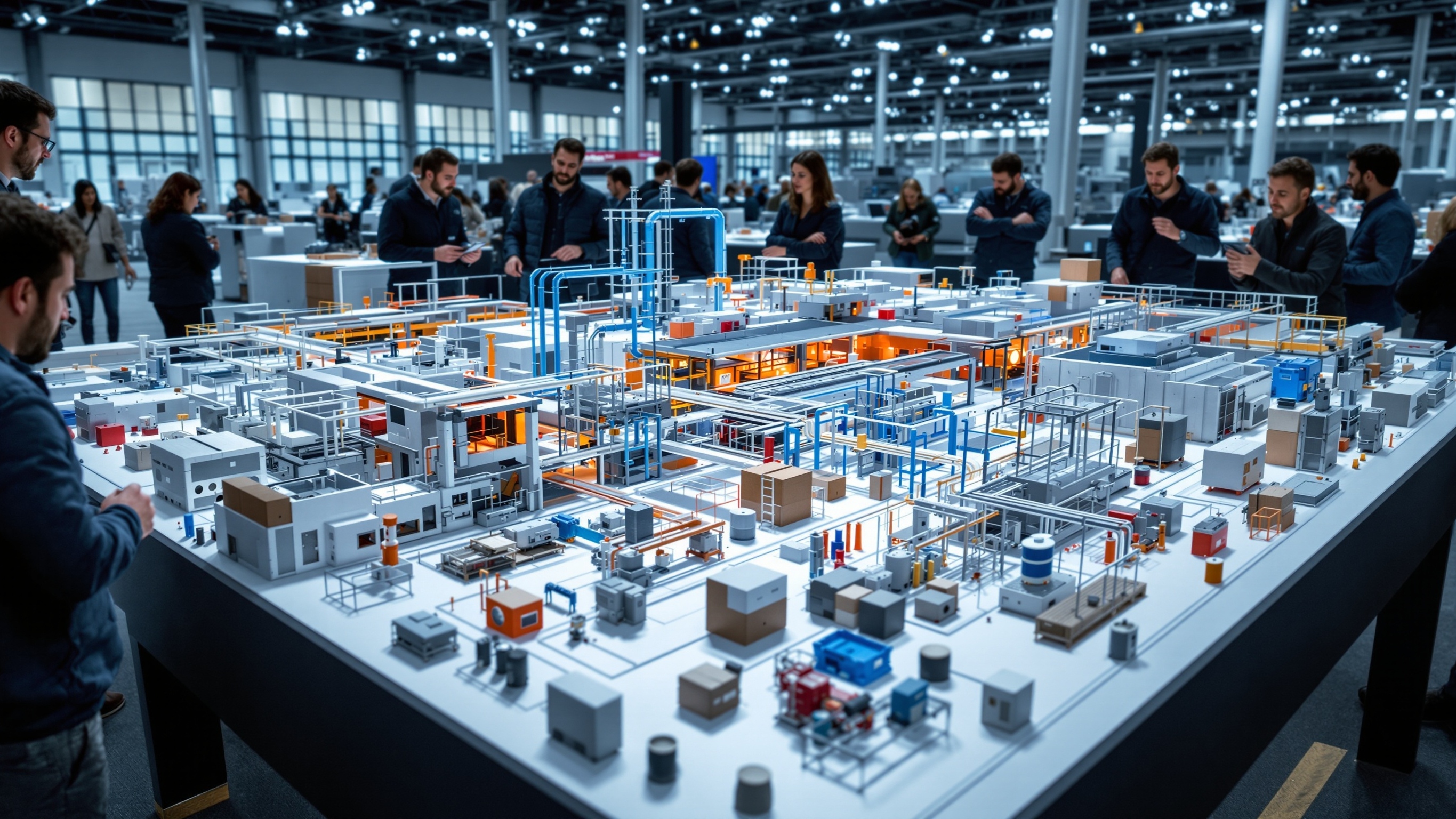
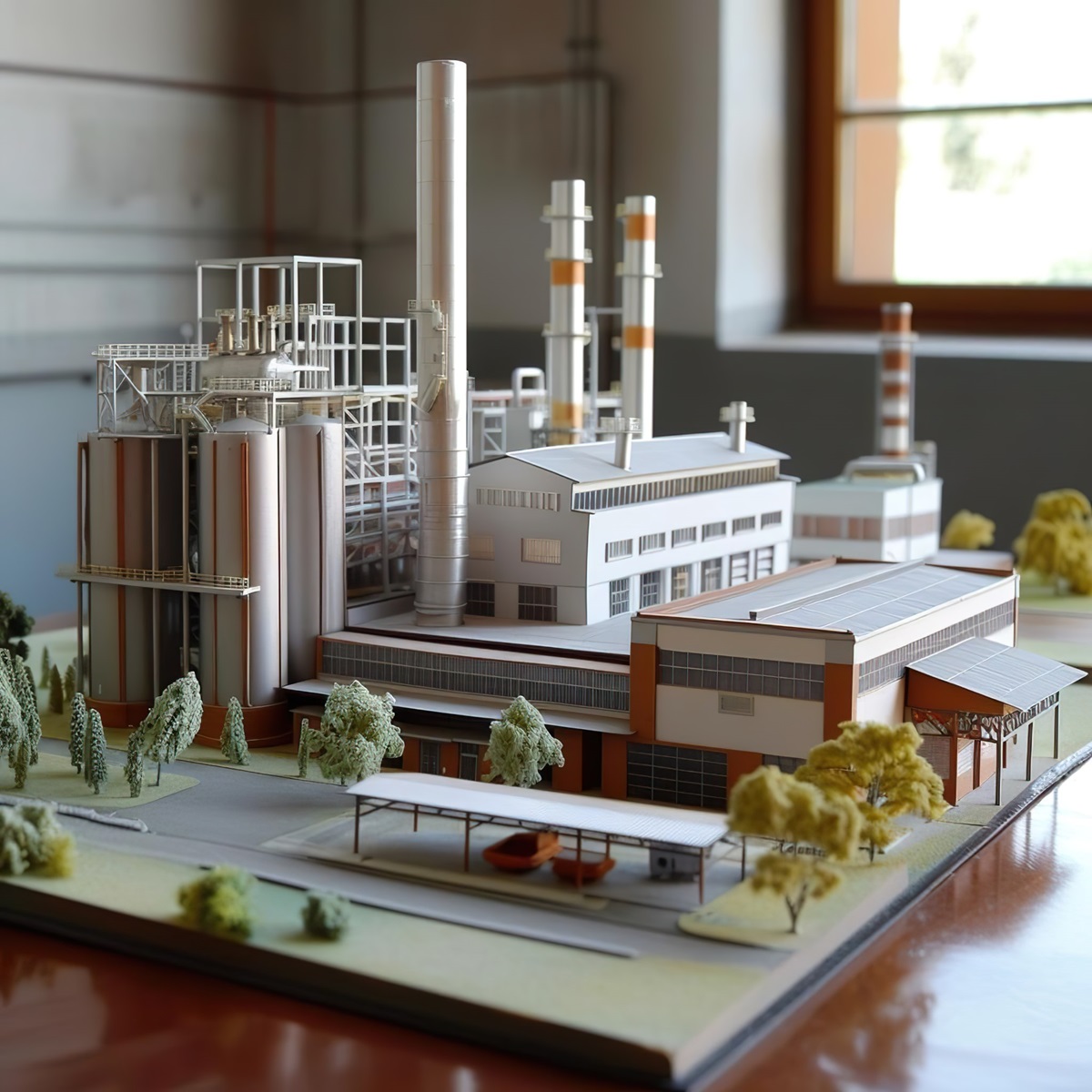
Before construction crews ever move a wall or pour a foundation, physical scale models are often fabricated to visualize flow and spatial dynamics. These tangible miniatures bridge the gap between concept and reality.

Step 1: Base Structure and Scale Planning

Layout models typically start with a baseboard representing the factory footprint, often made from MDF or foam board. Designers determine a workable scale—commonly 1:50 or 1:100—allowing an entire facility to fit neatly on a tabletop.

Step 2: Equipment Representation

CNC machines, assembly lines, conveyors, or robotic arms are represented by 3D-printed miniatures, laser-cut acrylic, or foam shapes. The precision here matters: the models often include accurate footprints and color-coding for process zones.

Step 3: Material Flow Visualization

Using colored paths or transparent overlays, engineers visualize the direction of material flow. Some even embed LED light strips to simulate conveyor movement—an effective tool for presentations or training.

Step 4: Modular Components for Flexibility

A good plant layout model isn’t static. Sections are built modularly, with magnets or pins allowing rearrangement. This helps teams test different configurations—experimenting with line expansion, alternative workflows, or future machine installations.

Step 5: Real-World Presentation and Digital Integration

Modern fabrication often blends physical models with digital augmentation. Cameras and projection overlays can simulate live traffic or heat mapping. Combining tangible and virtual modeling helps both engineers and stakeholders make confident decisions before breaking ground.

Step 6: Finishing and Display

Once finalized, these models are often displayed in engineering offices or lobbies—proof of thoughtful design and a tangible reflection of the company’s operational intelligence.

The Human Factor: Designing for People, Not Just Machines

Manufacturing efficiency isn’t purely mechanical. The layout must support human comfort, safety, and collaboration. Poorly designed work areas can cause fatigue, injury, and morale drops—all of which quietly drain productivity.

Ergonomics and Safety – Equipment placement should minimize repetitive strain and awkward movements. Adequate spacing around machines, safety barriers, and clear walkways are non-negotiable. The best layouts align with OSHA standards while still promoting fluid motion.

Communication Flow – The most efficient factories communicate visually. Sightlines between supervisors and operators matter. Open layouts or glass partitions promote transparency, faster problem-solving, and higher engagement.

Comfort and Environment – Lighting, ventilation, noise control, and even breakroom proximity play roles in performance. A layout that supports mental and physical well-being pays off in lower turnover and fewer accidents.

Lean Thinking Meets Spatial Design

Lean manufacturing’s mantra—eliminate waste—applies beautifully to layout design. The seven wastes (transport, inventory, motion, waiting, overproduction, overprocessing, and defects) all have spatial implications.

For instance:

  • Transport Waste: Poor layout causes materials to travel unnecessary distances.

  • Motion Waste: Workers walk or reach too far.

  • Waiting Waste: Machines idle because materials are delayed between stations.

By aligning layout design with lean principles, companies create spaces that inherently support continuous flow and just-in-time production. The result? A plant that feels alive, efficient, and remarkably intuitive to navigate.

Sustainability and Energy Flow in Layout Planning

Energy efficiency is the new frontier in plant design. A well-modeled layout can reduce lighting needs, optimize HVAC systems, and shorten energy-intensive processes.

Smart Energy Zoning – Grouping high-heat or high-noise operations in one area allows for localized environmental control—saving power and improving comfort elsewhere.

Natural Flow Design – Some layouts now incorporate passive ventilation or daylighting corridors, reducing the need for artificial climate control. Even the path of forklifts is simulated for fuel or battery optimization.

Sustainable Materials and Green Fabrication – In both plant construction and layout model fabrication, sustainable materials—like recycled foam, biodegradable plastics, and low-VOC coatings—are increasingly common. Eco-conscious design isn’t just marketing; it’s a measurable efficiency driver.

Adapting Layouts for the Future Factory

As automation, robotics, and AI redefine production, plant layouts must evolve. The factories of the near future will feature collaborative robots, autonomous vehicles, and smart logistics grids. Imagine modular walls that reconfigure overnight, conveyors that self-optimize based on workload, and drones that inventory materials from above. Future layout models will merge physical, digital, and even virtual spaces—fluid ecosystems of intelligence.

The design process itself is shifting too. Instead of engineers spending months modeling a layout, algorithms now test thousands of variations overnight. The role of human designers will focus on creativity and human-centric adaptation—how to make automated systems work with people, not replace them.

Efficiency Is an Ongoing Story

Plant layout modeling is part science, part strategy, and part storytelling. It translates a company’s goals, culture, and capabilities into a living physical space. When done well, it becomes invisible—machines hum, workers move effortlessly, and materials flow as though the building itself were thinking. From small foam prop shops to sprawling automotive factories, layout models remain the unseen heroes of manufacturing success. They prove that efficiency isn’t accidental—it’s engineered, tested, and built from the ground up. As factories continue to evolve, so will their blueprints. The future belongs to those who treat plant layout not as a one-time task, but as an ever-improving art of balance—between space and motion, people and technology, vision and execution.

Check out WhiteClouds’ 3D Industrial Models for more information.
 
Contact us today to learn more about our 3D services and how we can help you achieve your goals.   

Get a Free Quote on a Custom 3D Billboard

Get a Free Quote